

Wheel noise, engine hum, wind whistling, and the constant rattling of plastic can ruin the experience of even a comfortable car. This is especially noticeable during long highway trips, when the driver has to raise his voice to talk to passengers and turn up the music.
There are several ways to reduce noise in a car's interior: fixing technical problems, installing quieter tires, checking the tightness of doors and windows, or installing additional soundproofing of the body. However, the effectiveness of each solution depends on where the sound is coming from.
We understand why some cars remain quiet even at high speeds, while others constantly hear the road, which materials really work, and how to improve acoustic comfort without unnecessary costs.
Why is there noise in the car?
The car interior is not completely isolated from the environment. Sounds penetrate through the glass, doors, floor and other body elements. At the same time, some noise arises directly from vibrations of metal and plastic parts.
Automotive engineers use the term NVH — Noise, Vibration, Harshness. It covers noise, vibrations, and acoustic harshness, i.e. unpleasant sound and vibration sensations while driving.
The main sources of noise are:
Tires and road surface. Create a hum that increases with speed and depends on the structure of the asphalt.
Engine and transmission. Transmit sound and mechanical vibrations through the body and unit mounts.
Air currents. Cause whistling and rustling around mirrors, doors, glass, and body joints.
Suspension. Transmits shocks and low-frequency vibrations when driving over bumps.
Interior elements. May creak due to friction, wear of fasteners, or insufficient structural rigidity.
Ventilation system. Creates additional noise through the operation of the fan, air ducts or dampers.
It is important to distinguish between normal operating noise and sounds that indicate a malfunction. Additional sound insulation helps with the first problem, but should not hide the second.
How to identify the source of noise in a car
Before spending money on soundproofing, it is worth finding out the nature of the sound and the conditions under which it occurs.
The easiest way is to compare the car's behavior at different speeds and road surface types.
| Noise character | Probable source |
| Steady hum that increases with speed | Tires, wheel bearings |
| Loud noise on rough asphalt | Tires, wheel arches, floor |
| Whistling after accelerating to high speed | Seals, mirrors, aerodynamics |
| Humming noise associated with engine speed | Engine, exhaust, transmission |
| Knocking on potholes and bumps | Suspension, mounts, body elements |
| Squeak when driving on rough roads | Interior panels, clips, seals |
| Loud hissing or whistling ventilation | Fan, air ducts, filter |
These are only indicative signs, not a definitive diagnosis.
For example, if the hum remains on different road surfaces and changes when cornering, the cause may be a wheel bearing. If the sound changes noticeably depending on the asphalt, the first thing to check is the tires.
Important: New knocks, metallic grinding, strong vibrations or a sharp increase in hum require technical diagnostics. It is dangerous to hide such sounds with insulating materials.
How tires affect cabin noise levels
Tires are one of the main sources of acoustic discomfort while driving.
When the tread contacts the asphalt, mechanical vibrations and sound waves occur. Some of the vibrations are transmitted through the suspension to the body, and some of the sound penetrates through the wheel arches.
The intensity of noise depends on several characteristics.
Tread pattern and rubber composition
Tires with aggressive tread, large blocks, and wide grooves can run noisier than comfort-oriented road models under certain conditions.
The noise of studded winter tires on dry asphalt is especially noticeable.
At the same time, the tread pattern itself does not fully determine the acoustic characteristics. The carcass design, rubber compound, and the tire's ability to absorb vibrations are important.
Tire width and wheel size
Wider tires often create more rolling noise due to the characteristics of the contact with the road.
Low-profile tires can also transmit more shock vibrations to the suspension, although the result depends on the specific wheel model and vehicle.
Therefore, installing large discs for the sake of appearance sometimes worsens acoustic comfort.
Pressure and uneven wear
Incorrect pressure affects tire deformation, road contact, comfort and noise characteristics.
Unevenly worn tread can cause a characteristic humming sound, which is sometimes mistaken for a bearing failure.
Pressure should be checked when the tires are cold and maintained according to the vehicle manufacturer's recommendations. It is not a good idea to intentionally lower it for the sake of a quieter ride.
How to choose quiet tires
The European tire label indicates the level of external rolling noise in decibels and the corresponding class.
However, there is an important nuance here: the noise indicator on the European label characterizes the sound outside the car, not directly inside the cabin.
A tire with the lowest external noise will not necessarily be the quietest for the occupants of a particular vehicle.
When choosing, it is worth considering independent tests, comfort, wet grip characteristics, size compatibility and load indices.
Why is the car making a lot of noise on the highway?
At high speeds, aerodynamic noise becomes increasingly noticeable.
As air flows around the body, turbulent flows form near mirrors, windscreen pillars and other protrusions. These create pressure fluctuations that are transmitted through the glass, metal panels and seals.
This effect may be especially noticeable after installing additional equipment.
Common causes include:
roof bars and racks;
car boxes;
damaged or deformed seals;
incorrectly installed windshield;
loose doors;
third-party decorative overlays.
If the whistle appeared after replacing the glass or body repair, it is necessary to check the quality of the installation of parts and the tightness of the joints.
Additional door sealing does not always eliminate this sound. Sometimes it is enough to restore the standard seal or adjust the door correctly.
Practical advice: Before soundproofing, check whether the trunk crossbars are creating excessive noise. Removing them can significantly improve acoustic comfort without interfering with the body structure.
What materials are used for car soundproofing?
The term "soundproofing" is often used to refer to several different technologies. In fact, the materials differ in their working principle and purpose.
Vibration isolation materials
Vibration isolation is designed to reduce resonant vibrations of body panels.
The most commonly used self-adhesive materials are butyl rubber-based with an aluminum layer.
They are installed on the metal surfaces of doors, floors, roofs and other body elements.
The viscoelastic layer dissipates some of the vibration energy as heat, making the panels resonate less.
It is important to understand that vibration isolation is not a complete barrier to external sound. Its main task is to reduce structural vibrations.
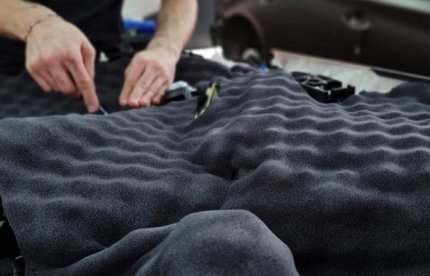
Sound-absorbing materials
Sound absorbers reduce the reflection and propagation of sound energy in the relevant frequency ranges.
For this purpose, special acoustic foams, fibrous materials, and multilayer automotive insulators are used.
They can be useful inside door panels, trunks, and other cavities.
However, not every foam rubber is suitable for a car. The material must withstand temperature fluctuations, and the conditions for its installation must not create a risk of moisture accumulation.
Soundproofing barriers
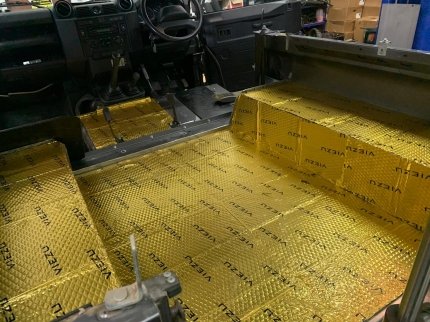
Dense multilayer materials are used to limit sound transmission through the vehicle structure.
They are especially relevant for floors and partitions through which road or mechanical noise passes.
Effectiveness depends not only on thickness, but also on the mass, structure, continuity of the coating and proper installation.
Soft foam by itself does not replace a full-fledged sound barrier.
Anti-squeak materials
To eliminate the creaking of plastic panels, thin tapes, gaskets, and other materials are used that reduce friction between parts.
They do not provide significant protection from external noise, but can effectively eliminate local irritating sounds.
Which parts of the car should be soundproofed first?
Complete soundproofing of the body is not always the most rational solution. It is much more important to treat the areas through which the main noise comes.
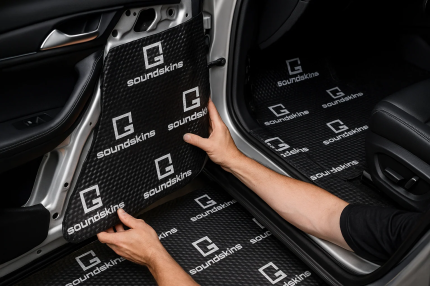
Wheel arches
It is through the wheel areas that you can often hear the rumble of tires, the impact of small stones, and uneven road surfaces.
To reduce noise, appropriate vibration and acoustic materials are used on the interior side or special solutions for the fenders.
Exterior materials must be designed for contact with water, dirt, temperature changes, and road chemicals.
Do not block drainage holes or create cavities in which moisture will accumulate.
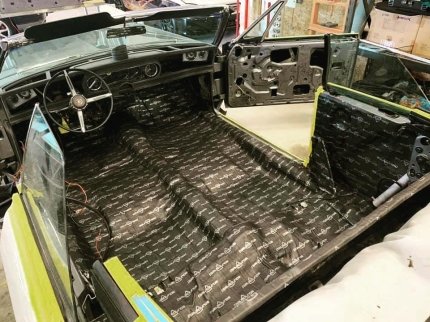
Car floor
The floor is one of the ways in which road noise and vibrations from the suspension and transmission are transmitted.
Its processing can be useful if a low-frequency hum is felt while driving.
Usually, this requires dismantling part of the interior, standard upholstery, and sometimes seats.
Effectiveness depends on the right combination of materials. Excessive thickness may prevent the installation of standard parts or fasteners.
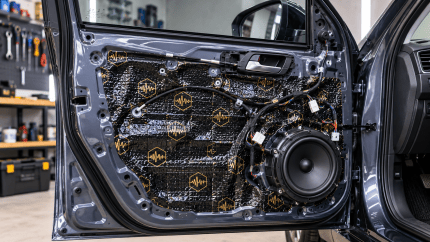
Car door
Doors have relatively large metal surfaces that can resonate under the influence of vibrations.
Their treatment can reduce local rattling and improve the sound of car acoustics.
At the same time, soundproofing doors will not necessarily eliminate tire noise or air whistling.
During installation, it is necessary to maintain the operation of the window regulators, locks, side airbags, and drainage channels provided by the design.
Trunk and rear wheel arches
For hatchbacks, station wagons and crossovers, the luggage compartment is often part of the overall acoustic space of the cabin.
Sounds from the rear wheels and body panels can travel forward without significant obstruction.
Therefore, finishing the rear arches, trunk floor and individual side panels sometimes provides a more noticeable effect than insulating the doors.
Car roof
Roof soundproofing primarily helps reduce the resonance of the metal panel, particularly during rain.
Its impact on road noise depends on the vehicle design and the source of the noise.
Dismantling the ceiling requires special care, as safety curtain elements, wiring, and fasteners may pass nearby.
Motor shield
The partition between the engine compartment and the passenger compartment is an important area for transmitting powertrain noise.
Additional acoustic treatment may help if the main irritant is engine sound.
However, access to the engine shield is often difficult and requires extensive disassembly of the front of the cabin.
Using random thermal insulation materials in the engine compartment is dangerous due to high temperatures and possible ventilation restrictions.
How to reduce noise without complete soundproofing
Not every problem requires disassembling the interior. Some unwanted sounds can be eliminated with simpler actions.
First of all, you should perform the following checks:
Inspect the tires. Check the pressure, even wear, balancing, and tread condition.
Check the suspension. Worn bushings, bushings, and other parts can create knocks and transmit vibrations.
Assess the condition of the seals. Damaged rubber around the door or glass can leak air and create a whistling sound.
Remove unnecessary external accessories. First of all, luggage racks and equipment that disrupts the body's flow.
Eliminate interior creaks. Check panel fastenings, clips, and plastic friction areas.
Check ventilation. A dirty cabin filter, faulty fan, or foreign objects can increase system noise.
For example, if after a seasonal tire change your car starts to make a louder noise, you shouldn't immediately order comprehensive noise insulation. First, you need to check the new set of tires, the balancing, and the condition of the wheels.
This approach helps eliminate the cause, rather than dealing with its consequences.
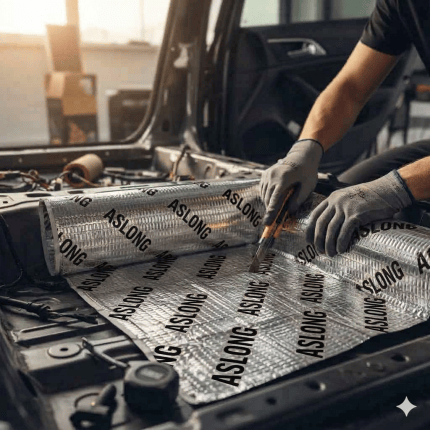
How to properly soundproof a car
The quality of installation is sometimes more important than the amount of material used.
Improperly installed insulation can peel off, accumulate moisture, complicate maintenance, and interfere with the operation of standard mechanisms.
Surface preparation
Before installing the materials, the surfaces must be cleaned of dust, dirt and residues of foreign substances.
The metal must be dry, and the preparation must comply with the material manufacturer's instructions.
If corrosion is detected, the cause must first be eliminated and the protective coating restored.
Gluing insulation over the rust does not solve the problem and may make further repairs more difficult.
Correct application of materials
Vibration isolation sheets must be rolled tightly with a suitable tool, ensuring proper adhesion to the surface.
The amount of material is determined according to the characteristics of the specific product and the design of the panel.
A solid coating of all metal is not always necessary for effective vibration damping.
At the same time, sound barriers usually require minimizing gaps through which sound can pass.
Maintaining standard functions
Special attention should be paid to safety.
Cannot be overlapped:
ways to deploy airbags and curtain airbags;
drainage and ventilation holes;
lock and window mechanisms;
access to critical electrical connections;
technological seat and seat belt fastenings.
For electric vehicles and hybrids, the location of high-voltage components must additionally be taken into account.
Work on passive safety systems and high-voltage equipment must be performed in accordance with the manufacturer's service documentation.
Why excessive soundproofing can be harmful
A common mistake is to believe that the thicker and heavier the layer of materials, the quieter the car will be.
In reality, the result depends on the frequency range, sound source, body design, and material properties.
Excessive insulation has several potential drawbacks.
Weight gain. Extra pounds increase the load on the vehicle and can affect fuel or electricity consumption.
Problems with fasteners. Overly thick layers sometimes prevent the correct installation of the skins.
Moisture accumulation. Inappropriate materials and installation errors can create conditions for corrosion.
Deterioration in maintainability. Access to wiring, fasteners, and service openings may become more difficult.
Unjustified costs. Treating areas that have little to no impact on the main noise will not provide the expected result.
Therefore, selective noise reduction in problem areas is often more rational than maximum coverage of the entire body.
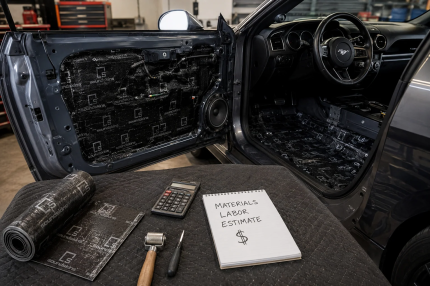
How much quieter will a car become after soundproofing?
There is no universal performance indicator.
The result depends on the car's initial soundproofing, the sound source, materials, and installation quality.
For example, door trim can significantly reduce metal resonance, but have virtually no effect on tire noise while driving on the highway.
Instead, working on the wheel arches and floor might be more beneficial for a car dominated by road noise.
The result should be evaluated under the same conditions: on the same route, with the same speed, ventilation mode, and set of tires.
For comparison, sound level measurement in decibels — dB(A) — is used.
It is worth remembering that the decibel scale is logarithmic. A decrease of 3 dB corresponds to approximately a halving of the sound energy, but does not mean that a person will perceive the noise as half as quiet.
A smartphone can help make a rough comparison, but without calibration it is no substitute for a professional sound level meter.
Does an electric car need additional noise insulation?
Electric cars do not have the usual noise of an internal combustion engine, but this does not mean absolute silence.
Tire sounds, aerodynamic noises, suspension vibrations, and the operation of auxiliary equipment come to the fore.
The lack of a loud powertrain can even make certain high-frequency sounds more noticeable.
Therefore, the noise insulation of an electric vehicle has its own characteristics.
First of all, you should pay attention to the acoustic characteristics of tires, fender flares, body tightness, and factory soundproofing solutions.
At the same time, the mass of additional materials is important for energy efficiency.
It is also necessary to avoid any interventions that could disrupt the temperature regime of the traction battery, the cooling of the electronics, or access to high-voltage equipment.
How much does car soundproofing cost and what does the price depend on?
The cost of work depends not only on the area of the body, but also on the complexity of its disassembly.
The final price is influenced by:
class and design of the car;
the number of areas that need treatment;
type and characteristics of materials;
the need to dismantle seats and trim;
body condition and presence of corrosion;
difficulty of access to problem areas;
warranty conditions and quality of interior assembly.
The same set of materials may produce different results in two cars due to design differences.
When comparing offers, it is important to specify not only the total cost, but also the list of treatment areas, materials used, and their mass.
Promises of guaranteed noise reduction by a specific number of decibels without diagnostics and measurements should be evaluated critically.
The most common mistakes when soundproofing a car
Even high-quality materials will not provide the desired result if the problem is incorrectly identified.
The first mistake is to isolate everything without diagnostics. If the noise is caused by a worn bearing, no amount of body gluing will replace repair.
The second is to use one material for all tasks. Vibration insulation, sound absorption, and sound barrier perform different functions.
The third is to use household materials. Ordinary foam rubber or construction insulation may not be suitable for automotive conditions.
Fourth, ignore moisture. Improper installation inside doors and arches can create conditions for corrosion.
Fifth, disrupting factory systems. Interference near airbags, belts, and electrical equipment is especially dangerous.
Sixth, evaluate the effect only subjectively. After expensive work, expectations can affect the perception of the result. A correct comparison requires the same conditions.
Conclusion
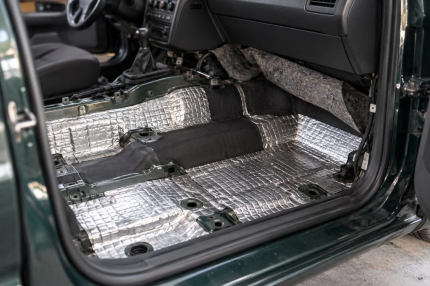
Effective car soundproofing begins not with choosing the most expensive materials, but with identifying the source of unwanted sound.
If the main problem is the tires, it is worth checking their condition and characteristics. If wind whistle is interfering, pay attention to the seals and aerodynamics. If road noise dominates, consider acoustic treatment of the wheel arches and floor.
The best result is a combination of a car in good technical condition, properly selected materials, and high-quality installation. This approach allows you to make the interior quieter without an unreasonable increase in weight and unnecessary costs.
FAQ: frequently asked questions about car soundproofing
1. What is the most effective car soundproofing?
The most effective way to deal with the areas where the main noise comes in is to treat them. For road noise, this is often the wheel arches and floor, and for panel resonance, appropriate vibration isolation. There is no universal material that eliminates all sounds equally well.
2. Is it worth doing complete soundproofing of the car?
Complete soundproofing may be justified if there are several significant noise sources. However, for many cars, local treatment of problem areas is sufficient. The decision depends on the expected result, budget and body design.
3. How to eliminate the hum of the wheels in the cabin?
First, you should check the tires, pressure, wear pattern, and condition of the wheel bearings. If there are no technical faults, you can consider quieter tires and additional acoustic treatment of the wheel arches and floor.
4. Does soundproofing doors help with road noise?
It may help a little, but the result depends on the path of sound penetration. Door treatment mainly reduces the resonance of their panels. If the main noise comes through the floor and arches, the effect may be limited.
5. Why did the car become louder after replacing the tires?
The cause may be a different tread pattern, tire design, tire width, pressure, or uneven wear. It is also worth checking the correct installation and balancing of the wheels.
6. Is it possible to soundproof a car yourself?
Local work is possible with the appropriate skills and tools. However, dismantling areas near airbags, wiring, belts and high-voltage components requires special training and compliance with service instructions.
7. Will soundproofing help reduce engine noise?
Yes, if engine sound is penetrating through the bodywork, proper acoustic treatment can reduce its intensity. However, faulty engine mounts, exhaust system, or other mechanical problems must first be addressed.
8. Why did the noise remain after soundproofing?
Most likely, the treated areas were not the main sound transmission paths or the materials used were not suitable for the nature of the noise. It could also be due to a technical malfunction, insufficient tightness or installation errors.
9. Does noise insulation affect fuel consumption?
Additional materials add weight to the vehicle, potentially affecting energy consumption. How noticeable the difference will be depends on the weight of the insulation installed, the vehicle, and the operating conditions.
10. How to reduce wind noise in a car at speed?
You need to check the door seals, the condition of the glass, the exterior trim, the mirrors and the additional accessories on the roof. Whistling is often associated with air turbulence or a leak, so installing soundproofing is not always the right solution.

