
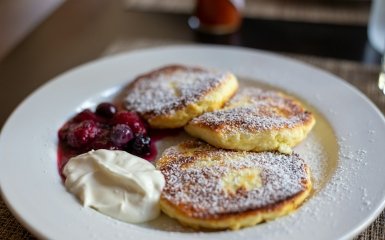
Restaurant cheesecakes are usually recognizable at first glance: smooth sides, a thin golden crust, a tender middle, and a distinct cheese flavor without the “floury dough” feel. At home, you can also achieve this result by controlling three things: the moisture content of the sour milk cheese, the amount of flour, and the frying temperature.
Points of attention
- Yolk-based cheesecakes can be as tender as in a restaurant if you follow the exact recipe and important shaping secrets.
- Using only the yolk allows you to preserve the tenderness of cheese dishes and avoid excessive liquidiness of the mass.
- Basic principles for choosing fermented milk cheese for cheesecakes with yolk and tips for preparing it for optimal results.
- Typical mistakes when making cheesecakes and ways to avoid them to get the perfect result are discussed.
- Yolk-based cheesecakes can be served with a variety of toppings, such as sour cream, sauces, berries, or honey, to enjoy the best flavor.
One of the successful techniques is to cook cheesecakes with the yolk, without the whole egg. The yolk helps bind the mass, adds softness, and does not thin the cheese as much as the white. But it is important to remember: the yolk will not save too wet cheese and will not replace the correct technology.
Why are cheesecakes made with egg yolk more tender?
A whole egg is often added to classic homemade cheesecakes. This is convenient, but the egg white makes the mixture thinner, and after heating it can give a denser texture. That's why sometimes you have to add more flour, and the cheesecakes become heavy.
The yolk works more delicately:
helps combine cheese, sugar, and flour;
adds oiliness and softness;
less dilutes the mass;
allows you to preserve the distinct cheese flavor;
helps to get tender cheesecakes from sour milk cheese without excess flour.
This doesn't mean that cheesecakes without a whole egg are always automatically perfect. The result depends on the cheese: if it's watery, the mixture can still be sticky and spread.
Ingredients for cheesecakes with yolk
The proportions are designed for approximately 8–10 small cheesecakes.
Main ingredients
sour milk cheese - 400 g;
yolk - 1 large or 2 small;
sugar - 1.5–2 tbsp. l.;
vanilla sugar or vanilla - optional;
salt - a small pinch;
wheat flour - 2–3 tbsp. l. per mass;
flour for dusting and shaping — 2–3 tbsp. l.;
oil without a pungent odor - for frying;
a small piece of butter — optional, for taste.
If the cheese is very wet, you may need a little more flour. But don't rush to add it all at once: it's better to first squeeze the cheese or cool the mixture.
What can be changed?
You can reduce the sugar if you plan to serve the cheesecakes with honey, jam, or a sweet sauce. Vanilla is optional, but it nicely enhances the flavor of the sour milk cheese. Part of the wheat flour for breading can be replaced with rice flour: it gives a thinner, drier crust.
Which cheese to choose for restaurant cheesecakes at home?
For the recipe for cheesecakes with yolk, a dense sour-milk cheese without noticeable whey is best. It should not be pasty and not too dry.
Focus on the following signs:
the cheese holds together in lumps but is easily kneaded;
there is no excess liquid at the bottom of the package;
the taste is clean, sour milky, without bitterness;
The consistency is not like a liquid cream.
If the cheese is grainy, it is best to pass it through a sieve or pulse it in a blender. But do not turn it into a liquid paste: over-grinding can make the mass sticky.
If the cheese is wet, wrap it in cheesecloth or a clean towel and squeeze it slightly. If the cheese is dry, you can add 1–2 tsp. sour cream, but be careful not to thin the base.
Step-by-step recipe for cheesecakes with egg yolk
1. Prepare the cheese
Transfer 400g of cottage cheese to a bowl. If it is lumpy, mash it with a fork or pass it through a sieve. If you see whey, press the cheese first.
The goal is to get a homogeneous, but not liquid base. This is what determines whether the cheesecakes will keep their shape.
2. Add the yolk, sugar and salt
Add the egg yolk, sugar, a pinch of salt, and vanilla to the cheese. Mix with a spoon or fork. You don't need to beat the mixture for long: too much activity can make it softer and stickier.
Salt is important even in sweet cheesecakes. It doesn't make the dish salty, it just balances the flavor.
3. Stir in the flour
Add 2 tbsp. flour and mix. Check the consistency: the mixture should be soft, slightly sticky, but formable.
If it spreads, add another 0.5–1 tbsp. of flour or put the mass in the refrigerator. Do not try to make it completely “dry” - after this the cheesecakes may turn out dense.
4. Cool the mass
Cover the bowl and refrigerate the cheese mixture for 20–40 minutes. This step is often skipped, but it is what helps make restaurant-quality cheesecakes: the mixture stabilizes, sticks less to your hands, and holds its shape better.
If time is short, you can refrigerate for at least 15 minutes. For very soft dough, cooling is especially important.
5. Form flat cheesecakes
Sprinkle flour on a board. Divide the dough into 8–10 pieces. Roll each piece in flour, shape into a ball, then flatten slightly.
To get the restaurant shape, place the cheesecake on a board and roll it between your palms or inside a cooking ring. The sides will be even and the top will be neat.
The optimal height is approximately 1.5–2 cm. Cheesecakes that are too thin will dry out quickly, and those that are too tall may remain cold or too soft inside.
6. Fry over moderate heat
Heat a frying pan over medium heat. Add a little oil. You can add a small knob of butter if you like, but don't overheat it as it will brown quickly.
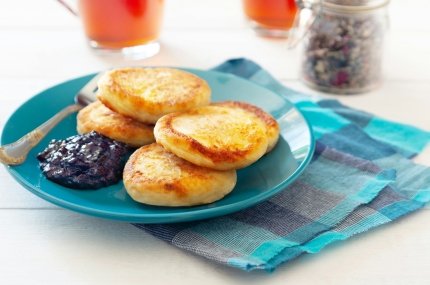
Place the cheesecakes in the pan, leaving some space between them. Fry until golden brown on one side, then carefully flip.
Do not turn the heat to maximum. Over high heat, the crust will quickly darken, and the middle may remain undercooked.
7. If necessary, bring to readiness
If the cheesecakes are tall or very tender, after frying, they can be cooked in the oven at a moderate temperature for a few minutes. Another option is to cover the pan with a lid for a short time and reduce the heat.
It is important not to overcook: the cheesecakes should remain soft inside and not turn into a dry casserole.
The secret of restaurant form
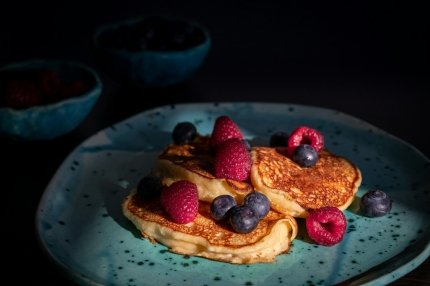
Making cheesecakes look good is not magic, but a sequence of small actions.
What helps:
thick cheese without excess whey;
minimum flour in the mass;
cooling before molding;
the same weight of each cheesecake;
light breading on all sides;
forming even sides using the palms, a knife, or a ring;
Frying without haste over moderate heat.
If you want the most delicate cheesecakes, put them in the refrigerator for another 10–15 minutes after shaping. This is especially useful when the kitchen is warm or the cheese mass has turned out soft.
Common mistakes: why cheesecakes spread or turn out dry
Cheesecakes are spreading
The most common causes are wet cheese, too much sugar, or insufficient refrigeration. Sugar draws out moisture, so don't add too much.
What to do:
squeeze the cheese before kneading;
do not add protein;
cool the mass;
Add a little flour, but don't cover up all the flavor.
Cheesecakes fall apart
This happens if the mixture is too dry, grainy, or poorly combined. It will help to knead the cottage cheese more thoroughly, add the yolk, and let the mixture rest.
If the cheese is too dry, you can add a teaspoon of sour cream. But do it gradually.
The cheesecakes turn out rubbery.
The reason is often too much flour or too long mixing. Cheesecakes with a minimum of flour have a more delicate texture, but require careful shaping.
The cheesecakes are burnt on the outside and raw on the inside.
The pan is probably too hot. Reduce the heat and fry more slowly. For tall cheesecakes, it is better to use a combination method: a quick crust in the pan plus a short finishing in the oven.
Cheesecakes stick to the pan
Possible causes: poorly heated pan, damaged coating, not enough oil, or too wet surface of cheesecakes. Before frying, roll them in a thin layer of flour and do not turn them over too early.
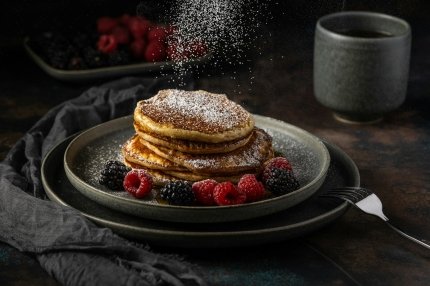
Cooking options
In a frying pan
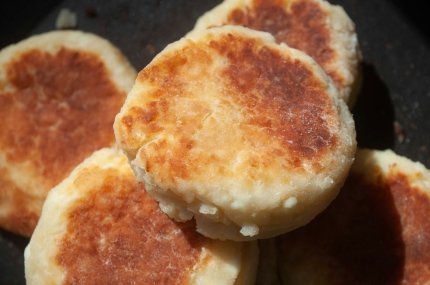
This is the quickest and most common method. It produces a crisp crust and a soft center, as long as you don't overheat the pan.
In the oven
You can bake cheesecakes, but they will be less like classic fried ones. The crust will be softer, but you will need less oil. For baking, it is better to keep the form a little denser.
Combined method
The closest approach to a restaurant at home: first quickly fry the cheesecakes until they are crispy, then finish them in the oven. This makes it easier to cook tall cheesecakes without overdrying the surface.
What to serve with cheesecakes with yolk
Cheesecakes for breakfast go well with simple side dishes:
sour cream;
thick natural yogurt;
berry sauce;
fresh berries;
honey in a small amount;
apple or pear puree;
caramelized fruits.
If the cheesecakes are sweet, it is better to choose a sour sauce or sugar-free yogurt. If there is little sugar in the mass, you can add a sweeter topping when serving.
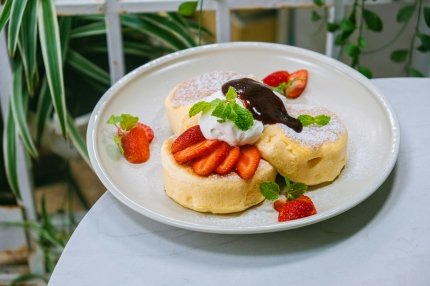
For restaurant-style serving, place 2–3 cheesecakes on a plate, add a spoonful of sour cream or yogurt on the side, a few berries, and a little sauce. Don’t fill the cheesecakes completely: this will keep the crust nice longer.
How to store and reheat
The most delicious cheesecakes are right after they are made. But you can save them for later.
Cool the finished cheesecakes, transfer them to a container, and refrigerate. Do not leave the dish at room temperature for a long time, especially in the warm season, as the recipe contains dairy products and egg yolk.
It is better to warm up:
in a dry or lightly greased frying pan over low heat;
in the oven at a moderate temperature;
in the microwave if speed is important, but the crust will be softer.
You can freeze cheesecakes, but the texture may change slightly after thawing. It is more convenient to freeze already formed cheesecakes on a board, and then transfer them to a bag or container.
FAQ
Why is only the yolk used in this recipe?
The yolk helps bind the curd mass and adds tenderness, but does not thin it as much as the egg white. This makes it easier to make cheesecakes without a whole egg and without adding extra flour.
Is it possible to make cheesecakes with yolk without flour?
You can try it if the cheese is very dense and well pressed. But for a stable shape, at least a small amount of flour or another dry ingredient is usually needed. Without it, the cheesecakes can be brittle.
Can I replace flour with semolina?
Yes, semolina is sometimes used instead of some of the flour. But it takes time to swell, so the mass should be left in the refrigerator longer. The texture will be slightly different - less creamy, more elastic.
Why do cheesecakes stick to your hands?
The dough may be wet or not chilled enough. Flour your hands and board, chill the base, and don't add too much flour at once.
Is low-fat cheese suitable?
Not always suitable. Low-fat cheese is often drier or, conversely, watery, and the flavor may be less pronounced. For a delicate texture, it is better to choose cheese with moderate fat content and normal moisture.
How to cook cheesecakes so they don't spread?
Use thick cheese, don't add protein, don't overdo it with sugar, cool the mixture and form cheesecakes in a thin layer of flour. Fry on moderate heat, not on maximum.
Can these cheesecakes be baked in the oven?
Yes, you can. But the crust will be less pronounced than after frying. For a more restaurant-like result, it is better to fry the cheesecakes first, and then briefly finish them in the oven.
How to make cheesecakes less sweet?
Reduce the sugar to 1 tbsp. or even less if the cheese is not too sour. You can adjust the sweetness when serving - with berries, sauce or honey.
Conclusion
Restaurant-style cheesecakes with yolk are all about balance. You need thick sour milk cheese, one yolk, minimal flour, short cooling, and moderate heat. These steps help to achieve an even shape, a thin crust, and a tender cheese center.
If your cheesecakes don't turn out perfect on the first try, it's often not the recipe that's causing the problem, but the moisture content of the cheese or the frying temperature. Adjust these two points and the result will be much more consistent.
Disclaimer: The material is of a culinary and informational nature. If you have an allergy to eggs or dairy products, lactose intolerance, or individual dietary restrictions, please consider them before preparing and consuming the dish.

