
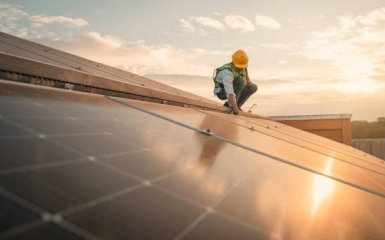
Improper installation of solar panels can lead to much bigger problems than reduced electricity production. Mistakes in the choice of fasteners, electrical connections, cables or protective equipment sometimes cause overheating, inverter damage, roof leaks and even fire. The peculiarity of solar power plants is that most defects do not manifest themselves immediately. The system may work normally after installation, but after a few months or years, dangerous processes begin to develop in places of poor-quality connections.
The most critical errors in solar power plant installation are incorrect calculation of electrical parameters, unreliable DC connections, insufficient protection against overvoltages, violation of fastening technology, and ignoring the condition of the roof.
Let's look at the ten mistakes that most often create technical risks for home solar power plants, explain their consequences and ways to prevent them.
1. Installing solar panels without checking the condition of the roof
One of the first mistakes occurs before installation begins - when the homeowner only estimates the available roof area without checking its structure.
Solar modules create a constant additional load. To their mass is added the weight of mounting profiles, fasteners and cable structures.
However, the greatest danger is sometimes not the power plant's own mass, but the influence of external factors.
Why you need to consider snow and wind
During strong winds, the structure is subjected not only to horizontal pressure, but also to lifting forces. If the fasteners are not calculated correctly, individual elements can loosen or break away from the roof.
In winter, snow load is of significant importance. Its magnitude depends on the region, roof shape, slope, and snow accumulation characteristics.
Special attention is required for:
Old wooden rafter systems.
Roofs with signs of deformation or corrosion.
Light sheds and outbuildings.
Flat roofs with ballasted mounting structures.
Buildings in open areas with high wind loads.
Before installing a solar power plant, it is necessary to check the load-bearing capacity of the structure and determine the permissible layout of the modules.
If the roof needs repairs in the coming years, it is best to do it before installing the panels. Otherwise, the power plant will have to be partially or completely dismantled to replace the coating.
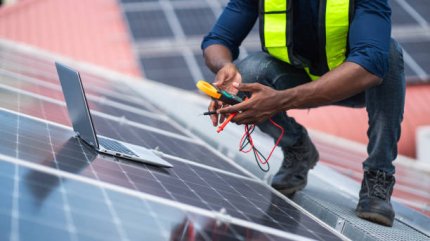
2. Incorrect choice of fasteners and combination of incompatible metals
The mounting structure must ensure the mechanical stability of the solar panels for many years.
Saving on profiles, clamps and connecting elements can lead to gradual loosening of fasteners and damage to modules.
How galvanic corrosion occurs
When dissimilar metals come into contact with each other in the presence of moisture, galvanic corrosion can occur under certain conditions.
For example, aluminum elements and some types of steel fasteners can form an electrochemical vapor in which the less stable metal gradually breaks down.
However, this does not mean that any combination of aluminum with steel is dangerous. The alloy composition, protective coating, joint design and operating conditions are important.
To prevent corrosion, compatible mounting systems provided by the gasket manufacturer and appropriate anti-corrosion coating are used.
It is also important to observe the tightening torque of the bolts. Insufficient tightening leads to loosening of the connections, and excessive tightening can deform the aluminum frames.
Do not drill solar panel frames yourself or change the recommended mounting points without the manufacturer's permission. This may reduce the mechanical strength of the module and violate the warranty terms.
3. Using regular cables instead of specialized solar ones
The cable system is constantly exposed to solar radiation, temperature fluctuations and moisture.
Ordinary household wires are not always designed for such conditions. Their insulation can age prematurely, lose elasticity, and crack.
Specialized cables, in particular of the H1Z2Z2-K type, are used for external DC lines of solar power plants, which meet the appropriate requirements for electrical and climatic resistance.
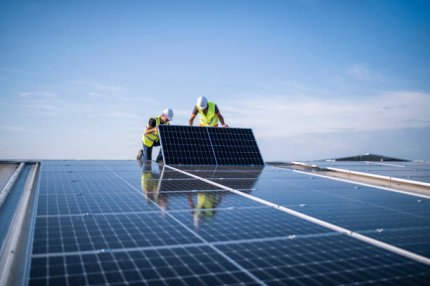
Why cable cross-section matters
When an electric current passes through a conductor, it heats up. The higher the current and the greater the resistance, the greater the energy loss can be.
If the cable cross-section is insufficient, the following occurs:
Increased voltage losses.
Excessive heating of the conductor.
Accelerated aging of insulation.
Risk of damage to connections and equipment.
At the same time, it is wrong to assume that all stations with a capacity of 5 or 10 kW necessarily require the same cable cross-section.
It is determined by the current of a specific circuit, line length, routing method, temperature conditions, and allowable voltage losses.
For example, in a high-voltage DC system, transmitting the same power may require less current than in a low-voltage configuration.
It is also important to properly secure the wires. Cables should not lie in water, touch sharp edges of metal structures, or hang freely under panels.
4. Poor quality MC4 connectors and incorrect cable connections
One of the most dangerous defects in solar power plants is poor electrical contact.
Even a small increase in contact resistance at a connection point can cause local heating. Over time, this can damage the connector, insulation, and adjacent components.
Particular attention should be paid to connectors, which are often generically referred to as MC4.
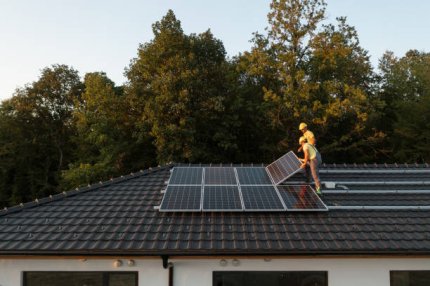
Why you can't arbitrarily combine connectors from different manufacturers
Externally, connectors may look almost the same, but differ in contact geometry, sealing, and materials.
The mechanical ability to connect two connectors does not confirm their electrical compatibility.
Compatible connectors must be used in accordance with the manufacturers' documentation. The provided tool is used to crimp the contacts.
The most common problems:
Incompletely recorded contact.
Incorrect conductor crimping.
Damaged seal.
Moisture ingress.
Connecting incompatible connectors.
The danger is exacerbated by a feature of direct current: an electric arc in a DC circuit can be maintained even in the absence of excessive current sufficient to trip a conventional circuit breaker.
Therefore, solar panel connectors must not be disconnected under load unless they are designed for such a switching mode.
5. Incorrect calculation of the number of panels in one string
A string is a group of solar modules connected in series.
When connected in this way, the voltage of the panels is added. If the number of modules exceeds the permissible value for the inverter, there is a risk of damage to its input electronic components.
Why frost can be dangerous for an inverter
The open circuit voltage of a photovoltaic module usually increases as the cell temperature decreases.
Therefore, a string that operates within the acceptable range in warm weather may exceed the maximum input voltage of the inverter during severe frost.
During design, it is necessary to check:
The maximum open-circuit voltage of the string at the lowest design temperature.
MPPT inverter operating range.
Maximum allowable input current.
Panel characteristics at high temperatures.
The number and configuration of parallel strings.
MPPT is a maximum power point tracking system that allows the inverter to efficiently use the energy from solar modules.
Insufficient string voltage under certain conditions can cause the MPPT to not operate within the optimal range. Excessive voltage, on the other hand, creates the risk of equipment damage.
For calculations, you need to use the characteristics of specific modules and inverters, not just their nominal power.
6. Ignoring solar panel shading
Partial shading is a common cause of reduced efficiency of a home solar power system.
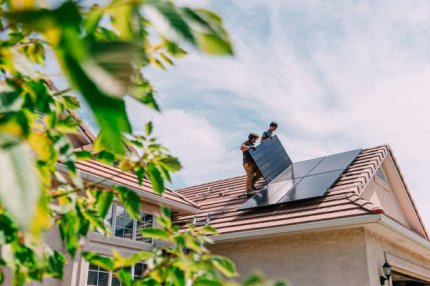
Shadow from a chimney, tree, antenna, or neighboring building can affect the output of an entire group of modules connected in series.
At the same time, the statement that any shadow necessarily destroys the panel is an exaggeration.
What are hot spots on solar panels?
Under certain conditions, a shaded or damaged photovoltaic cell can dissipate electrical energy as heat.
This creates local areas of overheating, known as hot spots .
To reduce the effects of uneven lighting, modern modules use bypass diodes. They allow current to bypass certain groups of elements.
However, such diodes do not eliminate all risks, especially in the presence of damaged elements or malfunctions inside the module.
How to reduce shading losses
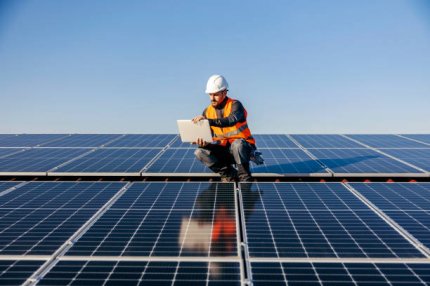
Even before installation, it is necessary to analyze the movement of shadows throughout the day and in different seasons.
It is worth considering that in winter the sun is lower above the horizon, so the shadows become longer.
In some configurations, separate MPPT inputs, power optimizers, or microinverters can help. However, their effectiveness depends on the specific scheme and the nature of the shading.
The best solution is to avoid shading as much as possible at the design stage, if the building's architecture allows it.
7. Improper grounding and lack of surge protection
Grounding and surge protection perform different functions, although they are often confused in everyday life.
Protective earthing and electrical bonding of metal parts of the system help reduce the risk of dangerous touch voltages and ensure the proper operation of the provided protective measures.
Surge protection is designed to limit short-term impulses that may occur due to lightning events or switching processes.
Why grounding alone is not enough
A common mistake is to believe that connecting metal frames to ground completely protects the power plant from lightning.
In reality, the risks are determined by the design of the building, the presence of external lightning protection, the location of cables, and the parameters of electrical equipment.
In the corresponding circuits, surge protection devices, or SPDs, are used.
A solar power plant may require separate devices for the DC and AC sides. Their type and characteristics are determined by the design results.
It is important not to use a regular AC device instead of a specialized DC protection unless the manufacturer has specifically intended for such use.
Also, the PZIP does not guarantee the safety of the equipment in the event of any direct lightning strike.
The protection design must take into account the relevant electrical safety requirements, in particular the principles of international standards IEC 62548-1, IEC 61643-32 and IEC 62305.
8. Incorrect placement of the inverter and insufficient ventilation
The inverter converts the direct current from solar panels into alternating current, suitable for powering household appliances.
During the conversion process, some energy is inevitably released as heat.
If the inverter is installed in a poorly ventilated space, its temperature may exceed optimal values.
What happens during overheating?
Many modern inverters have temperature protection mechanisms.
They can automatically reduce their output power when the temperature rises. This phenomenon is called thermal power limitation, or derating.
Under critical conditions, a protective shutdown is possible.
Typical installation errors:
Installation in direct sunlight without proper protection.
Failure to comply with minimum distances around the housing.
Placement in a closed cabinet without sufficient cooling.
Installation near heat sources.
Ignoring humidity and temperature requirements.
For example, an inverter in a small metal room under the roof can operate in much worse temperature conditions than in a cool technical room.
Specific requirements for ventilation, mounting clearances and permissible temperature should be checked in the manufacturer's instructions.
9. Incorrect roof sealing and non-compliance with installation gaps
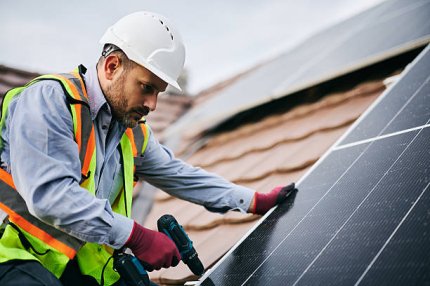
Even an electrically correctly installed solar station can cause problems if the roof's tightness is compromised during its installation.
This is especially true for structures where fasteners pass through the roofing.
Insufficient sealing, unsuitable seals or incorrect positioning of mounting elements can cause water ingress.
Over time, this leads to wetting of thermal insulation, damage to wooden structures, and corrosion of metal parts.
Why leave a space between the panels and the roof?
Solar modules heat up during operation. As the temperature of the photovoltaic cells increases, their power output usually decreases.
The ventilation gap under the panels helps dissipate heat.
Its value depends on the mounting system, roof type and module manufacturer's requirements.
Too dense installation can impair cooling. At the same time, arbitrary increase in the height of the structure can change wind loads.
It is also important to provide access for maintenance and meet fire safety requirements for equipment location.
10. Lack of system check before launch
Completion of physical installation does not mean that the power plant is ready for safe operation.
Before putting a solar power plant into operation, electrical checks are required to detect connection errors, insulation damage, and other defects.
The international standard IEC 62446-1 defines the principles for the documentation, inspection and testing of grid-connected photovoltaic systems.
What installers should check
The acceptance test program depends on the station design, but usually includes:
Checking the correct polarity of DC circuits.
Measurement of open circuit voltage of strings.
Checking the insulation resistance using the appropriate method.
Control of protective connections.
Cable and connector overview.
Checking the operation of protective devices.
Inverter and monitoring settings.
It is important to obtain documentation indicating the connection diagram, equipment characteristics, and test results.
If, after startup, the system regularly shuts down due to insulation faults or other alarms, simply restarting the inverter is not enough.
It is necessary to establish the cause of the malfunction, as restarting without diagnostics can be dangerous.
How to understand that a solar power plant is installed incorrectly
Some installation defects can be suspected by the behavior of the system, even without special equipment.
| Sign | Possible cause |
| Sudden drop in generation | Shading, string fault, MPPT error |
| Frequent inverter shutdowns | Overheating, insulation problems, unstable network |
| Grounding errors | Insulation damage, moisture, equipment malfunction |
| Unusual odor near electrical equipment | Overheating of components or contacts |
| Uneven production of similar thongs | Shading, contamination, module failure |
| Traces of water under the roof | Violation of the tightness of installation passages |
| New cracks or deformations in the frames | Mechanical load or incorrect fastening |
None of the above symptoms by themselves establish the exact cause of the malfunction.
For example, a decrease in generation in winter is normal due to the shortening of daylight hours. And lower performance in hot weather can be explained by the temperature characteristics of the panels.
For correct diagnosis, it is necessary to compare results under similar sunlight and temperature.
Important: If you smell burnt insulation, see smoke, sparks, or signs of overheating, stop using the product according to the manufacturer's safety procedures. Do not disconnect DC connectors or touch damaged conductors yourself.
Even after the inverter is turned off, sunlit panels can remain a source of dangerous DC voltage.
How to check the quality of solar panel installation after installation
The power plant owner is not obligated to perform electrical measurements himself. However, he can check the completeness of the documentation and the organization of the contractor's work.
Documentation and setup
After installation is complete, it is advisable to receive a wiring diagram, equipment passports, warranty documents, operating instructions, and acceptance test results.
You also need to make sure that the configured monitoring system allows you to see the generation capacity, electricity produced, and fault messages.
Inspection of fasteners and cable routes
From a safe location, you can visually assess whether there are any dangling wires, visible deformations, or foreign objects near the equipment.
Inspection of roof mounts and electrical connections should be performed by a qualified professional.
Control of actual generation
After launch, it is advisable to compare actual performance with the forecast obtained during design.
In doing so, it is necessary to take into account weather conditions, module temperature, seasonality, and possible inverter limitations.
A significant and unexplained difference between predicted and actual production is grounds for additional diagnostics, but not automatic proof of improper installation.
Do solar panels need to be maintained regularly?
Solar panels have no moving mechanical parts, so they typically require relatively little maintenance.
However, it is not worth leaving the power plant completely unattended.
The International Energy Agency, in the materials of the IEA PVPS program, draws attention to the influence of climatic conditions, pollution, temperature, wind and other factors on the reliability of photovoltaic systems.
For a home solar power plant, it is advisable to provide for periodic technical inspection, the frequency of which is determined by the manufacturer's documentation and actual operating conditions.
It may include:
Checking the condition of mounting structures.
Inspection of cables, connectors and insulation.
Inverter operation control.
Checking protective equipment.
Module contamination assessment.
Analysis of electricity generation.
If local overheating is suspected, thermal imaging is used. It allows you to detect temperature anomalies that cannot be seen with the naked eye.
The frequency of professional diagnostics depends on the characteristics of the station, previous malfunctions, and manufacturer recommendations.
Can improper installation lead to a fire?
Yes. A solar power plant, like any other electrical installation, can pose a fire hazard if there are technical malfunctions.
Potential causes include damaged insulation, faulty DC connections, arcing, overheating of contacts, and improperly selected components.
However, this does not mean that solar panels themselves are a fire hazard under normal operating conditions.
Risks depend largely on the quality of design, equipment, installation, and maintenance.
Systems can be equipped with arc detection, insulation monitoring and other protective features. Their availability and effectiveness depend on the specific inverter and solar power plant architecture.
Equipment selection must be made in accordance with the project, manufacturer's requirements, and current electrical safety regulations.
Conclusion
The reliability of a solar power plant is determined not only by the quality of the panels and inverter. Equally important are the correct calculation of electrical parameters, the strength of the fasteners, the compatibility of components, and professional installation.
The most dangerous errors often remain unnoticed after launch, so acceptance tests, documentation, and regular monitoring of system operation are of particular importance.
A properly designed and installed solar power plant can operate for decades, although individual components may require repair or replacement during this period.
FAQ: frequently asked questions about solar panel installation
What are the most dangerous solar panel installation mistakes?
The greatest risks are poor-quality electrical connections, damaged insulation, exceeding the permissible inverter voltage, incorrect protective devices and unreliable fastenings. Such violations can lead to equipment damage, fire or mechanical destruction of the structure.
Can I install solar panels myself?
The physical placement of the modules does not cover all the complexities of installation. Connecting electrical circuits, selecting protection, configuring the inverter and putting the system into operation require special qualifications. Working with high-voltage DC circuits is especially dangerous.
Can solar panels damage a roof?
Yes, if the fasteners are installed incorrectly, the load is not taken into account, or the tightness of the coating is broken. With proper design and installation, the risk of roof damage can be significantly reduced.
What happens if you connect solar panels to the inverter incorrectly?
Possible protective shutdown, MPPT operation errors or equipment damage. The consequences depend on the nature of the violation. Exceeding the maximum permissible input voltage is especially dangerous.
Is it necessary to ground solar panel frames?
The requirements for protective bonding and grounding are determined by the design of the equipment, its protection class and the applicable standards. For many installation systems, metal parts must be properly electrically connected. The specific scheme must correspond to the project.
Can solar panels be installed on the north side of the roof?
Technically it is possible, but in Ukraine a northern orientation usually provides a lower annual yield compared to a southern one. The feasibility depends on the angle of inclination, shading, available area and economic calculation.
Why do solar panels produce less electricity than stated?
The nominal power of the modules is determined under standardized laboratory conditions. In real operation, the output is affected by illumination, temperature, angle of incidence of sunlight, shading, pollution and losses in electrical equipment. Lower power does not always mean a malfunction.
Do solar panels need to be cleaned?
The need for cleaning depends on the contamination, rainfall and local conditions. In some cases, rain will partially wash away dust, but stubborn dirt may need to be removed. Cleaning should be carried out according to the manufacturer's instructions, without abrasives, excessive pressure and unsafe access to the roof.
Will solar panels work during a power outage?
A typical grid-connected solar power plant typically automatically stops generating power to the home grid when the external power supply fails. For backup power, a system is required that supports autonomous operation, proper separation from the external grid, and balancing production and consumption. A hybrid inverter with a battery is often used for this.
How many years can solar panels work after installation?
Many modern photovoltaic modules are designed to operate for 25–30 years or more, but their power gradually decreases. The actual resource depends on the quality of the equipment, installation, climatic conditions and maintenance. The power warranty period should not be equated with a guarantee of complete failure-free operation of the entire power plant.
Add a short checklist for the owner. Shorten repetitions and increase dynamics.

