
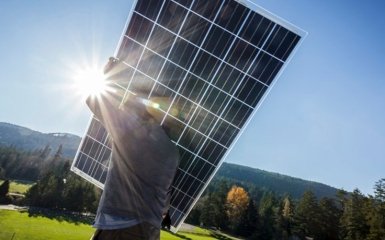
A solar power plant can last for decades, but mistakes made during its installation can significantly shorten this period. Incorrect panel tilt, unsuitable inverter, weak mountings or errors in electrical connections do not always appear immediately. Often problems become noticeable only after the first winter, strong winds or a long period of operation.
Points of attention
- The capacity of a home solar power plant should be calculated based on actual and projected consumption, not just the area of the house.
- The orientation, tilt, and seasonal shading of the panels affect the output, so they need to be evaluated before installation.
- The strength of the roof, reliable fastenings, and compatibility of the panels with the inverter determine the efficiency and safety of the station.
This is especially relevant for owners of private homes in Ukraine. Solar power plants are increasingly being installed not only to save on electricity, but also to provide backup power during outages. However, even an expensive system does not guarantee energy independence if its components are incorrectly selected or connected.
The most common mistakes in solar panel installation are related to incorrect power calculation, module placement, equipment selection, electrical safety, and non-compliance with installation requirements. Some of them only reduce output, while others create a risk of damage to the house or fire.
Let's consider ten mistakes to avoid when designing and installing a home solar power plant.
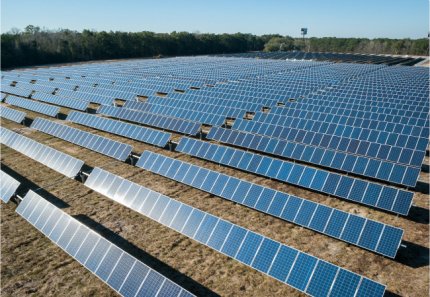
1. Incorrectly calculated capacity of the solar power plant
One of the most typical situations is when the owner buys a ready-made solar power plant kit for 5 or 10 kW, based on the area of the house or the seller's recommendations.
However, the capacity of a solar power plant should be determined primarily by actual electricity consumption, and not by the number of rooms or roof area.
Why is the rated power not equal to the actual output?
A 500W solar panel can achieve this under standardized test conditions. In real-world use, its output varies depending on light, temperature, and the position of the sun.
For example, a system with ten 500W panels has an installed capacity of 5kW. But that doesn't mean it will continuously produce 5kW throughout the daylight hours.
In cloudy weather, generation can be significantly lower, and in winter, output is additionally affected by the short length of the day.
For a correct calculation, it is necessary to take into account annual consumption, seasonality, daytime and evening loads, as well as the need for electricity storage.
Practical advice: Before purchasing equipment, it is worth analyzing your electricity bills for at least 12 months. If you are planning to install a heat pump, electric boiler or car charging station, the future load should also be included in the calculation.
2. Incorrect location and angle of inclination of solar panels
The correct orientation of the modules affects the amount of solar energy that the system is able to receive throughout the year.
For Ukraine, a southern orientation usually provides a high total output. However, this does not mean that panels must be installed only on the southern slope of the roof.
East and west locations can also be effective, especially when the main electricity consumption falls on the morning or evening hours.
Is there an ideal angle of inclination for all of Ukraine?
There is no universal angle that will provide maximum efficiency under all conditions.
The optimal value depends on the geographical latitude, roof orientation, seasonal consumption distribution and possible shading.
For many stationary systems in Ukraine, angles of approximately 25–40 degrees may be practical, but this is not a mandatory range for every home.
For example, a small slope of panels on a flat roof allows for more compact row spacing, while a larger angle can improve winter lighting and promote snow drift.
However, increasing the slope also changes the wind load and mutual shading of the rows.
How to avoid mistakes: evaluate not only the angle of the panels, but also the projected annual output of the power plant, taking into account the specific geometry of the roof.
3. Ignoring shading throughout the year
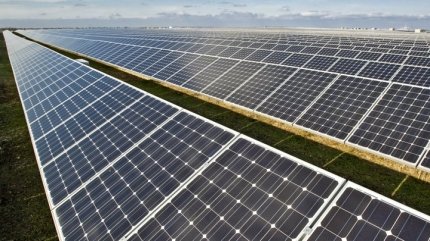
Even a small shadow from a chimney, ventilation shaft, or tree can significantly reduce the generation of a solar power plant.
The peculiarity of the traditional string system is that several panels are connected in series. Under certain conditions, shading of one module can affect the operation of the entire chain.
Modern panels include bypass diodes that help limit losses from partial shading, but do not completely eliminate the problem.
Why it's not enough to check your roof only in the summer
The height of the sun above the horizon changes throughout the year.
In June, a tree may not create a noticeable shadow on the roof, but in December its shadow can block a significant part of the solar modules.
You also need to consider future tree growth, neighboring buildings, and other obstacles.
For complex roofs, power optimizers or microinverters are sometimes used to reduce the impact of uneven lighting.
However, no electronics can fully compensate for the lack of sunlight.
The best approach is to conduct a shading analysis prior to installation and place the panels where they will receive the most beneficial radiation throughout the year.
4. Choosing panels based solely on price or wattage
A common mistake is to compare solar modules solely based on their rated power.
A 550W panel is not necessarily a better choice than a 450W model. It may have larger dimensions, different electrical specifications, and installation requirements.
If the roof is small, the efficiency of using the available space becomes an important parameter.
What characteristics should you look for?
In addition to the rated power, it is worth considering:
Solar energy conversion coefficient.
Temperature coefficient of power.
Module voltage and current.
Dimensions and weight.
Permissible mechanical loads.
Product warranty and power retention.
The temperature coefficient is especially important in hot weather.
For example, if a module has a temperature coefficient of power of −0.35% per °C, a 30 °C increase in the temperature of its cells relative to standard test conditions can reduce power by approximately 10.5%, if other conditions remain constant.
This is not a malfunction, but a normal feature of the operation of photovoltaic cells.
It is also advisable to check that the modules comply with the applicable IEC 61215 and IEC 61730 standards.
5. Installing solar panels without checking the strength of the roof
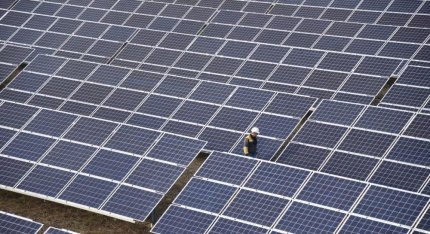
When installing on a roof, you need to consider not only the weight of the panels themselves, but also the load from fasteners, wind, and snow.
An incorrectly selected mounting structure can lead to deformation of the modules, damage to the coating, or loosening of fasteners.
Old wooden rafters, light canopies, and flat roofs where ballast systems are used require special attention.
Why saving on fasteners is dangerous
During strong winds, the panels are subjected not only to pressure but also to lifting forces.
If the fasteners do not meet the design loads, the structure may lose stability.
Equally important is the proper sealing of the places where fasteners pass through the roofing.
Leakage sometimes only becomes apparent after a few months, when water begins to penetrate the insulation or wooden roof elements.
It is also necessary to leave the ventilation space provided by the manufacturer between the panels and the roof. This helps to remove heat from the modules.
Important: drilling solar panel frames yourself or using inappropriate clamps may violate the manufacturer's requirements and reduce the mechanical reliability of the structure.
6. Incorrect connection of panels to the inverter
The compatibility of solar modules and an inverter is determined not only by their power.
You need to consider the operating voltage range, maximum input current, and MPPT characteristics.
MPPT is a technology that allows the inverter to find the mode in which the solar panels deliver the maximum available power.
What happens if there are not enough panels in the thong?
If there are not enough modules connected in series, the voltage may be lower than the minimum operating voltage of the inverter.
In this case, the system may start with a delay, operate inefficiently, or stop generating under certain conditions.
What is the danger of having too many panels?
The opposite situation is exceeding the maximum permissible DC voltage.
It is important to consider that as the temperature decreases, the open circuit voltage of solar modules usually increases.
Therefore, the string configuration needs to be checked not only for summer conditions, but also for the lowest design temperature.
The design also takes into account the difference in panel orientation. It is not always advisable to connect modules with different lighting conditions to the same MPPT input.
The calculation should be performed according to the technical passports of the specific equipment. It is incorrect to select the number of panels only according to the formula "panel power equals inverter power".
7. Using poor-quality cables and incompatible connectors
One of the most dangerous mistakes is saving on electrical connections.
Solar modules produce direct current, and the voltage in some systems can reach hundreds of volts.
Poor contact causes local heating. Under adverse conditions, this can lead to insulation damage and an electric arc.
Why a regular cable is not always suitable for solar power plants
Solar power plant cables can be exposed to ultraviolet radiation, moisture, and significant temperature fluctuations for long periods of time.
Therefore, specialized cable products designed for appropriate operating conditions are used for external DC lines.
The cable cross-section is determined by current, length, routing method, and allowable voltage drop.
Using a conductor with an insufficient cross-section increases energy loss and the risk of overheating.
Why connector compatibility is important
MC4 connectors are widely used to connect solar panels.
However, the external similarity of connectors from different manufacturers does not guarantee their compatibility.
Differences in contact surfaces and seals can lead to increased electrical resistance, heating, and loss of tightness.
It is necessary to use compatible components according to the manufacturers' requirements.
Connectors must not be disconnected under load unless they are designed for this purpose. Installation and testing of DC connections must be performed by a qualified technician.
8. Lack of proper electrical protection
A solar power plant requires properly organized electrical protection.
Depending on the system configuration, circuit breakers, surge protection devices, safe disconnection equipment, and appropriate protective bonding of metal parts may be required.
It is especially important not to confuse devices designed for alternating and direct current.
Why a conventional circuit breaker is not always suitable
A direct current electric arc has different extinguishing characteristics than an alternating current arc.
Therefore, using inappropriate switching equipment in DC circuits can be dangerous.
Similarly, surge protection devices must match the parameters of a specific circuit.
Does grounding protect against lightning?
Protective grounding performs important electrical safety functions, but by itself does not guarantee protection of a solar power plant from all the effects of a thunderstorm.
The need and characteristics of lightning protection and surge suppression devices are determined by the building structure and design results.
For photovoltaic systems, the relevant requirements for the electrical part are covered by the international standards of the IEC 62548 series.
It is a dangerous mistake to assume that any set of circuit breakers and fuses will provide sufficient protection. The equipment must be selected according to the electrical diagram and technical characteristics of the system.
9. Failure to consider backup power and home network features
For Ukrainian households, the ability to use electricity during outages has become of particular importance.
However, the mere presence of solar panels does not mean that the house will remain lit in the absence of external power supply.
A conventional grid-connected solar power plant usually automatically stops operating after the network voltage disappears.
This is necessary to prevent dangerous power supply to de-energized lines.
What equipment is needed for autonomous operation?
A hybrid inverter and battery are usually used for backup power.
In this case, it is necessary to take into account:
Maximum backup output power.
Battery capacity.
Starting currents of pumps and compressors.
Possibility of operation of individual phases.
Speed of switching to backup power.
Permissible battery charging power.
For example, a battery with a capacity of 10 kWh will not provide ten hours of operation for devices with a total load of 5 kW.
Even without taking into account losses, its theoretical reserve would only last for two hours.
Furthermore, the actual available capacity depends on the allowable depth of discharge, battery condition, and energy conversion efficiency.
Why you need to consider three-phase connection
In homes with a three-phase network, load distribution between phases is important.
Not every three-phase inverter is capable of providing the same maximum power on any individual phase in standalone mode.
Therefore, before purchasing, it is necessary to check the characteristics of the backup outlet and determine the list of devices that should work during a power outage.
10. Starting a power plant without inspection and subsequent maintenance
Completion of installation does not mean that the system is fully ready for operation.
Before starting, it is necessary to check the electrical parameters, correct connection, protective devices and inverter settings.
The international standard IEC 62446-1 defines the requirements for documentation, verification and acceptance testing of grid-connected photovoltaic systems.
What to check after installation
The test program depends on the station configuration, but may include:
Checking the polarity of DC circuits.
String tension measurement.
Insulation resistance control.
Checking protective connections.
Testing the intended inverter modes.
Checking the monitoring work.
The owner must receive the electrical diagram, equipment documentation, warranty conditions, and test results.
Why is generation monitoring important?
Even a properly installed solar power plant requires periodic monitoring.
Some faults develop gradually. For example, damage to a single string can reduce production without completely shutting down the plant.
Monitoring allows you to compare generation over different periods and detect atypical changes.
However, a drop in output does not always mean a malfunction: the cause may be weather conditions, seasonality, or power limitations on the part of the inverter.
In addition to remote monitoring, professional technical inspections must be carried out in accordance with manufacturers' requirements.
Which solar power plant mistakes are the most expensive?
Not all installation flaws have the same consequences.
Some errors mainly affect economic efficiency, while others create safety risks and significant repair costs.
| Error | Possible consequence |
| Incorrect orientation of panels | Decrease in annual production |
| Regular shading | Generation losses |
| Incorrect calculation of strings | Inverter failure or damage |
| Unreliable fasteners | Damage to the roof and modules |
| Poor electrical contacts | Overheating, electric arc, risk of fire |
| Incorrectly selected battery | Insufficient autonomy |
| Lack of acceptance tests | Undetected installation defects |
For example, if a solar power plant loses 10% of its potential annual output of 6,000 kWh due to poor location, this corresponds to 600 kWh of electricity per year.
This is a rough estimate, not a universal loss estimate. Actual figures depend on the specific configuration.
The cost of such losses is determined by whether the electricity could be used directly in the house, stored in a battery, or released into the grid.
However, electrical safety errors cannot be evaluated solely in terms of financial losses, as they potentially endanger people and property.
What to check before ordering solar panel installation
A high-quality solar power plant project should contain not just a list of equipment, but a technical justification for the chosen configuration.
Before starting work, you must make sure that the following issues are taken into account:
Energy consumption. The capacity of the solar power plant is determined based on the actual needs of the house and the forecast of future loads.
Roof. Its condition, load-bearing capacity, and the ability to securely fasten the modules have been checked.
Generation. Calculated expected output by month, taking into account orientation, tilt, and shading.
Equipment. Compatibility of panels, inverter, battery and control systems has been verified.
Safety. Necessary electrical protection and proper wiring diagram are provided.
Documentation. The warranty conditions, the procedure for accepting work and subsequent maintenance are determined.
Separately, you need to check the procedure for connecting the generating set to the power grid.
In Ukraine, the requirements depend on whether electricity is provided for export to the external grid and on other system characteristics.
As of the date of preparation of the material, the rules provide for notification to the relevant distribution system operator of the installation and connection of a generating unit in certain cases. Additional conditions apply to the sale of electricity.
Before implementing a project, it is necessary to check the current regulatory requirements, as they may change.
Can I install solar panels myself?
Physically securing a solar module to a structure is much easier than creating a safe power plant.
The main risks arise when working at height, connecting DC circuits, installing protective equipment, and integrating the inverter with the home electrical grid.
A feature of photovoltaic systems is that panels illuminated by the sun can produce dangerous voltage even after the inverter is turned off.
Therefore, disconnecting cables, checking contacts, or changing the electrical circuit without proper qualifications is dangerous.
Professional installation does not guarantee complete absence of malfunctions, but allows the application of necessary calculations, tests and protective measures.
Conclusion
Proper installation of solar panels begins long before they are mounted on the roof. The most important steps are calculating actual consumption, assessing generation conditions, selecting compatible equipment, and designing a safe electrical system.
Errors in module orientation mainly lead to power losses, while incorrect electrical connections, mounting or protective devices can cause much more serious consequences.
A reliable home solar power system is not just a set of quality components, but a properly designed, tested, and installed system whose characteristics meet the needs of a particular home.
FAQ: Frequently Asked Questions About Installing Solar Panels
What are the most common mistakes when installing solar panels?
Most often, problems arise due to incorrect power calculation, poor module placement, shading, mismatch of panel and inverter parameters, poor-quality electrical connections, and insufficient attention to protective equipment.
At what angle is it best to install solar panels in Ukraine?
For many roof systems, angles of approximately 25–40 degrees are practical, but the optimal pitch depends on the region, roof orientation, and desired seasonal yield. There is no one-size-fits-all angle for all homes.
Can solar panels be installed on a flat roof?
Yes. Special mounting structures are used for this. It is necessary to take into account wind load, roof load-bearing capacity, tightness of the coating and mutual shading of the rows.
Can I connect more panels to an inverter than its rated power?
In many systems, the total nominal DC power of the panels is allowed to exceed the AC power of the inverter. However, it must meet the manufacturer's requirements for permissible power, voltage and current. Excess generation will be limited by the inverter under certain conditions.
Why do solar panels work poorly in winter?
In winter, daylight hours are shorter, the sun is lower above the horizon, and cloud cover and snow can further limit generation. At the same time, the lower cell temperature with sufficient light contributes to higher energy conversion efficiency.
Can solar panels cause a fire?
If there are technical faults, this danger exists. The main risks are related to damaged insulation, defective contacts, electric arcing and incorrect protection. Proper design and installation significantly reduce these risks.
Do I need a battery for a solar power plant?
A battery is not required for a conventional grid-connected solar power system. However, a storage system is usually required for full backup power during outages. Some specialized inverters support limited battery-free autonomous operation.
Can solar panels be installed on an old roof?
This depends on the technical condition of the roof and its supporting structures. Before installation, it is necessary to assess the possibility of safe fastening and additional loads. If the roof will need to be replaced in the near future, it is advisable to carry out repairs before installing the solar power plant.
Why is the solar power plant producing less energy than promised?
This can be due to poor forecasting, shading, temperature, pollution, incorrect string configuration or technical failures. The assessment requires comparing actual generation with a reasonable forecast under appropriate weather conditions.
How many years do solar panels last?
Many modern modules are designed for 25–30 years of operation or more, during which their capacity gradually decreases. The actual resource depends on the quality of the equipment, installation, climatic conditions and maintenance. Inverters and other components may need to be replaced earlier.

