
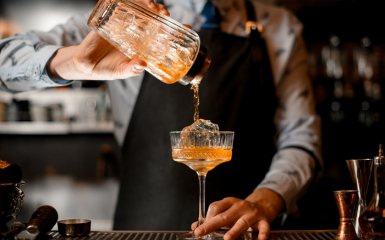
There is no magic in a good cocktail: there are precise proportions, the right temperature, controlled dilution with water, quality ice and technique. It is these details that explain why the same Negroni, Daiquiri or Martini in two establishments can taste completely different.
Points of attention
- The right ice in a cocktail is a complete ingredient that provides rapid cooling and dilution of the drink.
- A shaker and stirring with a bar spoon create different textures in drinks.
- A professional bartender always uses precise dosage to ensure repeatable flavors.
- Expensive alcohol in complex cocktails does not always make the drink better; many components determine the taste.
- Proper storage and use of fresh citrus, vermouth, and chilled glasses affects the quality of the cocktail.
At the same time, there are many myths surrounding bar culture. A lot of ice is supposedly needed to pour less drink. Expensive alcohol supposedly always makes a cocktail better. If you ask for “stronger,” the bartender will simply pour more alcohol. And coffee after a few cocktails supposedly helps you sober up faster.
In reality, professional mixology works differently. The International Bartenders Association standardizes classic recipes and preparation methods, and modern knowledge of temperature, dilution, and alcohol allows us to explain many bar "secrets" without legends and conspiracy theories.
Here are 12 things that will help you better understand cocktails and order with more confidence.
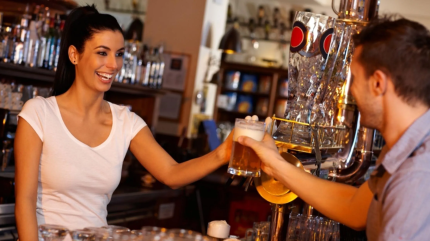
1. Ice in a cocktail is a complete ingredient
When the glass is almost completely filled with cubes, it's easy to think:
"The bar is just saving on drinks."
In a properly prepared cocktail, it's the opposite.
Ice is needed for two processes:
rapid cooling;
controlled dilution of the drink with water.
When a cocktail is shaken or stirred with ice, some of the ice melts. This water changes the alcohol concentration, mellows the taste, and helps balance the acidity and sweetness.
That is, the water formed during mixing is actually part of the recipe.
Why a lot of ice doesn't necessarily mean more water
One of the most persistent myths is that the more ice you add, the faster the drink will become watery.
In reality, a large amount of cold ice is often used precisely to cool a cocktail faster.
Once the low temperature is reached, the melting rate decreases noticeably.
The problem often becomes:
the ice has already melted;
small crumb;
a warm glass;
long standing of the finished drink.
Therefore, a full glass of large cubes in a good bar is more of a positive sign than an attempt to deceive you.
2. Shaken and stirred are different cocktails in texture
The famous "shaken, not stirred" has long since gone beyond the world of James Bond.
But the choice between a shaker and stirring with a bar spoon makes practical sense.
Cocktails are shaken when you need to actively mix different ingredients.
For example:
citrus juice;
syrup;
egg white;
cream;
sauce.
The shaker quickly cools the drink, creates active mixing and aeration.
That's why a Daiquiri, Margarita, or Whiskey Sour is usually shaken.
Cocktails are stirred when a clear and silky texture is important.
Drinks consisting primarily of alcoholic components are often prepared in a mixing glass.
Classic examples:
Martini;
Manhattan;
Negroni.
Mixing gives a different texture and aeration.
Therefore, the rule “a shaker makes any cocktail better” does not work.
The method is part of the recipe.
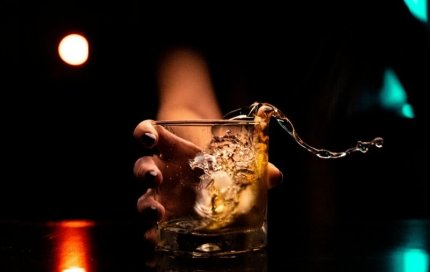
3. The bartender should not pour alcohol "by eye"
In a professional bar, one of the most important tools is a jigger — a small measuring container.
It is used for precise dosing.
This is not necessary because of the institution's greed.
Proportions determine:
strength;
sweetness;
acidity;
bitterness;
volume;
repeatability of taste.
Let's say the recipe contains:
50 ml of gin;
25 ml of lemon juice;
20 ml of syrup.
If you pour 40 ml of gin today, 70 ml tomorrow, and the day after tomorrow 30 ml of syrup instead of 20, these will be three different cocktails.
Therefore, measurement is one of the signs of professional work.
Effective free pouring without a jigger can also be accurate, but it requires a well-developed technique and control system.
4. “Make it stronger” is an ambiguous request
Phrase:
"Can I have a stronger cocktail?"
can mean at least three different things.
Do you want to:
more alcohol;
less sweet taste;
taste alcohol more strongly.
This is not the same thing at all.
If a larger amount of strong alcohol is required, this is actually an additional portion, for which the establishment usually has the right to charge a separate fee.
If you simply want a less sweet cocktail, the bartender can change the balance of the syrup or suggest a different drink.
If you want a rich alcoholic profile, it's better to order a cocktail of the appropriate style - for example, Manhattan, Martini, Old Fashioned or Negroni.
It is best to formulate your wishes specifically:
"I want a dry, not too sweet cocktail with a distinct gin flavor."
This is much more useful information for a bartender.
5. More expensive alcohol doesn't always make a cocktail better
The price of the base alcohol matters, but the relationship is far from linear.
In a cocktail, the taste is formed by several components at once:
base alcohol;
vermouth or liqueur;
citrus;
bitter;
syrup;
spices;
temperature;
dilution.
In a complex fruity or sweet cocktail, the subtle differences between a good, moderately priced bottle and a very expensive premium spirit may be much less noticeable than when tasting the drink neat.
Therefore, paying extra for the most expensive vodka in a cocktail with several juices and syrups does not always make sense.
But the statement:
"in a cocktail, the quality of alcohol doesn't matter at all"
also wrong.
In minimalist recipes, the difference is felt much more strongly.
For example, in a Martini, gin or vodka forms most of the flavor. In an Old Fashioned, whiskey plays a central role.
Here, the choice of base alcohol can really make a difference in the outcome.
6. Vermouth is not a spirit that can be kept open for years.
There is often a bottle of dry vermouth on the shelf at home that was opened last Christmas.
Then they make a Martini out of it and wonder:
"Why does it taste better in a restaurant?"
The reason may be very simple.
Vermouth is an flavored fortified wine.
After opening, it comes into contact with oxygen and gradually oxidizes.
Unlike strong spirits like gin, whiskey, or vodka, it is advisable to store opened vermouth in the refrigerator.
The brightest aromas gradually fade even in the cold.
Therefore, it is often more practical to buy a small bottle for home use if Martini or Manhattan are rarely prepared.
Why it's important in a bar
Vermouth is a key ingredient in many classic cocktails.
A stale bottle can spoil:
Martini;
Manhattan;
Negroni;
Americano;
Boulevardier.
Therefore, a quick turnover of open bottles and proper storage is a good sign of a bar.
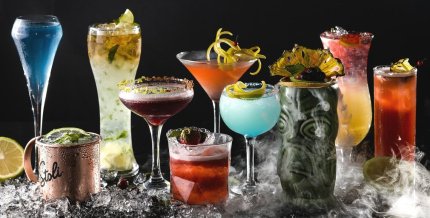
7. Fresh citrus really makes a difference
Lemon or lime juice seems like a simple ingredient.
In fact, it determines the balance of a huge number of cocktails.
Daiquiri is actually a balance between:
rum;
lime;
sugar.
Margarita depends on the ratio:
tequilas;
citrus;
orange component.
If the acidity or freshness of the juice changes, the entire drink changes.
Therefore, a good cocktail bar pays significant attention to:
citrus;
syrups;
to decorate;
ice;
proper storage of ingredients.
Expensive alcohol won't save a cocktail if the rest of the ingredients are of poor quality.
8. A chilled glass is not a decorative whim
The cocktail can be properly chilled in a shaker and then poured into a warm glass.
The temperature will immediately begin to rise.
That is why glasses for many cocktails are pre-chilled:
in the freezer;
refrigerator;
ice immediately before serving.
This is especially noticeable for drinks served without ice:
Martini;
Manhattan;
Daiquiri;
Gimlet;
Sidecar.
Here, the glass itself should help maintain the temperature.
It would seem like a small thing. But it is precisely these little things that make the difference between a mediocre and a well-made cocktail.
9. Garnish should work, not just look pretty.
Orange zest in a Negroni or Old Fashioned is not a random garnish.
When the zest is squeezed over the surface of the cocktail, the essential oils are released into the drink.
A person can feel the aroma even before the first sip.
The following can also have the same function:
mint;
zest;
olive;
spices;
cocktail cherry.
A good garnish is related to the taste or aroma of the drink.
If a cocktail is transformed into a structure of ten decorative elements, this does not say anything about the quality of the recipe itself.
Photogenicity and good balance are different things.
10. A good classic cocktail should have a recognizable structure
Classic recipes are not standardized to prohibit creativity.
They create a point of reference.
The International Bartenders Association maintains a list of official cocktails with the following defined:
ingredients;
proportions;
by cooking method;
by method of submission.
This means that a classic Negroni or Daiquiri shouldn't turn into a completely random drink just because a different bartender makes it.
The institution may have its own interpretation.
But then it is already a conscious authorial option.
Why Simple Cocktails Test the Bar Well
The fewer ingredients, the harder it is to hide mistakes.
Daiquiri has only a few basic ingredients.
In Old Fashioned too.
Therefore, bad:
proportions;
ice;
temperature;
dilution;
citrus
become obvious.
This is why a simple classic cocktail sometimes demonstrates the level of a bar better than a ten-ingredient drink.
11. “Free cocktail from the bartender” is not a universal rule
There is a popular myth that a good tip automatically grants access to a secret fund of free drinks.
Policies can be completely different in different institutions.
Somewhere, staff really have the opportunity to:
to treat a regular guest;
offer a tasting;
compensate for a failed order;
to give a small compliment from the establishment.
In another bar, all alcohol goes through strict inventory control and the staff cannot "give away" anything on their own.
Therefore, you should not perceive a free shot as a mandatory reward for a tip.
A good tip is a thank you for the service, not a hidden deal for extra alcohol.
12. A professional bartender has the right to stop pouring alcohol
And this is not a bad service.
If a person demonstrates severe intoxication, further alcohol consumption increases the risk of:
falls;
injuries;
vomiting;
loss of consciousness;
alcohol poisoning.
Therefore, a responsible response from staff may include:
stopping the sale of alcohol;
water;
soft drink;
assistance with safe transportation.
Here's the idea:
"the bartender will give a soft drink to discreetly sober up the guest"
needs clarification.
Water or a mocktail does not speed up the removal of alcohol from the blood.
They just don't add a new dose of alcohol.
Coffee, showers, and fresh air don't sober you up.
This is one of the most important bar myths.
After a few cocktails, a person may:
drink espresso;
take a cold shower;
to go outside;
feel more cheerful.
But this does not make the blood alcohol concentration drop faster.
Caffeine can reduce feelings of drowsiness, but it does not restore normal coordination and reaction speed.
A cold shower also does not speed up the metabolism of alcohol.
The main factor in sobering up is time .
That is why the subjective feeling:
"I feel normal now"
does not mean it is safe to drive.
And water between cocktails?
Water is useful, but it is important to understand its function correctly.
She can:
help maintain hydration;
slow down the pace of alcohol consumption;
to pause between drinks.
But water does not neutralize alcohol that has already entered the bloodstream.
Similarly, food can affect the rate of alcohol absorption, especially if eaten before or during consumption, but it does not "undo" the amount already drunk.
How to know if you're in a good cocktail bar
There is no single universal sign.
But it's a good sign if you see bartenders:
use measuring instruments or precisely calibrated dosage;
work with a sufficient amount of high-quality ice;
cool the glasses;
use fresh ingredients;
keep the work area clean;
store perishable ingredients properly;
can explain the composition of the drink;
clarify your taste preferences;
They don't try to convince you that the most expensive position is automatically the best.
Another good sign is when the bartender says:
"This drink might not be right for you if you don't like bitter things. Let's find another one."
This approach is much more professional than simply selling the most expensive cocktail.
How to order a cocktail if you don't know the names
It is not at all necessary to study IBA recipes.
A bartender needs just a few guidelines.
Say:
Which base do you like:
undefined gin, rum, whiskey, tequila, vodka or non-alcoholic option.
What profile do you want:
undefined sour, sweet, bitter, dry, fruity, herbal.
What strength:
undefined light, medium, rich.
For example:
"I want something gin-based, fresh, tart, not sweet, and medium-strength."
For a good bartender, this is almost a ready-made technical task.
6 popular myths about bars and cocktails
Myth 1. More ice means less cocktail
In a recipe bar, the liquid ingredients are measured separately. Ice is responsible for cooling and dilution.
Myth 2. The longer you shake the shaker, the better the drink will be.
After sufficient cooling, further shaking has less and less effect and can change the texture and dilution.
Myth 3. Premium alcohol always makes a premium cocktail
It depends on the recipe. In simple cocktails, the base is very noticeable, in complex ones the differences can be masked by other ingredients.
Myth 4. If a cocktail doesn't feel strong, it doesn't have much alcohol.
Sweetness, acidity, temperature, and dilution can mask the taste of alcohol. It is unreliable to determine the actual dose by feel.
Myth 5. Espresso after alcohol helps you sober up faster
No. Caffeine can make a person more alert, but it does not speed up the elimination of alcohol.
Myth 6. A good bar is one where they pour “generously”
In a professional bar, the advantage is stable formulation, balance, and portion control, rather than accidentally exceeding the amount of alcohol.
Conclusion
Real bartending secrets are much more interesting than legends about hidden portions and tricks with customers.
Ice in a cocktail is necessary for temperature and proper dilution. A shaker and a bar spoon create different textures. Precise proportions ensure repeatable taste. Open vermouth requires refrigeration, and fresh citrus, good ice, and a chilled glass sometimes have a greater impact on the result than switching to the most expensive bottle of alcohol.
The best way to evaluate a bar is not to look at the theatricality of the bartender's movements, but at the attention to detail, cleanliness, technique, and ability to tailor a drink to the guest's taste.
And one more rule is more important than all the cocktail subtleties: coffee, cold showers, and fresh air do not speed up sobering up. If alcohol has already been consumed, the body needs time.
Important: The material is for informational purposes only. Alcohol consumption is associated with health risks, and there is no safe universal dose that would suit every person. Alcohol should not be used as a way to treat stress, insomnia, or other conditions. After drinking alcohol, do not drive or perform work that requires quick reactions. If a person does not wake up after drinking alcohol, has seizures, vomits while unconscious, or is breathing very slowly or irregularly, emergency medical attention is required.
FAQ
Why do bartenders put so much ice in cocktails?
Ice quickly cools the drink and provides the necessary dilution with water. In a properly prepared cocktail, a large amount of ice does not in itself mean that the establishment is trying to serve less of the drink.
What is the difference between shaken and stirred?
Shaken means vigorous shaking in a shaker, which cools, dilutes, and aerates the cocktail. Stirred is a more gentle stirring with ice, often used for clear alcoholic cocktails like a Martini or Manhattan.
Is it worth ordering expensive alcohol in a cocktail?
It depends on the recipe. In Martinis, Old Fashioneds, and other minimalist drinks, the character of the base alcohol is clearly felt. In complex fruit cocktails, the difference between a good bottle and a very expensive one may be less noticeable.
Why should vermouth be stored in the refrigerator?
Vermouth is made from wine. Once opened, it oxidizes and gradually loses its freshness and aroma, so coldness slows down this process.
What should you tell the bartender if you want a stronger cocktail?
Be specific about what you mean: more alcohol, less sweetness, or a richer alcoholic flavor. An additional serving of strong alcohol is usually paid for separately.
Is it possible to determine the strength of a cocktail by taste?
Unreliable. Cold, sugar, acid, fruit juices, and other ingredients can greatly mask the taste of alcohol.
Does water help you sober up faster?
Water helps maintain hydration and can slow down the pace of drinking, but it does not speed up the removal of alcohol from the blood.
Does coffee help after alcohol?
Caffeine may reduce drowsiness, but it does not restore coordination or the ability to drive safely. It is not possible to sober up faster with coffee.
What cocktail is best to order to test the bar's level?
Simple classic cocktails are good for demonstrating technique because it's harder to hide mistakes. For example, you can evaluate a Daiquiri, Martini, Manhattan, or Old Fashioned.
How do I order a cocktail if I don't know its name?
Describe to the bartender the base alcohol, desired strength, and flavor profile. For example, “I want something rum-based, fresh, tart, not too sweet.” This is usually enough to offer a few options.
undefined

