
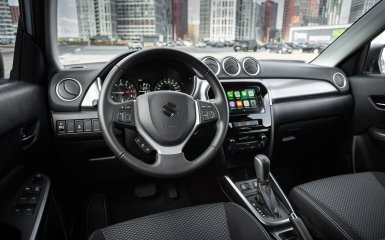
A modern car can park itself, maintain a safe distance from other cars, recognize voice commands, adjust suspension settings, and even massage the driver's back. However, after a few months of operation, the owner often uses only a small part of these capabilities.
Points of attention
- Passenger displays, massaging seats, voice assistants and automatic parking may be unnecessary if they do not meet the driver's needs.
- Practical features such as Bluetooth, a rear-view camera and navigation were highly rated in surveys of British and American drivers.
- Automatic emergency braking and other active safety systems should not be thoughtlessly turned off due to inconvenient signals or unfamiliar settings.
When buying a car, additional screens, intelligent assistants and dozens of electronic settings seem like compelling advantages. But in everyday driving, things can turn out differently: the voice assistant misunderstands commands, the head-up display is distracting, and automatic parking takes longer than usual.
Automotive market research for 2026 shows that drivers value features that solve specific everyday problems the most. Complex and expensive technologies often go unclaimed.
For example, in a survey by the American analytical company JD Power, 35% of owners of cars with an additional front passenger screen reported that they had never used it.
At the same time, some features that motorists turn off due to inconvenience can play an important role in preventing accidents.
Let's consider which automotive technologies drivers rarely use, why this happens, which systems you should learn how to properly configure, and how not to overpay for unnecessary equipment when buying a car.
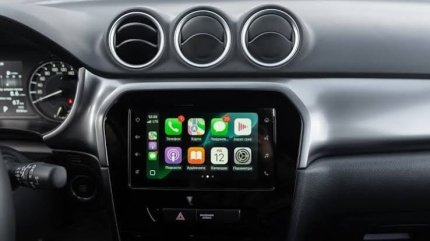
Why drivers don't use some of the car's functions
The reason is not always that the technology is bad or unnecessary.
Sometimes the driver simply doesn't know how it works. In other cases, the feature is only useful in certain circumstances.
For example, automatic parking can help in tight parking lots, but a person who parks in a spacious yard every day will have almost no need to use it.
There is another problem - the complexity of the interfaces.
To enable a certain feature, you sometimes need to open several menus on the touchscreen, confirm the settings, and wait for the system to respond.
If a regular button or mechanical switch can perform the same action faster, the owner is unlikely to want to go through a complicated procedure every time.
In the 2024 JD Power study, some facial recognition, fingerprint, and gesture control technologies received particularly low ratings.
Researchers have noted that such solutions sometimes attempt to eliminate a problem that car owners themselves do not consider significant.
What driver research showed in 2026
In the summer of 2026, research company Censuswide, commissioned by British automotive group Dick Lovett, surveyed 1,350 drivers in the UK.
The results showed a significant difference between the presence of a feature in a car and its actual use.
Among owners of cars equipped with adaptive cruise control, 25.9% reported not using it. Another 7% admitted they did not know how to properly operate the system.
Additionally, 21.3% of eligible respondents reported turning off automatic emergency braking, and nearly 18% avoided using lane keeping systems.
Another large-scale study — the JD Power US Tech Experience Index 2026 — covered 68,084 owners of new 2026 model year cars in the US after approximately 90 days of operation.
It showed that drivers highly value automatic functions that work inconspicuously, but are less willing to use complex multimedia solutions.
It is important to note that these results relate to British and American motorists. They cannot automatically be considered statistics on the use of automotive technologies in Ukraine.
12 car features that are often overlooked
1. Additional front passenger screen
Large displays are gradually taking up more and more of the car's front panel.
In some models, a separate screen is installed opposite the front passenger. It can be used to control multimedia, navigation or other available functions.
However, this technology is not always necessary.
According to JD Power's 2026 results, 35% of car owners with a passenger display have never used it.
Only 6% reported using it on every trip.
Such screens also received 21.3 problem reports per 100 cars in a user experience study.
When useful: during long trips with a passenger who regularly uses navigation or allowed multimedia features.
When you can do without it: if you mostly drive alone or the main display fully meets your needs.
It is worth remembering that entertainment content should not distract the driver from the road.
2. Augmented Reality Projection Display
A head-up display, or HUD, projects certain information into the driver's field of vision.
This can be speed, navigation tips, safety system warnings, and other information.
Advanced versions with augmented reality can overlay graphic prompts on images of the traffic situation.
The technology looks impressive, but the need for it depends on the driver's habits.
In a 2026 British survey, 17.1% of car owners with the feature reported not using it.
Some drivers still didn't know how to set it up.
When useful: if the driver uses navigation frequently and wants to look at the dashboard less often.
What to check: is the information clearly visible in different lighting conditions and can its volume be changed?
Too many prompts can be distracting. Therefore, personalization is more important than the number of graphical effects.
3. Voice assistants and gesture control
Modern multimedia systems can execute voice commands: change the temperature, start navigation, make calls, or control music.
Some manufacturers also offer gesture control.
For example, a certain hand movement can change the volume or perform another programmed action.
However, the user needs to remember the commands, and the system needs to recognize them correctly.
According to a 2026 British study, 17.8% of relevant drivers did not use voice assistants.
For some users, regular buttons remain simpler.
When useful: if the features work reliably and allow you to perform the necessary actions without being distracted from control.
When questionable: if the command requires multiple repetitions or a complex sequence of actions.
Voice control can also be distracting, so it should not be considered automatically safe under all conditions.
4. Massage seats
Massage seats are often offered in expensive packages.
Depending on the design, they may use pneumatic chambers or other mechanisms to create different massage modes.
Sounds appealing, especially for long trips.
But actual usage may be small.
In a 2026 British survey, only 22% of owners of cars equipped with massage seats reported using the feature regularly.
The reasons may be different: short daily routes, individual preferences, or lack of tangible benefits.
When useful: during long trips, if the function is personally comfortable for you.
When you can avoid overpaying: if most routes last 15–20 minutes.
Massage seats should not be considered a treatment for back pain or a substitute for medical care.
5. Biometric driver recognition
Some cars support facial recognition, fingerprints, or other identification methods.
Such systems can be used to access a machine, select a profile, or confirm certain actions.
However, a regular key or smartphone sometimes turns out to be faster and clearer.
In the 2025 JD Power study, biometric authentication was among the technologies with the highest number of reported issues.
For the driver, this means that a flashy feature doesn't always provide the best user experience.
When is it useful: if the car is regularly used by several drivers and personal profiles are switched quickly.
What to look for: is there an alternative access method, how does the system work in low light, and where biometric data is stored.
Before activating, it is worth reviewing the privacy settings.
6. Sport, Eco and Comfort driving modes
In many cars, you can choose different driving modes.
They can change the response of the accelerator pedal, the gearshift algorithm, the settings of the steering wheel, suspension or climate system.
However, the actual impact depends on the vehicle design.
For example, in a car without adaptive suspension, selecting Comfort will not necessarily change the stiffness of the shock absorbers.
Many drivers leave the standard mode and hardly switch settings.
When useful: if a specific mode noticeably improves comfort or meets operating conditions.
When you can do without it: if the standard settings fully satisfy your needs.
Don't assume that Eco mode always delivers the same fuel economy. The result depends on the model, route and driving style.
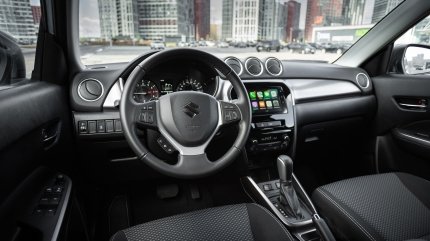
7. Remote engine and climate control start
Some cars allow you to remotely start the engine or adjust the interior temperature via your smartphone.
Electric vehicles often have a function to preheat or cool the interior without starting the internal combustion engine.
This can be convenient in winter and summer.
But not all owners use this opportunity regularly.
In a 2026 British study, remote start was significantly more popular among younger drivers, while only 5.1% of respondents over 55 used it.
When useful: if the car is regularly parked outdoors and the feature is supported in your country.
Things to consider: availability of mobile service, subscription, energy consumption, and safe usage rules.
It is absolutely forbidden to remotely start an internal combustion engine in a closed garage: exhaust gases contain dangerous carbon monoxide.
8. Automatic parking
Parking assistants can help determine a free space and perform some maneuvers.
Depending on the model, the system controls only the steering or also acceleration, braking and gear selection.
Some cars support remote parking.
However, the driver sometimes refuses this function due to inconvenient starting or the desire to control the maneuver independently.
Automated parking also has technical limitations.
The system may not recognize a certain obstacle, incorrectly estimate the size of the space or stop the maneuver.
When useful: in tight parking lots, where the feature works predictably.
When in doubt: if a simple maneuver requires a long time to configure the system.
During any automated parking, it is necessary to follow the manufacturer's instructions, monitor the surrounding situation and be ready to intervene.
9. Adaptive cruise control
Adaptive cruise control, or ACC, maintains a set speed and can change it depending on the distance to the vehicle in front.
This is one of the functions that drivers often ignore due to a lack of understanding of the principle of operation.
According to a 2026 British survey, 25.9% of car owners with ACC did not use it, and about 7% did not know how to properly turn it on.
At the same time, the system can be convenient during long trips on suitable roads.
Why adaptive cruise control doesn't replace the driver
ACC does not guarantee timely detection of every obstacle and cannot operate safely under all conditions.
Toyota's instructions, in particular, warn against using certain versions of radar cruise control on slippery roads, sharp turns, and in adverse weather.
Particular attention should be paid to snow, dirt, and precipitation, which can impair the operation of the sensors.
The driver must constantly monitor the road and be ready to brake independently.
10. Lane keeping system
Lane control systems can warn of unintentional departure from road markings or help correct the trajectory.
However, their behavior varies depending on the car.
One system only provides a warning, another briefly intervenes in the steering, and the third is able to help maintain the position in the middle of the lane under certain conditions.
This is what sometimes causes dissatisfaction among drivers.
For example, the system may react to poor-quality markup or create a sense of unwanted interference.
In a 2026 British study, almost 18% of eligible owners did not use such a feature.
Important: If the assistant works unpredictably, it is worth checking the instructions, sensitivity settings, and sensor status.
You should not thoughtlessly disable the protective function just because of unfamiliar sound signals.
11. Automatic emergency braking
Automatic emergency braking, or AEB, is one of the most important active safety systems.
It can detect the risk of collision and, under certain conditions, apply the brakes independently.
However, some drivers do not like warnings or unexpected system interventions.
In a 2026 British survey, 21.3% of eligible respondents reported turning off this feature.
Unlike massage seats or an additional display, this is a technology that can affect safety.
Does automatic braking really reduce the number of accidents?
According to the US Insurance Institute for Highway Safety (IIHS), forward collision warning systems combined with automatic braking have been linked to about half the number of collisions with cars in front in studies.
However, the effectiveness depends on the system design and specific conditions.
AEB cannot guarantee that every accident will be prevented.
If the system often misfires, you need to check its condition, the cleanliness of the sensors, and the compliance of the software with the manufacturer's recommendations.
Without a confirmed technical reason, it is impractical to completely abandon automatic emergency braking.
12. Special modes for car wash
Some modern cars have a separate mode for automatic car washes.
For example, Tesla Car Wash Mode can close the windows, block the charging port, and turn off the wipers and certain automatic features.
It sounds simple, but finding the right menu is sometimes more difficult than expected.
In a 2025 JD Power study, 38% of car owners with the feature said they needed clearer instructions for using it.
Another 15% considered the preparation of the car through this mode too slow.
When useful: if the car regularly goes through an automatic car wash that is compatible with the manufacturer's requirements.
Important: The procedure for preparing the vehicle, selecting neutral and operating the parking brake may vary between models.
Before washing your car, you must read the relevant section of the manual. Incorrect actions may cause damage to the car.
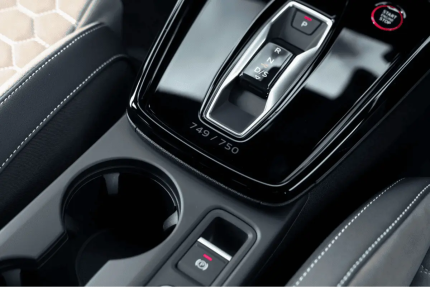
Which car features do drivers actually find useful?
Studies show an interesting pattern: the popularity of a technology does not necessarily depend on its complexity.
In a 2026 British survey, ordinary everyday functions were among the most sought-after.
| Car function | Share of respondents who regularly use and positively evaluate |
| Bluetooth connection | 58.3% |
| Rear view camera | 45.7% |
| Built-in navigation | 44.5% |
| Heated windshield | 41% |
| Heated seats | 31.9% |
| Wireless smartphone charging | 31.9% |
| Blind spot monitoring | 29.4% |
| Surround view camera | 27.8% |
These figures reflect the results of a specific British survey, not the share of users among all cars of a particular configuration.
However, the general conclusion is indicative.
Drivers appreciate technologies that help them park, see obstacles, maintain comfort, and use their phones without unnecessary actions.
For many, this is more important than sophisticated entertainment systems.
Why do drivers turn off some safety features?
At first glance, it may seem strange that a person would voluntarily disable technology designed to prevent accidents.
However, the reasons are different.
Firstly, the driver may not understand under what conditions the system works correctly.
Secondly, too frequent signals or incomprehensible interventions can cause irritation.
Third, the function may behave differently than expected.
The American Automobile Association AAA emphasizes that a lack of understanding of the capabilities and limitations of driver assistance systems creates the risk of misuse.
Are all car assistants equally important?
No. We need to distinguish between comfort and active safety technologies.
For example, turning off seat massage does not change the car's ability to avoid a collision.
And turning off automatic emergency braking can deprive the driver of an additional protective mechanism.
It's also important to remember that even cars with adaptive cruise control and lane-keeping assist usually require constant driver attention.
The presence of such functions does not mean full autonomous control.
How to understand which features are worth paying extra for when buying a car
Car options are often sold in packages.
For example, to get a surround view camera, the buyer may be offered a more expensive package with a large display, additional lighting, and a premium audio system.
Therefore, it is important to evaluate the real benefit of each feature.
Ask yourself five questions
How often will I use this opportunity?
If you drive mostly short city routes, seat massage may be of less value than a quality rearview camera.
Does technology improve safety?
Active safety systems should be evaluated separately from entertainment functions.
Is it possible to achieve the same result more easily?
For example, for navigation, you may need a smartphone, although a high-quality built-in system has its own advantages.
Does the feature require a subscription?
Certain digital features only work with active service, mobile communication, or a paid package.
Will the repair be expensive?
Additional screens, cameras, sensors, and complex electronics can increase maintenance costs.
What car options to choose for Ukrainian roads
When choosing a configuration, it is worth considering the actual operating conditions.
In Ukrainian cities, a rear view camera, parking sensors, and blind spot monitoring can be useful.
For regular intercity trips, adaptive cruise control is available if road and weather conditions allow it to be used safely.
In the cold season, heated windshields, mirrors, and seats are of practical value.
At the same time, the performance of cameras and other sensors can be impaired by snow, dirt, heavy rain, and damaged road markings.
Therefore , for Ukrainian conditions, it is important to evaluate not only the availability of a car assistant, but also how predictably it works on specific routes.
There is no need to specifically test the limits of the systems' operation in dangerous road situations.
Should you buy a used car with a lot of electronics?
A rich equipment list can make a used car more attractive.
But having expensive features doesn't always mean they're all working.
For example, a surround view camera may have problems after body repairs, and a driver assistance system may need sensor calibration.
Before buying, you should check:
do the declared functions work;
are there any errors in electronic systems?
whether any body repairs were carried out that could affect the sensors;
are paid subscriptions required;
Are relevant digital services available in Ukraine?
Is it possible to get maintenance and necessary updates?
For complex security systems, professional diagnostics are desirable.
You should not rely solely on the absence of warnings on the instrument panel.
How to check car functions before buying: a practical checklist
During a test drive, it is useful to evaluate not the number of options in the advertising brochure, but your own experience of use.
| What to check | What to look out for |
| Multimedia system | Speed of operation and menu clarity |
| Parking cameras | Image quality and review |
| Voice control | Support for the desired language and stability of commands |
| Projection display | Readability and customizability |
| Driver profiles | Convenient switching |
| Heating and climate | Speed and comfort of work |
| Driving assistants | Clarity of settings and instructions |
| Connected services | Availability in the country of use |
| Subscriptions | Present and future value |
Active safety functions do not need to be tested by deliberately creating emergency situations.
Their capabilities should be assessed according to manufacturer's instructions, independent testing, and professional diagnostics.
Five myths about modern automotive technology
Myth 1. The more features, the better the car. The number of options does not guarantee convenience, safety, or reliability. What matters is their quality and compliance with the driver's needs.
Myth 2: If drivers rarely use a feature, it’s useless. Some systems are only needed in certain circumstances, and safety technologies can operate automatically.
Myth 3. Adaptive cruise control allows you to not keep your eyes on the road. It only helps you manage your speed and distance within your capabilities.
Myth 4: All electronic assistance systems can be safely disabled. Disabling individual active safety systems may reduce the protection available to the driver.
Myth 5. Expensive equipment is always more profitable when reselling. The real residual value depends on the make, model, condition of the car, demand and specific equipment.
How to learn to use the features that are already in your car
Many drivers operate a car for years without knowing about some of its capabilities.
The easiest solution is to consult the user manual.
Particular attention should be paid to the sections on driver assistance systems, profile settings, climate system and operating rules.
You don't need to learn everything at once.
You can choose one function, understand its purpose, and test the settings in a safe environment.
If the control system is not clear, contact an authorized service center or a specialist who knows the specific model.
It is also important to check if the capabilities have changed after a software update.
Conclusion
Modern cars offer more and more digital features, but not every technology becomes part of everyday use.
Additional displays, massage seats, sophisticated voice assistants, and automatic parking may remain almost unclaimed if they do not meet the owner's real needs.
At the same time, active safety systems need to be evaluated differently. Just because a driver finds it inconvenient to use a certain assistant does not mean that it should be turned off.
When buying a car, it's worth focusing on the features that help with your typical trips, checking their convenience, and considering future costs.
The best automotive technology isn't necessarily the most expensive or the most advanced. It's the one that truly makes driving safer, easier, and more comfortable.
FAQ: Frequently asked questions about modern car features
What car functions do drivers use the least?
Technologies that are often overlooked include additional passenger displays, dedicated voice assistants, sophisticated head-up displays, and massaging seats. However, the frequency of use varies by model, operating conditions, and driver needs.
What car features are most useful in everyday life?
A 2026 British survey found Bluetooth, a rear-view camera, navigation and heated windscreens to be highly popular. But the choice depends on the route, climate, driver experience and the specific vehicle.
Is it worth paying extra for adaptive cruise control?
It can be useful for regular trips on suitable roads. However, it does not replace the driver's attention and has limitations in adverse weather, on difficult bends and in other conditions specified by the manufacturer.
Why do drivers turn off lane keeping systems?
The reasons may be unwanted signals, incomprehensible control interventions or problems with road marking recognition. Before disabling, it is worth checking the settings, instructions and technical condition of the system.
Can automatic emergency braking be disabled?
Some vehicles have this feature, but its use depends on the design and manufacturer's requirements. Since AEB can help prevent collisions, it is not advisable to turn it off without a valid reason.
Do I need a head-up display in my car?
It can make it easier to see speed and navigation cues. But if the information is hard to read or distracting, the benefit will be less. It's a good idea to test the feature in person before purchasing.
Should I buy a car with massage seats?
If you often drive long distances and find this feature comfortable, it can be a nice addition. For short city routes, its practical value may be small.
Is automated parking really better than conventional parking?
Not always. It can help in difficult situations, but it requires appropriate conditions and control. If the driver parks quickly and safely on his own, automatic mode will not necessarily save time.
What car options should you not buy without checking?
It’s especially helpful to try out additional screens, voice control, head-up displays, and sophisticated personalization systems before paying extra. You should also check whether they require a paid subscription.
How do I find out what features my car has?
Check the user manual and the package contents with the manufacturer or authorized dealer. Do not rely solely on the name of the equipment package: the availability of specific features may vary depending on the year of manufacture, market, and software.
Important: the material is for informational purposes only. The capabilities of automotive systems depend on the manufacturer, model, equipment, year of manufacture and software version. Before using or changing the settings of active safety systems, read the vehicle manual. Driving assistants do not replace careful driving and do not guarantee the prevention of accidents. Research data is as of October 2026 and characterizes the relevant samples, not all motorists in Ukraine.

