
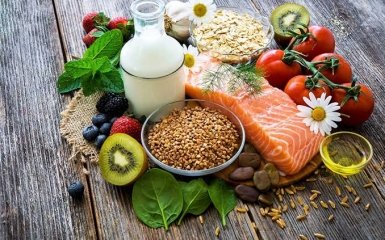
Milk that goes sour before the specified date, berries with mold the day after purchase, dried cheese and a ready-made dinner that has been in the refrigerator for several days. Often the cause of such problems is not the quality of the products, but improper storage.
Even a modern refrigerator does not guarantee food safety if the temperature is set incorrectly, raw meat comes into contact with ready-made dishes, and cooked foods remain on the kitchen counter for hours.
Points of attention
- The refrigerator temperature should not exceed +4 °C, and the freezer temperature should be approximately −18 °C or lower.
- Raw meat, poultry, and fish should be kept separate from ready-to-eat food, preferably on the bottom shelf in an airtight container.
- Ready meals should be refrigerated within two hours; most leftovers can be stored in the refrigerator for 3–4 days.
The most important rules for storing food: maintain the refrigerator temperature no higher than +4 °C, the freezer temperature around −18 °C, cool ready-made meals within two hours, and store raw foods separately from ready-made foods.
Mistakes can not only lead to loss of taste and unnecessary costs, some create conditions for the growth of bacteria that can cause food poisoning.
Let's look at twelve common mistakes, rules for storing various foods, and ways to organize your refrigerator so that food stays fresh and safe longer.
Why do foods spoil even in the refrigerator?
Cold slows the growth of many microorganisms and chemical processes that affect food quality. However, refrigeration does not make products sterile.
Some bacteria can grow even at refrigerated temperatures. Others persist in food and begin to grow more actively after it is heated.
The rate of deterioration is affected by:
Temperature and its fluctuations.
Initial freshness of the product.
Presence of moisture.
Contact with air.
Packaging method.
Cross-contamination.
Duration of storage.
It is important to distinguish between product spoilage and its microbiological hazard .
Spoiled food often changes its smell, taste, or texture. However, a product with dangerous bacteria will not necessarily have noticeable signs.
That is why you cannot rely solely on the appearance of food.
1. Incorrect refrigerator temperature
One of the most important mistakes is to focus on the position of the regulator instead of the actual temperature.
For example, the “3” mark on a refrigerator handle usually indicates a setting level, not a temperature of +3°C.
According to FDA and USDA recommendations, the refrigerator temperature should be +4 °C or lower , and the freezer temperature should be approximately −18 °C or lower .
Why a difference of a few degrees is important
At higher temperatures, many microorganisms can multiply faster.
Meat, poultry, fish, dairy products, and ready-made meals are especially sensitive to temperature fluctuations.
If the refrigerator is constantly maintained at +7 or +8 °C, its contents may spoil much faster than expected.
A separate thermometer is sufficient for checking.
It is also important not to press products against the ventilation holes and not to fill the shelves so tightly that air cannot circulate.
2. Storing raw meat above cooked food
Raw meat, poultry, and fish can contain microorganisms that cause foodborne infections.
These include Salmonella , Campylobacter , and some pathogenic strains of Escherichia coli .
If the packaging leaks, liquid from the raw product can get onto food that will no longer be cooked.
This is called cross-contamination.
Where to store raw meat
A practical solution is to allocate the bottom shelf of the refrigerator for it.
The product should be placed in an airtight container or on a pallet with sides to prevent liquid from getting on other surfaces.
Do not place raw meat next to salads, sliced fruit, cheese, or ready meals.
If the meat is not planned to be cooked in the near future, it is best to freeze it while it remains suitable.
3. Ready meals cool on the table for hours
It is a common belief that soup or other hot food should not be put in the refrigerator until it has cooled completely.
Because of this, the pot is often left on the stove for several hours, and sometimes overnight.
This approach can be dangerous.
How long can food last without a refrigerator?
According to general food safety guidelines, perishable foods should be refrigerated or frozen within two hours of cooking.
If the ambient temperature exceeds +32 °C, this time is reduced to one hour.
No need to wait until the dish is completely cold.
How to properly cool soup, meat and side dishes
It is better to divide a large pot of hot food into small portions.
Shallow containers are suitable for this, as they dissipate heat more quickly.
Small portions of warm food can be put in the refrigerator without leaving them on the table for a long time.
At the same time, a huge pot of boiling water can raise the temperature of other foods in the refrigerator. That's why portioning and rapid cooling are important.
4. Storing ready-made food in open plates and pans
Opened products lose moisture more quickly, can absorb foreign odors, and come into contact with contaminants.
For example, sliced sausage without packaging dries out, and the finished dish may take on the smell of fish or other products.
However, the problem is not limited to quality.
If ready-to-eat food is left unprotected next to raw food, the risk of cross-contamination increases.
Which packaging is best?
Clean food containers with lids are suitable for ready meals.
You can use glass, metal or plastic containers designed for contact with food.
It is important that the material meets the conditions of use.
For example, not every plastic container is suitable for heating in a microwave, and not all glassware can be put in the oven.
Glass containers are not automatically safer than any food-grade plastic. The properties of the specific product, the condition of the surface, and compliance with the instructions are decisive.
5. Storing eggs and milk on the refrigerator door
The refrigerator door is constantly in contact with warmer air when opened.
Because of this, the temperature on their shelves can fluctuate more than in the main compartment.
Such fluctuations are especially undesirable for products that require stable cooling.
Where is the best place to store eggs?
For eggs that are already stored refrigerated, the main compartment of the refrigerator is recommended, not the door.
It is advisable to leave them in their original packaging.
It protects the eggs from damage and allows you to see the marking and date.
The conditions for selling and storing eggs may vary depending on the country and processing method, so you need to take into account the requirements on the packaging.
What to do with milk?
Pasteurized milk, for which the manufacturer requires refrigerated storage, is best placed in the main compartment.
Ultra-pasteurized milk in sealed packaging can be stored without refrigeration until opened, if this is provided by the manufacturer.
After opening, you must follow the conditions and deadlines indicated on the packaging.
6. Washing berries and vegetables well before use
After returning from the store, you want to immediately wash all the fruits, berries, and greens.
However, additional moisture can accelerate the spoilage of some foods.
Berries with delicate surfaces are especially sensitive—raspberries, strawberries, and blackberries.
If they remain wet, the risk of mold growth increases.
How to store berries
Many types of berries are best stored unwashed until ready to use.
They should be rinsed under running water before consumption.
Damaged and spoiled berries should be separated from the rest.
If the berries have already been washed, you need to remove excess moisture as carefully as possible and ensure proper cooling.
Does this apply to all vegetables?
No. There are different rules for different products.
For example, pre-washed and ready-to-eat greens in factory packaging must be stored according to the labeling.
And root vegetables or vegetables with soil should not be placed next to ready-made foods.
The main rule is not to create excessive moisture and not to transfer contamination from unwashed vegetables to other food.
7. Storing all fruits and vegetables together
Not all plant products store well side by side.
Some fruits release ethylene during ripening, a gaseous substance that is involved in the regulation of ripening.
Active ethylene producers include, in particular, apples, bananas, pears and some other fruits.
Certain vegetables and fruits are sensitive to its effects.
Why vegetables can spoil faster
Ethylene can accelerate yellowing, aging, or other undesirable changes in sensitive products.
For example, greens and some vegetables may lose their presentation more quickly if exposed to sources of ethylene for a long time.
Therefore, when storing large stocks, it is advisable to separate products depending on their properties.
In a typical home refrigerator, this doesn't always require separate containers for each fruit. However, it's not a good idea to pack all the produce tightly into one bag.
What foods are best kept outside the refrigerator?
To preserve quality, some vegetables and fruits are usually kept in a dry place at an appropriate temperature.
| Product | Where to store |
| Unripe bananas | At room temperature |
| Dried whole onion | In a dry, ventilated place |
| Potatoes | In a dark, cool place |
| Ripe berries | In the refrigerator |
| Leafy greens | In the refrigerator |
| Cut fruit | In the refrigerator |
| Ripe tomatoes | Depending on ripeness and shelf life |
For example, unripe tomatoes may ripen better at room temperature, while ripe fruits may sometimes need to be refrigerated if they are not planned to be eaten quickly.
For potatoes, light and germination should be avoided. Refrigerated storage conditions can affect culinary properties, so the method also depends on subsequent cooking.
8. Defrosting meat on the kitchen counter
Frozen meat is often left on the table overnight so that it is ready for cooking in the morning.
The problem is uneven heating.
While the middle of the piece remains frozen, its surface may already have warmed up to a temperature at which bacteria actively reproduce.
How to properly defrost foods
Safe methods are:
Defrosting in the refrigerator.
Defrost in cold water in an airtight container with regular water changes.
Using the appropriate microwave mode.
If the product was defrosted in water or in the microwave, it should be cooked immediately after the process is complete.
Defrosting in the refrigerator takes longer, but allows you to maintain a safer temperature.
Meat should be kept in a container during defrosting that prevents liquid from getting on other products.
9. Improper storage of cooked rice and pasta
Rice, pasta, and other prepared side dishes are often considered less risky than meat or fish.
However, this is not always the case.
For example, dry rice may contain spores of the bacterium Bacillus cereus , which are able to survive normal cooking.
If cooked rice remains warm for a long time, conditions are created for the growth of bacteria and possible formation of toxins.
How to safely store cooked rice
The British Food Standards Agency recommends cooling rice as quickly as possible, preferably within one hour.
After that, it should be placed in the refrigerator and used within 24 hours.
It is recommended to reheat rice only once, ensuring thorough heating.
For other ready-made meals, a general rule of 3–4 days is often applied, but rice requires special attention due to the risks of improper refrigeration.
Important: Reheating does not always eliminate the effects of improper storage, as some bacterial toxins may be resistant to heat.
10. Freezing without proper packaging and labeling
The freezer allows you to significantly extend the storage of many products.
However, if you leave meat, berries, or ready-made meals in open or loose packaging, they will lose quality faster.
So-called freezer burn may appear - dry grayish or brown areas on the surface of the product.
Is frostbite dangerous?
According to the USDA, freezer burn primarily degrades the quality of food.
It occurs due to moisture loss and surface contact with air.
By itself, it does not mean that the product has become unsafe.
However, the taste and texture may deteriorate significantly.
For long-term freezing, it is better to use packaging designed for low temperatures, with a minimal amount of excess air.
Why sign packages?
Without a date, it is difficult to determine how long a product has been in the freezer.
It is useful to note the name, date of freezing and number of servings.
At a constant temperature of −18 °C, properly frozen products can remain microbiologically safe for a very long time, but their quality gradually deteriorates.
Therefore, recommended freezer storage times often relate primarily to taste and texture.
This rule does not apply to products that were unsafe even before freezing.
11. Ignoring expiration dates and preparation dates
In many refrigerators, you can find containers whose contents are already difficult to recognize.
Often people don't remember when they prepared a dish or opened the packaging.
In such a situation, you should not rely solely on smell.
How long can you store cooked food?
According to FoodSafety.gov, most cooked leftovers should be used within 3–4 days when properly refrigerated.
This applies to many soups, stews, prepared meats, and other foods.
For some categories, the deadlines are different.
For example, raw poultry and ground meat usually need to be cooked or frozen within 1–2 days.
What is the difference between "use by" and "best before"?
Such marks have different meanings.
"Use by" usually refers to the safety of a perishable product. It should not be consumed after the specified date, even if the smell seems normal.
"Best before" usually refers to the period of best quality. With proper storage, some products may remain good beyond this date, but the decision depends on the type and condition of the product.
The same rules cannot be applied to pasteurized milk, raw meat, dry pasta, and hermetically packaged cereals.
12. Checking freshness by smell or taste alone
One of the most dangerous habits is to taste a suspicious product to determine if it has spoiled.
Some bacteria and their toxins do not change the smell, color, or taste of food.
This means that a product may look normal but pose a danger.
You need to be especially careful with:
Meat and fish products.
Dishes that were left out of the refrigerator for a long time.
Home preservation of unknown origin.
Ready-made food with an unknown preparation date.
Products after a prolonged violation of the temperature regime.
If you are not sure whether perishable food has been stored properly, there is no need to test its taste.
It is also worth remembering that cutting off visible mold does not always make the product safe. Soft, moist, and porous products with mold usually require complete disposal.
How long can food be stored in the refrigerator: table
The times given are based on general food safety recommendations for a refrigerator with a temperature not higher than +4 °C.
They assume that the products were fresh, properly processed, and not kept warm for too long.
| Product | Approximate shelf life in the refrigerator |
| Raw chicken and other poultry | 1–2 days |
| Raw minced meat | 1–2 days |
| Fresh steaks, chops, large pieces of beef or pork | 3–5 days |
| Fresh fish | Usually 1–3 days depending on the species |
| Ready-made meat | 3–4 days |
| Soups and stews | 3–4 days |
| Ready-made salads with eggs, meat or fish | 3–4 days |
| Boiled eggs | Up to 7 days |
| Raw eggs in the shell | Approximately 3–5 weeks under proper conditions |
| Pizza after cooking | 3–4 days |
| Boiled rice | Up to 24 hours according to the cautious recommendations of British experts |
These are general guidelines and not a guarantee of product suitability.
If the manufacturer has set a shorter period, the labeling must be followed. You should also take into account the initial freshness, date of opening and transportation conditions.
How to properly arrange food in the refrigerator
Convenient organization helps reduce the risk of cross-contamination and makes inventory control easier.
At the same time, the actual temperature of the shelves depends on the design of the refrigerator.
In some models, the coldest zone is located closer to the back wall, while others have separate compartments with a special temperature regime.
Top and middle shelves
It is convenient to place ready-made meals, dairy products and other food that should not come into contact with raw meat here.
Finished products should be stored in closed containers.
Lower berth
It is advisable to reserve the lower level for raw meat, poultry and fish in airtight containers or on pallets.
This helps prevent liquid from getting on finished products.
Drawers for vegetables and fruits
Special compartments allow you to create more suitable humidity conditions for plant products.
However, not all vegetables and fruits need to be stored together.
It is advisable to take into account ethylene sensitivity and humidity requirements.
Door
This is a convenient location for products that are less sensitive to short-term temperature fluctuations, such as individual sauces and drinks.
However, for each product, the manufacturer's labeling must be taken into account.
How to store food during a power outage
During extended power outages, proper storage becomes especially important.
Even a quality refrigerator gradually loses its cold when the compressor is not working.
According to the CDC and FoodSafety.gov recommendations, if the door remains closed:
| Equipment | Estimated time to maintain safe temperature |
| Refrigerator | Up to 4 hours |
| Fully filled freezer | Up to 48 hours |
| Half-full freezer | Up to 24 hours |
These are approximate values. The actual time depends on the room temperature, the appliance model, its insulation and the frequency of opening.
What to do during a power outage
First of all, you need to open the refrigerator and freezer as rarely as possible.
If the outage lasts a long time, you can use a thermal bag or a special container with cold elements.
However, they must maintain the required temperature, not just create a feeling of coolness.
What products will have to be thrown away?
If the refrigerator has been without power for more than four hours and there is no confirmation that the products were stored at a temperature not higher than +4 °C, perishable products may be dangerous.
These include meat, poultry, fish, eggs, milk, prepared meals, and cut fruits.
The product can be refrozen in the freezer if it still contains ice crystals or its temperature did not exceed +4 °C.
You don't need to determine the safety of food after a power outage by smell or taste. The most reliable guidelines are time and actual temperature.
How to reduce food waste through proper storage
Spoilage of products means not only a loss of money, but also a waste of resources spent on their production and transportation.
Some food waste can be avoided through better inventory management.
Use the “older first” principle
It is advisable to place new purchases after products that are already at home.
This helps to use products with a shorter remaining shelf life earlier.
However, you need to focus on the date and condition of the product, not just the time of purchase.
Sign ready meals
The container can be labeled with the product name and date of preparation.
This is especially useful for dishes in the freezer, where it is difficult to distinguish soup, sauce or side dish by appearance.
Do not overload the refrigerator.
Placing food too close together can prevent the circulation of cold air.
In addition, in a crowded refrigerator, it is more difficult to notice products that need to be used in the near future.
Conclusion
Proper food storage starts with temperature control, cleanliness, and separation of raw and cooked food.
The most dangerous mistakes are leaving ready-made dishes warm for a long time, improperly defrosting meat, storing raw foods above ready-made foods, and trying to determine the safety of food by smell alone.
Maintaining a temperature of no higher than +4 °C in the refrigerator, rapid cooling of ready-made meals, proper packaging, and date control help reduce the risks of foodborne infections and avoid unnecessary food spoilage.
FAQ: Frequently asked questions about food storage
What temperature should the refrigerator be at?
For safe storage of perishable foods, a temperature of no higher than +4 °C is recommended. The freezer should be maintained at approximately −18 °C or lower. It is best to check the temperature with a separate thermometer.
How many days can you keep prepared food in the refrigerator?
Most prepared foods, including soups, stews, and leftovers, will keep for 3–4 days if properly refrigerated. For cooked rice, there are stricter guidelines — use within 24 hours.
Can you put hot food in the refrigerator?
Yes. You don't need to leave the finished dish on the table until it has cooled completely. It is better to divide large portions into shallow containers so that they cool faster. Perishable foods should be refrigerated within two hours of cooking.
Why shouldn't eggs be stored on the refrigerator door?
When the door is opened, the temperature on the shelves fluctuates more. Therefore, eggs that require refrigeration are best kept in the main compartment, preferably in their original packaging.
Do you need to wash berries before storing?
Most delicate berries are best washed just before eating. Excess moisture during storage can encourage mold growth. If berries have already been washed, they should be carefully dried and stored at the proper temperature.
Can defrosted meat be re-frozen?
It is possible under certain conditions. If the meat has been thawed in the refrigerator and remained at a safe temperature, refreezing is permissible, although the quality may deteriorate. If the product has been in a warm place for a long time, refreezing will not make it safe.
How long can you keep raw chicken in the refrigerator?
At a temperature not exceeding +4 °C, fresh raw poultry usually lasts 1–2 days. If you do not plan to cook it in the near future, it is better to freeze the product, observing its labeling and original expiration date.
Can I eat food that expired yesterday?
This depends on the type of product and the type of labeling. For perishable foods with a "use by" date, it is not recommended to exceed the indicated date. For foods with a "best before" date, the date is mainly related to quality, but storage conditions and the condition of the product must be taken into account.
How long can food stay in the refrigerator without light?
If the door remains closed, a refrigerator will typically maintain a safe temperature for about four hours. A full freezer can keep cold for about 48 hours, and a half-full freezer can keep cold for about 24 hours. The actual time depends on the equipment and the room temperature.
Can you tell if food is spoiled by smell?
Not always. Some dangerous bacteria and their toxins do not change the smell or appearance of food. Therefore, it is important to consider the temperature, storage time, and date of preparation. If a perishable product has been stored incorrectly, it should not be tasted to check.
The material is for informational purposes only and does not replace medical advice. Self-medication can be harmful to health. If you experience symptoms of food poisoning, you should first consult a doctor. The conditions and storage times of specific products may vary depending on the composition, packaging, and manufacturer's recommendations.

