
Budgeting apps, cashback, automatic transfers, and digital banks have made managing money much more convenient. But many effective ways to save money predate smartphones—and some of them work because of their simplicity.
Points of attention
- Record all expenses and make a detailed list of expense categories for transparent budget management.
- Use the envelope principle or digital accounts to allocate money by category and control spending.
- Set aside money as soon as you receive your income to form a habit of regular savings.
Writing down expenses, going to the store with a list, repairing things instead of automatically replacing them, planning menus, putting money aside right after payday — these habits seem old-fashioned, but they help solve the main problem of personal finance: making spending visible and predictable.
Saving money doesn't have to mean constantly depriving yourself of a normal life. The best financial habits cut back on expenses that don't provide you with enough value, leaving more money for the things that really matter.
Here are 12 practical approaches that are worth bringing back into everyday life.
1. Record all expenses, as you did before banking apps
Today, you can find your transaction history on your phone in seconds. However, an automatic list of transactions does not mean that a person understands where their money is going.
The old notebook method has one advantage: every purchase must be consciously recorded.
You don't have to literally carry a notebook with you. You can use a spreadsheet or notes on your phone.
Another important thing is to write down for one or two months:
housing and utility bills;
products;
transport;
restaurants and delivery;
subscriptions;
clothing;
entertainment;
small purchases;
irregular expenses.
After that, it often turns out that the problem is not just one cup of coffee.
For example, food delivery, several services with a monthly payment, or shopping "on the go" can take up a significantly larger amount.
A good budget starts not with restrictions, but with a reliable picture of expenses.
2. Use the envelope principle
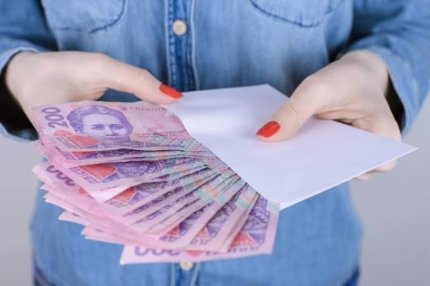
Once upon a time, money was literally put into envelopes after a salary:
products;
utility payments;
transport;
clothing;
rest;
savings.
When the envelope was empty, the category's budget for that period ended.
Today, the same principle can be applied digitally: create separate accounts, virtual banks, or simply set limits for categories.
For example, if 5,000 hryvnias per month is allocated for restaurants and delivery, this immediately creates a clear limit.
It is important not to turn the system into a financial prison.
If a major expense occurs this month, the budget can be adjusted. The point of envelopes is to see the limits, not punish yourself for every deviation from the plan.
3. Try cash for a category where you consistently overspend
There is no need to return completely to cash.
Cashless payment:
convenient;
ambulance;
simplifies accounting;
allows you to pay for purchases online.
However, consumer behavior studies show an interesting effect: with cashless methods, people tend to spend slightly more on average than with cash.
A large meta-analysis of 71 studies confirmed the existence of such an effect, although it is small and weakens over time.
So if one particular category is regularly getting out of control, you can run an experiment.
For example, at the beginning of the week, allocate 1,500 hryvnias in cash for:
coffee;
dinners away from home;
small purchases.
When the money physically decreases in your wallet, the budget limit becomes more tangible.
This method isn't for everyone, but for impulsive spending it sometimes works better than an abstract bank balance.
4. Go to the store with a list
This is one of the simplest financial habits that also helps you organize your meals.
Without a list, shopping often looks like this:
"Maybe there's no pasta at home."
"This cheese is on sale now."
"I'll have another cookie."
"And suddenly we ran out of eggs."
As a result, you end up with three packs of pasta, two open sauces, and products that will have to be thrown away in a week.
Before going to the store, it is useful to do three things:
check the refrigerator;
check the freezer and supplies;
roughly plan your main meals for a few days.
After that, a list is compiled.
This helps you buy according to your real need, not the mood at the shelf.
5. Plan your meals to use already purchased products
Food waste is literally money that was spent but did not provide any benefit.
Economical menu planning doesn't mean eating the same porridge all week.
The point is to transition the ingredients from one dish to another.
For example:
on Monday - baked chicken with vegetables;
on Tuesday - a portion of chicken in a salad;
on Wednesday — the rest in a sandwich or pasta;
bones and vegetable scraps - as a base for broth, if needed.
The same works with grains, herbs, vegetables, and sauces.
A separate useful habit is “refrigerator day”
Don't buy new foods for dinner once a week.
First, look at what you need to use in the near future.
Sometimes a few random leftovers can easily make a complete meal.
6. Buy large packages only after calculating the price per unit
"Wholesale is cheaper" is a rule that doesn't always work.
Large packaging is beneficial if three conditions are met simultaneously:
the price per kilogram, liter or piece is really lower;
the product will be used;
you have a normal place to store it.
For example, a large pack of rice, laundry detergent, or toilet paper often makes sense.
And a pack of ten avocados for one person could end up with half of them going bad.
So don't look at the big text:
"A great family package!"
and to a smaller number:
price for 1 kg / 1 l / 1 piece.
And another trap: a large stock sometimes increases consumption.
If you have a box of 30 snacks at home, they may run out sooner than expected.
7. Repair first — replace later
Modern consumer culture has taught us to change things quickly.
The zipper on the jacket broke - a new jacket.
The laptop has become slower - a new laptop.
The vacuum cleaner has reduced suction - a new vacuum cleaner.
However, sometimes the problem can be solved much cheaper:
replacing the zipper;
a new battery;
cleaning the filter;
cable repair;
by replacing a separate part.
Before making a major purchase, it's helpful to ask:
How much does diagnostics and repair cost?
Of course, not everything needs to be repaired.
If the equipment is dangerous, repairs cost almost as much as a new item, or the device is already systematically failing, replacement may be more rational.
Savings are about comparing the full cost of options, not automatically choosing the cheapest solution today.
8. Borrow or rent things you need only once
There is a category of purchases that lie idle for years.
For example:
drill;
ladder;
tourist equipment;
tools;
festive decor;
special clothing;
equipment for a one-time project.
Before buying, you should ask:
How many times will I actually use this thing?
If the answer is once or twice, renting or borrowing may be more rational.
The same goes for books.
If you just want to read a book, rather than have it in your own library, you can:
take it from the library;
to borrow;
buy used;
to exchange.
The rule is simple:
You don't have to own everything you use.
9. Buy second-hand items where it is safe and practical
For some categories of products, the overpayment for novelty is very high.
Good candidates for the secondary market may be:
furniture;
books;
decor;
dishes;
part of the tools;
sports equipment;
adult clothes.
Something that has been used for several months is sometimes sold much cheaper than a new one, even though it is functionally almost the same.
But common sense is needed here.
Not all products should be bought used because of the following issues:
security;
hygiene;
hidden damage;
lack of warranty.
Particular caution should be exercised with child car seats, personal protective equipment, and some electronics and equipment whose condition is critical to safety.

10. Save money immediately after income
The old rule goes something like this:
Pay yourself first.
That is, don't wait:
"At the end of the month, I'll put away whatever's left."
Many people have nothing left at the end of the month.
A much more reliable system:
income → savings → mandatory expenses → the rest.
Today, this old-fashioned habit is easy to automate.
For example, the day after payday, the bank automatically transfers:
fixed amount;
or a certain percentage of income
to a separate account.
Automatic transfers are considered one of the easiest ways to form a regular savings habit.
If your income is unstable, you can save not a fixed amount, but a portion of each income.
11. Keep your reserve separate from your daily expenses
It was once a separate envelope or hiding place.
Today it is better to have a special account.
The reserve fund is intended for unforeseen situations:
urgent repairs;
unexpected medical expenses;
loss of income;
major equipment breakdown;
other financial blows.
Even a small reserve can reduce the need to urgently use expensive credit.
The main mistake is to keep such money in the same account from which restaurants and purchases are paid every day.
When everything is seen as one big balance, it is psychologically easy to perceive savings as available money.
A separate account creates a useful barrier.
How much do you need to have?
There is no universal amount.
A few months of necessary expenses are often cited as a guideline, but the actual need depends on:
income stability;
number of people in the family;
debts;
insurance protection;
housing;
health;
professions.
Even a small fund is better than no reserve at all.
12. Postpone large purchases for 24–72 hours
Our grandmothers could rarely buy anything in 30 seconds from their phone.
Today, there is practically no gap between desire and payment.
Saw the advertisement.
Pressed.
Apple Pay.
Done.
That's why artificial delay has become a particularly useful financial habit.
Set the rule:
for optional purchases over a certain amount — a pause of at least 24 hours.
For more expensive items, 72 hours or a week.
During the pause, ask yourself four questions:
Do I need this thing?
Do I have something with the same function?
Would I buy it without a discount?
Does it fit into my budget without debt?
A lot of "urgently needed" things stop seeming so necessary after two days.
Do you really need to save on small things?
Saving on small, regular expenses can pay off.
But sometimes a person spends a huge amount of energy to find coffee 10 hryvnias cheaper, and at the same time overpays for years for:
mobile tariff;
Internet;
insurance;
bank fees;
rent;
credit;
car;
unused subscriptions.
The higher the regular consumption, the stronger the effect of its optimization can be.
For example, saving 1,000 hryvnias each month on a recurring payment means 12,000 hryvnias per year.
So start your audit with the big categories and then move on to coffee and snacks.

When saving starts to cost too much
Financially, the cheapest option is not always the most profitable.
Example:
You drive across the city to buy a product 50 hryvnias cheaper.
You spend:
fuel;
parking;
hour of time.
Formally, the product is cheaper.
Actual savings may be negative.
The same goes for home-made everything.
If fixing something takes six hours, requires tools, and is nothing but an annoyance, maybe a professional repair would be smarter.
Before making a “profitable” decision, it is useful to evaluate:
price + time + transportation + risk + future benefit.
How to start saving if you've never kept a budget before
You don't need to create a complex financial system in one day.
Start with a four-week experiment.
First week - don't change anything
Just record the expenses.
Second, find the three largest optional categories
For example:
delivery;
Taxi;
spontaneous purchases.
Third - set one realistic limit
Don't cut everything at once.
For example:
delivery maximum twice a week.
Fourth - set up automatic savings
Even a small amount creates a system.
After a month, you can adjust your budget based on your own numbers, not universal rules from social media.
6 financial habits that seem frugal, but can actually increase your expenses
Buy everything on sale
A discount only saves money when you were already planning to make a purchase.
A thing for 2,000 hryvnias with a 50% discount didn't save you 1,000 hryvnias if you weren't going to buy it at all without the promotion.
Take the cheapest without assessing quality
An item that will have to be replaced three times may be more expensive than a single quality item.
Buy supplies "just in case"
Money frozen in food, household chemicals, and other supplies also has a price.
Refusing preventive maintenance
Saving on timely servicing of a car, equipment, or home sometimes ends up in significantly more expensive repairs.
Traveling far for a small discount
Calculate transportation and your own time.
Postpone all pleasures
A budget that is too tight is often difficult to maintain. It is better to plan ahead for a reasonable amount for vacations and pleasant shopping.
Conclusion
The most effective old-fashioned financial habits work because they make money visible. Keeping track of expenses shows where it goes. Envelopes set boundaries. A shopping list reduces impulse purchases. Pausing before paying separates real need from impulse. Renovations, rentals, and second-hand shopping help you avoid buying new automatically.
And the most important habit is to regularly save a portion of your income before this money turns into everyday expenses.
There's no need to go back to the lifestyle of a few decades ago. It's enough to take the old principles of financial discipline and combine them with modern tools.
Important: The material is for informational purposes only and does not constitute individual financial, investment, credit or tax advice. The optimal size of the reserve, the method of storing savings and the order of debt repayment depend on income, expenses, interest rates, risks and personal circumstances.
FAQ
How to start saving money with a small salary?
First, record your real expenses for a month. Then find one or two categories that you can cut back on without compromising your basic needs, and set aside even a small amount regularly. Stability is more important than a large percentage at the start.
Does paying in cash help you spend less?
For some people, yes. Studies show a small average effect of higher spending when paying cashless. If you have a problem category, you can allocate a fixed amount of cash to it and see the result over a few weeks.
What is the envelope method?
This is a system in which money is pre-allocated into categories: groceries, transportation, entertainment, clothing, and other expenses. Today, instead of paper envelopes, you can use separate accounts or digital categories.
How much money should you save each month?
There is no universal percentage. The amount depends on income, mandatory expenses, debts, and financial goals. It is better to consistently save an amount that you can afford than to set an unrealistic percentage and abandon the system after a month.
How much money should be in a financial cushion?
They often focus on several months of basic expenses, but the specific reserve depends on job stability, family responsibilities, health, debts, and other risks.
Is it profitable to buy products in bulk?
Only if the unit price is lower and you actually use the product before the expiration date. For perishable products, large packaging can increase costs.
How to stop making impulse purchases?
A shopping list, a category budget, deleting saved bank cards from stores, and a 24–72-hour pause rule before making an unnecessary expensive purchase help.
Do I need to record every expense?
You don't have to do this your whole life, but one or two months of detailed accounting can help you see the real structure of your budget and find categories that previously remained invisible.
What is the best place to save money first?
First, check your large recurring expenses: housing, transportation, loans, insurance, rates, subscriptions, and eating out. Changing a large monthly expense often yields more than dozens of small cuts.
When does saving become harmful?
When you regularly sacrifice safety, health, necessary repairs, or spend a disproportionate amount of time for a small amount of money. Good savings reduce overall costs, not just minimize the price of a single purchase.
undefined

