
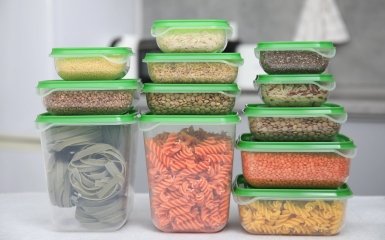
Having a stockpile of food at home isn't just for long-term emergencies. Even a simple power outage, water outage, or temporary store closure can make cooking difficult. Especially if all your food is stored in the refrigerator and most meals require a stove and water.
A properly formed food supply allows you to provide your family with food for several days without the need to urgently look for an open supermarket.
Points of attention
- A home supply of food and water should be formed for at least three days, taking into account the needs of each family member.
- One person needs approximately 9–15 liters of drinking water for three days; technical water should be stored separately.
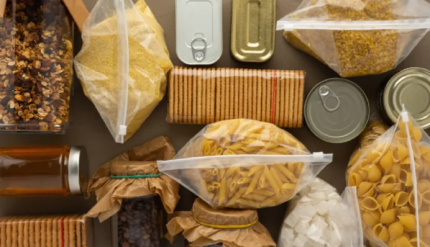
- The basis of the reserve should be products that do not require refrigeration or preparation: ready-made canned goods, legumes, breads, nuts, and dried fruits.
In case of an emergency, it is a good idea to have at least a three-day supply of drinking water and non-perishable foods at home, some of which can be eaten without cooking. These can include canned goods, ready-made legumes, breads, nuts, dried fruits, nutritious snacks, and other foods that do not require refrigeration.
However, simply buying a few packages of pasta and buckwheat is not enough. If there is no electricity, gas or drinking water, it may be impossible to cook them.
Let's look at 12 categories of products that are advisable to have at home, how to calculate supplies for a family, properly organize storage, and avoid dangerous mistakes.
What should be the stock of products in case of an emergency?
First, you need to determine for what period the stock is being formed.
The U.S. Federal Emergency Management Agency (FEMA) recommends having at least three days’ worth of food and water. The Ukrainian State Emergency Service also advises preparing long-term food supplies in advance for use during evacuations and other emergencies.
However, a home reserve and an emergency suitcase are not the same thing.
At home, you can store heavy canned goods, large containers of water, and foods that require cooking.
For evacuation, a more compact supply is needed that does not take up much space, has sufficient energy value, and preferably does not require heating.
Three basic product requirements
Long-term storage. The product must remain suitable for the period specified by the manufacturer without special conditions or have clear storage requirements.
Minimal preparation. At least some of the food should be ready to eat immediately after opening the package.
Nutritional value. The supply should contain not only fast carbohydrates, but also sources of protein, fats, dietary fiber and other nutrients.
It is the combination of these characteristics that allows you to form a practical reserve, rather than simply filling the shelves with products.
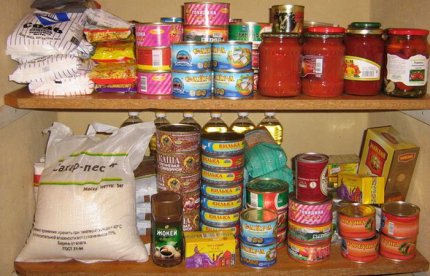
1. Drinking water is the most important part of a household supply
During water supply disruptions, drinking water becomes a priority over any food.
It is needed for drinking, cooking, taking some medications, and basic hygiene needs.
According to recommendations from the US Centers for Disease Control and Prevention (CDC), the minimum emergency supply is approximately 3.8 liters of water per person per day.
Ukrainian recommendations for preparing for water supply disruptions also include approximately 3–5 liters of drinking water per person daily and a separate supply of technical water.
How much water is needed for three days?
| Number of people | Drinking water supply for 3 days |
| 1 person | 9–15 l |
| 2 people | 18–30 l |
| 3 people | 27–45 l |
| 4 people | 36–60 l |
These amounts are guidelines for planning. Actual needs depend on age, health, air temperature and other conditions.
To cook food that requires a lot of water, you will need to increase the supply.
Technical water for flushing the toilet, cleaning, and other household needs must be provided separately.
How to store water
The most convenient option is industrially bottled drinking water in a sealed package.
It should be stored according to the label, away from sunlight, heat sources, and household chemicals.
If you collect water yourself, you must use clean food containers intended for contact with drinking water.
The CDC recommends refreshing your homemade water supply about every six months.
Do not use containers for drinking water that have previously stored fuel, toxic substances, or household chemicals.
2. Canned fish and meat - a ready source of protein
Industrial canned fish and meat are convenient because many of them can be consumed without additional cooking.
This is important when you can't use the stove.
Canned fish can provide the body with protein, and some types of fatty fish can also provide omega-3 fatty acids.
Canned meats contain protein and other nutrients, although their composition varies significantly by manufacturer.
Which canned goods are better to choose?
Practical options can be sardines, mackerel, salmon, tuna, or ready-made canned meats.
When purchasing, it is important to check whether the product is truly ready to consume.
Not every semi-finished product in a sealed package can be eaten without heat treatment.
It is also useful to compare the amount of protein, salt, and actual fish or meat content.
Why it is better to buy small banks
Once opened, canned goods lose the benefit of airtight storage.
Leftover perishable food should be kept in the refrigerator.
If there is no electricity, it can be difficult to keep a can open.
Therefore, portioned packages that can be used for one meal are often more convenient for emergency supplies.
3. Canned beans, chickpeas, and lentils are a nutritious base for meals
Legumes contain vegetable protein, fiber, carbohydrates, and various micronutrients.
According to the recommendations of the World Health Organization (WHO), they are part of a varied, healthy diet.
Particularly practical during an emergency are industrially canned legumes that have already undergone proper processing and are ready to consume.
For example, beans or chickpeas can be eaten alone, added to bread, or combined with canned vegetables.
Why dry legumes do not replace canned ones
Dried beans and chickpeas usually require soaking and long cooking times.
If there is no water or the ability to heat food, they will not help provide nutrition quickly.
Additionally, undercooked red beans can be dangerous due to natural lectins.
Therefore, it is practical to have both options: ready-made canned goods for the first few days and dry legumes for longer use if there are conditions for cooking.
What to look out for
If you plan to use the product regularly, it is advisable to choose options without excess salt.
For people who need to limit sodium, salt content is of particular importance.
Also, don't forget about the opener if the cans don't have a special ring.
4. Canned vegetables - a supplement to basic products
During periods of prolonged supply disruptions, fresh vegetables may be less available.
Industrial canned vegetables allow you to diversify your menu without a refrigerator and complicated preparation.
For example, canned peas, corn, carrots, or other prepared vegetables can be a complement to bread, fish, or legumes.
The WHO notes that canned vegetables can be part of a healthy diet as long as they do not contain excessive amounts of salt.
What vegetables to choose for storage
It is best to focus on the family's usual tastes.
There's no point in buying products that no one will eat.
For emergency supplies, preference should be given to canned foods that can be used without heating.
For example, ready-made green peas or corn are more convenient in the first hours of a shutdown than products that need to be stewed for a long time.
Are homemade vegetable twists suitable?
Only if they are manufactured using proven safe technology.
Homemade low-acid canned vegetables can pose a risk of botulism if prepared improperly.
For an emergency supply that needs to be as predictable as possible, properly labeled industrial canned food is often more practical.
5. Canned fruit and fruit puree in airtight packaging
In addition to sources of protein and carbohydrates, it is useful to include fruit in your food supply.
Fresh apples, bananas or berries have a limited shelf life, especially at high temperatures.
Instead, some industrial fruit products can be stored without refrigeration until opened.
These include fruit puree in portion packs and canned fruit.
What is better to choose?
If possible, you should prefer products without added sugar.
Canned fruits in their own juice can be a more practical alternative to products in thick, sweet syrup.
Portion packs are especially convenient if you don't have a refrigerator to store leftovers.
However, you need to check whether the product is truly intended for storage at room temperature.
Not all fruit purees, smoothies, and desserts have the same requirements.
6. Bread, biscuits and crackers - food without a stove and refrigerator
Regular fresh bread is not always convenient to store for several days.
Dry baked goods, on the other hand, may have a longer shelf life.
Bread, biscuits, crackers, and other ready-made grain products in airtight packaging are suitable for emergency supplies.
They can be combined with canned fish, beans, or other ingredients.
Is it necessary to choose whole grain bread?
Whole grain products usually contain more dietary fiber than their refined flour counterparts.
However, during an emergency, accessibility, product portability, and sufficient food quantity are also important.
You don't need to choose bread just because it says "fitness".
It is worth checking the composition, expiration date, and amount of salt.
If you have celiac disease or another medically confirmed need to avoid gluten, you should stock up on appropriate products.
7. Nuts and seeds are a concentrated source of energy
Nuts are convenient for emergency nutrition because they contain a significant amount of energy in a small portion.
They provide unsaturated fats, protein, and a number of minerals.
For example, walnuts, almonds, peanuts, or shelled sunflower seeds can be eaten without cooking.
This is useful when there is no access to a stove.
How many nuts should you have?
The amount depends on the family's needs, usual diet, and other products in stock.
For example, 100 g of nuts often contain approximately 550–650 kcal, depending on the type.
Therefore, even a small, sealed package can provide a significant amount of energy.
However, nuts should not be considered a complete replacement for all other foods.
How to store properly
Nuts contain fats that gradually oxidize.
Heat, light, and contact with air can accelerate the development of rancid flavors.
Therefore, the stock should be kept in a cool, dry place and updated regularly.
It's also important to keep allergies in mind. Whole nuts pose a choking hazard for young children.
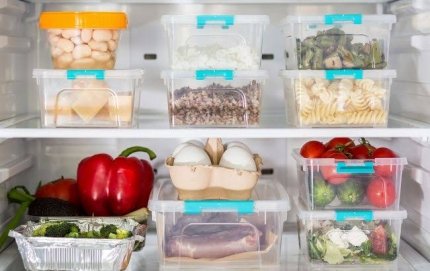
8. Dried fruits - a compact snack with long shelf life
Raisins, dried apricots, prunes, dried apples, and other dried fruits can be a useful addition to your emergency supply.
They contain carbohydrates, dietary fiber, and some minerals.
Compared to fresh fruit, dried fruit is more compact and usually has a longer shelf life.
They can be eaten without cooking or added to porridge if there is hot water.
Can dried fruit replace fresh fruit?
Not completely.
During drying, the water content, concentration of nutrients, and some vitamins change.
Additionally, dried fruits contain a concentrated amount of natural sugars.
Therefore, they are convenient to use as part of a stock, but not as the sole source of fruit.
How to avoid spoilage
After opening the package, dried fruits must be protected from moisture and pests.
They should not be left in open packages near heat sources.
For small children, you need to consider the texture of the product and the risk of choking.
9. Nutrition bars and chocolate — quick energy
During an evacuation or extended stay in shelter, foods that do not require utensils or cooking can be convenient.
These include some cereal, nut, and energy bars.
Chocolate can also be a compact source of energy.
However, it's important not to confuse a nutritious snack with a complete meal.
What to check when buying
It is worth paying attention to the energy value, composition, presence of allergens and shelf life.
Some bars contain mostly sugar, while others also contain protein, fat, and fiber.
It is not necessary to buy the most expensive sports products.
A simple bar with the right ingredients can be quite practical.
Is chocolate suitable for long-term storage?
Yes, if storage conditions are followed.
However, chocolate is sensitive to heat.
In a hot room, it can soften and lose its shape.
Therefore, you should not make it the basis of your entire supply, especially if the products will be stored in a car or a warm room.
10. Long-life milk and related plant-based drinks
Ultra-pasteurized milk in aseptic, hermetic packaging can be stored without refrigeration until opened, if this is provided by the manufacturer.
It is convenient for cereals, drinks and other dishes.
However, for emergencies, small packages are especially practical.
After opening, milk should be refrigerated and used according to the label.
Is it worth buying powdered milk?
Powdered milk can be convenient for long-term storage.
But safe water is needed to prepare it.
If access to drinking water is limited, ready-to-use ultra-pasteurized milk is sometimes more practical.
At the same time, different types of powdered milk have different shelf lives, especially due to fat content.
Therefore, it should not be assumed that any powdered milk will last for years.
Can I use plant-based alternatives?
Yes, if they meet nutritional needs and storage conditions.
For example, some soy drinks contain relatively more protein than almond or rice drinks.
But the nutritional value depends on the composition and enrichment with calcium or other substances.
For infants, regular plant-based drinks are not a substitute for breast milk or appropriate infant formula.
11. Oatmeal and instant cereals
For longer stays at home, it is worth having products that allow you to prepare warm meals with minimal energy consumption.
These include certain types of oatmeal, couscous, and other products that cook faster than regular cereals.
However, even instant foods may require hot water.
What is better to choose during a blackout?
If it is possible to safely boil water, porridge or couscous can be a convenient option.
For example, you can add dried fruits, nuts, and long-life milk to ready-made oatmeal.
This combination provides carbohydrates, fats, and some protein.
But you shouldn't expect that regular dry cereals can be safely eaten without cooking.
This is especially true for products for which the manufacturer requires full cooking.
Are instant noodles suitable?
It can be part of an emergency supply because it is compact and quick to prepare.
However, some products of this type contain a lot of salt and little protein.
Therefore, it is better to supplement them with canned legumes, vegetables, or other nutritious ingredients.
You also need to check whether pouring boiling water is enough for a particular product.
12. Dry cereals, pasta and vegetable oil are the basis of a longer supply
After the first few days, the emergency ration can be diversified with regular long-term storage products.
Buckwheat, rice, pasta, dry lentils, and other grains are good for a home pantry.
However, they require appropriate preparation.
Therefore, they should not be considered a full replacement for ready-to-eat foods.
Which cereals are the most practical?
For stock, it is advisable to choose those that the family uses regularly.
For example, buckwheat is suitable for a side dish, rice for various main dishes, and red lentils usually cook faster than dry beans.
There is no need to accumulate dozens of varieties of cereals if there is not enough space and a clear plan for their use.
Why do you need vegetable oil?
Oil provides fats and can be used for cooking.
The WHO recommends giving preference to unsaturated fats, which are found, in particular, in sunflower, rapeseed and olive oils.
The bottle should be kept tightly closed, away from heat and light.
You should also have a small amount of iodized salt and your usual seasonings, but don't use salt in excess.
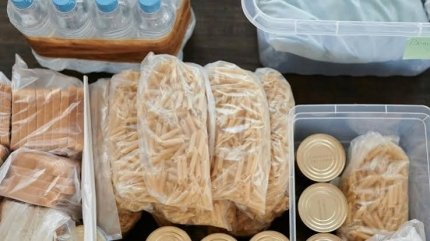
How much food is needed for a family for three days?
It is better to plan your stock not by the number of packages, but by the ability to provide a sufficient number of meals.
For example, three cans of corn by themselves do not create a complete three-day ration.
It is necessary to take into account the energy value of products, the availability of protein and the individual needs of family members.
Example of a minimum set for two adults
The above list can be used as a basis, which should be supplemented according to energy needs and usual diet.
| Product | Estimated quantity |
| Drinking water | 18–30 liters for 3 days |
| Canned fish or meat | 4–6 serving jars |
| Ready-made legumes | 4–6 jars or servings |
| Canned vegetables | 3–4 packages |
| Fruit puree or canned fruit | 4–6 servings |
| Breads and biscuits | 2–3 packages |
| Nuts and seeds | 400–600 g |
| Dried fruits | 300–500 g |
| Nutrition bars | 6–8 pieces |
| Long-life milk | By usual use |
This is an example of a set of products, not a guaranteed complete diet in terms of calories and all nutrients.
It is important to check the nutritional value of specific packages and the number of ready-made servings.
For children, pregnant women, people with certain diseases, or high physical activity, needs may differ significantly.
What can you eat without electricity, gas and water?
The most important feature of a true emergency supply is the ability to eat even without cooking.
It is necessary to have at least a few ready-made product combinations.
| Eating | Example without cooking |
| Breakfast | Bread, nut paste, fruit puree |
| Dinner | Ready-made canned beans, canned fish, vegetables |
| Snack | Nuts, dried fruits, nutritional bar |
| Dinner | Bread rolls, canned meats, prepared vegetables |
Such a menu can be used for a short time if the products are ready to consume and meet the person's needs.
For a longer period, it is necessary to ensure sufficient energy value and variety in the diet.
It is also worth considering that some products have a high salt content, and nut spreads may contain common allergens.
Which products are not suitable for emergency stockpiling?
Not all long-term storage products are equally practical.
For example, a large package of dried beans may be useful in the pantry, but it will do little if there is no way to cook them for a long time.
Likewise, perishable foods can cause problems during a prolonged power outage.
For a stock that needs to work without a refrigerator, you shouldn't rely on:
Fresh meat and fish.
Regular pasteurized milk without refrigeration.
Fresh creamy desserts.
Soft cheeses that require refrigeration.
Products in packages that require freezing.
Unknown homemade canned goods.
Dishes that cannot be prepared without significant consumption of water and fuel.
An important nuance: vacuum packaging does not mean that the product can be stored at room temperature.
For example, vacuum-packed cheese often requires refrigeration according to the manufacturer's labeling.
How to properly store your home food supply
Even long-lasting products can lose quality or spoil due to heat, humidity, damaged packaging, and poor conditions.
It is best to keep your main supply in a cool, dry place, protected from direct sunlight.
For canned food, it is important to avoid corrosion of metal cans and significant temperature fluctuations.
How long do industrial canned foods last?
According to the USDA, industrially produced low-acid canned foods, such as meats and some vegetables, can maintain their best quality for approximately 2–5 years under proper conditions.
For high-acid canned foods, particularly tomato and fruit, the guideline is often shorter — around 12–18 months.
However, these terms do not replace the information on the packaging of a specific product.
The expiration date set by the manufacturer must be adhered to.
Canned food with bulging, leaking, or severely damaged jars should not be tasted. These signs may indicate dangerous spoilage, including a risk of botulism.
How often to check inventory
It is practical to conduct an audit once every three months.
During the inspection, it is necessary to inspect the packaging, monitor expiration dates, and remove products that have already lost their proper quality.
It is advisable to use products with a shorter shelf life in the daily menu and replace them with new ones.
This approach is called inventory rotation.
It helps avoid the accumulation of expired food and unnecessary expenses.
What to do with products during a long power outage
If the power goes out, the food in the refrigerator and freezer will gradually warm up.
According to FoodSafety.gov, a closed refrigerator typically maintains a safe temperature for up to about four hours.
A fully filled freezer can keep food cold for about 48 hours, and a half-filled one can keep food cold for about 24 hours.
These are guidelines that depend on the condition of the equipment, the room temperature, and how often the door is opened.
Which products require special attention?
The greatest risk is associated with meat, fish, poultry, eggs, dairy products, and ready-made meals.
If they have been at temperatures above +4 °C for two hours or longer, they must be disposed of.
During a prolonged outage, when there is no way to confirm a safe temperature, you should not rely solely on smell or sight.
Frozen foods can be refrozen under certain conditions, in particular if they still contain ice crystals or their temperature has not exceeded +4 °C.
Is it possible to cook food on a camping stove in an apartment?
During blackouts, portable gas burners, barbecues, or other alternative heat sources are sometimes used.
However, devices not intended for use in residential areas can pose a serious hazard.
The CDC warns: Camping stoves, grills, generators, and other devices that burn fuel can emit carbon monoxide.
It is colorless and odorless, but can cause severe poisoning.
You cannot use a barbecue, charcoal grill, or generator inside an apartment or house.
You should also not expect that an open window automatically makes a dangerous device suitable for indoor use.
That is why part of the emergency supply should consist of foods that can be eaten without heating.
What additional products do families with children need?
For families with young children, the usual food supply needs to be adapted to the child's age and eating habits.
Not all adult products are suitable for children.
For example, whole nuts can pose a choking risk, and some canned foods contain excessive amounts of salt.
If the child is fed infant formula
It is necessary to have an appropriate supply of the exact formula that is suitable for the child.
The powder mixture must be prepared with safe water, following the manufacturer's instructions and hygiene rules.
WHO emphasizes that powdered infant formula is not sterile.
In the absence of the possibility of safely preparing the formula, ready-to-use sterile infant formulas in appropriate packaging may be of particular importance if they are suitable for the child.
Regular cow's milk powder and plant-based drinks are not an equivalent substitute for infant formula.
If the child is already eating regular foods
You can provide age-appropriate cereals, fruit purees, ready-made baby meals, and other foods that do not require long cooking times.
It is necessary to check the expiration date, storage conditions after opening, and the safety of the consistency.
It is also important to consider food allergies and individual restrictions.
How to separate your home supply and your worry suitcase
Products for home storage are not necessarily convenient to carry.
For example, ten large cans of canned food may provide several meals, but create excess weight during evacuation.
Therefore, it is advisable to provide two separate sets.
Home supply
A basic supply can include water, canned food, cereals, oil, dry goods, baby food, and other essentials.
Its volume depends on the number of people, available space, and individual needs.
Evacuation products
Portion-sized, compact, and light foods that can be consumed without cooking will be more practical in an emergency suitcase.
The State Emergency Service of Ukraine recommends taking long-term storage food that does not take up much space, as well as drinking water.
An evacuation kit can include biscuits, nutritional bars, dried fruits, appropriate canned goods, and other products based on people's ages and needs.
You should not overload your backpack so much that it prevents you from moving quickly.
Seven mistakes when building a food stock
1. Buy only cereals and pasta
Such products are useful, but without water and the ability to cook them, they are difficult to use.
2. Forget about drinking water
Even a large supply of food is no substitute for sufficient amounts of safe water.
3. Buy unfamiliar products
In an emergency, it is better to use food that is familiar to the family and does not cause adverse reactions.
4. Not checking expiration dates
Even long-life products have a limited shelf life and require regular inspection.
5. Forget about the bottle opener
Some cans require a separate tool.
6. Rely on the refrigerator
During a prolonged power outage, perishable foods may become unsafe.
7. Accumulate excessive inventory
A large number of products without thoughtful rotation leads to spoilage, unnecessary costs, and lack of space.
How to organize a food supply without spending a lot of money
You don't have to buy everything in one day.
It is more practical to gradually build a reserve of products that are regularly used at home.
For example, during a regular shopping trip, you can add one or two cans of canned beans or an extra package of bread.
After the stock is formed, new products are put aside, and older ones are used in the daily menu.
This way, products don't remain motionless for years.
It is also important not to buy excess volumes just because of a promotion.
Real savings occur when a product is used before its expiration date.
Conclusion
A food supply in case of a crisis should ensure not just the availability of food, but the ability to eat even without electricity, gas, and a refrigerator.
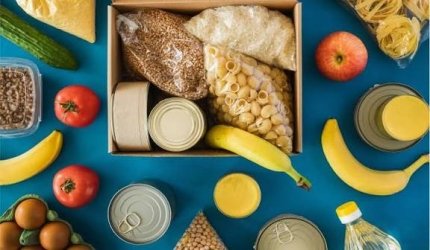
The most important thing is to provide drinking water, industrial canned food, ready-made legumes, breads, nuts, dried fruits and other products that do not require cooking. Cereals, pasta and dried legumes are useful for a longer period, but only if the appropriate conditions are met.
The optimal stock is formed according to the needs of a particular family, regularly checked and gradually updated. This approach allows you to prepare for supply disruptions without unnecessary purchases and accumulation of unsuitable products.
FAQ: Frequently asked questions about stocking up on groceries at home
What products are a must-have at home in case of a crisis?
First of all, drinking water, industrial canned fish and meat, ready-made legumes, canned vegetables, bread, nuts, dried fruits, and products for quick snacks. Additionally, it is worth having cereals, pasta, and oil if you have the opportunity to cook.
How many days of food should you stock up on?
A basic guideline is at least three days. If there is space and financial means, you can plan a larger supply of products that are used regularly. It is important to consider the needs of all family members.
How much drinking water does one person need for three days?
For planning purposes, you can base your needs on 9–15 liters of drinking water per person for three days. In addition, process water is required. Actual needs may be greater in high temperatures, during illness, or under other special circumstances.
What foods can you eat without gas and electricity?
These include industrial canned goods, ready-to-eat legumes, breads, biscuits, nuts, dried fruits, some fruit purees and nutritional bars. Before using, you should check whether the product really does not require heat treatment.
Is buckwheat suitable for an emergency supply?
Yes, dry buckwheat is good for home storage, but it does require cooking. Therefore, it should be supplemented with foods that can be eaten without heating.
Can industrial canned food be stored for several years?
The shelf life depends on the type of product and the manufacturer. Under proper conditions, some low-acid industrial canned goods can maintain their best quality for 2–5 years. However, you should always follow the labeling and check the condition of the can.
Do you need a refrigerator for food storage?
It is advisable to form the basis of an emergency stockpile of products that do not require refrigeration before opening. This allows them to be used during long power outages.
What products should you take in your emergency suitcase?
The most convenient compact products for long-term storage: biscuits, bars, dried fruits, nuts and ready-made canned food in portions. Drinking water is also necessary. The weight of the products should correspond to the ability to safely carry the backpack.
Can you rely on home remedies during an emergency?
Only if they are manufactured using safe, proven technology and stored properly. Unknown homemade meat, mushroom, and low-acid vegetable cans may pose a risk of botulism. For an emergency supply, it is more practical to use industrial canned food.
How often should long-term storage products be renewed?
It is practical to check stocks approximately once every three months. It is necessary to monitor expiration dates, integrity of packaging and compliance with storage conditions. Products whose expiration date is approaching their expiration date should be used in the daily menu and replaced with new ones.
The material is for informational purposes only and is not a substitute for medical advice. Self-medication can be harmful to health. If you have food allergies, diseases that require a special diet, or symptoms of food poisoning, you should first consult a doctor. Food supplies for infants, young children, and people with special dietary needs should be formed individually.

