

A creative hobby doesn't require an art education, expensive equipment, or special talent. Its main value is much simpler: you do something for the sake of the process itself, learn something new, and get an activity that doesn't boil down to endlessly watching a movie.
Research on creative activities links such activities to positive emotions, feelings of autonomy, competence and engagement. A major World Health Organization review of more than 3,000 studies on arts and health also found a wide range of potential benefits of creative and cultural activities for well-being. At the same time, hobbies need not be turned into a method of “self-medication”: their value can lie simply in the pleasure.
Here are 15 creative hobbies you can try even with zero experience.
1. Sketching the city
Sketching is quick drawings of what you see around you: a house, a tree, a cup of coffee, passersby, an old balcony, or a bicycle by the entrance.
The main advantage of this hobby is the low threshold of entry.
You just need:
a small notebook;
a simple pencil or black pen;
15–20 minutes of free time.
Don't try to create a realistic illustration right away. It's much more interesting to set yourself a goal: one drawing per day for a week.
For example:
Monday is a window;
Tuesday - tree;
Wednesday - favorite cup;
Thursday - the facade of the house.
In a month, such a notebook will turn into a visual diary of the summer.
2. Watercolor in the open air
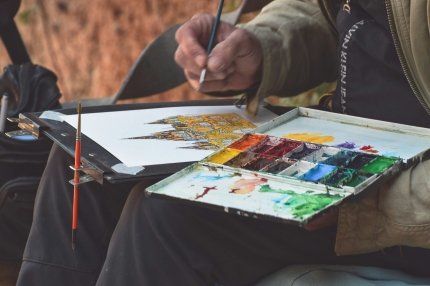
If regular sketching seems too subdued, add color.
To get started, you don't need a professional set of dozens of paints. A small watercolor palette, a brush, and thick paper are enough.
The summer format is especially convenient:
draw a sunset;
flowers in the park;
country house;
lemonade on the terrace;
sea or river;
trees after the rain.
Try working quickly—for example, 20 minutes per job. This helps you think less about “right” and more about observing.
The goal of the first month is not an exhibition. The goal is to make 10–15 works and see if you like the process.
3. Photo walks with a specific task
You don't have to buy a camera to get creative with photography. A modern smartphone is more than enough to get you started.
But there is one condition: instead of chaotic photography, choose a walking theme.
For example:
only red objects;
old door;
shadows;
display in windows;
geometry of buildings;
summer flowers;
bicycles;
people with umbrellas;
the city after the rain.
Restrictions paradoxically stimulate creativity: the brain begins to search more actively for a plot.
You can create a series of 10 photos on one theme and then choose the three strongest ones.
This is how the phone transforms from an endless scrolling tool to a surveillance tool.
At the same time, when taking photographs, it is important to follow safety rules and current restrictions on photographing military, defense, and critical facilities.

4. Art Diary
Art diary combines:
painting;
short notes;
collage;
photographs;
tickets;
stickers;
dried plants;
random phrases.
There are almost no rules.
On one page, you can write down your thoughts of the day, on another, draw a cup of coffee, and on the third, paste a ticket from your trip.
This is a good hobby for people who have a hard time choosing between writing and drawing.
How to get started
Buy one notebook and set a very simple rule:
one page per week.
You don't need to run it every day.
Once the habit is established, the frequency can be increased.
5. Collages and your own mini journals
If you don't feel like drawing, you can build your creativity from ready-made elements.
For a collage, the following are suitable:
old magazines;
advertising booklets;
photographs;
colored paper;
packaging;
postcards;
printed images.
You can use them to create thematic compositions or your own little magazines - zines.
For example:
"My summer in 20 details"
or
"Places in the city that I love" .
This hobby has almost no technical threshold: all you need are scissors, glue, paper, and an idea.

6. Pottery or sculpting
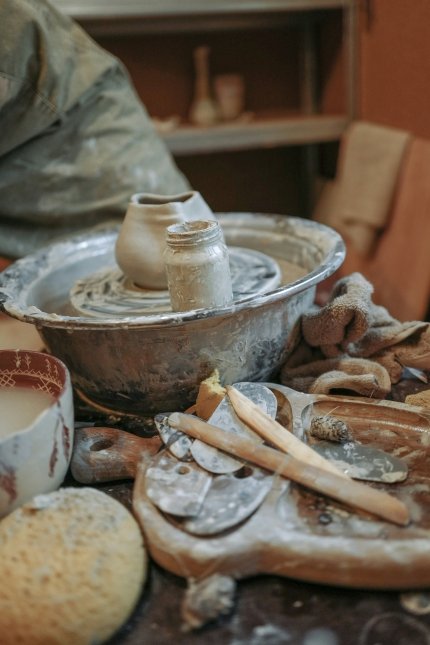
Working with clay is well suited for people who want to do something with their hands and get a physical result.
You can go two ways.
Ceramic studio
There are available:
wheel;
professional clay;
roasting;
glazes;
help of a master.
Sculpting at home
For a first acquaintance, self-hardening clay is suitable, which does not require a special oven.
Start with something simple:
plates for decorations;
stands;
a small vase;
candlestick;
decorative figurine.
Don't buy a large set of tools at once. First, check if you like the material and the process.
7. Embroidery
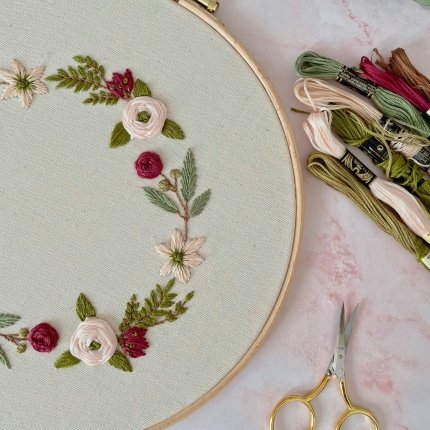
Embroidery can be very different - from traditional ornaments to modern minimalist designs.
The starter kit is simple:
hoop;
cloth;
needle;
several colors of thread.
For your first work, choose a small plot that you can realistically complete in a few evenings.
A project that is too big at the start often turns into another unfinished business.
The advantage of embroidery is that it is easy to take with you to the cottage, on a trip, or on the balcony.
8. Crochet
If classic knitting seems difficult, try crochet.
A beginner only needs to learn a few basic loops.
The first projects can be very small:
cup stand;
small bag;
cover;
Panama hat;
decorative flower.
Learning here is well broken down into small steps: today one loop, tomorrow another, in a few days the first finished thing.
This creates a sense of progress, which is important for any hobby.
9. Summer gardening
You don't need a dacha for this.
Even a small windowsill or balcony allows you to grow:
basil;
mint;
parsley;
arugula;
salad;
cherry tomatoes;
decorative flowers.
Gardening is interesting because the result changes every day.
Seeds were planted.
The first sprout appeared.
Then the leaves.
Then the harvest.
Leisure activity studies find a link between gardening and better measures of subjective well-being, although this does not mean that a few pots of plants in themselves will cure anxiety or depression.

Easy start
Don't create a garden of twenty crops at once.
Plant three:
basil, mint and lettuce.
This is enough to understand whether you enjoy taking care of plants.
10. Botanical Diary
This hobby is at the intersection of walking, observation, photography, and drawing.
Choose one park or area and throughout the summer document the plants you encounter there.
On the page you can:
draw a leaf;
write down the date;
add a photo;
describe the place;
find the name of the species;
indicate the flowering period.
In three months you will have your own little summer catalog.
It is important not to pick rare or protected plants for the sake of a herbarium - a photograph and sketch are enough.
11. Creative Writing
You can start writing without plans to publish a novel.
Try short formats:
mini-stories;
essay;
verse;
dialogue;
a letter to a fictional character;
description of one summer day.
Restrictions work well.
For example:
Describe the scene in a maximum of 300 words.
Or:
write a story that takes place over the course of ten minutes.
When the task is small, the feeling of having to create something brilliant disappears.
Research on everyday creativity links creative engagement with positive emotions and a sense of competence, but writing shouldn't automatically be called "self-therapy." It's a hobby, and psychotherapy is a separate professional practice.

12. Learning to play a simple musical instrument
In the summer, you can set yourself a very specific goal:
learn to play five songs in two months.
Convenient compact tools to get started:
ukulele;
mouth organ;
kalimba;
small synthesizer.
You don't have to wait until you've learned all the music theory.
First learn:
hold the tool correctly;
get a clean sound;
play basic chords or notes;
perform one simple composition.
Systematic reviews of research on musical activity find potential positive effects on psychological and social well-being, particularly in group singing. However, results vary depending on the type of activity and research methodology.
So, the main reason to pursue music should still be the desire to play.
13. Culinary project for the whole summer
Cooking becomes a hobby when you stop just making the usual dinner and start exploring the process.
Come up with your own summer project.
For example:
cook a dish from another country every week;
learn to bake bread;
master homemade pasta;
find 10 ways to prepare seasonal vegetables;
make your own family recipe book.
You can take photos of the results and record changes to the recipe.
After a few tries, you will have your own version of the dish, rather than just repeating the instructions.

14. Upcycling and recycling old things
Before buying materials for a new hobby, take a look at what you already have at home.
Old things can be:
repaint;
to alter;
to decorate with embroidery;
turn into a bag;
use for decoration;
restore.
For example, a regular denim jacket can become a project for several evenings: add patches, embroidery, or hand painting.
There is an additional practical advantage here: the result is a thing that can be used.
15. Creative walks without headphones
This is the easiest option for someone who doesn't want to buy anything at all.
Choose an area and go for a walk with a small task.
For example, find:
five interesting balconies;
three unusual trees;
the oldest house on the route;
street art;
the most beautiful courtyard;
a place for a future drawing or photograph.
You can combine a walk with photography, notes, or sketching.
Here is an important difference from regular walking: you don't just walk the route, you consciously observe.

How to choose a hobby if you like everything at once
Don't make a list of ten things to do for the rest of your life.
Choose a hobby based on four parameters.
How much are you willing to spend?
Almost free: writing, sketching, taking photos on your phone, walking.
Small budget: watercolor, knitting, embroidery, gardening.
Requires more expenses: ceramics, musical instruments, professional photography.
Where will you work?
For a small apartment, the following are better suited:
notebook;
writing;
knitting;
music in headphones on a digital instrument.
If there is a balcony, gardening is added.
If you want to leave the house - photography, plein air, and creative walks.
Do you want people or silence?
For quiet time alone:
painting;
writing;
knitting;
collage.
For communication:
choir;
ceramic studio;
cooking course;
art club;
photo walks.
Do you want a process or a finished result?
If it's important to see the finished item, try:
ceramics;
sewing;
knitting;
cooking.
If you like the process itself:
music;
painting;
writing;
photo.
The Two Week Rule: How to Know if This Hobby Is for You
The main mistake a beginner makes is buying materials for six months before the first class.
It's better to conduct a little experiment.
Day 1
Try a 20–30 minute session.
First week
Go back to it twice more.
Second week
Do one small completed project.
For example:
one picture;
one embroidery;
one pot with a plant;
one story;
one composition;
ten photos.
After that, ask yourself three questions:
Do I want to continue?
Do you enjoy the process, not just the result?
Does this activity fit into my regular life?
If the answer is "no," it's not a failure.
That's how they look for hobbies.
Why a hobby shouldn't become another job
Modern culture easily turns any activity into a project.
We started knitting - we need to open a shop.
We started taking photos — it's time to create a professional profile.
You bake cakes - why don't you sell them yet?
This approach deprives leisure of one of its main advantages: the ability to do something without KPIs, clients, and the need to demonstrate results.
Hobby has the right:
not to bring money;
do not collect likes;
not be useful for a career;
remain unprofessional;
sometimes it turns out badly.
Research on everyday creativity shows that positive experiences can be linked to a sense of autonomy and competence. But when a voluntary activity becomes just another to-do list, some of that value can easily be lost.
How to spend less time on your phone with a hobby
Simply telling yourself to “scroll less” is usually not enough.
The empty space needs to be filled with something.
Practical scheme:
Instead of 20 minutes of tape after work, 20 minutes of sketching.
Instead of the phone before bed, read a few pages of a book or do some knitting.
Instead of an hour of social media on Sunday, take a photo walk.
There's no need to declare a digital detox for a month.
It's much more realistic to create a few moments in the day where the phone simply loses out to a more interesting activity.
Do you have to be talented to have a creative hobby?
No.
Hobbies and professional activities have different criteria for success.
It is important for a professional to create a result of a certain quality.
For a person who draws for pleasure, it is enough that they are interested in drawing.
The first:
drawings may be crooked;
photographs are unsuccessful;
pots - asymmetrical;
scarves - uneven;
texts are clumsy.
This is a normal stage of learning.
Skill comes after practice, not before it.
Conclusion
A good summer hobby is not the one that looks the most impressive on social media, but the one that you want to return to.
Try a small format without big expenses: a sketchbook, a few plants on the balcony, a photo walk, a small clay project, your first embroidery, or a short story.
Give it two weeks and see how you react. If you feel like doing more, keep going. If not, try the next one.
The main thing is that creative leisure should not turn into another competition for productivity. Sometimes the best result of a hobby is an evening during which you are so absorbed in the process that you simply forgot to check your phone.
FAQ
What is the cheapest creative hobby?
Creative writing, sketching with a regular pen, photography on a smartphone, collages from old magazines, and creative walks require virtually no start-up costs.
What hobby can you start at home?
Drawing, art journaling, knitting, embroidery, writing, collage, cooking, modeling from self-hardening clay, and learning to play a compact musical instrument are well suited for the home.
What hobby is suitable for an adult who can't draw?
Photography, ceramics, knitting, gardening, creative writing, music, cooking, or collage. Artistic skills are not required for a creative hobby.
What hobby will help you spend less time on your phone?
Activities that occupy your hands and attention work best: drawing, knitting, pottery, a musical instrument, gardening, or cooking. It's helpful to replace a specific period of scrolling with a hobby in advance.
How much time should you devote to a hobby?
There is no set amount. 20–30 minutes a few times a week is enough to start. A regular, small format is often easier to fit into your life than waiting for a free evening.
What hobby can you try outdoors in the summer?
Plein air painting, urban sketching, photography, gardening, botanical diary and themed walks.
How to find a hobby you like?
Try a few classes in short two-week cycles. Don't buy a lot of equipment at once. Evaluate whether you want to return to the process after the initial excitement of the novelty.
Can a hobby improve your mood?
Studies have found a link between creative activity, positive emotions, and subjective well-being. However, the effect is individual, and hobbies are not a substitute for professional help for mental disorders.
What creative hobby is suitable for introverts?
Writing, drawing, photography, knitting, sculpting, collage, and plant care are all easy to practice alone, but any of them can be made social through a club or class if desired.
Is it necessary to monetize your hobby?
No. A hobby can remain a purely enjoyable activity. Turning it into a job changes motivation, adds deadlines, and external demands, so monetization only makes sense if you really want to.

