
A fogged windshield, a discharged battery, increased fuel consumption or frozen wipers can cause a lot of inconvenience even to an experienced driver. It is especially unpleasant when a small problem occurs before an important trip or far from home. You can find hundreds of car life hacks on the Internet: from cleaning headlights with toothpaste to defrosting windows with hot water. However, not all such tips are effective. Some can damage the paintwork, electronics or even create a danger on the road.
The most useful life hacks for motorists are simple actions that prevent malfunctions: regularly checking tire pressure, using the climate control system correctly, monitoring the battery condition, adopting an economical driving style, and preparing the car for seasonal conditions.
For example, incorrect tire pressure can simultaneously increase fuel consumption, accelerate tire wear, and impair handling. And a simple switch to the ventilation mode often helps to remove condensation from the glass more quickly without any additional tools.
Let's look at 15 practical tips for daily car use, explain how they work, and determine which popular tricks are best avoided.
1. Properly demist the glass with air conditioning
Fogging of car windows occurs when water vapor from the air condenses on a cold surface.
This most often happens in the fall and winter, when the temperature outside is lower than inside the cabin.
Additional moisture is created by wet clothes, shoes, snow on the mats, and passengers' breathing.
How to quickly remove condensation
In most cars, the following sequence works effectively:
Turn on the windshield defroster.
Set the outside air supply instead of recirculation.
Turn on the air conditioner if its operation is allowed at the current temperature.
Set comfortably warm air and sufficient fan speed.
Turn on the rear window heater.
Air conditioning can reduce the humidity of the air entering the cabin, which is why it is useful not only in the summer.
Car manufacturers, including Toyota, recommend using the windshield defroster and outside air to eliminate fogging.
An important nuance: at low temperatures, the air conditioning compressor in some cars may not turn on automatically. This depends on the design of the climate system.
What not to do
There is no need to constantly use recirculation when the windows are misting up from the inside. In this mode, the humid air remains in the cabin.
It is also undesirable to apply shaving foam, soap, or random homemade mixtures to the windshield.
They can leave streaks, create glare at night, and impair visibility.
If fogging occurs repeatedly, check the cabin filter, ventilation operation, and possible sources of moisture.
2. Check your tire pressure at least once a month
This is one of the easiest ways to reduce the risk of malfunctions and unnecessary costs.
According to the recommendations of the US National Highway Traffic Safety Administration (NHTSA), tire pressure should be checked at least once a month.
Insufficient pressure can increase rolling resistance, impair handling, and cause the tire to overheat.
Excessive pressure is also undesirable: it can change the wear pattern and worsen driving comfort.
How to measure blood pressure correctly
It is advisable to check the tires when they are cold - when the car has not been moving for at least three hours.
Use a working pressure gauge for measurement.
Determine the correct pressure according to the vehicle manufacturer's recommendations.
Usually, the relevant information is contained on a sticker in the driver's door opening or in the instructions.
Do not rely on the maximum pressure listed on the sidewall of the tire. This is not necessarily the recommended value for your vehicle.
If the vehicle is equipped with a TPMS tire pressure monitoring system, this does not eliminate the need for periodic inspections.
The warning may only appear after a significant drop in pressure.
3. Use smooth acceleration to save fuel
Sharp acceleration and braking increase energy consumption.
According to estimates from the American resource FuelEconomy.gov, an aggressive driving style can reduce fuel economy by approximately 15–30% on highways and by 10–40% in urban conditions with frequent stops.
These are ranges from studies of different cars, not guaranteed savings for every driver.
How to drive more economically
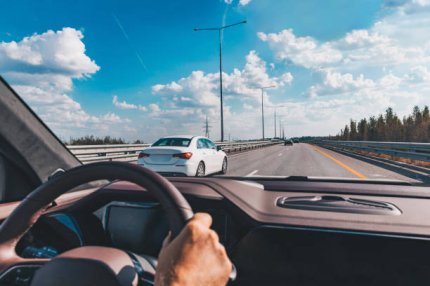
Try to maintain a steady speed, respecting road conditions and restrictions.
Assess the situation ahead in advance to avoid unnecessary sudden braking.
Don't accelerate hard only to stop almost immediately at the next traffic light.
On the track, keep in mind that aerodynamic resistance increases with increasing speed.
How much can you save?
Let's say a car consumes 8 liters of fuel per 100 km.
If, thanks to a change in driving style, the actual consumption decreases to 7.2 liters, it will be possible to use 8 liters less per 1000 km.
This is a conditional calculation.
The result depends on the engine, gearbox, route, temperature, load and technical condition of the vehicle.
The main rule is that savings should not be achieved at the cost of safety.
For example, driving in neutral on a downhill slope is not a universal way to save fuel and can reduce control of the vehicle.

4. Cool the interior faster in hot weather
A car that has been parked in direct sunlight for a long time can become very hot.
The temperature rises especially quickly in the cabin with the windows closed.
At the same time, the surfaces that are exposed to sunlight heat up the most: the steering wheel, dashboard, seats and trim elements.
How to cool your car without spending too much
Before starting your trip, you can briefly open the doors or windows to release some of the heated air.
After starting the car, use the air conditioner according to the vehicle instructions.
When the cabin cools down, in many systems, recirculation helps maintain the set temperature as the air conditioner re-cools the already cooler air.
The U.S. Department of Energy recommends briefly airing out a heated vehicle before running the air conditioner intensively.

Does sunscreen help?
A screen on the windshield can reduce the heating of certain surfaces in the interior.
This is especially true for cars that are parked outdoors every day.
At the same time, the effect depends on the screen material, its size and the position of the car relative to the sun.
Do not leave children or animals in a parked vehicle, even for a short time. The interior can heat up dangerously quickly.
5. Do not pour hot water on frozen glass.
In frosty weather, drivers often want to clear the windshield of ice as quickly as possible.
However, hot water is a bad method.
A sharp temperature drop can create thermal stress in the glass.
This is especially dangerous if there are chips or cracks.
In addition, water can refreeze on the glass, wiper blades and seals.

How to properly remove ice
First of all, use the standard air conditioning or heated windows, if provided.
A special plastic scraper is suitable for cleaning the outer surface.
You can use an automotive glass defroster that is compatible with the appropriate materials.
Do not use metal objects, knives or other tools that can scratch the glass.
Before starting the movement, it is necessary to ensure sufficient visibility in all directions.
Don't limit yourself to a small cleared area directly in front of the driver.
6. Don't turn on the wipers if they are frozen.
Frozen windshield wipers are a common problem in winter.
If you force them to turn on, you can damage the rubber elements, the drive mechanism, or create excessive load on the motor.
How to act correctly
First, check if the brushes move freely.
If they are frozen, use regular glass defrosting or a suitable automotive product.
Do not force the brushes apart.
Some models have a wiper service mode that allows you to set them in a convenient position for cleaning.
The procedure for using this mode depends on the vehicle design.
Also, you should not try to scrape off the ice directly with the rubber edge of the wipers.
This can accelerate their wear.
7. Check the battery condition before frost sets in
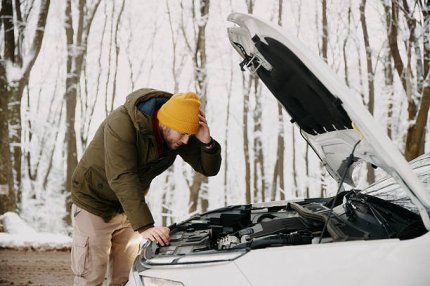
In cold weather, the load on the car's starting system increases.
At the same time, the ability of a conventional lead-acid battery to deliver current at low temperatures decreases.
Therefore, a battery that worked normally in the summer may not be effective enough in the winter.
NHTSA recommends checking the battery and charging system before the winter season.
What signs indicate a possible problem?
Pay attention if the starter turns the engine unusually slowly, starting has become unstable, or the battery often discharges after parking.
However, the reason does not necessarily lie in the battery.
The problem may be related to the generator, contacts, starter, or excessive electricity consumption while parked.
Will a starter help?
A portable jump starter, or booster, can help start a vehicle with a dead 12-volt battery.
But it must be selected according to the requirements of the car and used strictly according to the instructions.
Incorrect connection may damage the electronics or cause injury.
For hybrids and electric vehicles, you need to check the manufacturer's regulations especially carefully. You cannot interfere with the high-voltage system yourself.

8. Monitor tire wear with a special meter
The condition of the tread directly affects the tire's ability to shed water and provide traction.
In rain or snow, insufficient groove depth can impair handling and increase the risk of loss of control.
The popular advice to check the tread with a coin has a significant drawback: the result depends on the denomination of the coin and the method of measurement.
The best way to check tires
A more practical tool is a tread depth gauge.
It is inexpensive, compact and allows you to get a specific value in millimeters.
Measurements should be taken in several places across the width of the tire.
Also pay attention to uneven wear, cuts, cracks, and sidewall swelling.
According to NHTSA recommendations, tires should be replaced when the tread reaches the wear indicators. However, even before that point, traction on wet or snowy roads may be insufficient.
Do not rely solely on the minimum permissible value: difficult weather conditions may require a higher residual depth and the appropriate type of tire.

9. Clean your car headlights properly
Over time, plastic headlight lenses may lose transparency.
The reasons are exposure to ultraviolet radiation, pollution and gradual wear of the protective layer.
Deterioration in transparency can affect the quality of road lighting.
Does toothpaste help?
Some toothpastes contain abrasive ingredients, so they can temporarily change the appearance of the surface.
However, this is not a complete technology for restoring automotive optics.
Uncontrolled polishing can damage the remaining protective coating.
After such an intervention, the surface sometimes quickly becomes cloudy again.
How to properly care for headlights
For normal dirt, a suitable car shampoo and a soft cloth are sufficient.
If the diffuser has become cloudy due to material degradation, specialized restoration with appropriate surface protection is required.
At the same time, not all lighting problems are caused by the condition of the glass.
The cause may be lamps, LED modules, reflectors or incorrect adjustment.
If the headlights are not working properly, it is important to check the entire system.

10. Don't cover up scratches if the paint is damaged
Small scratches on the body can sometimes be made less noticeable with the help of a special polishing compound.
However, the repair method depends on the depth of the damage.
How to determine the nature of a scratch
If only the top clear coat is damaged, professional polishing can partially or completely remove the visible defect.
If the scratch has gone through the paint to the ground or metal, regular polish will not restore the missing layers of coating.
It is especially important not to neglect bare metal, as it can corrode.
What not to use
There is no need to apply toothpaste, household abrasive powders, or other random substances to the body.
They can create small scratches on the paintwork and change the shine of the surface.
Before self-treatment, it is worth determining the type of coating and checking the compatibility of the product.
For deep damage, it is safer to use appropriate paint repair technology.
11. Eliminate the cause of the unpleasant odor, not mask it
An unpleasant odor in the cabin can be caused by food residue, moisture in the floor mats, dirty upholstery, or problems with the ventilation system.
Air freshener sometimes temporarily changes the smell, but does not eliminate its source.
For example, if water constantly accumulates under a rug, using a freshener will not solve the problem.

What to check
First of all, inspect the floor mats, the space under the seats and the trunk.
If necessary, clean surfaces with products designed for specific materials.
Check the condition of the cabin filter according to the maintenance schedule.
If there is a persistent musty smell coming from the ventilation, the climate system may need cleaning or diagnostics.
Do not mask the smell of fuel, exhaust fumes, or burning insulation with fragrances.
Such odors may indicate a dangerous malfunction.
12. Remove unnecessary things from the trunk
Unnecessary cargo increases the weight of the vehicle.
Additionally, roof racks and boxes can impair aerodynamics.
According to FuelEconomy.gov, carrying extra items on the roof can significantly affect fuel consumption, especially at high speeds.
How to properly organize your trunk
Regularly review the items you carry around.
There is no need to carry equipment with you every day that you only use a few times a year.
At the same time, a first aid kit, emergency sign, necessary tools, and other important safety equipment should remain available according to the requirements and needs of the trip.
Heavy objects must be securely fastened.
Unsecured cargo can move during sudden braking and pose a danger to passengers.
13. Prepare your car in advance for a long trip
Even a well-maintained vehicle may need additional inspection before a long-distance trip.
Especially if the route passes through sparsely populated areas or involves driving in difficult weather conditions.
NHTSA recommends checking the condition of tires, lights, wipers, fluids, and other major systems before long trips.

What to check
Focus on the condition of the tires, pressure, washer fluid level, operation of the exterior lights, and the absence of malfunction warnings.
You also need to check the relevance of maintenance.
If your car has been experiencing unexplained noise, vibration, or braking problems for a long time, a long trip is not a good time to check if the problem will go away on its own.
What to have in the car
A useful set depends on the season and route, but may include:
Charged phone and car charger.
First aid kit.
Flashlight.
Reflective vest.
Emergency marking devices.
Drinking water.
Glass cleaning products.
Pressure gauge and related equipment for wheels.
Warm clothes and a blanket in winter.
Having tools does not mean that the driver should perform dangerous repairs on their own.
If the stopping place is dangerous, the first priority is to ensure the safety of people and call for necessary assistance.
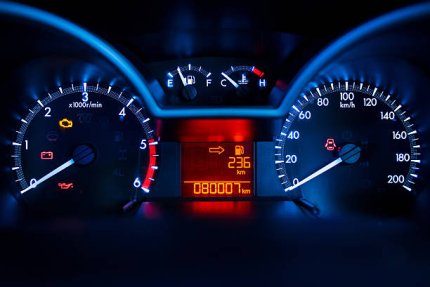
14. Don't ignore warnings on the dashboard
Modern cars are equipped with self-diagnostic systems.
They can report malfunctions in the engine, brakes, safety systems, charging, and other components.
However, the value of a specific indicator depends on the make and model of the car.
What signals require special attention?
For example, a red low engine oil pressure indicator could indicate a risk of serious engine damage.
In such a situation, you must stop safely and act according to the manufacturer's instructions.
The overheating warning should also not be ignored.
Do not open the cover of a hot cooling system: pressurized fluid can cause burns.
Can I just erase the error with a scanner?
A diagnostic OBD scanner helps retrieve trouble codes, but does not necessarily determine their root cause.
Clearing the code does not repair the vehicle.
In addition, after clearing errors, data important for further diagnostics may be reset.
Therefore, you should not consider a extinguished indicator as proof that the malfunction has been eliminated.
15. Use navigation and your phone without risk to drive
The smartphone has become one of the most useful tools for a driver.
It helps you plan your route, check the traffic situation, and find the information you need.
However, improper placement of the phone can create additional risks.
For example, a mount that blocks the view or poorly holds the device can distract the driver.

How to organize navigation correctly
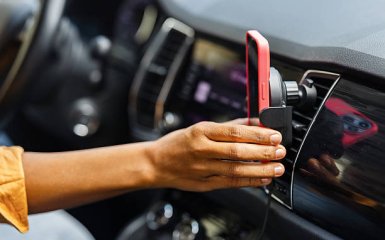
Install your phone in a secure car mount that does not interfere with driving or block your view.
Do not place foreign objects in the airbag deployment area.
Enter the route to the start of the journey.
If you need to change complex settings, it is best to do so after a safe stop.
Do not use double-sided tape as a substitute for proper fastening.
The reliability of such fixation depends on temperature, surface and vibrations.
Dropping your phone under the pedals or trying to pick it up while driving can create a dangerous situation.
Which car life hacks are really useful, and which ones are better not to repeat?
Not every popular piece of advice is technically sound.
You should be especially careful with methods that involve the use of household chemicals, abrasives, or foreign objects in the car's mechanisms.
| Problem | A safer approach | What is best to avoid? |
| Fogged glass | Ventilation, outside air, air conditioning | Shaving foam on the windshield |
| Ice on the glass | Standard heating, scraper, car defroster | Hot water |
| Dimmed headlights | Cleaning or professional restoration | Uncontrolled polishing with toothpaste |
| Minor scratches | Suitable paintwork material | Household abrasives |
| Worn tires | Tread depth gauge | Eye assessment |
| Unpleasant smell | Source search and cleanup | Constant masking with fragrances |
| Phone mount | Certified or compatible car mount | Scotch tape and unreliable stands |
| Low battery | Diagnostics and the correct starting device | Accidental connection of wires |
The main difference between a useful life hack and a dubious one is the predictability of the result and the absence of additional risk for the car and people.
How to save money on a car without compromising safety
The biggest savings are not always associated with using cheaper materials or doing repairs yourself.
It is often more profitable to prevent a malfunction.
For example, timely pressure checks can help avoid premature tire wear.
Proper maintenance of the cooling system reduces the risk of overheating problems.
And early diagnosis of a suspicious noise can sometimes fix a small malfunction before it damages other components.
What you shouldn't save on
Particular care should be taken when repairing the brake system, tires, steering, and suspension components.
These nodes directly affect traffic safety.
There is no need to use questionable spare parts just because of the lower price.
It is also undesirable to increase maintenance intervals without taking into account the manufacturer's recommendations and the actual conditions of use of the vehicle.
How to prepare your car for winter: a quick checklist
Before the cold season, it is useful to check the main systems on which safe operation depends.
Tire condition and adequacy of tread for winter conditions.
Tire pressure.
Battery health.
Heating and window blowing work.
Condition of windshield wipers.
Availability of appropriate winter washer fluid.
The level and compliance of the coolant with the manufacturer's requirements.
The operation of headlights, turn signals and brake lights.
Availability of a scraper, gloves and necessary emergency equipment.
Phone charge and the ability to stay in touch.
According to NHTSA recommendations, before winter trips, it is especially important to assess the condition of the battery, tires, lighting, wipers, and cooling system.
For Ukraine, preparedness for long travel delays, communication and power outages is of additional importance.
Five car myths that drivers still believe
Myth 1. To save fuel, you need to drive as slowly as possible
Too low a speed does not always provide the minimum fuel consumption. Efficiency depends on the engine, transmission and road conditions. It is more important to avoid excessive acceleration and follow a safe driving style.
Myth 2. In winter, the engine must be warmed up for ten minutes
For many modern cars, a long warm-up at idle is not necessary. You should follow the manufacturer's instructions, ensure proper inspection, and avoid high loads after starting until operating temperatures are reached.
Myth 3. If there is no warning light on the dashboard, the tires are fine
The TPMS system does not detect all tire damage and is not a substitute for regular tire inspection and pressure measurement.
Myth 4. Universal household products are suitable for cars
Some household cleaners can damage coatings, plastics, sealants, and other materials. You should check the compatibility of the product with the specific surface.
Myth 5. A minor malfunction can be postponed without consequences
Not every small problem requires immediate attention, but ignoring it can sometimes lead to much more expensive repairs. This is especially true for fluid leaks, overheating, and safety system failures.

Conclusion
Useful car life hacks should not replace maintenance or create additional risks.
The best results are achieved by simple habits: regular tire checks, proper use of the climate control system, smooth driving style, battery condition monitoring, and timely fault diagnosis.
Before using any unusual cleaning or repair method, you should consider the materials, construction, and recommendations of the vehicle manufacturer.
A small saving on household products does not justify the risk of damage to headlights, glass, paintwork or control systems.
FAQ: Frequently Asked Questions About Car Lifehacks
What are the most useful life hacks for motorists?
The most practical advice is to regularly check tire pressure, use the correct windshield washer mode, avoid aggressive driving, monitor the battery, and check the technical condition of the car in a timely manner.
How to quickly demist the windshield?
Turn on the windshield defroster, set the outside air supply, and if possible, use the air conditioner to dehumidify the air. If the glass is constantly fogging up, you need to check the ventilation and moisture sources.
Can you clean car headlights with toothpaste?
Toothpaste may contain abrasives that temporarily change the appearance of the surface, but do not provide full restoration of the protective coating. For cloudy headlights, it is better to use specialized cleaning and restoration technologies.
How to reduce gasoline consumption in a car?
Smooth acceleration and braking, maintaining a safe speed, correct tire pressure, and no excess cargo help. Actual savings vary depending on the vehicle and operating conditions.
How to defrost a windshield without damage?
Use standard window heating or blowing, a plastic scraper, and a suitable automotive defroster. Do not pour hot water on frozen glass or use metal objects.
How to check if tires need to be changed?
Measure the tread depth with a special device, inspect the tire for cuts, cracks, swelling and uneven wear. Take into account legal requirements and tire manufacturer recommendations for a particular season.
Is it possible to start a car with a dead battery yourself?
For some vehicles, it is possible to use a suitable jump starter. However, the connection procedure must be taken from the manufacturer's instructions. Incorrect actions may damage the electronics or cause injuries.
How to cool down a car interior faster in summer?
Before starting the journey, you can briefly ventilate the car to release some of the heated air. Then use the air conditioning according to the design of the climate system. Parking in the shade and using a sunshade also help.
What is a must-have in a car for a long trip?
It is worth having emergency identification, a first aid kit, a phone with a charger, a flashlight, drinking water, and equipment provided for by the vehicle design and route conditions. In winter, warm clothes, a scraper, and additional equipment for difficult weather conditions are useful.
Can I use home remedies to care for my car?
Not all household substances are compatible with automotive materials. Vinegar, abrasive pastes, solvents and other agents can damage surfaces. Before use, check the manufacturer's compatibility and recommendations.
The material is for informational purposes only. The methods provided are not a substitute for diagnostics, routine maintenance, or professional vehicle repair. When working with electrical systems, batteries, hot liquids, and other potentially hazardous components, manufacturer's instructions and safety precautions must be followed.

