
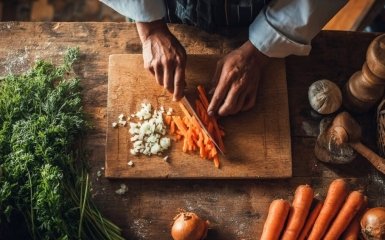
Why do ordinary potatoes in a restaurant turn out crispy, vegetables have a rich flavor, and meat remains juicy? Often it's not about expensive products or professional equipment, but about small details: the temperature of the pan, the amount of moisture, the way you cut and the sequence of adding ingredients.
Points of attention
- If you roast vegetables today, you can immediately prepare some of the ingredients for tomorrow's dinner.
- Before frying meat or fish, you can gently pat the surface dry with a disposable paper towel.
- If you want potatoes with a crispy crust and a soft middle, try partially boiling the pieces first.
Most cooking mistakes can be fixed by understanding what happens to foods during heating, mixing, and storage. For example, excess moisture prevents browning, starch can help thicken sauces, and improper cooling of cooked foods creates a risk of bacterial growth.
You don't have to buy expensive equipment or look for complicated recipes to get the best results. Sometimes, changing just one routine step is enough.
We have collected 30 practical cooking techniques for the home kitchen: from preparing ingredients and using spices correctly to cooking meat, vegetables, baking, and safely storing prepared meals.
Each tip explains not only what to do, but also why it works, when the method is appropriate, and what mistakes to avoid.
How to cook faster: five tips for organizing your kitchen properly
The speed of cooking depends not only on the recipe. A lot of time is spent searching for products, re-washing dishes, and correcting minor mistakes.
1. Start with a recipe, not a stovetop
Before cooking, read the recipe in its entirety, check the ingredients, and determine what takes the most time.
For example, if dinner consists of baked vegetables, rice, and fish, you should preheat the oven and prepare the vegetables first, then add the cereal, and cook the fish closer to the end.
This principle is called mise en place — pre-preparing everything you need. It reduces rush and helps avoid situations where the garlic is already burning and the onion is not yet chopped.
2. Cut foods into approximately equal pieces
When potatoes or carrots are cut very unevenly, small pieces have time to cook while large ones remain hard.
For soup, stews, and baked vegetables, try to make pieces of similar size.
This doesn't mean that all ingredients need to be cut the same. Carrots and zucchini, for example, have different densities and may require different cooking times.
The main thing is to consider not only the shape, but also the properties of the products.
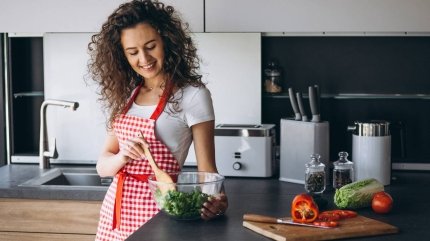
3. Use a kitchen scale for accurate recipes
In baking, the amount of ingredients is especially important.
For example, a cup of flour can contain different amounts of flour depending on how densely it was packed.
King Arthur Baking experts recommend using a kitchen scale for more consistent results.
If the recipe calls for 250 g of flour, it is better to weigh this amount rather than relying on an approximate volume.
For a salad, a small error is usually not critical, but for a biscuit or bread, it can significantly change the texture.
4. Keep your knife sharp and your cutting board stable
A dull knife requires more effort, can slip off hard foods, and makes precise cutting difficult.
Use a sharp, working knife suitable for the task.
The cutting board should be placed on a non-slip surface. A special anti-slip mat will do if necessary.
When cutting, keep the fingers of the hand holding the product bent and the blade pointing away from you. Do not try to speed up the work at the expense of safety.
5. Prepare ingredients for multiple dishes at once
If you roast vegetables today, you can immediately prepare some of the ingredients for tomorrow's dinner.
For example, prepared carrots are suitable for a warm salad, and boiled lentils are suitable for soup or a side dish.
It is important to determine the storage conditions in advance. Cooked foods should not be left in the kitchen until the next day.
This approach reduces the number of repetitive operations, but requires proper cooling and refrigerated storage.
How to make food tastier: five secrets of spices and flavor balance
Sometimes a dish is cooked correctly but feels bland. The reason may not be the amount of spices, but the way saltiness, acidity, sweetness, bitterness, and the rich umami flavor are combined.
6. Season the dish gradually, not just before serving
Adding all the salt at the end does not always ensure an even taste.
In many dishes, it is more beneficial to season individual components during cooking: vegetables at the beginning of the stir-fry, broth during the process, and the finished dish after the final inspection.
However, keep in mind that liquid evaporates during prolonged cooking, so the salt concentration may increase.
If you use salty cheeses, soy sauce, or ready-made broth, the amount of additional salt should be reduced.
7. Unleash the aroma of dry spices while heating
Coriander, cumin, paprika and some other spices contain aromatic substances that are better felt after a short heating.
Ground spices can be briefly warmed with oil over moderate heat before adding the main ingredients.
This helps distribute the flavor more evenly throughout the dish.
But spices burn easily, especially when ground finely. If they darken and develop a pungent odor, heating should be stopped.
8. Use acid when the taste seems heavy
Sometimes a soup, stew, or sauce has enough salt but still seems flat or too full of fat.
In such cases, a small amount of lemon juice or a suitable vinegar can help.
For example, a few drops of lemon juice can make the taste of a creamy sauce more pronounced.
Acid should be added gradually, constantly tasting. It does not replace salt and is not suitable for every dish.
9. Fry the tomato paste before adding the liquid
If you are making a stew or tomato sauce, try briefly heating the tomato paste along with the vegetables and oil.
During heating, some of the moisture evaporates and the flavor becomes more concentrated.
After that, you can add broth, water, or chopped tomatoes.
It is important to avoid burning: tomato paste contains natural sugars and can quickly stick to the bottom of the pan.

10. Add tender greens at the end of cooking
Dill, parsley, basil and other fresh herbs can lose some of their characteristic aroma during prolonged heating.
Therefore, for a more pronounced fresh taste, add them at the end or just before serving.
At the same time, denser aromatic herbs, such as rosemary or bay leaves, are often used during long stews.
The rule is simple: consider the properties of a specific plant, and don't add all the herbs at once.
How to get a crispy crust: secrets of frying and baking
The rosy color and rich aroma of fried foods are largely due to the Maillard reaction—chemical transformations between amino acids and sugars during heating.
Important conditions are temperature, time and the amount of moisture on the surface.
11. Remove excess moisture before frying
If the surface of the product is covered with water, some of the thermal energy will be spent on its evaporation.
Because of this, the formation of a golden crust may slow down.
Before frying meat or fish, you can gently pat the surface dry with a disposable paper towel.
After contact with raw food, the towel should be thrown away immediately, and hands and work surfaces should be washed thoroughly.
This technique affects the texture but does not replace checking for doneness.
12. Don't fill the pan too full with food.
When too many foods are fried at once in a small pan, the surface temperature can drop and moisture can build up.
As a result, instead of intensive frying, partial stewing occurs.
For example, if you are cooking a large portion of mushrooms or meat, it is better to work in several batches.
However, too much heat is also undesirable: it can cause the outside to burn before the inside is properly cooked.
13. Bake vegetables in a single layer
For a browned surface, vegetables need space and the opportunity to lose moisture.
Distribute the pieces on the baking sheet so that they do not lie in a large pile.
For many dense vegetables, a temperature of around 200–220 °C is suitable, but this needs to be adjusted depending on the recipe, the size of the pieces and your oven.
For example, carrots will take longer than thinly sliced zucchini.
Also, don't add too much oil: the vegetables should be lightly coated with it, not swimming in fat.
14. Give the mushrooms time to release moisture
Champignons and other fresh mushrooms contain a lot of water.
When heated, it rises to the surface, so the mushrooms may not be fried at first, but stewed in their own juice.
Don't rush to add more oil.
Cook in a large enough pan until the excess liquid evaporates, then let the mushrooms brown.
Readiness depends on the type of mushroom; wild mushrooms require especially careful species identification and proper heat treatment.
15. For crispy potatoes, use pre-boiling
If you want potatoes with a crispy crust and a soft middle, try partially boiling the pieces first.
After draining the water, let the potatoes dry and gently shake them in the pan so that the surface becomes slightly uneven.
Then add oil and bake on a baking sheet.
Small bumps create more surface area for browning. Baking time depends on the type of potato and the size of the pieces.
How to properly cook meat, poultry, fish and pasta
In these dishes, it is especially important to distinguish between culinary quality and food safety.
A beautiful color or appetizing aroma does not always indicate sufficient heat treatment.
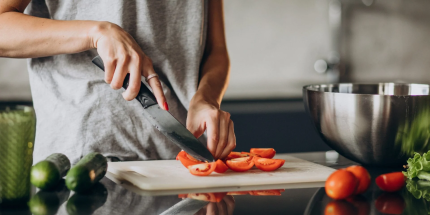
16. Use a cooking thermometer for poultry
The most reliable way to determine the safe doneness of chicken and turkey is to measure the internal temperature of the product.
According to the United States Department of Agriculture (USDA) guidelines, the minimum internal temperature for poultry is approximately 165 °F (74 °C) .
The thermometer should be inserted into the thickest part of the meat, without touching the bone.
The color of the juice or the absence of pink areas are not sufficiently reliable criteria for safety.
17. Don't wash raw chicken under the tap.
The popular notion that washing meat makes it safer is false.
When washing raw poultry, water droplets can transfer bacteria to the sink, work surfaces, and other products.
The USDA does not recommend washing raw chicken before cooking.
Proper heat treatment, hand hygiene, and preventing contact of raw meat with cooked food are much more important for food safety.
18. Don't judge the doneness of cutlets by color alone.
Ground meat requires particularly careful preparation, as bacteria can get inside the product during grinding.
For ground beef, pork, lamb, and veal, the USDA recommends a minimum internal temperature of 160°F (71°C) .
For minced poultry - approximately 74 °C .
Therefore, it is better to check homemade burgers and cutlets with a thermometer, rather than just cutting them and assessing the color.
19. Let the finished meat rest before slicing
After cooking a large piece of meat, it is not always worth cutting it immediately.
A short rest helps to equalize the temperature and can reduce fluid loss during slicing.
The resting time is different for different types and sizes of pieces.
At the same time, you should not leave cooked food at room temperature for a long time.
For whole cuts of beef, pork, and lamb, the USDA recommends a minimum internal temperature of 140°F (63°C), followed by a resting time of at least three minutes.
20. Finish cooking the pasta directly in the sauce
If you simply put the pasta on a plate after cooking and pour the sauce over it, it may not spread well.
Try to transfer the pasta to the sauce a little earlier than it reaches the desired doneness.
Add a small amount of the water it was cooked in.
The starch in this water helps the sauce combine better with the pasta and form a more uniform texture.
It is important not to overcook the pasta during the final heating.
Secrets of sauces, eggs and homemade baking
Even simple dishes can change depending on temperature, proportions, and mixing method.
21. Thicken the sauce with starch without lumps
If the sauce is too thin, you can use a small amount of cornstarch.
First, stir it in cold water until smooth, and then gradually pour it into the hot sauce, stirring.
Starch begins to thicken the liquid when heated.
Do not add dry powder directly to boiling food: it may clump.
The amount depends on the volume of liquid and the desired consistency.
22. Cook scrambled eggs over medium heat.
In a very hot pan, eggs quickly harden and can become dry.
For a delicate texture, use moderate to low heat and stir the egg mixture.
It is not necessary to add cream or milk—the texture depends largely on temperature and time.
For safe cooking, especially for children, pregnant women, and people with compromised immune systems, eggs should be properly cooked or pasteurized for recipes that require underheating.
23. Don't open the oven unnecessarily while baking.
Opening the door frequently changes the temperature inside the oven.
This is especially undesirable for baked goods whose structure has not yet stabilized, such as biscuits.
Preheat the oven and check for doneness according to the recipe's recommendations.
It is also important to remember that the actual oven temperature may differ from the set temperature.
For more precise control, a separate oven thermometer will help.
24. Don't overmix muffin batter.
During prolonged mixing of flour with liquid, a gluten structure develops.
This is often desirable for bread, but delicate baked goods like muffins can become dense.
Therefore, after combining the dry and wet ingredients, mix the mixture only until they are combined, unless the recipe requires otherwise.
Small lumps are acceptable in some types of this dough.
25. Consider the temperature of the butter
The same amount of oil can have different effects on baking depending on its temperature.
Cold butter is used for certain types of shortcrust pastry and puff pastry to preserve the individual fat layers.
Soft butter is convenient for beating with sugar in many cupcake and cookie recipes.
Melted butter creates a different texture to the dough.
Therefore, you should not arbitrarily replace cold butter with melted butter, even if the amount in grams remains the same.
How to properly store food and ready meals
Poor storage conditions can ruin even well-cooked food.
Special attention should be paid to temperature, humidity, and prevention of cross-contamination.
26. Keep leafy greens free from excess moisture
Lettuce leaves and other tender greens lose quality more quickly when left too wet or wrinkled.
If you wash the greens in advance, they should be thoroughly dried and then stored in a clean container suitable for the refrigerator.
You can use a paper towel to absorb excess moisture.
At the same time, different types of greens have different storage requirements, so you shouldn't expect the same freshness period.
27. Freeze foods in small portions
If you regularly use a small amount of a certain ingredient, it is convenient to divide it into portions in advance.
For example, chopped greens can be frozen in a suitable food container, and chopped vegetables can be packaged for individual preparations.
This helps to avoid re-thawing the entire quantity.
For safe storage, maintain the freezer temperature at approximately −18 °C .
Freezing does not make spoiled foods safe or kill all microorganisms.
28. Freeze broth and ready-made sauces for quick cooking
Small portions of broth or sauce are convenient to use for preparing side dishes, soups, and stews.
Before freezing, cool the finished product properly, divide into portions and place in containers suitable for food and low temperatures.
Mark the date of preparation.
Do not leave homemade mixtures of fresh garlic or herbs in oil at room temperature: if stored improperly, they can pose a risk of botulism.
29. Quickly refrigerate leftovers
A large pot of hot soup can cool down too slowly.
To speed up the process, divide the food into small portions and use shallow containers.
According to USDA recommendations, foods that require refrigeration should be cooled and placed in the refrigerator within two hours.
If the air temperature exceeds approximately 32 °C, this time is reduced to one hour.
Most leftovers are recommended to be used within three to four days when properly refrigerated. For certain foods, such as rice, some recommendations suggest shorter periods.
30. Don't use the same dirty cutting board for raw meat and salad.
Cross-contamination is one of the common causes of foodborne infections.
For example, if raw chicken is cut on a cutting board and then vegetables for a salad are cut without washing, bacteria can get into the products that will not be heated.
It is most convenient to use separate equipment for raw animal products and ready-to-eat foods.
After contact with raw meat, you should thoroughly wash your hands, knife, cutting board, and surfaces.
Table of safe cooking temperatures
For home cooking of meat, poultry and fish, a kitchen thermometer is a much more reliable tool than assessing color or juice.
| Product | Minimum internal temperature |
| Chicken, turkey and other poultry | 74 °C |
| Minced beef, pork, lamb | 71 °C |
| Whole pieces of beef, pork, lamb | 63 °C with a rest of at least 3 minutes |
| Fish | 63 °C |
| Leftovers from cooked meals when reheating | 74 °C |
| Casseroles | 74 °C |
Values are rounded to the nearest whole degree per USDA guidelines. Additional requirements may apply for special recipes, specific food categories, and certain products.
Five popular culinary myths you shouldn't believe
Some kitchen tips have been passed down for years, although their explanation is not always correct.
Myth 1. Searing seals all the juices inside the meat. The browning adds flavor, but it doesn't create an airtight barrier. The meat can still lose moisture.
Myth 2. Raw meat must be brought to room temperature. Controlled heat treatment is more important for safe and high-quality cooking. Raw meat should not be intentionally left out of the refrigerator for long periods of time.
Myth 3: Salt always makes legumes hard. This is an oversimplification. The cooking conditions and properties of the legumes themselves matter, and salt does not necessarily prevent them from softening.
Myth 4: Food can be stored as long as it smells good. Dangerous bacteria don't always change the smell or appearance of a product.
Myth 5: More spices means a tastier dish. An excess of aromatic components sometimes hides the main flavor, so balance is important.
Which kitchen tools really help you cook better?
Most of the techniques listed above do not require a professional kitchen.
However, a few simple tools can make the job much easier:
Kitchen scales - for accurate measurement of ingredients.
Food thermometer - for checking the safe doneness of meat, poultry, and other dishes.
Refrigerator thermometer - to monitor storage temperature.
A sharp kitchen knife — for more precise and convenient cutting.
A sturdy cutting board for safe food preparation.
Airtight food containers - for storing prepared food in portions.
You don't have to buy everything at once. The most important thing is to choose tools that match the dishes you regularly prepare.
Conclusion
Delicious homemade food depends not only on the recipe and the quality of the ingredients. Temperature, time, amount of moisture, proportions of ingredients, and proper organization of work are of great importance.
If you want to improve the result, start simple: cut the ingredients evenly, don't overload the pan, control the heat, and gradually adjust the taste.
For meat dishes, use a kitchen thermometer, and for ready-to-eat foods, follow refrigeration and storage guidelines.
The most useful cooking hacks are the ones you understand and can repeat. They help you cook faster, use less ingredients, and get the results you want without too much effort.
FAQ: frequently asked questions about cooking lifehacks
What cooking hacks are the most useful for beginners?
First, learn how to pre-prepare ingredients, cut them evenly, control temperatures, and season food properly. Basic food safety rules are also important: hand hygiene, separate utensils for raw meat, and refrigerated storage of ready-made meals.
How to make homemade food tastier without expensive products?
Pay attention to browning, balance of salt and acidity, proper use of spices, and cooking time. For example, pre-sautéing vegetables for soup can give it a richer flavor without complex ingredients.
Why does meat turn out dry and tough?
The cause may be excessive heat, cooking for too long, improper processing method, or the characteristics of a particular piece of meat. To check the doneness, it is worth using a thermometer and considering the recommended temperature.
How to make crispy potatoes in the oven?
You can partially boil the potatoes, pat them dry, slightly roughen the surface, and bake them in a single layer with a little oil. It's important not to overload the baking sheet and to consider the specifics of your oven.
Why do vegetables in the oven become soft instead of browned?
This is most often due to excess moisture, too close placement of vegetables, or insufficient temperature. Try to arrange the products in a single layer, preheat the oven, and do not add too much oil.
How to quickly thicken a liquid sauce?
One option is to mix a small amount of cornstarch in cold water. Gradually add the mixture to the hot sauce and heat until thickened. The amount depends on the recipe and desired consistency.
Why does pasta in a restaurant taste better than at home?
One possible reason is the way the pasta is combined with the sauce. If you finish cooking the pasta directly in the sauce and add a little starchy water after cooking, the texture may become more uniform.
Do I need to wash chicken before cooking?
No. Rinsing raw chicken is not recommended because water droplets can spread bacteria to kitchen surfaces. Clean equipment and proper cooking to a safe internal temperature are more important.
How long can you store prepared food in the refrigerator?
For many ready-made meals, if properly refrigerated and the refrigerator temperature is no higher than 4 °C, the recommended time is three to four days. Some foods may require shorter times. If food has been stored incorrectly, you cannot rely solely on smell.
What temperature is needed to safely cook chicken?
According to USDA recommendations, the internal temperature of chicken should reach approximately 74 °C. This should be checked with a food thermometer in the thickest part of the piece, not touching the bone.
Important: The article is for informational purposes only. Food safety advice does not replace individual medical advice. If you suspect food poisoning, especially in children, pregnant women, the elderly, and people with weakened immune systems, you should consult a doctor. Self-medication can be harmful to your health. For people with food allergies, food intolerances, or diseases that require a special diet, the composition of dishes should be coordinated with a doctor.

