

“I won’t go to school today,” “My stomach hurts,” “Can I stay home?” — these are words that even parents of children who previously enjoyed studying sometimes hear. In some cases, the reason is simple: fatigue, a difficult test, or an unwillingness to wake up early. In others, the reason for the refusal may be anxiety, bullying, conflicts with teachers, or serious learning difficulties.
Points of attention
- Not wanting to attend school does not always mean laziness or lack of interest in learning.
- When a student is constantly falling behind, afraid to answer at the board, or receives negative comments, learning can begin to be associated with stress.
- If the cause is known and not related to danger, the child can be helped to return to school with appropriate support.
If a child does not want to go to school, the first thing to do is to find out the reason, and not to force them to cross the school threshold at any cost. At the same time, prolonged avoidance of learning without proper support can increase fear and make it difficult to return to the usual rhythm.
Child psychologists and psychiatrists distinguish between a normal temporary reluctance to attend classes and the so-called school avoidance associated with pronounced emotional discomfort. Such situations require different approaches.
The issue is gaining particular attention in Ukraine, where air travel anxiety, lack of sleep, forced relocations, and interruptions in in-person learning are added to the usual school difficulties.
We understand why a child doesn't want to go to school, how to properly react to morning tears, what to do in case of bullying, and when the help of a psychologist or doctor is needed.
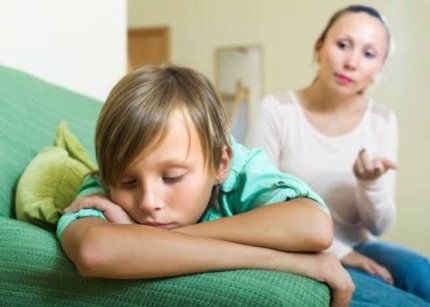
Why a child doesn't want to go to school: the main reasons
Not wanting to attend school does not always mean laziness or lack of interest in learning.
The American Academy of Child and Adolescent Psychiatry (AACAP) notes that school refusal can occur for a variety of reasons, including anxiety, relationship difficulties, and psychological distress.
According to estimates provided by the academy in its updated 2026 recommendations, approximately 1–5% of school-age children experience severe school avoidance at some point.
Such difficulties are especially common around the ages of 5–7 and 11–14, when children experience important transitions between educational stages.
However, the reason is not always related to age.
Fear of separation from parents
For a first-grader, school can mean the first experience of being away from close adults for a long time.
The child is worried that something will happen to him or his parents, is afraid to stay in an unfamiliar environment, or is not sure that he will be picked up after school.
A little anxiety during adjustment is common.
But if the fear is prolonged, excessive, and interferes with daily life, it may be related to separation anxiety disorder.
This condition requires professional evaluation.
Problems with classmates
Conflict, social isolation, and bullying can make school a place where a child does not feel safe.
For example, a student may study well but refuse lessons due to constant offensive comments during breaks.
Sometimes children hide the problem because they are afraid of retaliation from classmates or don't believe that adults will be able to help.
Learning difficulties and fear of making mistakes
Not all children learn material at the same speed.
When a student is constantly falling behind, afraid to answer at the board, or receives negative comments, learning can begin to be associated with stress.
Sometimes the cause is not insufficient effort, but undiagnosed learning difficulties, attention deficits, or other developmental issues.
Therefore, it is important to evaluate not only grades, but also how the child performs the tasks and what support he receives.
Overfatigue, lack of sleep and excessive workload
If a child attends several clubs after school, does homework until the evening, and gets little rest, a morning protest may be a manifestation of exhaustion.
According to CDC recommendations, children ages 6–12 typically need 9–12 hours of sleep per night, and adolescents ages 13–17 typically need 8–10 hours.
Insufficient sleep can affect mood, attention, and the ability to cope with daily stress.
Does the child just not want to study or is he really afraid of school?
It is important to distinguish between a temporary reluctance to attend classes and a situation where a child is experiencing severe emotional discomfort.
In professional literature, the terms school refusal or school avoidance are used.
This is a description of behavior, not an independent psychiatric diagnosis.
| Sign | Temporary reluctance | Marked avoidance of school |
| Basic reaction | Dissatisfaction, complaints about boring lessons | Severe fear, crying, panic |
| Physical symptoms | Usually absent | Possible abdominal pain, nausea, headache |
| Duration | Certain days or situations | Recurring or ongoing problem |
| Return to studies | Often occurs without significant difficulty | May require a special support plan |
| Help | Conversation, rest, change of regime | Assessment of causes, cooperation with school and specialists |
This table is not intended to make a diagnosis.
Even a one-time refusal may be associated with a dangerous situation, and a repeated unwillingness to learn does not necessarily indicate a mental disorder.
What to do if your child cries in the morning and refuses to go to school
When there are twenty minutes left before school starts, it's difficult for parents to stay calm.
However, shouting and threats usually do not help to find out the cause of the problem.
The first step is to assess the child's condition.
Pay attention to whether there is fever, vomiting, severe pain, or other symptoms of illness.
If a child is feeling physically unwell, appropriate medical evaluation is required.
If there are no obvious signs of illness, but the student is very scared, you should not automatically consider his complaints to be fiction.
Anxiety can be accompanied by real physical sensations.
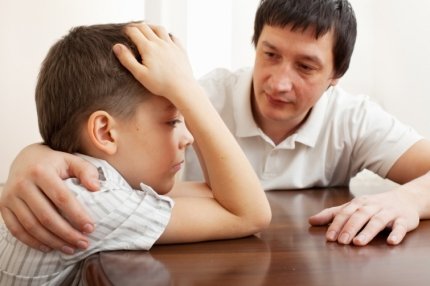
Step two — reduce stress
Try to speak in short, calm sentences.
For example:
"I see that you are having a hard time getting ready today."
"I want to understand what exactly is bothering you."
"We will think together about how to make the situation safer."
There is no need to demand that the crying stop immediately.
You also shouldn't promise that nothing unpleasant will happen at school.
It is more important to explain that adults will help deal with the problem.
Step Three — Determine Next Actions
If the cause is known and not related to danger, the child can be helped to return to school with appropriate support.
But if she reports violence, threats, or serious harassment, her safety must be ensured first.
In cases of severe fear or repeated disruptions to school attendance, it is worth involving a pediatrician, a mental health specialist, and representatives of the educational institution.
How to talk to your child to understand the real reason
Asking, "Why don't you want to go to school?" doesn't always help.
The child may not know the answer or be afraid of disappointing adults.
It is more useful to ask specific questions about events, people, and situations.
For example:
"When is it most difficult for you at school - before lessons, during classes, or during breaks?"
"Is there anyone you feel uncomfortable around?"
"What lesson or situation are you most excited about?"
"Who can you contact at school if you have a problem?"
"What could we change to make you feel more at ease?"
You don't need to ask all the questions in a row.
It is better to choose a moment for the conversation when the child is rested and does not feel pressure.
If the child does not explain anything
Don't insist on an immediate response.
You can suggest drawing a school day, describing the most unpleasant moment, or showing where exactly difficulties arise.
Sometimes talking while walking or playing together helps.
If reluctance to speak is combined with sudden changes in behavior, it is worth seeking professional advice.
What to do if a child is afraid of the teacher
A student may be anxious because of harsh remarks, public criticism, or fear of making a mistake at the blackboard.
It is important not to dismiss such experiences just because the teacher has extensive teaching experience.
At the same time, one should not draw final conclusions based on one phrase.
First, find out the specific circumstances: what happened, when, who was present, and how the child reacted.
If it's a simple misunderstanding, a calm conversation with the teacher may help.
If a child reports systematic humiliation, threats, or other inappropriate behavior, the problem should be raised with the school administration.
Respect for the teacher's authority does not mean that a child should endure psychological or physical abuse.
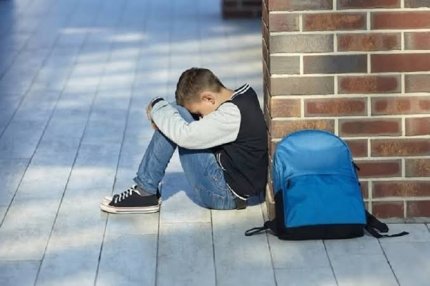
If a child doesn't want to go to school because of bullying
Bullying is not just a one-time argument between classmates.
It usually involves repeated aggressive behavior and an inequality of power or influence between the participants.
This can be humiliation, threats, physical violence, social isolation, or cyberbullying.
According to the American government resource StopBullying.gov, children do not always talk about bullying because they fear retaliation, are embarrassed, or doubt that adults will help.
What signs to look out for
Possible signals are:
sudden reluctance to attend school;
disappearance of personal belongings;
unexplained injuries;
sleep disturbances or nightmares;
sharp deterioration in mood;
avoiding communication with former friends;
recurring complaints of headache or stomach pain.
None of these signs alone prove bullying, but they should be taken seriously.
How to act as parents
Listen to the child without accusations and do not advise them to respond with violence.
Record known circumstances, save messages or other possible evidence.
Contact the administration of the educational institution and demand that the situation be reviewed in accordance with the current procedure for responding to bullying.
The Ministry of Education and Science of Ukraine provides for the obligations of the institution's management to notify the relevant authorities and organize a response to cases of bullying.
If there is an immediate threat to the child's safety, you should contact the police or emergency services.
The child does not want to go to school because of a stomachache or headache
A common situation: on weekdays, a child complains of nausea or abdominal pain, but on weekends the symptoms disappear.
Parents may decide that the student is deliberately faking the illness.
However, physical manifestations of anxiety can be real.
The American Academy of Pediatrics notes that school-related anxiety is sometimes accompanied by headaches, nausea, dizziness, and abdominal pain.
Why you shouldn't ignore symptoms
Even if the pain occurs mainly before classes, it is necessary to rule out physical illnesses.
You should not independently establish that the reason is definitely psychological.
The first step should be to consult a pediatrician, especially if symptoms recur, worsen, or are accompanied by other complaints.
If the doctor does not find a physical illness, the next step may be to assess anxiety and school stressors.
The goal is to help the child return to school without ignoring their well-being.
How to help a first grader who is afraid of school
Starting school is a significant change from your usual lifestyle.
The child is getting to know new adults, rules, classmates, and schedules.
For some first-graders, the most difficult part is separation from their parents.
What can help you adapt?
It is useful to explain to a first-grader in advance what the school day will look like, who will meet him and when his parents will take him home.
It is important that these arrangements are predictable.
If possible, you can introduce the child to the teacher, show them the classroom, and take the usual route to school.
There is no need to describe school exclusively as a place of entertainment.
It's better to honestly explain that there will be interesting activities, rules, and new tasks.
If the fear of separation is very strong or does not subside, it is advisable to consult a specialist.
Why did the teenager suddenly stop going to school?
In adolescence, school avoidance may more often be related to difficult relationships, bullying, academic stress, or mental health problems.
AACAP recommends that situations where school refusal first appears at an older age be evaluated especially carefully.
It is also important to consider a teenager's need for personal space.
Constant monitoring of messages, questions about friends, or threats of punishment can further complicate the conversation.
Try to discuss specific difficulties and agree on common steps.
If a teenager refuses to study for an extended period of time, becomes isolated, or exhibits pronounced mood swings, professional evaluation should not be delayed.
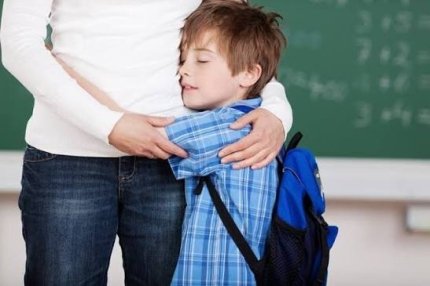
Why is a child afraid of school during war?
In Ukrainian realities, reluctance to go to school may be related not only to studies.
A child may be afraid of air anxiety, staying in shelter for a long time, loud noises, or being separated from parents in times of danger.
Well-being is also affected by nightly shelling, forced relocations, and interrupted in-person education.
UNICEF emphasizes that war and prolonged uncertainty can increase fear and affect children's daily functioning.
How to talk about school safety
You should not reassure your child that there is no danger.
It is better to talk about specific rules: where the shelter is located, who accompanies the students, and how communication with parents takes place.
It is also necessary to check the current training format, safety conditions, and procedures of a particular institution.
If the situation does not allow for safe attendance at school, possible options for organizing learning should be discussed with the administration in accordance with current regulations.
Real danger cannot be interpreted as a manifestation of unfounded childish anxiety.
How to get your child back to school after a long absence
Prolonged school avoidance can make it difficult to return.
Over time, missed assignments accumulate, contacts with classmates weaken, and the thought of returning begins to cause even more anxiety.
According to AACAP recommendations, the best results are achieved when the family, school, and appropriate professional work together.
One evidence-based approach is cognitive behavioral therapy, which helps process anxious thoughts and gradually return to difficult situations.
Why a gradual return is sometimes more effective
If anxiety is severe, specialists may recommend an individual return to school plan.
It sometimes involves a shorter initial stay at school, contact with a trusted adult, or a gradual increase in the number of lessons attended.
It is important that such a plan takes into account the reason for avoidance.
If the problem is related to bullying or another real threat, the danger must first be eliminated.
Gradual return should not mean forced immersion in an environment where the child continues to be harmed.
Action plan for parents for the coming week
If a child has started to regularly refuse school, it is useful to act consistently.
The plan provided is a guideline for organizing care, not a treatment protocol.
| Stage | What to do |
| Day 1 | Talk calmly with your child, assess symptoms and possible risks |
| Day 2 | Contact the class teacher and find out the situation at school |
| Day 3 | Consult a pediatrician if necessary. |
| Day 4 | Determine what changes in training or regimen might help |
| Day 5 | Agree with the teacher on specific ways to support |
| Days 6–7 | Assess changes and, if necessary, consult a child psychologist |
You don't need to wait until the end of the week if the problem is severe.
In case of severe fear, suspicion of violence, a sharp deterioration in condition, or dangerous symptoms, help is needed earlier.
How to organize your morning to reduce stress before school
A predictable schedule can make daily meetings easier.
It is useful to prepare a backpack, clothes, and necessary items the day before.
In the morning, it is advisable to leave enough time for breakfast and the road without constant rush.
But it's important to understand that a flexible schedule doesn't eliminate bullying, anxiety disorders, or learning problems.
It can be a supporting tool, not the only solution.
How to support your child in the evening
The first thing you should pay attention to is sleep.
If a student goes to bed late every day, waking up in the morning can be much more difficult.
It is also worth assessing the workload of classes, the amount of homework, and the opportunity for rest.
Sometimes reducing extra classes helps a child adapt better to learning.

What not to do if your child refuses to go to school
Even when parents are worried about missed lessons, some reactions can make the situation worse.
Don't call your child lazy. It doesn't help you understand the reason for the refusal.
Don't make fun of fear. For a child, their experiences can be very strong, even if the situation seems insignificant to an adult.
Don't threaten punishment for the mere fact of anxiety. Fear of punishment can reinforce hiding problems.
Don't ignore physical symptoms. Abdominal pain or nausea require careful evaluation.
Don't let the problem go unresolved for months. A prolonged absence from school can make it difficult to return.
Do not force a return to a dangerous environment. If there is violence or bullying, the priority is to protect the child.
At the same time, you shouldn't automatically turn every difficult school morning into a complete abandonment of learning. You need to find an appropriate way to support and return to the educational process.
When you need the help of a psychologist or child psychiatrist
A one-time reluctance to go to class does not necessarily require special treatment.
But if the fear recurs, the child misses school or cannot function normally, it is necessary to consult a specialist.
According to the recommendations of the American Academy of Pediatrics, if school avoidance lasts for more than a week or is accompanied by persistent physical symptoms and pronounced anxiety, it is worth seeking professional help.
Particular attention should be paid to the following manifestations:
severe panic reactions before school;
regular vomiting or pain for no apparent reason;
sleep disturbances;
pronounced social isolation;
prolonged depressed mood;
a sharp deterioration in daily functioning;
statements about hopelessness or self-harm.
If thoughts of suicide, self-harm, or an immediate threat to safety arise, emergency help is needed.
Treatment of anxiety disorders in children may include psychotherapy and, for certain indications, medication under the supervision of a physician.
You cannot prescribe sedatives to a child yourself.
Conclusion
When a child doesn't want to go to school, it's important not to rush to explain their behavior as laziness or an unwillingness to learn.
The reasons for refusal may be fatigue, learning difficulties, fear of separation, conflicts, bullying, or anxiety.
The best approach is to calmly find out the reason, check on the child's safety and well-being, and agree on specific steps together with the school.
If necessary, it is worth involving a pediatrician, psychologist, or child psychiatrist.
The main task of parents is not just to ensure that children attend classes, but to help their child return to school in an environment where they feel safe enough and receive the necessary support.
FAQ: Frequently asked questions about a child's reluctance to go to school
What to do if a child categorically does not want to go to school?
First of all, you need to assess her physical condition, find out the reason for the refusal, and check if there is a safety threat. If the fear recurs or the child misses classes, it is worth involving the school and relevant professionals. Yelling and punishment are no substitute for finding the cause.
Why does a child cry every morning before school?
The cause may be separation anxiety, peer conflict, academic difficulties, or other stressors. Sometimes the problem is related to overexertion. If crying is recurrent and interferes with school attendance, professional evaluation is needed.
How to get a child to go to school without tantrums?
Forceful coercion is not the best way to solve the problem. It is more important to identify what is causing the strong protest and organize support. If anxiety is pronounced, a gradual return to education with the participation of specialists may be necessary.
Why doesn't my child want to go to school after the holidays?
After a long break, children may find it difficult to get back to the routine of getting up early, getting into the routine of school, and getting back into the routine of studying. Separation anxiety and anxiety about classmates may also increase. If the difficulties persist, it is worth looking for a specific reason.
What to do if a first grader is afraid of school?
It is helpful to explain the school schedule, maintain predictability, introduce the child to the teacher, and discuss their experiences. If the fear is severe, prolonged, or accompanied by panic and physical symptoms, professional consultation is necessary.
Can a child not want to go to school because of anxiety?
Yes. School anxiety can manifest as fear, crying, nausea, headaches, or stomach aches. However, these symptoms do not prove the presence of an anxiety disorder. Physical causes should be ruled out and an appropriate evaluation should be performed.
What to do if a child is bullied at school?
It is necessary to listen to the child, record the circumstances and contact the administration of the educational institution. If there are signs of bullying, a response should be demanded in accordance with current procedures. In the event of an immediate threat to life or health, the assistance of the police or emergency services is required.
Can I leave my child at home if he is afraid of school?
The solution depends on the cause of the fear and the safety situation. If a child is at risk of violence or has medical contraindications, they should not be forced to attend a dangerous environment. For anxious school avoidance, experts usually recommend organizing a supported return to school so that the problem does not worsen.
How to understand that a child needs a psychologist?
Help may be needed if school anxiety is recurrent, panic attacks occur, sleep disturbances occur, isolation occurs, or school absences are prolonged. If symptoms significantly affect daily life, it is worth seeking help from an appropriate professional.
Should a child be punished for missing school?
Punishment does not address the underlying causes of anxiety, bullying or learning difficulties and can reinforce mistrust. It is important to distinguish between deliberate breach of agreement and avoidance of school due to emotional discomfort. Further action should take into account the actual circumstances.
Important: This article is for informational purposes only and is not a substitute for professional medical or psychological advice. Self-treating anxiety disorders, depression, and other mental health conditions can be harmful. If your child regularly refuses to go to school, experiences severe fear, has recurring physical symptoms, or has noticeable behavioral changes, be sure to consult a doctor and, if necessary, a child psychologist or psychiatrist. In cases of violence, risk of self-harm, or an immediate threat to life, emergency care is required.

