
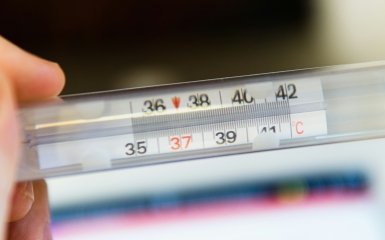
The mercury thermometer slipped from my hands and broke on the floor. Among the glass fragments, small silver balls appeared, which quickly rolled in different directions. In such a situation, it is easy to get confused, especially if there are small children or pets at home. The first thing to do if a mercury thermometer breaks is to remove people and animals from the room, isolate the spill site, open the windows and contact the State Emergency Service for advice by calling 101. There is also a single emergency number in Ukraine, 112.
The most dangerous mistake is to try to quickly remove mercury with a vacuum cleaner, broom, or regular rag. Such actions can break up the metal droplets, spread the contamination, and increase the concentration of toxic vapors in the air.
At the same time, a broken thermometer does not mean that everyone present will definitely be poisoned. The risk depends on the amount of mercury, the duration of contact, the room temperature, and the correctness of further actions.
Let's consider how dangerous mercury is, how to determine the type of broken thermometer, when it is permissible to carefully collect a small amount of metal yourself, in which cases professional demercurization is required, and where to go for safe disposal.
What to do if a mercury thermometer breaks: first steps
If you see fragments of a thermometer and silver drops on the floor, do not immediately try to pick them up with your hands.
First of all, it is necessary to prevent the spread of mercury and limit the possible inhalation of its vapors.
Step-by-step algorithm
Get everyone out of the room. Children, pregnant women, the elderly, and pets are the first to leave. Exit in a way that avoids stepping on the spill.
Isolate the room. Close the doors to other rooms to limit the spread of contaminated air.
Open the windows to the outside. Provide ventilation, but do not direct a strong stream of air directly at the mercury balls.
Turn off additional heat sources if safe to do so. Elevated temperatures accelerate the evaporation of mercury.
Do not use a vacuum cleaner, broom, or mop. Do not step on the mercury and do not allow others to enter the room.
Call the State Emergency Service at 101 and explain where exactly the thermometer broke, whether mercury leaked, and what surface it landed on.
Rescuers will help determine the necessary next steps. Depending on the circumstances, specialized cleaning of the premises may be required.
It is especially important to contact specialists if mercury has gotten into the carpet, upholstered furniture, floor cracks, or heating appliances, or if its amount cannot be estimated.
How to determine if there is mercury in a broken thermometer
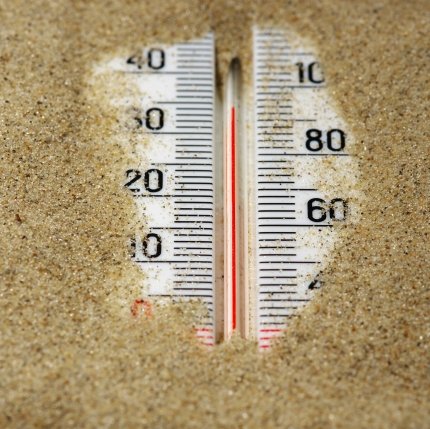
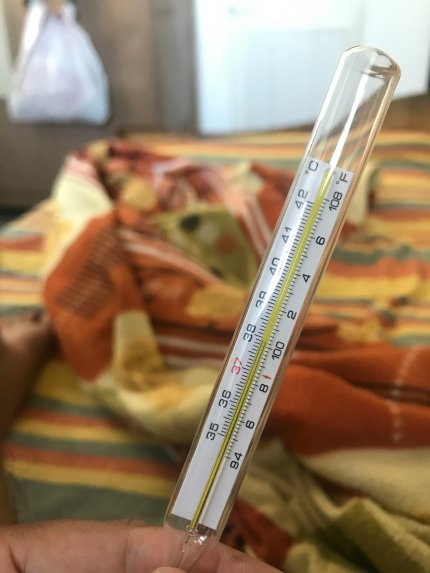
Not every glass medical thermometer contains mercury.
There are also mercury-free models on sale that use alcohol solutions or special metal alloys.
For example, some mercury-free thermometers use galinstan, an alloy of gallium, indium, and tin.
Outwardly, it may resemble mercury.
Main features of different thermometers
| Thermometer type | What's inside | What to look out for |
|---|---|---|
| Mercury glass | Metallic mercury | Silvery liquid that forms moving balls |
| Mercury-free metal | Usually a special alloy | Silver liquid and mercury-free labeling |
| Spirituous | Colored liquid | Most often red, blue or another color |
| Electronic | Electronic components and battery | There is no glass flask with mercury. |
| According to the recommendations of the US Environmental Protection Agency (EPA), if a broken glass thermometer contained silvery liquid, but there is no confirmation that the device is mercury-free, the presence of mercury should be assumed. | ||
| The inscription Mercury Free or corresponding manufacturer's marking helps to distinguish a mercury-free model. | ||
| Do not attempt to test the fluid by touch, smell, or heat. Such experiments are dangerous and are not necessary to determine further action. |
How dangerous is mercury from a broken thermometer?
Mercury is a metal that is in a liquid state at normal room temperature.
Unlike most metals, it easily breaks into small, mobile droplets.
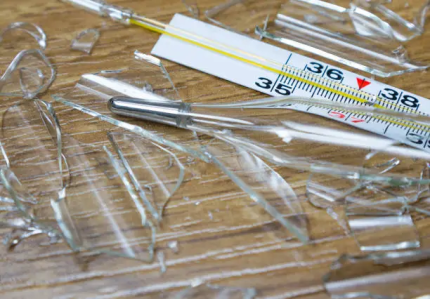
After breaking the thermometer, these balls can get into cracks, under furniture, baseboards, and other hard-to-reach places.
The main danger is that metallic mercury gradually evaporates even at room temperature, and its vapors have no noticeable odor.
How mercury enters the body
The greatest risk from a household spill is inhalation of metallic mercury vapor.
Once in the lungs, mercury can be absorbed into the bloodstream and affect the nervous system, kidneys, and other organs.
According to the U.S. Agency for Toxic Substances and Disease Registry (ATSDR), children may be particularly sensitive to the toxic effects of mercury due to their developing nervous systems.
During pregnancy, mercury exposure also requires special attention due to possible risks to the fetus.
At the same time, contact of a small amount of metallic mercury with intact skin usually poses much less danger than inhalation of its vapors.
This does not mean that you can touch mercury with your hands.
Can you get poisoned from one broken thermometer?
This possibility exists, but severe poisoning after short-term contact with a small amount of mercury is not inevitable.
Medical thermometers usually contain a relatively small amount of metal.
However, the danger increases if mercury is left indoors, heated, or sprayed by a vacuum cleaner.
Therefore, the main task is to prevent long-term air pollution and ensure proper purification.
How to properly collect mercury from the floor
The safest option when in doubt is to entrust the collection of mercury to trained professionals.
The State Emergency Service recommends seeking help, especially if there is no necessary protective equipment or confidence that the contamination can be completely eliminated.
At the same time, the EPA allows for the careful self-collection of small amounts of mercury, about the same as in a household thermometer, from a smooth, hard surface, provided that appropriate instructions are followed.
Before cleaning yourself, it is advisable to seek advice from the State Emergency Service. If mercury has got on porous materials, in cracks, or on heating appliances, do not try to remove it using ordinary home methods.
What you need for a small spill on a smooth surface
According to EPA recommendations, for gentle mechanical collection, the following can be used:
rubber or nitrile gloves;
two small pieces of thick cardboard;
pipette or syringe without a needle;
adhesive tape;
flashlight;
paper napkins;
sealed container and packaging for contaminated materials.
The prepared container must comply with the requirements of the service that will accept hazardous waste.
A regular medical mask or wet gauze bandage does not provide reliable protection against mercury vapor. Therefore, it cannot replace room insulation, ventilation, and professional protective equipment.
How careful harvesting works
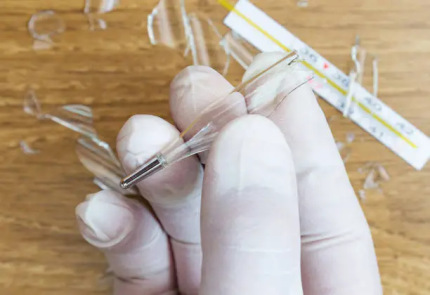
First, you need to put on gloves and carefully remove large pieces of glass without touching them with your bare hands.
Next, the mercury balls on the smooth surface are slowly collected using cardboard, trying not to separate them into smaller drops.
Individual beads can be drawn in with a pipette or a syringe without a needle.
To search for small drops, use a flashlight, directing the light at a slight angle towards the floor.
Mercury reflects light well, so the little shiny balls become more noticeable.
Residual small drops on a smooth surface are sometimes collected with adhesive tape.
All used materials and broken glass must be sealed as contaminated waste.
If some of the mercury has disappeared into the cracks or you are not sure that you have collected everything, you should stop cleaning and contact specialists.
What you absolutely must not do if a mercury thermometer breaks
Improper cleanup can create a greater hazard than the initial spill itself.
Attempts to quickly remove silver balls with ordinary household products are especially risky.
The seven most dangerous mistakes
Vacuum the mercury. Airflow and motor operation can spread mercury vapor. The vacuum cleaner itself can then also become a source of contamination.
Sweep with a broom. The bristles separate the mercury into smaller droplets and spread them over a larger area.
Wipe with a regular cloth. Mercury can smear, penetrate textiles and remain on the surface.
Pour mercury down the drain. The metal can remain in the pipes and pose a risk during subsequent maintenance of the system.
Throwing debris in the trash can can cause environmental pollution and endanger others.
Heat the spill area. Heat speeds up the evaporation of mercury.
Use homemade chemical mixtures. Do not fill a contaminated surface with chlorine-containing agents, vinegar, acids, or other reagents without professional instructions.
Separately, contact of contaminated shoes with clean surfaces should be avoided.
If you accidentally step on mercury, do not walk in the apartment in that shoe. Isolate it and get advice on further cleaning or disposal.
What to do if mercury gets on a carpet, sofa or mattress
Soft and porous materials create much more difficult cleaning conditions than tiles or linoleum.
Small beads can penetrate between the fibers and remain there after surface cleaning.
Therefore, regular washing, wiping, or using a household vacuum cleaner do not ensure reliable removal of mercury.
If the thermometer breaks on the carpet
No need to shake out the carpet, carry it around the apartment, or try to knock the mercury outside.
EPA recommends removing contaminated porous materials and disposing of them in accordance with hazardous waste regulations.
In the case of carpet, sometimes it is enough to professionally remove only the contaminated area, but the solution depends on the spread of the metal.
Before taking any action, it is worth consulting with demercurization specialists.
If mercury gets on a sofa or bed
Do not use the furniture until the contamination has been assessed.
This is especially important when it comes to a mattress, crib, or soft toys.
Do not attempt to clean such items with a steam generator: heating may increase the evaporation of mercury.
Depending on the circumstances, contaminated items may require specialized cleaning or disposal.
Clothing and fabrics that have been directly exposed to mercury should not be washed in a regular washing machine. This poses a risk of contaminating the machine and other items.
What to do if mercury gets into the cracks of the floor or under the baseboard
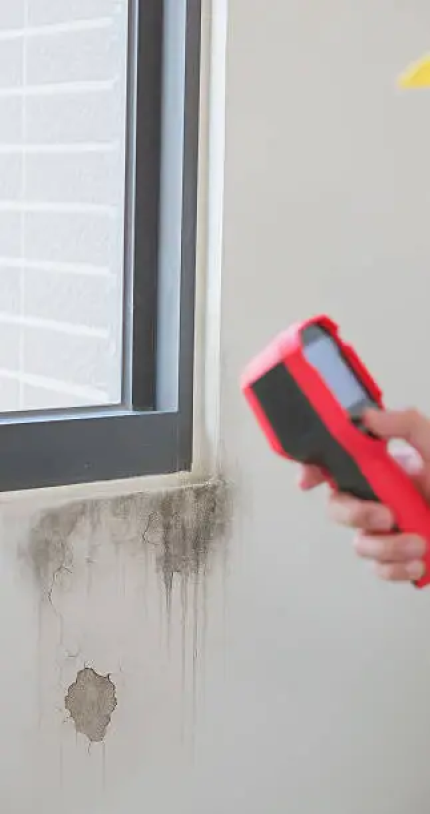
Mercury can travel an unexpectedly large distance from where the thermometer falls.
It is especially difficult to notice on uneven surfaces, between floorboards or under baseboards.
If metal gets into such places, simply wiping the floor does not guarantee safety.
When is professional demercurization needed?
Demercurization is a set of measures aimed at removing mercury and reducing indoor pollution.
It may involve mechanical metal collection, the use of special reagents, removal of contaminated materials, and control of vapor concentration.
Professional help is especially important if:
mercury has rolled under furniture or baseboards;
part of the metal fell into the cracks;
carpets or upholstered furniture are dirty;
mercury ended up on a warm radiator or near a heater;
the vacuum cleaner has already been used for cleaning;
it is unknown whether all the mercury has been collected;
there were small children or pregnant women in the room.
In difficult cases, specialists can use special equipment to measure the concentration of mercury vapor.
How long does it take to ventilate a room after a broken thermometer?
Ventilation helps reduce the concentration of mercury vapor in the air, but is not a substitute for removing the metal itself.
If mercury balls remain on the floor or furniture, simply opening a window will not solve the problem.
According to EPA recommendations, after successfully cleaning up a small spill, it is necessary to provide ventilation to the outside for at least the next 24 hours.
Ukrainian recommendations from the State Emergency Service may require longer ventilation - up to three days.
When can I use the room again?
This depends not only on the time that has passed since cleaning.
It is important to ensure that the contamination is removed and the room is safe for use.
For complex spills or concerns about the quality of the cleanup, professional air monitoring may be required.
You should not rely on smell: mercury vapor does not have a characteristic odor that would allow you to determine its concentration.
Children and pets should be kept out of the potentially contaminated area until the necessary measures are completed.
Where to dispose of mercury from a broken thermometer in Ukraine
Mercury and materials contaminated with it are classified as hazardous waste.
They cannot be thrown into the household waste container, left near the garbage chute, or flushed down the drain.
How to organize recycling
After consulting with the appropriate service, the collected mercury, thermometer fragments, and used materials should be hermetically packaged.
Ukrainian recommendations often suggest using a glass jar with a tight-fitting lid.
However, the specific method of packaging and transferring waste must be agreed upon with the organization that will accept it.
For information, you can contact the State Emergency Service at 101 or local authorities.
Hazardous waste collection procedures may vary depending on the community.
You don't need to take mercury to the first recycling collection point you come across.
Before transportation, it is necessary to ensure that the organization actually accepts the relevant waste and has communicated the requirements for its packaging.
What to do if mercury gets on your skin or in your mouth
Such situations require separate assessment.
Metallic mercury is poorly absorbed through intact skin and a healthy digestive tract.
However, this does not mean that any contact with her can be ignored.
If mercury gets on your hands
Stop contact with metal.
Remove contaminated gloves or other items in a way that does not spread contamination.
Wash exposed skin areas with soap and water.
If there is skin damage or it is suspected that mercury has entered the wound, medical advice is required.
If a child swallows mercury from a thermometer
According to toxicology services, small amounts of ingested metallic mercury are usually poorly absorbed in the digestive tract.
However, a broken glass thermometer poses an additional risk of injury from fragments.
Therefore, if ingestion is suspected, it is necessary to consult a medical professional.
You should not induce vomiting yourself, give activated charcoal, or other means to "remove mercury" without a doctor's prescription.
If a child is coughing, choking, has severe pain, or there is a suspicion of a foreign object entering the respiratory tract, emergency care is needed.
What symptoms may indicate mercury vapor poisoning?
Signs of poisoning depend on the concentration of vapors and the duration of their inhalation.
With significant acute exposure, coughing, chest pain, difficulty breathing, headache, nausea, and general weakness may occur.
Long-term exposure to mercury can negatively affect the nervous system and kidneys.
In particular, there may be impaired concentration, hand tremors, and changes in coordination.
However, these symptoms are nonspecific and can occur for other reasons.
You should not diagnose poisoning yourself just because of a headache after a broken thermometer.
When to call an ambulance
Emergency medical attention is needed if, after possible contact with mercury, the following symptoms appear:
difficulty breathing;
severe chest pain;
impaired consciousness;
pronounced weakness with a sharp deterioration in condition;
other severe symptoms.
In Ukraine, you can call 103 or 112.
To determine the need for tests and treatment, the doctor evaluates the circumstances of the contact, symptoms, and other medical data.
It is dangerous to use drugs to remove heavy metals on your own.
What to do if you have already vacuumed up the mercury
This is one of the most dangerous household mistakes.
A vacuum cleaner can separate mercury droplets, heat them, and carry the contaminants with the air flow.
In addition, mercury may remain inside the device.
What to do after such an error
Stop using the vacuum cleaner immediately.
Do not turn it on again and do not attempt to disassemble or clean the internal parts yourself.
If possible, isolate the contaminated area, restrict access to people, and contact the State Emergency Service at 101.
Report that the vacuum cleaner has already been used to clean up mercury.
In such a situation, a professional assessment of the contamination of the room and the device itself may be required.
Do not return the vacuum cleaner to normal use without confirming its safety.
Is it possible to neutralize mercury yourself with potassium permanganate or chlorine?
Household instructions often advise treating the floor with a solution of potassium permanganate, soda, soap, or chlorine-containing products.
However, it is important to understand that regular floor washing does not replace the mechanical removal of mercury beads.
Also, not all homemade chemical mixtures are safe.
Incorrect use of reagents may pose additional health risks or damage surfaces.
Professional demercurization involves the use of special methods and tools depending on the nature of the contamination.
Therefore, there is no need to experiment with concentrated solutions, mix household chemicals, or try to "dissolve mercury" on your own.
If chemical treatment is necessary, the method should be determined by specialists.
How to prevent a dangerous situation from happening again
The easiest way to reduce the risk of household mercury spills is to stop using mercury thermometers.
Modern electronic and infrared devices allow you to measure temperature without liquid metallic mercury.
However, the accuracy of the measurement depends on the quality of the device, proper use, and the location of the measurement.
You should not assume that any glass thermometer is always more accurate than an electronic one.
How to choose a safer thermometer
For home use, you can consider:
Electronic contact thermometer. Suitable for measuring temperature according to the manufacturer's instructions.
Infrared thermometer. Provides quick measurement, but requires compliance with rules regarding distance, device position, and environmental conditions.
Mercury-free glass thermometer. Contains no mercury, but remains fragile and can break.
If you have an old mercury thermometer at home, it should be kept in a protective case out of the reach of children.
An unnecessary mercury thermometer must be sent for specialized disposal, even if it is intact.
Conclusion
A broken mercury thermometer requires careful and consistent action, but there is no need to panic.
First of all, you should isolate the spill site, remove people and animals, ensure ventilation, and contact the State Emergency Service by calling 101.
The most important thing is not to use a vacuum cleaner, broom, or regular rag, not to heat the mercury, and not to throw contaminated materials in the household trash.
If the metal has fallen on a smooth surface, a small spill can be cleaned up under certain conditions according to professional recommendations. However, for contamination of carpets, furniture, crevices or heating appliances, it is better to entrust the cleaning to professionals.
To prevent such situations, it is worth replacing old mercury thermometers with modern mercury-free models.
FAQ: Frequently Asked Questions About Broken Thermometers and Mercury
What should you do first if a mercury thermometer breaks?
It is necessary to remove people and animals from the room, close the doors to other rooms, open the windows and do not touch the mercury. You cannot use a vacuum cleaner or broom. In Ukraine, for advice and assistance, you can contact the State Emergency Service at 101.
Is it dangerous if only one thermometer breaks?
A single medical thermometer usually contains a small amount of mercury, so severe poisoning is not inevitable. However, the metal vapors are toxic, and drops can remain in crevices and evaporate. That's why even a small spill needs to be cleaned up properly.
How to collect mercury from tiles or linoleum?
According to EPA recommendations, small drops of mercury on a smooth surface under certain conditions can be carefully collected with cardboard, a pipette, or a syringe without a needle, using gloves. A flashlight helps to detect small residues. It is advisable to consult with the State Emergency Service before self-cleaning.
Can mercury be removed with a vacuum cleaner?
No. The vacuum cleaner can spread mercury vapor and become contaminated itself. If you have already used it, do not turn it on again, isolate the contaminated area and contact a specialist.
How long does it take for mercury to evaporate from a thermometer?
Mercury can gradually evaporate at room temperature as long as it is left exposed. The rate depends on temperature, surface area of the droplets, and ventilation. Therefore, there is no universal safe time after which mercury left on the floor automatically ceases to be a hazard.
How much should you ventilate a room after a broken thermometer?
The EPA recommends ventilating the premises to the outside for at least 24 hours after successful cleaning. Ukrainian recommendations from the State Emergency Service may require ventilation for up to three days. However, it is the complete removal of contamination, not just the duration of ventilation, that is decisive.
What to do if a child touches mercury?
It is necessary to stop contact, remove the child from the contaminated area and wash exposed skin with soap and water. If you suspect mercury ingestion, injury from broken glass or symptoms appear, you should consult a doctor. You should not give yourself drugs for "removal of toxins".
Can I sleep in a room where the thermometer is broken?
The room should not be used until the mercury has been collected, contaminated materials have been removed, and necessary ventilation measures have been completed. If there is any doubt about the cleanup, a professional assessment should be obtained. It is especially important to keep children out of a potentially contaminated room.
Where to drop off collected mercury in Ukraine?
Mercury is classified as hazardous waste and should not be disposed of with regular garbage. To find out where it is accepted in your community, you can contact the State Emergency Service at 101 or local authorities. Acceptance and packaging conditions should be clarified in advance.
How do you know if the thermometer was mercury-free?
Mercury-free glass thermometers are often labeled with a label such as Mercury Free. A colored liquid usually indicates an alcohol thermometer. If the liquid is silver and there is no evidence that mercury is present, it is best to act as if the thermometer were mercury.
Important: the material is for informational purposes only and does not replace professional medical advice or recommendations from chemical safety experts. Self-treatment of possible mercury poisoning, self-use of sorbents, heavy metal removal preparations or hazardous chemicals can be harmful to health. In case of contact with mercury and suspicion of poisoning, be sure to consult a doctor. To assess the contamination and safely clean the premises, contact the State Emergency Service at 101. In case of difficulty breathing, severe chest pain, loss of consciousness or other severe symptoms, call 103 or 112.

