
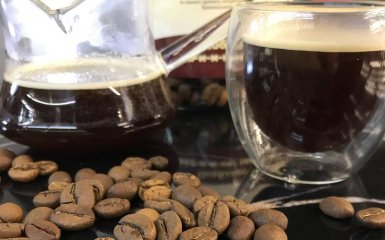
Arabica and robusta are the two most common types of coffee, which differ significantly in taste, aroma, caffeine content, and cultivation characteristics. Arabica generally has a richer aroma, more pronounced acidity, and natural sweetness, while robusta is characterized by more intense bitterness, a denser flavor, and about twice the caffeine content.
Points of attention
- Arabica usually has a more diverse aroma and more pronounced acidity, while robusta has a denser taste and more noticeable bitterness.
- Dry Robusta beans usually have about twice as much caffeine, but the amount in a cup depends on the recipe and preparation method.
- The designation “100% Arabica” does not guarantee quality: the origin, processing, freshness of the beans, and roasting are also important.
However, the statement that Arabica is always better than Robusta is a simplification. The quality of coffee depends not only on the botanical species, but also on the growing conditions, processing of the beans, the degree of roasting and the method of preparation.
Coffee labeled "100% Arabica" may be mediocre, while properly processed Robusta can surprise with a rich flavor without excessive bitterness.
Let's look at the main differences between Arabica and Robusta, find out which coffee contains more caffeine, why a darker roast does not necessarily mean a stronger one, and how to choose beans for espresso, cappuccino, Turkish coffee, or a coffee machine.
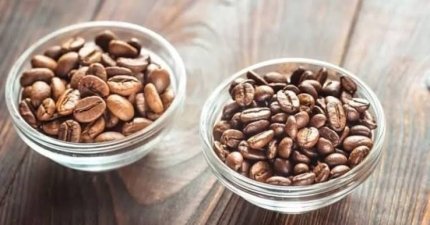
Arabica and Robusta: main differences in the table
Both species belong to the coffee plant genus Coffea, but have different botanical and chemical characteristics, which largely determine the properties of the finished beverage.
| Characteristic | Arabica | Robusta |
| Botanical name | Coffea arabica | Coffea canephora |
| Taste | Softer, often sweeter | More intense, often bitter |
| Aroma | Fruity, floral, nutty, chocolate | Nutty, woody, grainy, chocolate |
| Acidity in taste | Usually more expressive | Often inferior in feel |
| Caffeine in dry beans | Approximately 0.8–1.4% | Approximately 1.7–4% |
| Feeling of density | From light to rich | Often denser |
| Crema in espresso | Depends on freshness and preparation | Often produces more foam |
| Plant resistance | Usually more susceptible to disease | Generally more durable |
| Price | Often higher | Often lower |
| Typical use | Filter coffee, espresso, specialties | Espresso blends, instant coffee, single varieties |
Caffeine levels are approximate for dry coffee, not the finished beverage. Specific values depend on the plant variety, growing conditions, and other factors.
The main rule of thumb: if you like aromatic coffee with a variety of flavors, you should start with Arabica. If you want an intense bitter taste and more caffeine, you can choose Robusta or a blend of the two.
What is Arabica and why is it popular?
Arabica is a coffee obtained from the Coffea arabica plant. Its natural origin is associated with Ethiopia, and today this species is grown in many countries in Latin America, Africa and Asia.
Arabica is most often associated with high-quality coffee because it has great potential for forming a complex aromatic profile.
In the cup you can feel notes of citrus, berries, flowers, caramel, chocolate, honey or nuts. This does not mean that the coffee has been added to the appropriate ingredients. This describes the natural aromatic and taste characteristics of the grain.
For example, one Arabica may resemble milk chocolate and hazelnuts, while another may resemble blackcurrant and citrus.
At the same time, both drinks will remain regular black coffee without flavorings.
Why is Arabica often more expensive?
Growing Arabica usually requires careful selection of location and control of conditions.
The plants are often grown in mountainous areas where temperatures are more moderate and fruit ripening may occur more slowly.
Arabica is also more susceptible to a number of diseases, including coffee rust, which poses additional risks for farmers.
The final price is affected by yield, hand harvesting, fruit sorting, post-harvest processing, and transportation costs.
But a high price does not guarantee excellent taste. Improper storage, grain defects, or poor roasting can ruin even an expensive harvest.
What is Robusta and why does it contain more caffeine?
Robusta is the commercial name for the coffee species Coffea canephora, which originates from tropical regions of Africa.
This plant is generally better adapted to many warm and humid climates and has higher natural resistance to certain pests and diseases.
One of its characteristic features is its high caffeine content.
For the coffee plant, caffeine not only acts as a substance that affects the human body, but also participates in the plant's natural defense mechanisms against certain pests.
Robusta usually contains about twice as much as Arabica, although the specific ratio depends on the variety and growing conditions.
What does robusta taste like?
Traditionally, robusta is described as a strong, bitter coffee with a pronounced body.
It is characterized by shades of dark chocolate, cocoa, roasted nuts, wood and grains.
Low-quality coffee may have undesirable earthy, rubbery, or overly pungent flavors.
However, quality robusta doesn't necessarily have to be harsh or unpleasantly bitter.
Modern producers are paying more and more attention to the selection, processing and sensory evaluation of Robusta. For high-quality batches, the term Fine Robusta is used.
Such a grain can have a clean taste, a pleasant sweetness, and a well-balanced bitterness.
Therefore, robusta should not automatically be considered a cheap or low-quality substitute for arabica.
Arabica or Robusta: Which has more caffeine and which coffee is stronger?
For the same weight of dry beans, robusta usually contains more caffeine than arabica. But the amount of caffeine in the finished drink is determined not only by the type of coffee.
Also important are:
weight of ground coffee per serving;
water to coffee ratio;
cooking method;
grinding degree;
extraction duration;
composition of the grain mixture.
For example, a small shot of espresso may have a more concentrated flavor than a large cup of filter coffee. However, the total amount of caffeine in a large cup of filter coffee may be higher.
Therefore, it is wrong to compare the strength of drinks only by the richness of the taste or the size of the cup.
How much caffeine is in a cup of coffee?
Approximate values for common cooking methods:
| Drink | Volume | Caffeine |
| Espresso | 30–60 ml | Approximately 40–100 mg |
| Filter coffee | 200–240 ml | Approximately 80–120 mg |
| Instant coffee | 200–240 ml | Often 40–90 mg |
| Decaffeinated coffee | 200–240 ml | Usually a few milligrams |
These are guidelines, not exact figures for each recipe. Actual caffeine content can vary significantly depending on the bean and brewing technique.
If a person drinks two large servings of filter coffee, they may get more caffeine than after two small espressos.
Does a bitter taste mean more caffeine?
No. Caffeine has a bitter taste, but it is not the only thing that makes coffee bitter.
During roasting, numerous compounds are produced that also affect bitterness, aroma, and aftertaste.
Dark roasted Arabica may seem significantly more bitter than light roasted Robusta, although for the same weight of beans, Robusta will usually contain more caffeine.
So, bitterness is not a reliable way to determine the caffeine in a drink.
How roasting changes the taste of coffee
Roasting is one of the key stages in flavor formation.
Green coffee beans have completely different aromatic characteristics than finished roasted coffee. During heating, chemical reactions occur, including Maillard reactions, which contribute to the formation of characteristic aromatic substances.
The temperature profile and roasting duration affect the acidity, sweetness, bitterness, and body of the drink.
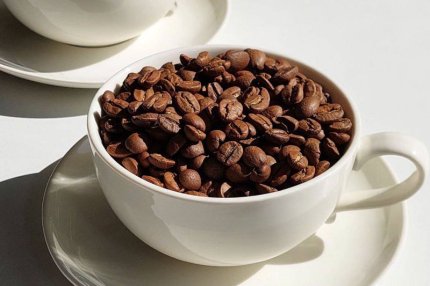
Light roasting
Light roasting usually allows you to better experience the characteristics of the grain's origin.
Fruity, berry, citrus, and floral notes can be clearly evident in coffee.
This profile is often chosen for alternative brewing methods, including pourover and other filtration methods.
However, light roasting requires the right cooking parameters. If extraction is insufficient, the drink may turn out to be too sour or not sweet enough.
Medium roast
A medium roast often provides a compromise between the natural characteristics of the grain and the flavors that develop during heating.
The taste may be dominated by chocolate, nuts, caramel and ripe fruit.
This is a common choice for home coffee machines, espresso and lattes.
Medium roast is especially good for those who want to experience the natural sweetness of coffee without excessive bitterness.
Dark roast
Dark roasting intensifies roasted, caramelized, and bitter tones.
Coffee can have flavors of dark chocolate, toasted nuts, and smoky notes.
At the same time, the characteristic fruity and floral aromas become less pronounced.
It is important to understand that a dark roast does not automatically make the coffee higher quality or stronger in terms of caffeine content.
The color of the grain primarily tells about the degree of heat treatment.
Is it true that dark roasts contain more caffeine?
This is one of the most common myths about coffee.
During roasting, the beans lose moisture, some of their mass, and increase in volume. At the same time, caffeine is relatively stable to normal roasting conditions.
Due to variations in mass and density, comparing light and dark coffee can yield different results depending on the measurement method.
If you measure grains with a spoon, their weight may vary. If you use a scale, this error is reduced.
For the amount of caffeine in a cup, it is much more important how many grams of coffee were used and how much of the caffeine was transferred to the water.
Therefore, you should not choose a dark roast just to get a stronger stimulating effect.
Which is better: 100% Arabica or a blend of Arabica and Robusta?
The inscription "100% Arabica" means that the coffee is made from Coffea arabica beans. However, this is not a guarantee of high quality, freshness or pleasant taste.
A blend is a mixture of grains that is created to achieve a specific flavor profile.
A combination of Arabica and Robusta can help balance aroma, bitterness, density, and caffeine content.
100% Arabica
Suitable for those who appreciate a variety of aromas, fruity or chocolatey nuances and want to explore the characteristics of coffee from different regions.
It is a popular choice for filter coffee and espresso, but the result depends on the specific bean and roast.
A blend of 90% Arabica and 10% Robusta
A small amount of Robusta can add density and more pronounced bitterness to the drink.
This blend is often suitable for espresso, when you want to preserve the aromatic characteristics of Arabica, but get a slightly more intense flavor.
A blend of 70% Arabica and 30% Robusta
This is one of the common options for classic espresso.
Robusta often contributes to the formation of a denser crema, the foamy layer on the surface of the espresso.
The taste of such a drink can be rich, with chocolate and nutty notes.
At the same time, more crema does not automatically mean better quality coffee.
A blend of 50% Arabica and 50% Robusta
A blend with a high proportion of Robusta often has intense bitterness, a dense flavor, and more caffeine.
It may appeal to those who prefer traditional strong espresso or coffee with lots of milk.
However, the quality of the result depends on the beans themselves. A poor Robusta can create a harsh aftertaste even in a well-composed blend.
Which coffee is best for espresso, cappuccino, Turkish and filter
The same variety can reveal itself differently depending on the cooking method.
Therefore, when choosing, you should consider not only the ratio of Arabica and Robusta, but also the equipment, grinding, and desired taste.
For espresso and automatic coffee machines
A medium-roasted Arabica or a balanced blend with a small amount of Robusta is suitable.
For espresso, the freshness of the beans, the precision of the grind, and the correct extraction are important.
If your drink is too sour, it's not necessarily because of the Arabica. It could be that the water is passing through the coffee too quickly or the grind is not fine enough.
If the espresso is bitter and astringent, it is worth checking not only the composition of the beans, but also the degree of roasting and cooking parameters.
For cappuccino and latte
Milk softens the perception of acidity and bitterness, so chocolate and nutty flavor profiles work well in dairy drinks.
Medium-roasted Arabica or a blend of 10–30% Robusta can create a distinct coffee base.
If the milk completely overwhelms the taste of the coffee, you can try a different bean or change the ratio of coffee to milk.
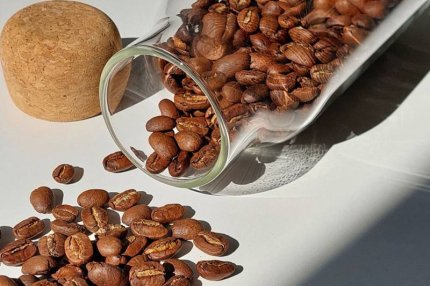
For the Turk
Both types of coffee are suitable for preparation in a cezve.
Arabica can provide a fragrant drink with a pleasant sweetness. Robusta or a blend will add intensity and bitterness.
Grinding is of particular importance: very finely ground coffee is used for Turkish coffee.
It is worth avoiding prolonged intense boiling, which can negatively affect the taste.
For filter coffee and pourover
For such methods, light or medium roast Arabica is often chosen.
Filtration helps to reveal the aromatic characteristics of the beans, and the paper filter retains a significant portion of insoluble particles and coffee oils.
If you don't like the pronounced fruity acidity, you can choose a grain with a chocolate or nutty profile.
Why coffee from the same country can taste different
Country of origin is just one component of taste.
For example, coffee from Ethiopia can have floral and citrus tones, while individual Brazilian batches are often characterized by nutty and chocolate notes.
But these descriptions are not universal rules.
Even grains from the same region can vary significantly due to growing altitude, plant variety, weather conditions, and processing method.
Clean coffee processing
During washing, the skin and a significant portion of the pulp are removed from the fruit, after which the grain undergoes further technological stages.
This type of coffee often has a cleaner flavor profile and a more pronounced perception of acidity.
Natural finish
With the natural method, coffee berries are dried along with the pulp, and only then are the beans separated.
This can contribute to the formation of rich fruit, berry and sweet shades.
Honey processing
During honey processing, a certain amount of sticky fruit tissue is left on the grain during the drying stage.
Depending on the technology, such coffee can combine sweetness, expressive body, and balanced acidity.
However, the processing method does not guarantee a specific taste. The quality of the fruit, the fermentation processes and the control of the drying are also important.
How to read coffee packaging before buying
To choose quality coffee, it is not enough to focus only on the brand name or the inscription "Premium".
Information packaging can contain several characteristics.
Type of coffee: Arabica, Robusta, or the ratio of beans in the blend.
Country and region of origin. Helps you understand where the coffee was grown. However, they do not guarantee a particular taste.
Plant variety. For example, Bourbon, Typica, Caturra, or Gesha are names of varieties related to Arabica, not individual botanical types of coffee.
Processing method: Washed, natural, honeyed, or other methods that may affect the flavor profile.
Roasting level. Light, medium, or dark. The boundaries between these may vary between roasters.
Roasting date. Allows you to assess the freshness of the grain more accurately than the expiration date itself.
Flavor description. It suggests what shades to expect, but remains a sensory characteristic, not a guaranteed result.
For example, packaging labeled “Brazil, Arabica, natural processing, medium roast, chocolate, nuts” provides much more information about the expected drink than the label “Premium premium coffee.”
Is it possible to identify Arabica and Robusta by the appearance of the beans?
There is a common belief that Arabica always has an elongated shape and a curved central groove, while Robusta has a more rounded shape and a straighter cut.
Such differences can indeed occur, but they are not a reliable method of determining the type of coffee.
The shape of the grain depends on genetic characteristics, the plant variety, and the conditions of fruit development.
Additionally, roasting changes the size and appearance of the beans.
Therefore, even with careful inspection, it is not always possible to accurately determine whether a package contains Arabica, Robusta, or a mixture of them.
The most reliable household reference point is manufacturer information and traceability of the product's origin.
Why cheap coffee is sometimes more bitter
Strong bitterness does not necessarily mean that the coffee contains a lot of robusta.
Among the possible reasons:
use of grains with defects;
excessively dark roasting;
improper storage;
excessive extraction during cooking;
unsuccessful combination of grains in the mixture.
For example, even expensive Arabica can become unpleasantly bitter due to too fine a grind or an inappropriate cooking method.
At the same time, an affordable blend can have a balanced taste if the producer uses quality grains and chooses the right ratio.
Therefore, it is inappropriate to evaluate coffee solely by price or percentage of Arabica.
How to store coffee so it doesn't lose its aroma
After roasting, coffee gradually changes: it loses some of its volatile aromatic substances, releases carbon dioxide, and interacts with oxygen.
The speed of these processes is affected by temperature, humidity, contact with air, and the degree of grinding.
Ground coffee usually loses its aromatic characteristics faster than beans because it has a much larger area of contact with air.
For daily use, you should follow simple rules:
store coffee in an airtight opaque package or container;
keep it away from sunlight and heat sources;
do not leave an open package near the stove;
grind the grains shortly before cooking;
buy a volume that can be used without long-term storage.
Regular daily storage of coffee in the refrigerator is not always advisable due to the risk of moisture condensation and absorption of foreign odors.
For long-term storage, freezing can be useful, provided the coffee is packaged airtight and handled properly after removal.
Arabica, Robusta and Health: Is There a Difference?
The main difference between these types of coffee in terms of stimulating effect is related to the amount of caffeine.
Caffeine affects the central nervous system, can increase alertness and temporarily reduce feelings of fatigue.
At the same time, excessive consumption in sensitive people can cause sleep disturbances, anxiety, heart palpitations, and other undesirable reactions.
The European Food Safety Agency considers consumption of up to 400 mg of caffeine per day to be a level that generally does not raise safety concerns for most healthy adults, with the exception of pregnant women.
During pregnancy, the guideline is up to 200 mg of caffeine per day from all sources, however individual medical circumstances may require additional restrictions.
This does not mean that it is advisable for every person to consume the maximum amount of caffeine.
If coffee causes unpleasant sensations or impairs sleep, it is worth evaluating portion size, time of consumption, and total caffeine intake, including from tea, energy drinks, and chocolate.
Important: The material is for informational purposes only and does not replace medical advice. Self-medication can be harmful to your health. Before changing your caffeine intake if you have a medical condition, are pregnant, or are taking medication, you should consult your doctor.
How to choose coffee according to your own taste preferences
The easiest way to decide on the type of beans is to focus on the characteristics of the desired drink.
| If you like it | What to try |
| Fruity and floral coffee | Light roast Arabica |
| Chocolate-nut flavor | Medium roast Arabica |
| Intense classic espresso | Blend of Arabica and Robusta |
| Dense coffee with a pronounced bitterness | High-quality robusta or a blend with a high proportion of it |
| Soft coffee for cappuccino | Arabica or medium roast blend |
| Coffee with less caffeine | Arabica or decaffeinated coffee |
For a more accurate comparison, you can prepare two coffees in the same way, using the same weight of beans and volume of water.
This makes it easier to understand the difference between flavor profiles than to compare drinks prepared in different coffee shops using different recipes.
Conclusion
Arabica and Robusta have different benefits. Arabica typically offers a more complex flavor profile, while Robusta is characterized by higher caffeine content, body, and a distinctive bitterness.
However, the quality of the beans, roasting, freshness and proper preparation are crucial. The best coffee is not necessarily the most expensive or the one that contains 100% Arabica, but the one whose taste matches your preferences.
FAQ: Frequently asked questions about Arabica and Robusta
Which is better - arabica or robusta?
There is no clear answer. Arabica usually has a more diverse aroma and pronounced acidity. Robusta contains more caffeine and often has a denser, bitter taste. The choice depends on taste preferences and preparation method.
Which coffee is stronger - Arabica or Robusta?
If strength is defined as the caffeine content in the dry beans, Robusta is usually stronger. However, the amount of caffeine in the finished cup also depends on the recipe, the weight of the coffee, and the brewing method.
Why is robusta cheaper than arabica?
Robusta often has higher yields, better resistance to certain diseases, and can be grown in a wider range of conditions. This can reduce production costs. However, the price also depends on quality, demand, country of origin, and market conditions.
Is it true that 100% Arabica is always better than a blend?
No. The designation "100% Arabica" defines the botanical composition of the coffee, but does not guarantee its quality. A well-chosen blend with Robusta can be more delicious than mediocre Arabica, especially for espresso and milk drinks.
What coffee is best for a coffee machine?
For automatic coffee machines, medium roast beans are often chosen: Arabica or a blend with Robusta. It is important to follow the equipment manufacturer's recommendations, especially regarding the use of very dark, oily or flavored beans.
Which coffee is less bitter?
Light to medium roast Arabica beans are generally less bitter. However, the origin of the bean, the roasting process, and the extraction parameters can affect the result. Incorrectly prepared Arabica beans can also be excessively bitter.
Is there more caffeine in dark roasted coffee?
Not necessarily. Dark roasting changes the flavor, weight, and density of the bean, but is not a reliable indicator of the caffeine content in the cup. The type of bean, dosage, and brewing method are more important for evaluation.
Is instant coffee made only from robusta?
No. Robusta, Arabica, and their blends are used to produce instant coffee. Robusta is popular due to its technological and economic characteristics, but the specific composition depends on the manufacturer.
Is there a caffeine-free Arabica?
Yes. Decaffeinated coffee is made by removing a significant portion of the caffeine from the green beans before roasting. It can be made from either Arabica or Robusta. Decaf, however, usually contains a small amount of residual caffeine.
What is the difference between specialty coffee and regular coffee?
Specialty coffee involves increased attention to the quality, origin, processing, and sensory characteristics of the beans. It is evaluated using professional methods. However, the name "specialty" itself does not define a specific taste and does not mean that everyone will necessarily like the coffee.

