
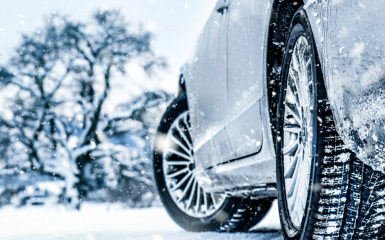
The most important rule is simple: in winter, the gearbox needs smoothness, proper fluid, the right tires, and attention to symptoms.
Points of attention
- In winter, the cold weather and slippery road conditions can put additional stress on your automatic transmission, leading to accelerated wear and potential damage if not handled correctly.
- Common mistakes to avoid include abrupt starting, prolonged skidding in snow, improper use of winter modes, shifting between gears without coming to a complete stop, and neglecting ATF fluid and cooling system conditions.
Automatic transmission in winter: driver mistakes that reduce the gearbox's life
Winter makes it difficult for any transmission to work. Frost, snow, ice, short trips and frequent skidding create conditions in which the automatic transmission operates with increased load. This does not mean that the “automatic” is fragile or unsuitable for winter. But the mistakes of drivers with automatic transmissions in the cold season can really accelerate wear and tear and bring expensive repairs closer.
Why is it harder for a machine gun to fire in winter?
In a classic automatic transmission, CVT or robotic gearbox, many processes depend on temperature, pressure, lubrication and electronic control. In frost, the transmission fluid, often called ATF, can become thicker. Because of this, in the first minutes after starting, it is more difficult for the hydraulic system to quickly create the required pressure and ensure smooth operation of the components.
Added to this are winter factors:
wheels slip more often on snow or ice;
the driver presses the gas pedal harder, trying to drive away;
short trips do not allow the transmission to reach normal temperature;
snow, ice and dirt can impair cooling;
old oil or leaks are more noticeable.
Therefore, automatic transmission operation in winter should not be aggressive, but predictable.
Mistake #1: Moving off abruptly immediately after starting
One of the most common mistakes is to start the engine in frost, immediately shift the selector to D and sharply press the gas. At this point, the engine, transmission, fluid and seals are still cold. If you add a sharp start, the load on the torque converter, friction elements and hydraulics can increase.
This does not mean that the car needs to be warmed up for a long time in place. In many modern cars, manufacturers advise starting the car after a short warm-up, but to do it calmly.
Practical algorithm:
Start the engine and let it run for a short time while you clean the windows, mirrors and headlights.
Press the brake, move the selector to the desired mode without jerking.
Start moving smoothly, without sudden acceleration.
For the first few kilometers, avoid kickdown, sudden acceleration, and high speed.
If the automatic transmission shifts a little slower in the cold, it may be due to temperature, but strong impacts or slipping are a reason for diagnostics.
Proper warming up of an automatic transmission is primarily a calm driving mode at the beginning of the trip, unless otherwise specified in the instructions for a specific car.
Mistake #2: Skidding in the snow for a long time
Slipping in an automatic transmission is one of the most dangerous winter scenarios for a transmission. The driver sees that the car is not moving and presses the gas harder. The wheels spin, the car stops, the load increases, and the transmission can quickly heat up even in frost.
You need to be especially careful with CVTs and robotic gearboxes: they are sensitive to prolonged slippage and overheating. But even a classic automatic transmission doesn't like situations where the wheels grind snow or ice for a long time.
What to do if your car is stuck
If the car won't start:
do not hold the gas in one position for a long time;
stop and assess the situation;
clear the snow in front of the wheels;
place a mat, sand, gravel or special tracks under the wheels, if available;
turn off or change the stabilization system mode only when this is provided for in the instructions and really helps to drive away;
use automatic transmission winter mode or manual gear limitation if the manufacturer allows it;
Do not try to "gnaw through" the snow with the force of the gas.
Rocking the car back and forth should only be done very carefully, with a complete stop before shifting to D/R. If the car does not move after several attempts, it is better to ask for help than to overheat the transmission.
Mistake #3: Shifting between D and R without coming to a complete stop
In the snow, drivers are often in a hurry: they haven't stopped yet after reversing, but they already engage D; or they roll forward and shift the selector to R. This is a bad habit for an automatic transmission.
When the direction of movement changes to a complete stop, part of the load is transferred to the transmission elements. If repeated regularly, this can accelerate wear of frictions, couplings, bearings and drive units.
The rule is simple:
come to a complete stop;
hold the brake pedal;
move the selector to the desired position;
wait for the mode to turn on;
only then smoothly press the gas.
This is especially important when parking in snowdrifts, leaving the yard, or trying to get out of a rut.
Mistake #4: Using winter modes incorrectly
Many cars have Snow, Winter, Eco, Manual, L, 2 modes, or the ability to limit the gear. They can help, but they are not a magic bullet for protection against breakdowns.
The winter mode of an automatic transmission usually makes the response smoother or helps to start from a higher gear to reduce slippage. The L or 2 modes can be useful on downhill slopes, in snow or on slippery surfaces, but they should not be used constantly unless necessary.
Typical errors:
turn on the reduced mode at high speed;
drive for a long time in L where the gearbox could work normally;
use manual mode as a way to "cheat" a faulty automatic transmission;
to think that Snow allows you to press the gas sharply on ice.
It is best to refer to the car's manual. Different manufacturers may have different modes that appear to be the same.
Mistake #5: Ignoring ATF and cooling condition
ATF fluid performs several functions at once: it transmits pressure, lubricates, cools, and helps the transmission shift. If the fluid is old, contaminated, has the wrong level, or does not meet specifications, problems can become more pronounced in the winter.
Signs to look out for:
delay in switching on D or R;
jerks when switching;
automatic transmission jerks when cold, which do not disappear after warming up;
the smell of burning;
dark or dirty liquid, if the design allows it to be checked;
traces of leakage under the car;
transmission error message.
There is no one universal ATF replacement interval for all cars. It depends on the model, type of transmission, operating conditions and manufacturer's recommendations. But if the car is often driven in the city, skids, tows a trailer or has high mileage, checking the fluid condition before winter is a smart preventive measure.
The cooling system is also important. A dirty heat exchanger, problems with antifreeze, or poor heat transfer can affect the temperature regime of the gearbox. Overheating of the automatic transmission is possible not only in summer, but also in winter — for example, during prolonged towing.
Mistake #6: Towing a car with an automatic transmission “like a mechanic”
Towing a car with an automatic transmission requires special care. In some models, towing with a cable is allowed only for a short distance and at a limited speed, in others it is not recommended at all. The reason is that when driving with the engine off, some of the transmission elements may not receive proper lubrication.
A safer option in many cases is a tow truck with a full or partial load, depending on the type of drive and the manufacturer's recommendations.
Before towing, you should check the instructions for your specific vehicle. Don't rely on "I've always done it this way" advice — different transmissions have different limitations.
Mistake #7: Relying only on the transmission, not on the tires and driving style
An automatic transmission in winter does not compensate for bad tires, sudden steering movements, or incorrect speed. If the tires do not grip the road, the transmission will work in more difficult conditions: the traction control will be activated more often, the wheels will skid more often, and the driver will press the accelerator excessively more often.
To reduce the load on the automatic transmission:
use high-quality winter tires with sufficient tread depth;
maintain correct tire pressure;
move smoothly;
brake early;
do not provoke a skid;
keep a greater distance;
Do not use cruise control on slippery roads unless recommended by the manufacturer.
A smooth driving style is often more important than any special transmission mode.
Signs that an automatic transmission should be taken to a service center
Not every cold start means a serious breakdown. But there are symptoms that should not be ignored, especially in winter.
Seek diagnostics if you notice:
strong shocks when switching;
noticeable delay between selecting D/R and starting the movement;
slippage when the revs increase and the car accelerates poorly;
the smell of overheated or burnt liquid;
vibrations that were not there before;
emergency mode of the box;
errors on the instrument panel;
fluid leaks;
unusual noise from the transmission.
The sooner you find the cause, the more likely you are to get by with adjustment, fluid replacement, repair of a related component, or leak repair, rather than a major overhaul of the automatic transmission.
A short checklist for a driver in winter
To reduce the risk of expensive repairs, follow these basic rules:
do not start abruptly immediately after starting;
Drive slowly for the first few kilometers;
do not skid in the snow for a long time;
switch D/R only after a complete stop;
use Snow, L, 2 or Manual only as intended;
don't ignore jerks, burning smells, and errors;
check the condition of the ATF fluid according to the regulations and operating conditions;
monitor the cooling of the engine and transmission;
tow the car only according to the manufacturer's instructions;
Don't skimp on winter tires.
Conclusion
Automatic transmissions in winter do not require excessive fear, but they do require proper driver behavior. The most damaging are sudden cold starts, prolonged skidding, changing direction without stopping, ignoring fluid, and attempts to tow a car without considering the manufacturer's requirements.
How to drive an automatic in winter without unnecessary risk? Start off smoothly, don't overload the transmission in the first few minutes, use winter modes wisely, monitor the technical condition and respond to symptoms in a timely manner. This does not guarantee a complete absence of breakdowns, but it significantly reduces the likelihood of expensive consequences.
FAQ
Is it necessary to warm up the automatic transmission in winter?
Usually, a short preparation before driving and a calm ride for the first kilometers are enough. Long standing still does not always effectively warm up the gearbox. Refer to the instructions for the specific car.
Is it possible to stand at a traffic light in D mode?
In most modern cars, a short stop in D with the brake applied is a standard situation. If the stop is long, you can shift the selector to N or P depending on the conditions, but there is usually no need to constantly pull the selector at every traffic light.
Does shifting to N at traffic lights hurt?
Shifting into N itself is not necessarily harmful, but frequent unnecessary shifts can be inappropriate. It is better to follow the manufacturer's recommendations and avoid sudden actions with the selector.
What to do if the car skids in the snow?
Don't press the gas for too long. Stop, clear the snow from in front of the wheels, use chocks or assistance, turn on the appropriate winter mode if available. If the car doesn't start after several attempts, it's best not to overheat the transmission.
Is it possible to rock a car with an automatic transmission?
You can only do this very carefully and not on all cars. The main thing is to stop completely before switching D/R and avoid prolonged skidding. For some transmissions, this practice is undesirable, so it is worth checking the instructions.
Can I tow a car with an automatic transmission?
Depends on the model, transmission type and drivetrain. Some cars can only be towed with restrictions, others are better transported by tow truck. Always check the manufacturer's instructions.
Should I change ATF before winter?
It's not necessarily right before winter, if the fluid is fresh and meets the regulations. But before the cold season, it's useful to check the level, condition of the fluid, and for leaks, especially on cars with high mileage.
Are automatic transmission jerks dangerous when cold?
A slight slowdown in shifting in the cold may be a feature of the cold fluid. But strong shocks, delays, slipping or jerks after warming up are a reason to seek diagnostics.
The material is for informational purposes only and does not replace the diagnosis of a specific vehicle. The manufacturer's recommendations from the instructions for your model take precedence. In case of jerks, leaks, a burning smell, transmission errors or suspected overheating, contact a qualified service.

