

Choosing a crypto wallet in 2026 depends not so much on the number of supported coins, but on how you plan to use the cryptocurrency. For daily USDT transfers, long-term Bitcoin storage and working with decentralized finance, different tools are required. Modern crypto wallets allow you to manage digital assets from your smartphone, exchange tokens, interact with smart contracts and sign transactions directly on the hardware device. At the same time, convenience does not always mean maximum security.
For long-term storage of large amounts, it is usually more appropriate to use hardware wallets such as Ledger or Trezor. For daily transactions with various cryptocurrencies, Trust Wallet or MetaMask are suitable, for DeFi - Rabby, and for the Solana ecosystem - Phantom.
However, no wallet is foolproof. Losing your backup phrase, signing a fraudulent transaction, or making a mistake when choosing a blockchain network can lead to irretrievable loss of funds.
Let's look at nine cryptocurrency wallets, their advantages and limitations, as well as criteria that will help you choose the right solution.
What is a crypto wallet and how does it work?
A crypto wallet is a software application or hardware device that allows you to manage cryptocurrencies using cryptographic keys.
Contrary to popular belief, the Bitcoins, Ether, or stablecoins themselves are not physically stored inside a wallet. Information about the assets and their movements is contained in the blockchain.
The wallet provides access to these assets and allows you to confirm transactions.
Two main elements are used for this.
Public address — details that can be shared with other people to receive cryptocurrency.
A private key is secret data that allows you to sign transactions and manage assets.
Many non-custodial wallets provide a backup recovery phrase — a seed phrase — that can be used to recover the corresponding private keys.
Losing a private key or backup phrase without another recovery method could mean permanent loss of access to funds.
What are the types of crypto wallets: hot, cold and exchange wallets?
Before comparing specific products, it is important to understand how the main methods of storing cryptocurrency differ.

Hot wallets
A hot wallet is a crypto wallet that is used on a device with an internet connection.
These can be mobile apps, browser extensions, or desktop programs.
This category includes Trust Wallet, MetaMask, Phantom, and Rabby.
Their main advantage is convenience. The user can quickly transfer cryptocurrency, exchange tokens, and work with Web3 applications.
The main disadvantage is the greater reliance on the security of the smartphone or computer. Malware, phishing, and device compromise can pose a threat to private keys.
Cold and hardware wallets
Cold storage involves isolating private keys from the regular internet environment.
The most popular option is a hardware wallet, which signs transactions inside a specialized device.
Such solutions include Ledger, Trezor, and Tangem.
A hardware wallet can connect to a smartphone or computer, but the private keys remain inside a secure environment when working properly.
This reduces the risk of them being hijacked by malware. However, it does not protect against deliberate or mistaken confirmation of a fraudulent transaction.

Custodial and non-custodial wallets
This is another classification criterion that determines who controls the assets.
In the custodial model, the keys are managed by a third-party service, such as a centralized crypto exchange.
The user gains access through an account, but it depends on the platform, its rules, and the ability to withdraw funds.
In a non-custodial wallet, control over the keys or the corresponding authorization mechanism belongs to the user.
This model provides more independence, but the responsibility for backups and security also rests with the owner.
Ranking of the best crypto wallets in 2026
The above selection covers software and hardware wallets for various scenarios. This is a comparison of functionality, not the results of laboratory security tests.
| Crypto wallet | Type | Best suited for |
| Trust Wallet | Program | Newbies and different cryptocurrencies |
| MetaMask | Program | Ethereum and Web3 |
| Rabby Wallet | Program | Active work with DeFi |
| Phantom | Program | Solana, NFTs and mobile transactions |
| Ledger Flex | Hardware | Long-term storage |
| Trezor Safe 7 | Hardware | Secure self-storage |
| Tangem | Hardware, NFC | Easy storage via cards |
| Sparrow Wallet | Program | Advanced Bitcoin Management |
| Safe Wallet | Smart contract | Joint asset management |

1. Trust Wallet — a universal wallet for beginners
Trust Wallet is a non-custodial crypto wallet available on smartphones and as a browser extension.
It supports numerous blockchains, including Bitcoin, Ethereum, Solana, and various EVM-compatible networks.
The user can receive and send cryptocurrency, view balances, exchange tokens, and use available staking features.
Advantages: clear interface, large number of supported assets, no installation fee.
Limitations: Security is highly dependent on the device and proper storage of the backup phrase. Not all features are available on every network.
Trust Wallet can be considered for everyday use of various cryptocurrencies without the need to install a separate application for each blockchain.
2. MetaMask — for Ethereum and decentralized applications
MetaMask remains one of the most well-known tools for interacting with Ethereum and decentralized services.
In 2026, the wallet's functionality goes beyond traditional EVM networks: Bitcoin, Solana, and other integrated blockchains are also supported.
MetaMask allows you to work with tokens, connect to Web3 platforms, use exchanges, and interact with smart contracts.
A separate advantage is the ability to connect compatible hardware wallets to sign transactions.
Advantages: broad compatibility with Web3, support for various networks, integration with hardware devices.
Limitations: complexity of working with smart contracts, phishing risks, and additional fees for individual built-in operations.
MetaMask is especially useful for those who regularly use decentralized exchanges, NFT platforms, and other blockchain applications.

3. Rabby Wallet — for active work with DeFi
Rabby is primarily focused on Ethereum and other EVM-compatible blockchains.
Its main feature is its pre-transaction analysis tools.
Before confirming a transaction, the wallet can simulate its outcome and show expected balance changes, requested permissions, and potential risks.
This is especially useful when working with smart contracts, where the user does not always immediately understand the consequences of signing.
Rabby also supports working with various EVM networks and connecting compatible hardware wallets.
Advantages: preliminary transaction analysis, convenient work with DeFi, smart contract permission management.
Limitations: focus on the EVM ecosystem, more complex functionality for beginners.
Important: Simulating a transaction does not guarantee its security. The result may vary, and analysis tools do not detect all possible fraud schemes.
4. Phantom — for Solana and mobile use
Phantom was originally developed as a wallet for Solana, but later gained support for Bitcoin, Ethereum, Base, Polygon, and other integrated networks.
It is available on smartphones and in the browser.
Users are offered cryptocurrency storage, NFT transactions, token exchanges, and SOL staking.
One of the advantages of Phantom is an interface focused on quickly performing everyday operations.
Advantages: convenience on a smartphone, developed integration with Solana, support for several popular blockchains.
Limitations: Not all networks and tokens are supported, and the availability of certain financial features depends on the region.
Phantom is well suited for users who primarily work with Solana but occasionally use other cryptocurrencies.
5. Ledger Flex — a hardware wallet for long-term storage
Ledger Flex is a hardware crypto wallet with an E Ink touch display and a Secure Element chip.
Private keys remain inside the device, and transactions are confirmed through its interface.
The Ledger Wallet application and supported third-party wallets are used to manage cryptocurrencies.
The device is compatible with a wide range of digital assets, but specific capabilities depend on the application and blockchain.
Advantages: isolation of private keys, physical confirmation of transactions, support for a large number of assets.
Limitations: need to purchase a separate device, responsibility for backup, and risk of confirming a malicious transaction.
Ledger Flex is a good option to consider for assets that do not need to be transferred daily.
6. Trezor Safe 7 — a secure wallet with an open architecture
Trezor Safe 7 is a hardware wallet with a touchscreen display, wireless connectivity, and a multi-level hardware security system.
The device uses two Secure Element components and a separate microcontroller.
The manufacturer pays attention to the possibility of independent research of security components and verification of the authenticity of the device.
Asset management uses the Trezor Suite. Compatibility with supported third-party wallets is also provided.
Advantages: hardware protection of keys, openness of a significant part of the software architecture, support for various cryptocurrencies.
Limitations: cost of the device, need for responsible storage of backup data and compatibility checks of individual assets.
Trezor Safe 7 may be interesting to users for whom not only convenience but also transparency in the implementation of security mechanisms is important.
7. Tangem — a crypto wallet in NFC card format
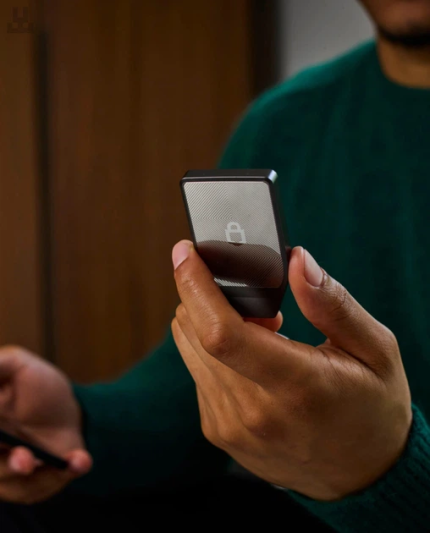
Tangem offers an unusual hardware wallet format: instead of a traditional device with a display, NFC cards are used.
To work, you need a compatible smartphone with the Tangem app.
The wallet can be configured without a seed phrase. In this case, additional cards from the same set provide access reservation.
The private key is created and stored in a secure chip.
Advantages: compact, easy to use, customizable without a traditional backup phrase.
Limitations: dependence on physical cards and a compatible smartphone, lack of its own screen for independent viewing of all transaction parameters.
An important nuance: if a user created a wallet without a seed phrase and lost all backup cards, it may be impossible to restore access to assets.
8. Sparrow Wallet — for experienced Bitcoin owners
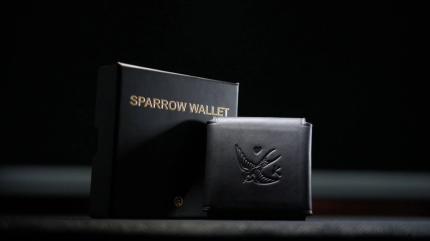
Sparrow is a specialized Bitcoin wallet for your computer.
Unlike universal multi-currency applications, it focuses on detailed management of Bitcoin transactions.
Features include UTXO control, fee settings, hardware wallet support, multi-signature, and working with PSBTs — partially signed Bitcoin transactions.
The wallet allows you to use various options for connecting to the Bitcoin infrastructure, including your own node.
Advantages: advanced transaction management, open source, support for various storage scenarios.
Limitations: Bitcoin-only support and a more complex interface compared to mainstream mobile apps.
Sparrow is suitable for those who value detailed control over Bitcoin transactions, rather than a wide range of cryptocurrencies.
9. Safe Wallet — for shared crypto asset management
Safe Wallet differs from regular wallets in that it uses smart contract accounts.
One of the key features is multi-signature, a mechanism that requires confirmation from multiple authorized participants to complete a transaction.
For example, a company can set up a scheme where a transfer requires two confirmations out of three.
This avoids a situation where one person solely controls all of the organization's funds.
Advantages: flexible transaction confirmation rules, shared asset management, ability to distribute authority.
Limitations: more complex setup, blockchain transaction costs, and risks associated with smart contracts.
Safe Wallet is primarily aimed at teams, companies, and users who need an extra layer of control over large portfolios.
Which crypto wallet is better to choose for Bitcoin, USDT and Ethereum?
One common mistake is choosing a wallet without considering the specific cryptocurrency and the network it is used on.
For example, USDT can exist on different blockchains. Therefore, support for the token itself does not necessarily mean support for the desired transfer method.

Best Bitcoin wallet
For long-term storage of Bitcoin, Ledger or Trezor hardware solutions are often chosen.
For advanced management of Bitcoin transactions, you can use Sparrow in conjunction with a compatible hardware wallet.
If you only need to periodically transfer small amounts, supported mobile solutions may also be suitable.
Which wallet to choose for USDT
When working with USDT, the most important thing is to choose the right blockchain.
For example, USDT on the Ethereum and TRON networks is not the same token contract and is not interchangeable transfer details.
Trust Wallet can be useful for managing assets across multiple networks. MetaMask or Rabby are suitable for EVM-compatible networks.
Before transferring, it is necessary to check not only the USDT symbol, but also the full network name and its support by both parties.
Which wallet is suitable for Ethereum?
For regular work with Ethereum and DeFi, it is advisable to consider MetaMask or Rabby.
For long-term storage of ETH, you can use a compatible hardware device, such as Ledger or Trezor.
The combination of API and hardware transaction signing allows you to maintain the convenience of Web3 without the need to transfer private keys to a browser application.

How to choose a secure crypto wallet: 6 main criteria
The number of supported cryptocurrencies is not the main sign of reliability.
When choosing, it is worth evaluating the following characteristics:
Control of private keys. Who has the technical ability to sign transactions and how access recovery is organized.
Supported networks. Does the wallet work with a specific blockchain, token, and address type.
Transaction security. Can you verify the address, amount, smart contract permissions, and other parameters before confirmation?
Backup. How clear is organized recovery after losing a smartphone or device.
Updates and Audits: Is the product supported by the developer and is information about vulnerability fixes available?
Cost of use. What fees arise during transfers, exchanges, and other operations.
Don't rely solely on the number of downloads or brand popularity. Even a well-known product cannot guarantee complete absence of vulnerabilities.
How much does it cost to use a crypto wallet?
Most non-custodial software wallets can be installed for free.
However, this does not mean that cryptocurrency transfers and exchanges will be free.
Costs can consist of several parts.
Network fee. Paid for conducting a transaction on the blockchain. Its amount depends on the network, load, and type of transaction.
Service fee. May be charged when exchanging tokens, making cross-network transfers, or purchasing cryptocurrency through a third-party provider.
Conversion costs. Arises due to exchange rate differences or exchange markups.
For hardware wallets, you also need to consider the cost of the device itself.
Prices for Ledger, Trezor, and Tangem depend on the model, country of purchase, configuration, and current manufacturer offers.
It is worth checking the current conditions before making a decision, as features, availability, and rates may change.
How to create a crypto wallet and not lose access to funds
The process of creating a software wallet itself usually takes little time. It is much more important to properly organize protection.
Step 1. Installing the application
You need to use a genuine product from the developer, verifying its origin.
Fake browser extensions and mobile app copies can mimic well-known crypto wallets.
Step 2. Creating a new wallet
During the first setup, the application will prompt you to create a wallet or import an existing one.
A new set of keys is created for the new user. Depending on the product, a seed phrase or an alternative recovery system may be used.
Step 3. Save the backup
If the wallet uses a seed phrase, it must be stored in a way that prevents unauthorized access to this data.
You should not take a picture of it, send it via instant messengers, or store it in unprotected cloud notes.
It is advisable to keep the backup copy separate from the device on which the wallet is installed.

Step 4. Verify recovery
Before transferring significant amounts, you need to make sure that the backup data is recorded correctly and the recovery procedure is clear.
Verification should be performed only through the procedure provided by the manufacturer, without entering confidential data on third-party sites.
Step 5. First transfer
To check the address, network, and wallet compatibility, it is advisable to first perform a small test transaction.
Only after its successful completion can the main transfer be made.
The most common mistakes when using crypto wallets
Even a secure device does not eliminate the risks associated with human error.

Incorrect transfer network
One of the most dangerous situations is sending tokens to a network that the recipient does not support.
For example, the same EVM address format does not guarantee that the recipient controls the desired network through their service.
Refunds depend on the recipient's technical capabilities and policies and are not always possible.
Signing malicious permissions
When working with DeFi, a user can grant smart contracts the right to spend certain tokens.
If such permission is granted to a fraudulent contract, the attacker can, under certain conditions, write off assets without separately confirming each transfer.
Therefore, it is necessary to check permissions, their limits and purposes, and revoke unnecessary ones.
Storing all assets in one hot wallet
If a single wallet is used simultaneously for significant savings and connection to unverified Web3 sites, compromise can have particularly serious consequences.
A more practical approach may be to separate assets: a separate wallet for everyday transactions and a separate one for long-term storage.

Trusting in false support
Fraudsters often pose as technical support staff for crypto wallets.
They may request a seed phrase ostensibly for verification, update, or fund recovery.
The secret phrase or private key cannot be shared with anyone. Knowing this information usually allows you to gain control over the relevant assets.
Is it safe to store cryptocurrency on an exchange?
Centralized exchanges are convenient for buying and selling cryptocurrencies, but their accounts usually operate on a custodial model.
This means that the user is dependent on the platform that stores the keys and ensures that the transactions are carried out.
Risks include cyber-hacking, temporary blocking of withdrawals, regulatory restrictions, and the operator's financial problems.
A non-custodial wallet eliminates some of the risks associated with an intermediary, but instead requires you to protect your keys and verify transactions yourself.
Therefore, the choice between an exchange and your own wallet is not just a matter of convenience. It is a choice of a model of responsibility for access to assets.

Conclusion
The best crypto wallet is not necessarily the one that supports the most coins or has the widest range of features.
For everyday transactions, software solutions such as Trust Wallet, MetaMask, Rabby, and Phantom are convenient. For long-term storage, consider hardware wallets such as Ledger, Trezor, or Tangem. For specific tasks such as advanced Bitcoin management or shared asset control, there are Sparrow and Safe.
The key is to choose the right storage model, protect backup data, and verify every transaction. These factors are often more important for security than the popularity of a particular brand.
FAQ: Frequently Asked Questions about Crypto Wallets
Which crypto wallet is the best in 2026?
There is no universal leader. Trust Wallet is suitable for working with various cryptocurrencies, MetaMask and Rabby for Ethereum and DeFi, Phantom for Solana. Ledger and Trezor are advisable to consider for long-term storage. The choice depends on the networks, frequency of transactions and security requirements.
Which crypto wallet is the safest?
Hardware wallets are generally better at isolating private keys from malware. However, even they don't protect against all types of fraud. The most secure configuration depends on how you back up your keys, verify transactions, and the owner's behavior.
Which wallet is best for USDT?
The first thing you need to do is identify the blockchain that uses USDT. For different networks, Trust Wallet, MetaMask, or Rabby may be suitable. Be sure to check support for a specific token and network before withdrawing funds.
Can I use a crypto wallet without identity verification?
KYC is usually not required for basic setup of many non-custodial wallets. However, when purchasing cryptocurrency with fiat, using bank cards or using third-party services, identification may be required.
Can I recover my crypto wallet after losing my phone?
Yes, if the necessary recovery data is saved. For traditional non-custodial wallets, this is usually a seed phrase. For alternative models, such as separate wallets with social login or NFC cards, different recovery rules apply.
What happens if I lose my hardware crypto wallet?
Losing the device itself does not necessarily mean losing your cryptocurrency. If you have a valid backup, you can restore access on a compatible device. However, if you lose both the device and all the necessary recovery data, your funds may become inaccessible.
Do I need to pay for a crypto wallet?
Most software wallets are free to install. Hardware devices require purchase. There may be additional network fees, token exchange fees, cross-blockchain transfers, or additional services.
Is it possible to have multiple crypto wallets at the same time?
Yes. A user can create separate wallets for different tasks. For example, one for daily transfers, one for DeFi, and one for long-term storage. It is important to ensure that access to each of them is restored separately.
Is it possible to transfer cryptocurrency from one wallet to another?
Yes, if the wallets support the desired asset and network. To transfer, you need to specify the recipient's address, verify the blockchain, and take into account the network fee. Transactions are usually irreversible after confirmation on the blockchain.
Can cryptocurrency disappear from a cold wallet?
A hardware wallet does not guarantee the safety of assets under all circumstances. Funds can be lost due to a compromised backup phrase, fraudulent transaction signing, or other errors. In addition, the market value of cryptocurrency can fluctuate significantly regardless of the storage method.
The material is for informational purposes only and does not constitute individual investment advice. Crypto wallet features, available networks, and service terms are as of November 2026 and are subject to change. Transactions with crypto assets involve the risk of loss of funds.

