

A crypto wallet allows you to store access to digital assets, receive and send cryptocurrency, exchange tokens, and use blockchain services. However, different wallets provide different levels of security, support different networks, and organize access recovery differently. For daily Bitcoin or USDT transfers, mobile apps are usually convenient. For long-term storage of significant amounts, hardware devices that isolate private keys from a smartphone or computer are more often chosen. And users of decentralized finance need additional tools for working with smart contracts.
In 2026, the most notable crypto wallets include Trust Wallet, MetaMask, Phantom, Rabby, Kraken Wallet, Ledger Flex, Trezor Safe 7, and Tangem. Each has its own advantages, but none is the best for absolutely all tasks.
Let's consider how these solutions differ, how to choose a wallet for a specific cryptocurrency, what fees you will have to pay, and what you need to do to avoid losing funds.
What is a crypto wallet and where is cryptocurrency actually stored?
A crypto wallet is a software or hardware tool that allows you to manage cryptocurrencies using cryptographic keys.
Despite their names, Bitcoin, Ethereum, and other digital assets do not reside inside an app or physical device. Their information is stored on the corresponding blockchain.
The wallet provides the ability to confirm transactions with assets associated with specific addresses.
Two main elements are used for this.
Public address — details that can be shared with other people to receive cryptocurrency.
A private key is secret cryptographic data that allows you to sign transactions and manage assets.
In many wallets, private keys are created based on a backup recovery phrase called a seed phrase. It is usually 12 or 24 words long, although other formats exist.
A person who receives such a phrase can often regain control of the relevant assets without access to the original phone or hardware device.
That is why the security of a crypto wallet depends not only on the manufacturer's technologies, but also on the method of storing secret data.
What are crypto wallets and how do they differ?
Before choosing a specific product, you need to determine how you will use cryptocurrency.
According to the conditions of access to private keys, wallets are divided into hot and cold.
Hot wallets — for fast transfers and daily transactions
A hot crypto wallet runs on a device that can connect to the internet.
This is a mobile application, browser extension, or computer program.
Such wallets are convenient for transfers, token exchanges, DeFi use, and other everyday transactions.
Their main advantage is quick access to funds without a separate physical device.
The disadvantage is that security depends on the security of the smartphone, computer, application, and backup data.
Cold wallets — for long-term storage
Cold storage involves isolating private keys from the normal internet-connected environment.
The most common way is to use a hardware crypto wallet.
Such a device creates and stores private keys in a specialized environment, and signs transactions without transferring the keys to a computer.
This reduces the risk of sensitive data being stolen by malware.
However, a hardware wallet does not protect against all threats. If the owner confirms a fraudulent transaction or reveals the backup phrase, the funds can still be lost.
Custodial and non-custodial wallets
This is a separate classification that determines who controls the cryptocurrency.
In the custodial model, private keys are managed by a third-party service, such as a centralized exchange.
The user may regain access to the account through the platform's procedures, but it depends on its rules, financial condition, and availability of asset withdrawals.
A non-custodial wallet gives the user direct control over the keys or the corresponding authorization mechanism.
This model reduces dependence on an intermediary, but requires you to independently ensure access.
Ranking of the best crypto wallets in 2026
Eight popular solutions with different storage models and functionality were selected for comparison.
This is an editorial selection based on practical usage scenarios, not a ranking based on the results of independent security testing of all products.
| Crypto wallet | Type | What is it suitable for? |
| Trust Wallet | Program | Beginners, multicurrency transactions |
| MetaMask | Program | Ethereum, Web3, various blockchains |
| Phantom | Program | Solana, NFT, mobile transfers |
| Rabby Wallet | Program | DeFi, EVM networks |
| Kraken Wallet | Program | Multi-network self-storage |
| Ledger Flex | Hardware | Long-term storage of various assets |
| Trezor Safe 7 | Hardware | Key protection and redundancy |
| Tangem | Hardware | Easy control via NFC cards |
1. Trust Wallet — for beginners and various cryptocurrencies
Trust Wallet is a non-custodial crypto wallet that works on smartphones and via a browser extension.
Its main advantage is support for a large number of blockchains and tokens in a single interface.
The user can receive and send cryptocurrency, view assets, and use supported exchange and staking mechanisms.
Trust Wallet supports Bitcoin, Ethereum, TRON, Solana, and other networks.
Advantages: clear setup, support for various assets, free installation.
Disadvantages: dependence on device security, need to protect backup data, different commission terms for individual transactions.
This wallet can be convenient for someone who uses multiple cryptocurrencies and doesn't want to install a separate application for each network.
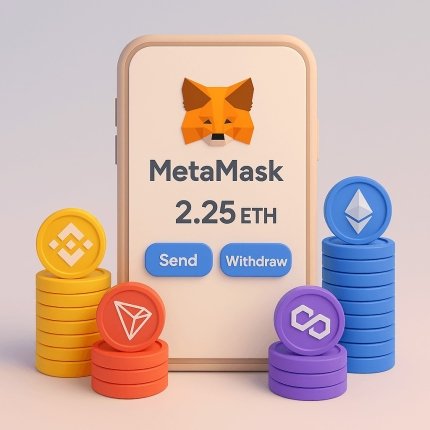
2. MetaMask — for Ethereum and Web3
MetaMask is one of the most well-known wallets for working with decentralized applications.
Initially, its functionality was focused on Ethereum and EVM-compatible networks, but support was later expanded.
As of 2026, MetaMask also supports Bitcoin, Solana, and TRON. Additional features are available through supported extensions and integrations.
MetaMask allows you to work with smart contracts, tokens, decentralized exchanges, and other Web3 services.
Advantages: broad integration with decentralized applications, support for many networks, compatibility with appropriate hardware wallets.
Disadvantages: complexity of certain operations for beginners, phishing risks, need to control smart contract permissions.
MetaMask is primarily suitable for users who regularly work with blockchain applications, not just store cryptocurrency.
3. Phantom — for Solana and digital assets
Phantom was originally created as a wallet for the Solana ecosystem, but gradually became multi-network.
As of the date of preparation of the material, it supports Solana, Ethereum, Bitcoin, Base, Polygon, BNB Chain and some other networks.
The wallet is available on smartphones and via a browser.
Users have access to transfers, NFT work, supported exchanges, and Web3 interaction tools.
Advantages: convenient mobile interface, developed Solana support, integration with decentralized applications.
Disadvantages: not all blockchains are supported, the availability of individual features varies, and connecting to third-party applications requires caution.
Phantom is especially convenient for Solana users who regularly perform transactions with SOL, tokens, and NFTs.
4. Rabby Wallet — for advanced DeFi users
Rabby is a crypto wallet focused on Ethereum and other EVM-compatible blockchains.
Its important feature is pre-transaction analysis tools.
Before signing a transaction, the wallet can simulate its outcome, show expected changes in assets, and warn about certain risks.
This is useful when working with complex smart contracts, where the usual confirmation of a transaction is not always clear.
Advantages: preliminary transaction analysis, convenient work with multiple EVM networks, permission control tools.
Disadvantages: focus mainly on the EVM ecosystem, more complex interface, inability to guarantee the security of each smart contract.
Important: Even if the simulation shows the expected result, the actual conditions of the transaction execution may change. Therefore, the automatic warning does not replace the verification of the transaction by the user.

5. Kraken Wallet — for multi-network self-storage
Kraken Wallet is a separate crypto wallet that should not be confused with a custodial account on the Kraken exchange.
It allows you to independently manage digital assets and interact with supported blockchain applications.
Supported networks include Bitcoin, Solana, Ethereum, Base, Arbitrum, Polygon, and others. The set of available assets depends on the type of wallet.
In 2026, the service supports both traditional wallets with a backup phrase and embedded wallets with other login and recovery methods.
Advantages: support for multiple blockchains, availability on smartphones, ability to store assets independently.
Disadvantages: differences in functions between wallet types, the need to properly organize backups and check network support.
It is important to distinguish between the functions of the Kraken Wallet and an exchange account: the availability of an asset on an exchange does not mean automatic support of this asset in a separate wallet.
6. Ledger Flex — for long-term storage of cryptocurrency
Ledger Flex is a hardware crypto wallet with a touchscreen E Ink display.
It uses a Secure Element chip designed to isolate private keys.
Transaction confirmation is performed via a physical device, allowing information to be verified before signing.
Ledger Flex supports numerous cryptocurrencies through proprietary software and compatible third-party wallets.
Advantages: hardware isolation of keys, own display for confirming transactions, support for various digital assets.
Disadvantages: cost of the device, dependence on proper backup, risk of signing a fraudulent transaction.
For someone who plans to store cryptocurrency for years and not make regular transfers, a hardware wallet may be more practical than a regular mobile app.
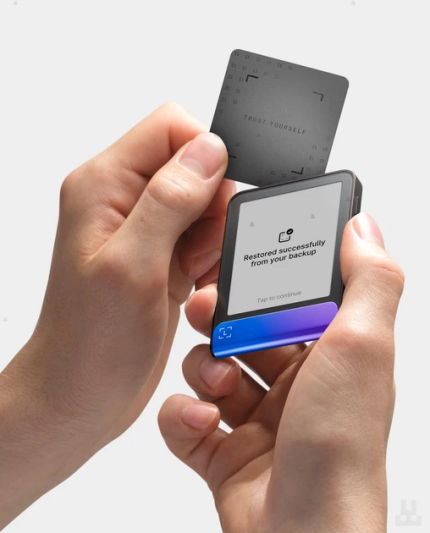
7. Trezor Safe 7 — for users with high security requirements
Trezor Safe 7 is a hardware wallet with a touchscreen display and a multi-level security system.
It uses two Secure Element components and a separate microcontroller.
The manufacturer pays attention to the openness of the software architecture, the possibility of independent verification and access reservation.
The device supports various backup formats, including distributed backup, in which the recovery data is divided between multiple parts.
Advantages: hardware protection, physical confirmation of transactions, flexible backup mechanisms.
Disadvantages: cost, complexity of advanced settings, need to check support for specific coins.
Trezor Safe 7 may be suitable for those who want to control crypto assets themselves and are willing to devote sufficient attention to organizing a secure recovery.
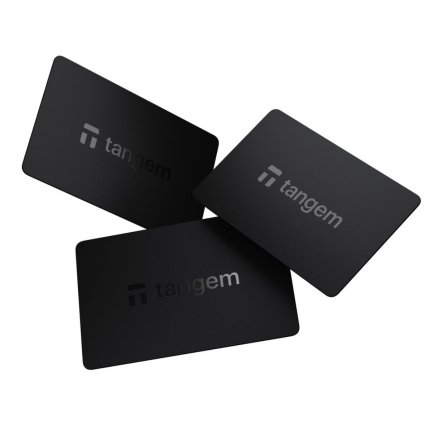
8. Tangem — a crypto wallet in NFC card format
Tangem differs from traditional hardware wallets in format.
Instead of a separate device with a display, special NFC cards are used that work together with a smartphone.
The private key is created and stored in the card's secure chip.
The wallet can be configured without a traditional seed phrase. In this case, access is reserved using additional cards from the kit.
Advantages: compactness, ease of use, ability to work without recording a backup phrase.
Disadvantages: dependence on physical cards, need for an NFC smartphone, lack of its own display for independent confirmation of all transaction parameters.
It is important to consider the backup model. If a wallet is created without a seed phrase and all cards are lost, it is impossible to regain access to the assets.
Therefore, backup cards must be stored separately from each other.
Which crypto wallet to choose for Bitcoin, Ethereum and USDT
The choice depends not only on the name of the cryptocurrency, but also on the blockchain network, type of transactions, and the required level of protection.
Best Bitcoin wallet
For regular Bitcoin transfers, Trust Wallet, MetaMask, or Kraken Wallet may be suitable.
For long-term storage, it is advisable to consider Ledger Flex or Trezor Safe 7.
There are also specialized Bitcoin wallets, such as Sparrow, that allow for more granular management of coins, addresses, fees, and multi-signature.
The choice between them depends on whether you need simple transfers or advanced control over transactions.
Which wallet is suitable for USDT?
USDT is a stablecoin issued on various blockchain networks.
For example, USDT on TRON and USDT on Ethereum have different network mechanisms and details.
Therefore, when choosing a wallet, it is necessary to check not only the name of USDT, but also the specific network.
For various supported blockchains, you can use Trust Wallet. For Ethereum and EVM-compatible networks, MetaMask or Rabby are suitable.
If the recipient only supports USDT on a particular network, sending tokens on another network without confirmed compatibility is dangerous.

Which crypto wallet is best for Ethereum?
For Ethereum and decentralized applications, MetaMask and Rabby remain popular solutions.
They allow you to interact with smart contracts, decentralized exchanges, and other Web3 tools.
To store ETH for a long time, you can use a hardware wallet.
The combination of hardware signing and a software interface allows you to work with decentralized services without passing the private key to the browser application.
What to look for when choosing a crypto wallet
The popularity of an application or the number of supported tokens does not guarantee its security.
It is more important to evaluate specific characteristics.
Key control: Are private keys stored with the user or is access to them dependent on a third-party operator?
Backup. Is it possible to restore access after losing a device and what data is needed for this?
Supported networks. Does the wallet work with a specific cryptocurrency, token standard, and blockchain?
Transaction security. Can you verify the address, amount, fee, and other parameters before confirmation?
Security updates: Is the product supported by the developer and are any vulnerabilities fixed?
Commissions. What costs arise during transfers, token exchanges, and the use of additional services.
For large amounts, you should also consider the possibility of sharing access between multiple devices or participants.
How much does a crypto wallet cost and what fees will you have to pay?
Most software crypto wallets can be installed for free.
However, conducting transactions on the blockchain often requires paying a network fee.
Network Commission
This is the fee for processing the transaction by the relevant blockchain network.
Its size depends on the specific blockchain, network load, and complexity of the transaction.
For example, a Bitcoin transfer, an Ethereum transaction, and a Solana token transfer use different fee calculation mechanisms.
The user must have sufficient asset balance to pay for the relevant network costs, unless another mechanism is provided by the service.
Cryptocurrency exchange fee
Some wallets offer built-in exchange features.
Such transactions may incur additional service provider fees, network charges, or exchange rate surcharges.
Therefore, before confirming, it is necessary to evaluate not only the displayed commission amount, but also the actual amount of the asset that the user will receive.
Hardware wallet cost
Ledger, Trezor, and Tangem require the purchase of a physical device or set of cards.
Prices depend on the model, configuration and supplier.
As of November 2026, manufacturers offer different devices in terms of functionality and price, so you need to compare them based on actual specifications, not just brand.
How to safely create a crypto wallet: step-by-step instructions
Creating a crypto wallet usually takes a little time. However, during the setup phase, it is most important to properly organize access reservation.
Step 1. Verify the authenticity of the application
Fraudsters can create fake mobile apps and browser extensions that mimic popular wallets.
Therefore, it is important to check the developer's name and the authenticity of the software.
Hardware devices should be purchased with the manufacturer's requirements for authentication and initial setup in mind.
Step 2. Create a new wallet
After installation, the application usually offers to create a new wallet or import an existing one.
During creation, an appropriate private key management mechanism is formed.
For a traditional non-custodial wallet, this often means creating a backup phrase.

Step 3. Safely save the recovery data
The seed phrase should not be photographed, sent via instant messengers, or written in unsecured cloud documents.
It can be stored on physical media in a place protected from unauthorized access, fire, and damage.
Alternative or distributed backup methods are available for some hardware wallets.
Step 4. Check for recovery
Before storing significant amounts, you need to make sure that the backup data is recorded correctly.
Only mechanisms provided by the manufacturer may be used for testing.
You cannot enter the seed phrase on third-party sites or send it to support.
Step 5. Perform a test transaction
Before your first large transfer, it is worth checking the recipient's address, network, and token compatibility.
A small test transfer helps to detect some errors before carrying out the main operation.
At the same time, even a successful test transaction does not replace checking the details before each subsequent transfer.
What mistakes most often lead to the loss of cryptocurrency?
Crypto wallets may have sophisticated security features, but not all risks are related to software hacking.
Often, funds are lost due to user errors.
Loss of seed phrase
If the owner loses their phone and does not have a proper backup, it may be impossible to regain access to a non-custodial wallet.
Support does not necessarily have the technical capabilities to recover private keys.
Sending assets to the wrong network
Cryptocurrency transactions are usually irreversible once confirmed on the blockchain.
If a user sent tokens to an address or over a network that the recipient's service does not support, a refund may not be possible.
Signing a fraudulent smart contract
In decentralized finance, a user sometimes grants a smart contract permission to manage certain tokens.
If such permission is granted to a harmful contract, assets may be written off in accordance with its authority.
Therefore, it is important to check not only the site address, but also the transaction content and permissions.
Storing all assets in one hot wallet
If one wallet is used for both long-term storage of funds and interaction with unknown Web3 applications, compromise can lead to the loss of the entire balance.
Separating assets between separate wallets helps limit the consequences of a possible incident.
Is it safe to store cryptocurrency on an exchange?
An exchange account and a non-custodial wallet work on different principles.
On a centralized exchange, the user usually does not control the private keys directly.
The platform provides asset storage, balance accounting, and transaction execution according to its own rules.
This simplifies trading and restoring account access, but creates dependence on a third-party operator.
Risks may include temporary blocking of withdrawals, cyber incidents, platform financial problems, or regulatory restrictions.
Non-custodial storage reduces dependence on the exchange, but shifts responsibility for keys and backups to the user.
For everyday trading and long-term savings, different approaches may be justified.

Conclusion
The best crypto wallet is the one that suits the specific way you use digital assets.
Trust Wallet and Kraken Wallet are suitable for multi-network use, MetaMask and Rabby for Web3 and DeFi, Phantom for the Solana ecosystem. Ledger Flex and Trezor Safe 7 are focused on secure hardware storage, and Tangem offers an alternative format in the form of NFC cards.
However, even the most advanced security measures cannot compensate for the loss of backup data or the confirmation of a fraudulent transaction. The safe use of cryptocurrency primarily depends on controlling private keys, choosing the right network, and verifying transactions.
FAQ: Frequently Asked Questions about Crypto Wallets
Which crypto wallet is the best in 2026?
There is no universal best wallet. For everyday transactions, Trust Wallet or Kraken Wallet may be suitable, for DeFi - MetaMask or Rabby, for Solana - Phantom. For long-term storage, you should consider Ledger or Trezor. The choice depends on the cryptocurrencies, the frequency of transfers, and security requirements.
Which crypto wallet is the safest?
Hardware wallets typically provide better isolation of private keys from the software environment. However, no device can guarantee absolute security. Protecting your passphrase, verifying transactions, and using genuine software are still important.
Which wallet is better to choose for USDT TRC-20?
USDT on the TRON network requires a wallet that supports the corresponding network and token. One of the available options is Trust Wallet. Before transferring, you need to verify the address, TRON support, and whether you have enough resources or TRX to pay for network costs.
Can I use a crypto wallet without a passport?
Many non-custodial wallets allow you to create an address without KYC. However, you may need to verify your identity to purchase cryptocurrency with a bank card, use centralized exchanges, or other financial services.
Can I recover my crypto wallet after losing my phone?
Yes, if the necessary data is saved or another properly configured recovery method is provided. Traditional non-custodial wallets usually require a seed phrase. If all necessary data is lost, recovery may not be possible.
Can I store Bitcoin and Ethereum in the same wallet?
Yes, if the wallet supports both blockchains. For example, multi-network wallets may allow you to manage BTC and ETH from a single interface. However, each network uses its own addresses and transaction rules.
Do I need to pay to use a crypto wallet?
Software wallets are often free to set up. However, there may be network fees for transfers and service fees for exchanges or other additional features. Hardware wallets also require an initial cost to purchase the device.
What happens if I lose my hardware crypto wallet?
If a proper backup is in place, access to your assets can usually be restored on a compatible device. Losing your wallet itself does not automatically mean losing your cryptocurrency. However, without the necessary backup data, recovery may not be possible.
Is it possible to have multiple crypto wallets at the same time?
Yes. For example, one wallet can be used for regular transfers, another for DeFi, and a third for long-term storage. This approach allows you to separate assets by purpose and reduce the impact of a compromise of one of the instruments.
Can cryptocurrency disappear from a cold wallet?
Hardware storage does not eliminate all risk. Funds can be lost due to compromised backup data, erroneous transfers, or malicious transaction signing. Additionally, the market value of digital assets can fluctuate regardless of how they are stored.
The material is for informational purposes only and does not constitute an individual investment recommendation. The characteristics of crypto wallets and supported networks are as of November 2026. Terms of use may change. Transactions with cryptocurrencies are associated with financial and technological risks.

