
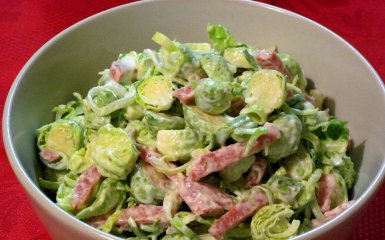
Brussels sprouts often have a reputation as a “lover’s vegetable.” The reason is usually not the cabbage itself, but the way it is prepared: overcooking it, putting it on a baking sheet wet, or not balancing out its natural bitterness.
Given high heat, a little fat, a golden crust, and the right sauce, Brussels sprouts become something else entirely: sweet, nutty, spicy, or even festive. Below are practical ways for everyday meals and menus with character: with an Asian vibe, blue cheese, nuts, citrus, and simple homemade sauces.
Points of attention
- Understand the main mistakes in cooking Brussels sprouts such as overcooking, lack of salt or fat, excess moisture, and improper placement on the baking sheet.
- Discover how to choose and prepare Brussels sprouts correctly for a delicious dish, including practical tips on trimming, rinsing, and cutting for optimal results.
Why are Brussels sprouts bitter or have a strong smell?
The slight bitterness of Brussels sprouts is natural: they're a cruciferous vegetable, like broccoli, cauliflower, and kale. But the unpleasant, pungent odor and watery texture are most often caused by cooking errors.
The most common reasons:
Digestion: Long cooking makes cabbage soft, grayish, and intensifies the sulfurous aroma.
Old or damaged cobs. They may have a coarser taste and unpleasant texture.
Excess moisture. Wet cabbage does not bake in the oven, but steams.
Not enough salt, acid, or fat. Without balance, the natural bitterness is felt more strongly.
The baking tray is overcrowded. The vegetables are packed too tightly, do not brown and become soft.
The good news: all of this is easy to fix. Bitter-free Brussels sprouts aren't a separate variety, but a matter of proper preparation, high heat, and balanced flavor.
How to choose and prepare Brussels sprouts
For a delicious dish, the start is important. Choose firm, uniform-sized heads of cabbage. They should be firm, green, and free of slime, dark, soft spots, and a strong odor.
Before cooking:
Remove the outer damaged leaves.
Cut off the dry tip of the base, but not too deeply so that the cob does not fall apart.
Rinse under cool water.
Dry very well with a towel.
Cut large cabbages in half or into quarters; small ones can be left whole.
For roasting, cutting in half works best: the flat side caramelizes quickly, while the cabbage inside remains juicy.
Basic everyday recipe: baked Brussels sprouts
Roasting Brussels sprouts is the easiest way to love this vegetable. The high heat gives it a golden brown crust and the inside is soft but not watery.
Basic ingredients
Brussels sprouts;
olive or other neutral oil;
salt;
black pepper;
garlic, lemon zest or paprika — optional.
How to cook
Preheat the oven to approximately 200–220 °C. Focus on your oven: active browning is important, not just the number.
Mix the dry shredded cabbage with oil, salt, and pepper.
Place on a baking sheet in a single layer, preferably cut side down.
Bake until the edges are browned and the cabbage is soft inside. The time depends on the size of the cabbage and your oven.
At the end, add lemon juice, zest, a little butter or grated hard cheese.
Don't be afraid of the dark golden edges: they are what give the nutty flavor. But it's better to remove the black, charred leaves — they can be bitter.
Quick Brussels Sprouts in a Pan
Pan-fried Brussels sprouts are perfect for a weeknight dinner when you don't want to turn on the oven. The main thing is not to stir them every second: let the cut brown.
The scheme is simple:
Heat a wide frying pan.
Add oil and place the cabbage cut side down.
Fry for a few minutes until golden brown.
Turn over, reduce heat and cook until tender.
At the end, add butter, garlic, lemon juice or a pinch of chili.
If the cabbages are large, you can add a few tablespoons of water and cover for a short time. But after that, it's better to remove the lid and let the moisture evaporate so that the cabbage doesn't become stewed and lack texture.
Option with an Asian vibe
Brussels sprouts with soy sauce is one of the best ways to balance out their flavors. Saltiness, acidity, ginger, garlic, and a slight sweetness work well with the browned vegetables.
Sauce
Mix:
soy sauce;
a little rice vinegar or lime juice;
grated ginger;
chopped garlic;
a few drops of sesame oil;
a little honey, maple syrup or sugar — optional;
chili flakes or sriracha — if you want it spicy.
The exact proportions depend on your taste. It is important not to overdo it with soy sauce: it is salty, and as it evaporates, the flavor becomes more concentrated.
How to cook
It's best to roast or sauté the Brussels sprouts until golden brown first, then quickly mix them in with the sauce. If you add the sauce at the beginning, the sugar and garlic can burn, and the sprouts will start to stew instead of roasting.
Sprinkle the finished dish with sesame seeds, green onions, or cilantro. For extra filling, you can add fried tofu, chicken, rice noodles, or boiled rice.
What to serve with
This Brussels sprout side dish goes well with:
chickens or turkeys;
salmon or white fish;
rice, buckwheat, bulgur;
noodles with vegetables;
eggs, omelette or tofu.
Festive Brussels Sprouts with Blue Cheese
Brussels sprouts with blue cheese are a great option for a holiday meal or dinner when you want a bold flavor. It's important not to make the dish too heavy: blue cheese is salty and rich, so it's best to add it in moderation.
A successful combination
For a festive option, combine:
baked Brussels sprouts;
blue cheese crumbs;
toasted walnuts or hazelnuts;
thin slices of pear or apple;
a few drops of balsamic vinegar or honey;
black pepper
Add the cheese after baking, while the cabbage is still warm. It will melt a little, but not turn into a greasy sauce. For a milder flavor, mix the blue cheese with a little Greek yogurt or sour cream and serve as a sauce on its own.
How not to ruin the taste
It's best not to use too much garlic, smoked meats, and salt at the same time in this dish. Blue cheese is very active on its own. It needs contrasts: sweet pear, sour balsamic, crunch of nuts, and russet cabbage.
Other good combinations for different menus
Brussels sprouts can be used in a variety of recipes: from a simple homemade side dish to a warm appetizer for a holiday table.
Try these combinations:
Parmesan and lemon. Add grated cheese after baking, and lemon zest on top.
Bacon or pancetta: Salty smoked pieces balance the cabbage well, but don't need a lot of extra salt.
Tahini and lemon. A sauce made from sesame paste, water, lemon juice, and garlic makes the dish creamy without the cream.
Mushrooms and thyme. A good fall-winter option with potatoes, poultry, or cereals.
Honey and mustard. A small amount of honey-mustard sauce after baking adds brightness.
Chili and lime. For those who like spicy vegetable side dishes.
Cranberry or pomegranate. Sweet and sour accents work well in holiday salads.
Common mistakes and how to avoid them
To make sure there is no question about how to cook Brussels sprouts deliciously, remember a few rules.
Don't cook for too long. If you cook in water, do it briefly and stop the process immediately, for example with cold water. But for taste, baking or frying often wins.
Do not place wet cabbage on a baking sheet. Moisture prevents browning.
Do not overcrowd the baking sheet. There should be space between the pieces. If there is a lot of cabbage, it is better to bake it in two batches.
Don't add sauces too early. Honey, garlic, soy sauce, and balsamic can burn quickly at high temperatures.
Don't oversalt. The soy sauce, bacon, Parmesan, and blue cheese are already salty.
Don't be afraid of acid. Lemon, lime, vinegar, or balsamic vinegar make the taste cleaner and less heavy.
How to serve, store and reheat
Brussels sprouts can be a side dish, a warm appetizer, or part of a salad. Serve them with grains, eggs, fish, chicken, or legumes on weekdays. For the holidays, they look great on a large plate with nuts, cheese, herbs, and fruit accents.
Leftovers are best stored in a sealed container in the refrigerator. To restore texture, reheat in a pan or oven rather than in the microwave if you want to maintain the browning. Cheese or yogurt-based sauces are best added after reheating.
If you use frozen Brussels sprouts, keep in mind that they have more moisture, so the browning may be weaker. They should be dried well after defrosting or baked on a well-heated baking sheet, without overloading it.
FAQ
Do you need to cook Brussels sprouts before baking?
Not necessarily. Fresh cabbage can be baked immediately, especially if the heads are small or cut in half. Blanching can help with very large heads, but the cabbage should be thoroughly dried afterwards.
How to remove bitterness from Brussels sprouts?
Don't overcook it, bake or fry it until golden brown, add acid — lemon, lime, vinegar — and balance the flavor with fat, salt, and a little sweetness. This way, the bitterness becomes milder and more pleasant.
Can you cook frozen Brussels sprouts?
Yes, but it is usually more watery than fresh. It is better to let it thaw, dry it and bake it at a high temperature in a single layer. For a quick option, you can fry it in a pan, evaporating the excess moisture.
How long to bake Brussels sprouts?
The time depends on the size of the courgettes, your oven, and the number on the baking sheet. Focus not just on the minutes, but on the signs of doneness: browned edges, soft middle, and a pleasant nutty aroma.
What spices go well with Brussels sprouts?
Black pepper, paprika, garlic, thyme, rosemary, nutmeg, chili, ginger, lemon zest work well. For an Asian style, ginger, garlic, sesame seeds, soy sauce, and lime work well.
Can I cook Brussels sprouts in advance?
Yes, but the best texture is right after baking. If making ahead, bake the cabbage without the dipping sauce, cool, and reheat quickly in the oven or on a pan before serving. Add cheese, yogurt sauces, herbs, and nuts at the end.
What can I replace blue cheese with?
If the taste of blue cheese seems too strong, try feta, goat cheese, Parmesan, or a mild cream cheese. The dish will be less spicy but will still have a creamy and salty accent.
Are Brussels sprouts good for children?
It may be suitable if the child tolerates this vegetable well and the taste is not too sharp. For children, it is better to choose milder options: baking with oil, a little butter, without hot sauce and a lot of salty cheeses.
Conclusion
To make Brussels sprouts delicious, they need three things: good preparation, browning, and a balance of flavor. Don't overcook them, dry them well, bake or roast them in a single layer, and finish them with acid, sauce, cheese, nuts, or herbs.
For everyday meals, oil, salt, pepper, and lemon are enough. For a more vibrant dinner, make an Asian sauce with soy sauce, ginger, and sesame seeds. For a festive table, serve baked Brussels sprouts with blue cheese, nuts, pear, and balsamic — simple, expressive, and without unnecessary complexity.
The material is of a culinary and informational nature. If you have individual dietary restrictions, allergies, or medical recommendations regarding your diet, please take them into account and, if necessary, consult a specialist.

