
A car in photos may look flawless, have low mileage and an attractive price, but its real history is sometimes much more complicated. An accident, insurance write-off, flooding, commercial use, a twisted odometer, or several years of intensive use may be invisible after a quality repair.
That's why before buying a used car from the USA, one of the first steps should be to check its VIN and history.
Points of attention
- Before buying a used car from the USA, it is important to check its history using the CARFAX Vehicle History Report.
- CARFAX has significant advantages in displaying registrations, accidents, mileage, and other important vehicle events.
- A clean CARFAX does not guarantee the absence of technical problems, so you should combine the report with a technical diagnosis before purchasing.
- It is important to carefully analyze the title, mileage, damage records, and other key points that indicate the condition of the car.
- CARFAX does not replace a full inspection at a service station and a vehicle inspection, but helps to get an overall picture of its history and condition.
One of the most well-known tools for this is the CARFAX Vehicle History Report . The report can show registration, title, recorded accidents, mileage, service records, number of owners, vehicle usage, and other events.
However, CARFAX is not a “certificate of a good car.” Even a no-accident report does not guarantee that the car has never been damaged. Therefore, a proper inspection of a car from the USA consists of several stages: analysis of the history, documents, auction photos and a technical inspection.
We analyze what exactly CARFAX shows, how to read it correctly, and which entries should alert the buyer.
What is CARFAX?
CARFAX is a vehicle history service that aggregates information about cars from a large number of sources.
For an American car, the report may contain data obtained from:
registration authorities;
insurance companies;
police;
dealers;
service centers;
maintenance stations;
auctions;
other automotive information providers.
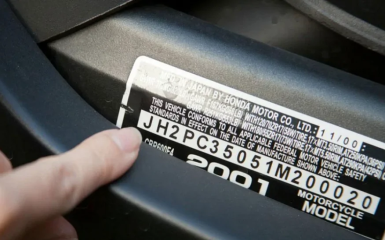
All records are tied to the VIN — Vehicle Identification Number , a unique identification number for a car.
For most modern cars, the VIN consists of 17 characters.
It can be used to identify a specific machine, regardless of how many times it has changed:
owner;
license plates;
state of registration;
country of residence.
What you can see in a CARFAX report
The content of a specific report depends on what information about the vehicle was recorded and transferred to the database.
The most useful are multiple blocks.
1. History of registrations and owners
CARFAX can show:
first registration;
change of owners;
the state where the vehicle was registered;
approximate periods of ownership;
type of use.
For example, in history you can see:
Owner 1 — Personal Vehicle
and then:
Owner 2 — Rental Vehicle.
For the buyer, this is an important difference.
A single owner driving 15,000–20,000 kilometers per year and a rental car with constant changes of drivers may have the same current mileage, but completely different operating conditions.
At the same time, the number of owners alone does not prove anything.
Four owners in ten years doesn't automatically make a car bad, just as one owner doesn't guarantee perfect condition.
We need to look at the whole story in its entirety.
2. Mileage
One of the most useful elements of the report is the chronology of odometer readings.
Mileage can be recorded during:
service;
registration;
technical inspection;
sales;
auction operations;
other documented events.
For example:
2021 — 28,400 miles;
2022 — 41,700;
2023 — 55,300;
2024 — 67,100.
This sequence seems logical.
And here:
2023 - 82,000 miles;
2024 — 54,000 miles
needs explanation.
This could be:
data entry error;
replacement of the instrument panel;
a legally recorded problem with the odometer;
real interference with the mileage.
One strange entry doesn't prove a twist, but it can't be ignored.
3. Accidents and damage
CARFAX may contain records such as:
Accident Reported;
Damage Reported;
Minor Damage;
Moderate Damage;
Severe Damage;
Structural Damage;
Airbag Deployment.
These formulations need to be read carefully.
Accident Reported
It means that the service received information about the accident.
But the fact of the accident itself does not indicate how seriously the car was damaged.
Damage Reported
The damage was recorded by the data source, but it is not necessarily a traffic accident.
The reason could be, for example:
hail;
falling object;
vandalism;
another event.
Structural Damage
One of the most serious signals.
It may indicate damage to the vehicle's structural elements.
Such a machine needs to be checked especially carefully:
body geometry;
welding points;
power elements;
spars;
repair sites.
Airbag Deployment
Airbag deployment often means a fairly significant impact.
After such a car, it is important to check whether there were:
new pillows installed;
restored belt tensioners;
correctly repaired SRS system;
Damaged interior elements were replaced.
A record of an accident itself is not an automatic reason to abandon the vehicle.
The key question is what was damaged and how it was repaired .
4. Title: one of the most important blocks
An American vehicle title can be roughly explained as a document that legally reflects a vehicle's status and ownership.
The rules and status names vary from state to state, so a single term doesn't always have exactly the same legal meaning across the country.
Particular attention should be paid to so-called title brands.
Salvage
Usually means that the vehicle has sustained such significant damage that it has been classified as salvage under applicable regulations.
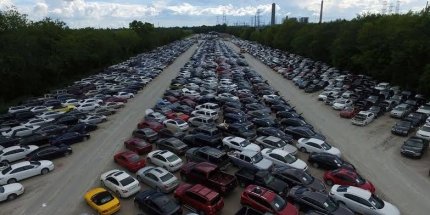
Often, such cars end up at insurance auctions.
The reason may be:
Road accident;
flooding;
fire;
other serious injuries.
However, salvage does not describe the quality of the future repair .
One car could have relatively predictable body damage and be qualitatively restored.
Another is to survive a serious accident with body deformation.
Therefore, the word Salvage itself is not enough for assessment.
Rebuilt or Reconstructed
Typically, this status means that the car previously had a salvage history, after which it was repaired and went through the specific jurisdiction's return to the road procedure.
This does not mean:
"the car has been restored to factory condition."
Legal status and quality of repair are different things.
Flood
A very serious risk factor.
After flooding, problems may appear months or years later:
corrosion of connectors;
failures of electronic units;
wiring problems;
oxidation of contacts;
sensor malfunctions.
Modern cars with a lot of electronics are especially complex.
Junk
Typically, this is an even more severe negative status associated with a car that was intended for disposal or use as a source of parts.
For the buyer, such a record is a reason to find out the origin of the car in as much detail as possible.
5. Total Loss
Total Loss means that the insurance company has declared the vehicle a total insured loss in accordance with its rules and applicable law.
A common mistake is to assume that total loss always means:
"the car is physically destroyed."
Not necessarily.
The insurance solution is largely economic.
Repairing a relatively inexpensive car may lose its meaning even if there is damage that can be technically repaired.
For an expensive car, the limit may be completely different.
Therefore, you need to look at:
nature of the damage;
photos before repair;
cost of the car;
damaged nodes.
But the Total Loss record is always a significant part of the story and affects the future price of the car.
6. Service history
Sometimes CARFAX allows you to see very detailed maintenance:
lubricant replacement;
tire fitting;
brake repair;
battery replacement;
diagnostics;
major routine work.
Such a story is useful for two reasons.
First, you can understand whether the car has been regularly serviced.
Secondly, service records form additional mileage checkpoints.
For example:
March — 45,200 miles, oil change;
August — 51,100, tire fitting;
December — 55,700, dealer service.
This is much more convincing than a single number on the odometer at the time of sale.
But the lack of service records does not mean that the car has not been serviced at all.
The owner could use a repair shop that does not provide CARFAX information or service the car themselves.
7. Rental, leasing, taxi and commercial use
The report may indicate the previous type of operation.
For example:
Personal;
Rental;
Lease;
Commercial;
Taxi.
This is important, but you shouldn't think in stereotypes.
A rental car may have:
many drivers;
high annual mileage;
intensive urban operation.
At the same time, large companies often maintain their fleet according to strict schedules.
A personal car of one owner can also be operated for years without normal service.
Therefore, Rental status is a factor in assessing price and condition, not a ready-made diagnosis.
Can you trust CARFAX 100%?
No.
And CARFAX itself directly admits this.
The report reflects events, information about which has reached its sources .
Let's imagine a simple situation.
The owner was in a minor accident.
The police were not called.
I didn't notify the insurance company.
He repaired the car with his own money in a small workshop that does not transmit data anywhere.
Such an accident may not appear at all in CARFAX.
Therefore the phrase:
No accidents reported
means:
"There are no accident reports in the available CARFAX data."
It does not mean:
"This car is guaranteed to have never been in an accident."
This is a fundamental difference.
Why a “clean CARFAX” doesn’t guarantee a good car
Even a perfect story will say nothing about some of the current technical problems.
For example:
low engine compression;
worn gearbox;
oil leak;
turbine problems;
suspension play;
poor-quality painting after private repairs;
corrosion;
electronics problems.
CARFAX itself recommends combining the report with a pre-purchase inspection and test drive.
The same principle is supported by American consumer protection organizations: the history of a vehicle does not replace independent technical diagnostics.

CARFAX and NMVTIS: What's the difference?
For cars from the USA, it is useful to know another abbreviation - NMVTIS , National Motor Vehicle Title Information System.
This is an American system created to combat:
vehicle fraud;
thefts;
hiding salvage history.
NMVTIS focuses on several key indicators:
the current title and its date of issue;
history of title brands;
odometer readings;
total loss;
salvage/junk history.
Data is received from, among other things, state registration authorities, insurance companies, and salvage industry enterprises in accordance with federal regulations.
CARFAX has a different purpose and can contain a much broader household history:
service;
Road accident;
registration;
type of use;
repairs;
recall.
Therefore, for an expensive purchase, it is useful not to consider these systems as interchangeable.
CARFAX or AutoCheck
AutoCheck is another well-known American car history service owned by Experian.
Its feature is the AutoCheck Score , a score that helps compare a car with other cars of a similar age and class based on historical data.
AutoCheck also has a significant array of auction information.
The practical approach is simple:
If you are buying an inexpensive car with a clear history, one detailed report may be enough for the initial selection.
If we are talking about:
expensive car;
a complex auction history;
several accidents;
conflicting records,
It is useful to check the VIN in several independent databases.
Different services may have different information providers.
Free VIN check: what else can you do
There are useful free inspections for a car from the USA.
NICB VINCheck
The National Insurance Crime Bureau service allows you to check whether insurance companies have records in their database about:
a car that has not been recovered after being stolen;
salvage;
flood damage.
But the NICB itself emphasizes: this is not a complete report of the car's history.
A clean result does not guarantee a clean story.

Review of recalls
You can also use the VIN to check for open safety recalls — manufacturer campaigns that indicate a specific car still needs repair.
For a car that is already outside the US, it is also worth clarifying whether the local dealer will be able to carry out a specific recall campaign and under what conditions.
What is title washing and why is it important?
A separate risk of the American market is title washing .
In simple terms, this is a scheme where a car with a negative status is transferred between jurisdictions in an attempt to hide or lose an unwanted title brand.
For example, a car had a flood or salvage history, but after a chain of re-registrations, the current document may look much “cleaner”.
It is precisely to combat such schemes that the history of statuses is important, not just the current title.
Therefore, the buyer should be interested in the following questions:
"What title does the car have now?"
and at the same time:
"What statuses did he have before?"
How to read CARFAX correctly: algorithm
Don't start by looking for a single Accident inscription.
Read the report from top to bottom like a timeline of the car's life.
Step 1. Check the VIN
The VIN in the report must match exactly:
Vehicle VIN;
auction lot;
documents;
other sources.
One wrong number or letter means you are analyzing a different machine.
Step 2. Look at the title
First, find:
Salvage;
Rebuilt;
Junk;
Flood;
Lemon;
other brands;
Total Loss.
These records can significantly change the allowable price of the car.
Step 3. Build a timeline of the run
All readings should be in a logical sequence.
Any decrease in mileage requires explanation.
Step 4. Find all the damage
Don't limit yourself to the number of accidents.
Look:
date;
side of impact;
severity;
structural damage;
airbags.
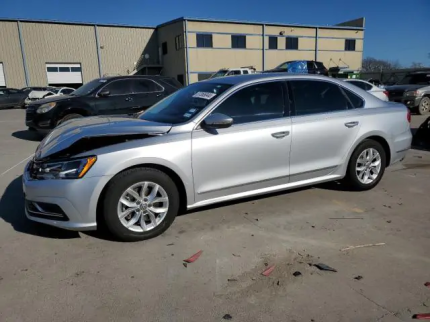
Step 5. Compare the accident to the auction photos
This is one of the most important steps when buying a car from an insurance auction.
CARFAX says it was recorded .
The photos show what the car actually looked like after the damage .
Pay attention to:
wheel position;
body clearances;
roof;
racks;
thresholds;
spars;
trunk floor;
airbags;
suspension damage.
Step 6. Analyze the service
Regular records can confirm normal operation and mileage.
Step 7. See how quickly the car sold
Several short periods of ownership in a row are not proof of a problem, but a reason to ask a question.
Step 8. Find time gaps
The absence of records for two years is also not proof of an accident.
The machine could simply be serviced outside the system.
Therefore, large gaps are not a "red flag" but an area of uncertainty.
10 CARFAX Entries That Need Special Attention
Before buying, it is worth examining in detail:
Structural Damage.
Airbag Deployment.
Total Loss.
Salvage title.
Rebuilt/Reconstructed title.
Flood damage.
Junk title.
Odometer rollback or inconsistent readings.
Several serious accidents.
Very short periods of ownership combined with other problematic records.
No list is a substitute for evaluating a specific machine.
For example, a properly restored salvage car may be a better buy than a more expensive car with a "clean" report and hidden artisanal repairs.

Typical mistakes of a car buyer from the USA
"There are no accidents on CARFAX, so the car is not damaged"
Incorrect. Unregistered damage may not be included in the database.
"Salvage means the car cannot be bought"
It's also too categorical. You need to assess the nature of the damage, the quality of the repair, and the price.
"Rebuilt means the car has been fully inspected"
No. This is a legal status, not an independent guarantee of factory quality restoration.
"Low mileage means good condition"
A car with 40,000 miles after a flood may be worse than a well-maintained car with 100,000 miles.
"There are no service records - the car has not been serviced"
Not necessarily. Some workshops do not transmit data to the system.
"One owner - guaranteed good car"
One owner may also not maintain the car, get into accidents, or operate it in very difficult conditions.
What verification is needed before the actual purchase?
For a car from the USA, the optimal algorithm looks like this:
Check the VIN.
Get a history report.
Check the title and its history.
Find available auction information and photos.
Check mileage records.
Check theft/salvage/flood information.
Check for revocable campaigns.
Inspect the body with a thickness gauge.
Conduct computer diagnostics.
Check the engine, transmission, chassis and electronics.
Assess the quality of body repair.
Calculate future costs after purchase.
It is the combination of history and physical examination that gives the most realistic picture.
Conclusion
CARFAX is a very useful tool for checking a used car, especially if the car came from the U.S. A single VIN can show important episodes in its life: registrations, recorded accidents, mileage, service, insurance write-offs, title brands, and the nature of previous use.
But the main principle of working with the report is simple:
CARFAX shows the known history of a car, not its entire history.
Therefore, the inscription No accidents reported is not a guarantee of the absence of body repairs, and a clean title does not mean perfect technical condition.
A good purchasing decision is based on a combination of data: CARFAX, official and insurance databases, documents, pre-repair photos, and independent technical diagnostics.
The more expensive the car and the more complicated its history, the less sense it makes to save on the inspection.
Important: The information in the material is for general reference purposes only. The content of CARFAX and other VIN services depends on available sources, country, state, age of the vehicle and specific history. Title terminology and rules for registration of salvage/rebuilt vehicles in the USA may differ between states and change. Before buying, check the current documents of a specific vehicle and conduct an independent technical inspection.
FAQ
What is CARFAX in simple words?
CARFAX is a service that generates a report on the known history of a vehicle based on a VIN. It may include registration, mileage, accidents, service records, title, total loss, type of use, and other events.
Is it possible to check CARFAX for free?
A full, up-to-date CARFAX is usually a paid product. Some parts of a vehicle's history can be checked for free through individual official and insurance VIN services, but they are not a substitute for a full report.
What does No accidents reported mean on CARFAX?
This means that there is no recorded accident report among the available CARFAX information. This does not guarantee that the vehicle has never been damaged.
What does Salvage mean in CARFAX?
Salvage refers to a vehicle's history that has been classified as severely damaged under applicable regulations. Specific criteria may vary from state to state.
What does Rebuilt title mean?
Typically, this is a vehicle that previously had salvage status, has been restored, and has undergone the specific jurisdiction's return-to-service procedure. This is not a guarantee of the quality of the repair.
Should I buy a car with an accident from CARFAX?
The accident record itself is not an automatic reason to abandon the car. The force and direction of the impact, damage to power elements, airbag deployment, quality of repair, and the price of the car are important.
How can I tell from CARFAX that the mileage is inflated?
All consecutive odometer readings should be checked. If a later entry is significantly lower than the previous one, this may indicate an error, odometer replacement, or mileage tampering and requires further verification.
Which is better — CARFAX or AutoCheck?
Both services use large amounts of automotive data, but have different information providers and reporting formats. For an expensive or suspicious car, it is useful to compare data from multiple sources.
Does CARFAX replace a car inspection at a service station?
No. A history report cannot assess the current engine compression, condition of the transmission, suspension, electronics, hidden corrosion, or the quality of any previous repairs. An independent technical diagnosis is required before purchase.
What is the most important thing to check in CARFAX before buying a car from the USA?
First of all, title history, total loss, accident and structural damage, airbag deployment, mileage history, type of previous use, and service history. After that, the data needs to be compared with documents and photos of the car before the repair.

