

Coconut water is often touted as a natural isotonic, a source of electrolytes, a drink for weight loss, post-workout recovery, and even a “detox.” Some of these claims have a rational basis: coconut water does contain potassium, small amounts of sodium and magnesium, natural sugars, and plenty of fluid.
Points of attention
- Coconut water contains potassium, electrolytes, and natural sugars, but it's not always a better alternative to regular water for hydration.
- After a workout, coconut water can help restore fluids and electrolytes, but with insufficient sodium, it may not be an ideal option for an intense workout.
- Coconut water is a source of potassium, which is good for the nervous system, muscles, and heart, but it can be obtained from other foods.
But calling it universally better than regular water is wrong. For everyday hydration, a healthy person usually needs regular water, and after an intense, long workout, coconut water doesn't always provide as much sodium as is needed for optimal electrolyte replenishment.
Its main advantage is much simpler: it is a pleasant drink with a relatively low calorie content and a noticeable amount of potassium, which can be part of a normal diet.
We analyze what is contained in coconut water, how it can be useful, whether it helps you lose weight, and who should limit its consumption.
What is coconut water?
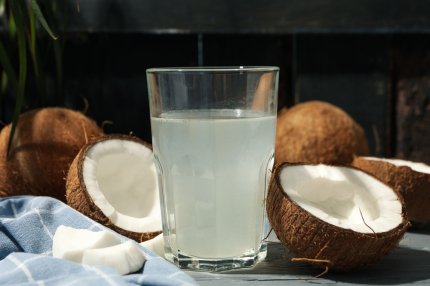
Coconut water is a clear or slightly cloudy liquid that is naturally found inside a coconut.
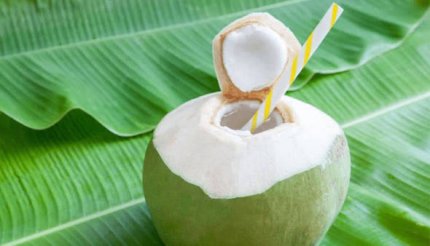
It is most abundant in young green fruits. As they ripen, some of the liquid is used to form the coconut pulp.
It is important not to confuse several different products.
Coconut water
Liquid directly from the coconut. Virtually fat-free.
Coconut milk
It is made from shredded coconut and water. It is much fattier and higher in calories.
Coconut cream
An even more concentrated product with a high fat content.
Coconut oil
Almost pure fat and a completely different category in terms of nutritional value.
Therefore, data on coconut oil or milk cannot be transferred to coconut water.
What is in coconut water?
The composition depends greatly on the variety of coconut, its maturity, and the specific finished drink.
On average, a glass of about 240 ml of unsweetened coconut water can contain about:
40–50 kcal;
9–11 g of carbohydrates;
about 9–10 g of natural sugars;
almost 0 g of fat;
a small amount of protein;
approximately 400–600 mg of potassium.
The amount of sodium, magnesium, calcium, and other minerals varies even more.
That is why the composition on the packaging of a specific product is more important than universal tables from the Internet.
1. Coconut water really helps maintain hydration
The most obvious benefit of coconut water is that approximately 95% of its composition is water.
Therefore, she:
replenishes fluid losses;
contains electrolytes;
may be more enjoyable than plain water for people who have difficulty drinking enough.
Among the main electrolytes it contains are:
potassium;
sodium;
magnesium.
Electrolytes are involved in the regulation of fluid balance, muscle function, the nervous system, and other physiological processes.
However, the phrase "coconut water moisturizes better than regular water" needs clarification.
A systematic review of studies on exercise recovery found no convincing advantage of fresh coconut water over plain water in terms of hydration.
So, if you just want to quench your thirst at the office or after a walk, buying coconut water for the sake of "better absorption" is not necessary.
2. It can be beneficial after a workout, but it's not always better than a sports drink.
Coconut water is often called a natural sports drink.
There is logic in this: after physical exertion, the body needs to restore fluid and lost electrolytes.
Small studies have shown that coconut water may provide fluid replacement at about the same level as regular water or sports drinks.
In 2026, a small randomized trial also showed that after exercise-induced dehydration, coconut water provided a similar level of overall fluid replacement to a carbohydrate-electrolyte sports drink.
However, there is an important nuance.
Coconut water is high in potassium but relatively low in sodium.
During heavy sweating, a person loses a lot of sodium.
Therefore, after:
long run;
bicycle race;
training for more than an hour;
work in extreme heat;
very heavy sweating
Plain coconut water may not be an ideal substitute for a specially selected electrolyte drink.
For a short training session, most healthy people generally have enough water and a regular meal after the workout.
3. It is a good source of potassium
Potassium is one of the main nutritional benefits of coconut water.
This mineral is needed for:
nervous system function;
muscle contraction;
normal heart rhythm;
regulation of fluid balance;
maintaining blood pressure.
For adults, the estimated adequate intake of potassium is about 2,600 mg per day for women and 3,400 mg for men.
One glass of coconut water can provide approximately 400–600 mg.
This is a pretty notable contribution.
However, potassium is easy to obtain from regular food:
potatoes;
legumes;
green vegetables;
dairy products;
fruits;
avocado;
Pisces.
Therefore, it is not necessary to drink coconut water specifically because of the potassium.
4. Does coconut water help lower blood pressure?
A diet with sufficient potassium is indeed associated with better blood pressure control.
Potassium helps the body regulate sodium and is involved in maintaining normal vascular tone.
Separate small studies of coconut water have also shown potential blood pressure reduction in people with hypertension.
But there is not enough evidence yet to use it as a treatment.
Especially wrong:
replace blood pressure medications with it;
independently increase potassium intake in case of kidney disease;
drink liters in order to "cleanse the vessels."
To control hypertension, the overall diet, salt intake, body weight, physical activity, smoking cessation, and treatment prescribed by a doctor are important.
5. Coconut water may be a better alternative to sugary soda
If the choice is between:
a can of sweet soda water
and
a glass of natural unsweetened coconut water,
the second option will often contain fewer calories and sugar and provide additional potassium.
But that doesn't mean coconut water is a sugar-free drink.
A glass can contain about 9–10 g of natural sugars.
If you drink a liter, it's already:
approximately 160–200 kcal;
a few dozen grams of sugar.
Therefore, it is not worth perceiving it as a complete analogue of water and drinking it without restrictions.

6. Does coconut water help you lose weight?
It doesn't burn fat.
There is no substance in coconut water that would cause the body to lose fat faster regardless of diet.
Its advantage for weight control is different.
It is usually lower in calories than:
sweet carbonated water;
a significant portion of juices;
milkshakes;
sweet coffee drinks.
Therefore, replacing a higher-calorie beverage with coconut water can help reduce overall energy intake.
But if you simply add it to your usual diet, you don't need to expect a separate effect for weight loss.
To reduce fat mass, a prolonged energy deficit is necessary.
7. Coconut water and blood sugar levels
Coconut water is sometimes credited with the ability to "stabilize sugar."
There are no such recommendations for treating diabetes.
Coconut water itself contains natural sugars and carbohydrates.
This does not make it forbidden for all people with diabetes, but the serving should be considered in the overall carbohydrate intake.
You need to read the label of the finished product especially carefully.
The manufacturer may add:
sugar;
fruit concentrates;
syrups;
flavorings.
Then the drink is significantly different from 100% coconut water.
8. Does coconut water protect against kidney stones?
There is interesting, but still preliminary data here.
In small studies, consuming coconut water increased urinary citrate levels.
Citrate may prevent the formation of some types of stones.
In a 2025 study, this effect was also observed, but the number of participants was small.
This does not yet mean that coconut water has been proven to prevent or treat urolithiasis.
The most important universal factor in the prevention of many stones remains adequate fluid intake, and specific recommendations depend on the type of stone and urine composition.
9. “Antioxidant properties” are often exaggerated
Coconut water does contain various biologically active compounds.
Laboratory and experimental studies demonstrate:
antioxidant activity;
potential anti-inflammatory effects;
other interesting biological properties.
The problem is that a significant portion of such data is obtained:
in laboratory conditions;
on cells;
on animals.
This is not at all the same as a proven clinical effect in humans.
Therefore, the claim that coconut water:
"rejuvenates the body";
treats inflammation;
protects against cancer;
removes toxins
do not have sufficient clinical evidence.
10. Coconut water is not a cosmetic for the skin
Regular intake of sufficient fluid is necessary for the entire body, including the skin.
But coconut water has no proven unique ability:
remove wrinkles;
treat acne;
cleanse the skin;
"Moisturizing it from the inside" is better than other liquids.
If a person has been dehydrated, fluid replacement is generally beneficial.
However, the following are much more important for skin condition:
protection against ultraviolet rays;
quitting smoking;
normal nutrition;
care;
treatment of dermatological problems as needed.

Does coconut water have a detox effect?
Not in any particular sense.
The body does not need a drink that "washes out toxins."
The following are involved in the processing and excretion of various metabolic products:
liver;
kidneys;
lungs;
digestive system.
Coconut water can maintain normal water balance just like other fluids.
This is a useful physiological function, but calling it "detoxification" is incorrect.
Who can coconut water harm?
For most healthy people, moderate amounts of coconut water are safe.
But there are important exceptions due to the high potassium content.
In chronic kidney disease
The kidneys are responsible for maintaining normal potassium concentrations in the blood.
When their function decreases, excess potassium can accumulate.
This is called hyperkalemia.
Severe hyperkalemia can cause dangerous heart rhythm disturbances.
The National Kidney Foundation specifically lists coconut water as a high-potassium beverage that may need to be limited in kidney disease.
When taking certain medications
Potassium levels can be increased by, among other things:
ACE inhibitors;
angiotensin receptor blockers;
potassium-sparing diuretics.
For example, spironolactone belongs to the latter.
This does not mean that a person on such medications automatically cannot drink coconut water.
But you should not regularly consume large amounts of it without consulting a doctor, especially if you have impaired kidney function.
Can coconut water be used for diarrhea and dehydration?
With mild fluid loss, a healthy adult can drink various safe beverages, including coconut water.
But for significant diarrhea, it should not replace standard oral rehydration solution .
Such solutions contain a specially selected ratio of:
water;
sodium;
glucose;
other electrolytes.
It is this formula that helps effectively restore fluid lost through the intestines.
The World Health Organization recommends the use of standard oral rehydration solutions for diarrhea, especially in children.
Therefore, coconut water is a regular drink, not a homemade substitute for a medical rehydration solution.
Can you drink coconut water every day?
For a healthy person, a small portion of natural coconut water may well be part of the daily diet.
There is no official "daily coconut water intake."
A practical option for many adults may be one small glass or package, if the drink is enjoyable and fits into the overall diet.
There is no need to drink a liter a day for electrolytes.
The higher the number, the more you get:
sugars;
calories;
potassium.
For a healthy person with normal kidney function, dietary potassium is usually not a problem, but for people at risk of hyperkalemia, the situation needs to be evaluated separately.
How to choose coconut water in the store
It is desirable to see the simplest possible composition on the packaging.
The best option:
100% coconut water / 100% coconut water.
Check a few points.
Is there added sugar?
Coconut water already contains natural sugar.
There is no particular need to sweeten it additionally.
What is the packaging volume?
The label may show the composition for 100 ml, while the bottle has 500 ml.
Therefore, you need to take into account the entire amount actually drunk.
How much potassium and sodium
This is especially important if the drink is used after a long workout or if the person has medical restrictions.
What else is in the composition?
Some products contain:
fruit juices;
flavorings;
sweeteners;
added sugar.
This is a different drink in terms of nutritional value.
Coconut water, plain water, or sports drink
There is no universal winner.
During a normal day
Plain water is the simplest and most practical option.
After a short workout
For most people, water plus normal food is enough again.
If you want a drink with flavor and electrolytes
Coconut water can be a good option.
After prolonged intense exercise and heavy sweating
A sports drink with adequate sodium and carbohydrates may be more beneficial, especially if you need to continue physical activity.
Therefore, coconut water occupies an intermediate position: it is a pleasant electrolyte drink, but not a universal sports formula.

7 myths about coconut water
Myth 1. It hydrates the body much better than water
Studies do not show a consistent large benefit for the average person.
Myth 2. It burns fat
No. Losing fat tissue requires an energy deficit.
Myth 3. You can drink it without restrictions because it is natural
Even 100% natural coconut water contains sugars, calories, and lots of potassium.
Myth 4. It treats high blood pressure
Potassium is important for blood pressure control, but coconut water is not a substitute for hypertension treatment.
Myth 5. It’s a natural “detox”
A specific mechanism for cleansing the body with coconut water has not been proven.
Myth 6. It is always better than a sports drink
With heavy sweating, sodium deficiency may occur.
Myth 7. It is safe for absolutely everyone
For people with kidney disease or at risk of hyperkalemia, high potassium levels may pose a problem.
Conclusion
Coconut water is a normal, nutritious drink that can be part of a healthy diet. It contains a lot of water, a significant amount of potassium, natural sugars, and small amounts of other electrolytes.
It can be used after physical activity, instead of higher-calorie sweet drinks, or simply because you like the taste.
But there's no good reason to consider coconut water a superfood. It's not proven to cleanse the body, burn fat, treat hypertension, and has no clear advantage over water for everyday hydration.
It's best to treat it as just another dietary product — useful under certain conditions, but not at all mandatory.
Important: The material is for informational and educational purposes only and does not constitute medical advice, diagnosis, or a recommendation for treatment or special nutrition. Self-medication can be harmful to your health. If you have chronic kidney disease, heart failure, potassium disorders, diabetes, or are taking medications that affect potassium or blood pressure, be sure to consult your doctor before regularly consuming large amounts of coconut water.
FAQ
What are the benefits of coconut water?
It provides fluids and electrolytes, especially potassium, and is usually lower in calories than many sugary sodas and juices.
How much potassium is in coconut water?
The figures vary by product. A glass of approximately 240 ml often contains approximately 400–600 mg of potassium, but you should look at the label for the exact amount.
Can you drink coconut water every day?
For a healthy person, moderate amounts usually don't cause any problems. There's no particular need to drink it every day.
Does coconut water help you lose weight?
It does not have a fat-burning effect on its own. However, replacing it with a higher-calorie soda or sugary drink can reduce overall calorie intake.
What is better after a workout - coconut water or regular water?
After a short, regular workout, water is often sufficient. After a long workout, coconut water can be a recovery option, but if you sweat a lot, you may need more sodium.
Is coconut water safe for high blood pressure?
Potassium in the diet can be helpful in controlling blood pressure, but coconut water is not a cure for hypertension. People with kidney disease or those taking certain blood pressure medications should be aware of the risk of excess potassium.
Can I have coconut water with diabetes?
It contains natural sugars and carbohydrates, so the portion size should be considered in the diet. It is worth choosing 100% coconut water without added sugar and coordinating the diet with a doctor if necessary.
Is coconut water good for the kidneys?
For someone with healthy kidneys, it can be a normal source of fluid and potassium. In chronic kidney disease, high potassium levels can be dangerous, so consult a doctor.
Can coconut water be completely replaced with water?
There is no need for this. Plain water remains the primary and most versatile beverage for hydration. Coconut water is best viewed as an additional option.
How is coconut water different from coconut milk?
Coconut water is naturally found inside the fruit and is almost fat-free. Coconut milk is made from coconut pulp and water, so it is thicker, fattier, and significantly higher in calories.
undefined

