
In your makeup bag, you may find a brand-new lipstick you bought a few years ago, a serum without a box, or a mascara you’ve only used a few times. Sometimes these products look perfectly normal on the outside, but that doesn’t mean they’re safe and have the properties they claim to have. Cosmetics have a limited shelf life, which depends on their ingredients, packaging, storage conditions, and exposure to air and microorganisms. Eye products, products containing water, and sunscreens require special attention.
The main rule: you need to distinguish between the general shelf life of cosmetics and the period of use after opening. The 12M symbol on the picture of the opened jar means 12 months after first opening, not 12 months from the date of manufacture or purchase.
However, cosmetics may deteriorate before the specified period due to overheating, contamination, or improper storage.
Let's look at how to read labels, how long you can use different cosmetics, what changes signal spoilage, and what to do with products whose opening date is unknown.
What does the expiration date of cosmetics mean?
Shelf life is the period during which the manufacturer confirms the proper properties and safety of a cosmetic product under the specified storage conditions.
It depends on the formulation, production method, packaging, and stability test results.
The U.S. Food and Drug Administration (FDA) explains that cosmetics can change over time due to component degradation, exposure to air, temperature fluctuations, and the entry of microorganisms.
For example, cream is an emulsion—a mixture of water and fat phases. Under adverse conditions, these phases can separate, and the preservation system can gradually lose its effectiveness.
Dry powder is usually less susceptible to microbial contamination than liquid foundation, but it also does not have an unlimited shelf life.
What is the difference between expiration date and PAO?
There may be two different markings on the packaging.
The best before date indicates the date until which the product, when properly stored, retains its specified characteristics.
PAO (Period After Opening) is the period after opening during which cosmetics can be used in accordance with the conditions specified by the manufacturer.
For example, if the cream is marked 6M and it was opened on January 10, the six-month countdown begins on that date.
However, PAO does not extend the overall shelf life of a product if it is also listed and expires earlier.
How to read labels on cosmetics correctly
Cosmetic products often use international symbols that help you understand the rules of use.
The most famous is an image of an open jar with the number and letter M.
| Mark | What does it mean? |
| 3M | Use within 3 months after opening. |
| 6M | Within 6 months |
| 9M | Within 9 months |
| 12M | Within 12 months |
| 24M | Within 24 months |
| EXP | Expiration date indication in some labeling systems |
| LOT or Batch | Production batch number, not necessarily date |
| Hourglass symbol | May indicate minimum shelf life |
It is important to note that the open jar symbol is not used on all products.
For example, for certain disposable products and sealed aerosol containers, the concept of a period after opening may not apply.
Why is there no date on some devices?
According to European Regulation No. 1223/2009, for cosmetic products with a minimum shelf life of more than 30 months, indicating a specific date is not mandatory.
Instead, when applicable, the period after opening is indicated.
For products with a minimum shelf life of up to and including 30 months, appropriate dating is provided.
Ukraine also has a Technical Regulation for Cosmetic Products, approved by Resolution of the Cabinet of Ministers No. 65. As of November 2026, a transition period is in effect until July 31, 2027, so products with different labeling formats may appear on the market.
How long do cosmetics last after opening: table
Different types of cosmetics have different stability.
Liquid products are more likely to have problems due to contact with microorganisms, while dry products can retain their properties longer if used properly.
The given periods are general guidelines, not universal standards . If the manufacturer specifies a different period, its labeling must be followed.
| Type of cosmetics | Estimated period after opening |
| Mascara | About 3 months as a cautious guideline |
| Liquid eyeliner | Approximately 3–6 months |
| Cream eyeshadow | Often 6–12 months |
| Dry shadows | Often 12–24 months |
| Foundation | Approximately 6–12 months |
| Liquid concealer | Approximately 6–12 months |
| Compact powder, dry blush | Often 12–24 months |
| Pomade | Approximately 12–24 months |
| Lip gloss | Often 6–12 months |
| Face cream | Usually 6–12 months |
| Serum | Depending on the formula, often 3–12 months |
| Shampoo, conditioner | According to the label, often 12–24 months |
| Sunscreen | By expiration date and PAO of a specific product |
It is especially important not to transfer the term of one product to all products in the same category.
For example, two vitamin C serums can differ significantly in stability due to different forms of the active ingredient, concentration, packaging, and composition.
Mascara: why you need to replace it more often
Mascara is a cosmetic that comes into direct contact with the eye area.
Each time you use it, the brush touches your eyelashes, returns to the tube, and can transfer microorganisms there.
The FDA recommends throwing away mascara about three months after purchase, and immediately if it has dried out or changed its properties.
This is a more cautious guideline than some of the labeling on packages.
Can I dilute dry mascara with water?
Not worth it.
Adding water changes the original formula, can disrupt the work of preservatives, and promote microbial contamination.
It is especially dangerous to dilute mascara with saliva.
If the product has dried out, it is best to replace it.
During an eye infection, the FDA recommends discontinuing the use of cosmetics in that area and discarding products used during the illness.
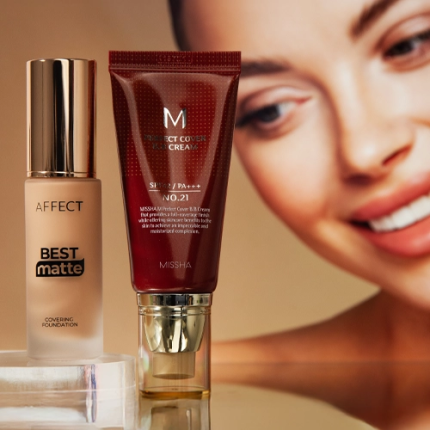
How much foundation and concealer can you use?
Liquid foundations usually contain an aqueous phase, oils, pigments, and ingredients that ensure a uniform texture.
Once opened, the formula comes into contact with air, and during application, it comes into contact with tools or skin.
If the manufacturer specifies 6M or 12M, you should focus on this period.
What affects the shelf life of foundation?
A pump or dispenser can reduce direct contact of the contents with the fingers.
On the other hand, opened jars require more attention to hygiene.
However, packaging with a pump does not mean that the product can be used indefinitely.
If the foundation flakes, has an unusual odor, or has significantly changed color, you should stop using it.
Do not try to restore uniformity to obviously spoiled cosmetics by adding cream, water, or oil.
Powder, blush and dry eyeshadow: do they really last for years?
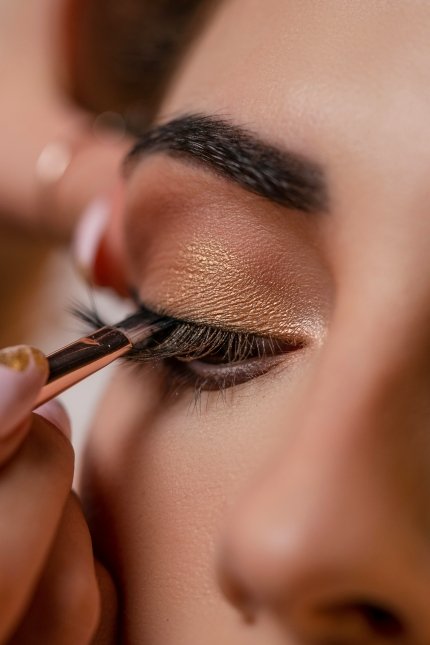
Dry makeup often has a lower risk of microbial contamination due to the low available water content.
That's why compact powders and dry eyeshadows often have a longer shelf life after opening.
However, this does not mean that old pallets are always safe.
What shortens the shelf life of dry goods?
The main factors are contact with wet brushes, foreign substances, and improper storage.
For example, if you regularly apply eyeshadow with a wet brush without the manufacturer's recommendations, their surface may change.
You also need to monitor the cleanliness of the applicators.
If a dry product has an unusual odor, traces of mold, or unusual changes in texture, it should be discarded regardless of the specified date.
Lipstick, gloss and balm: how suitable are they?
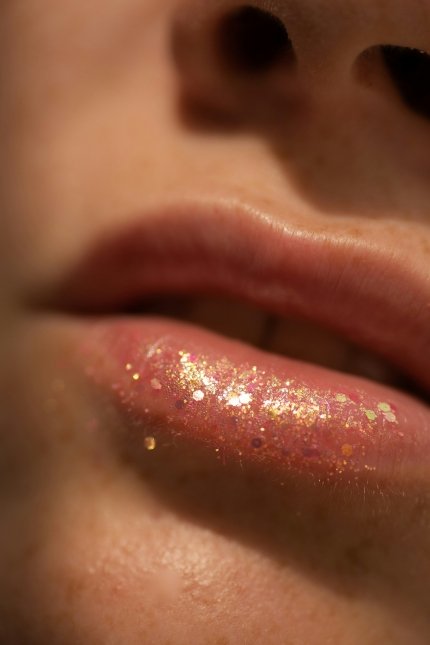
Lipstick can remain outwardly unchanged for a long time, but over time its fatty components can oxidize.
This changes the smell, consistency, and application properties.
Classic lipsticks often have a PAO of around 12–24 months, although the specific timeframe needs to be checked.
Why lip gloss can spoil faster
Gloss with a built-in applicator comes into regular contact with the lips.
Each time the applicator is returned to the packaging, the risk of transferring microorganisms may be higher than in some other formats.
You should not share your lip gloss or lipstick with other people.
It is especially important to stop using lip products if there is an unusual odor, change in texture, or signs of irritation.
Creams and serums: why the expiration date depends on the formula
Skincare cosmetics differ significantly in composition.
For example, a regular moisturizer, an anhydrous oil serum, and a product with unstable active ingredients may require different storage conditions.
Therefore, the statement that all creams are suitable for exactly one year after opening is incorrect.
Vitamin C serum
Some forms of vitamin C, particularly ascorbic acid, can be oxidized by exposure to oxygen, light, and temperature.
As a result, the product can change color and gradually lose its claimed properties.
However, not all vitamin C derivatives have the same stability.
A slight change in shade also does not always allow you to accurately determine the suitability of the product.
The formula, packaging, and manufacturer's recommendations are crucial.
Retinol and retinoids
Some retinoids are sensitive to light, oxygen, and temperature.
Because of this, manufacturers can use opaque bottles, special stabilization systems, and airtight dispensers.
You don't automatically need to store all retinol products in the refrigerator.
For some products, the manufacturer recommends a cool place, while for others, normal storage conditions are sufficient.
If a retinoid treatment is registered as a medicinal product, the rules for its use and suitability are determined by separate instructions.
Sunscreen: why the expiration date is especially important
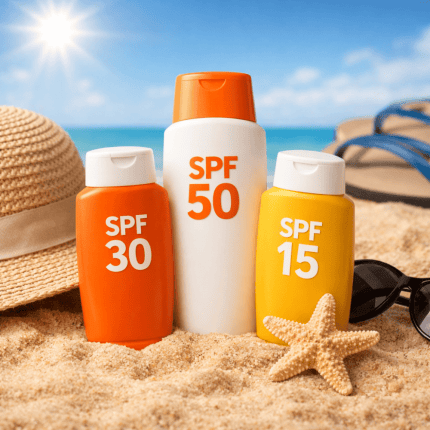
Sunscreen must provide the claimed level of protection against ultraviolet radiation.
After the expiration date, the manufacturer no longer guarantees the preservation of all characteristics.
The American Academy of Dermatology recommends not using expired sunscreen.
Can I use SPF from last summer?
Yes, if the specified expiration date has not expired, the PAO has not been exceeded, and the product has been stored according to the instructions.
For example, a cream marked 12M opened in July does not automatically become unusable in September just because summer is over.
But that doesn't mean it will remain fit until next summer.
The actual opening date must be taken into account.
Where did the three-year rule for SPF come from?
In the US, sunscreens are regulated as over-the-counter drugs.
The FDA sets special rules: in the absence of an expiration date, a product can be considered usable for three years with proven stability.
This rule does not need to be automatically transferred to all sunscreen products sold in Ukraine or the EU.
For a specific product, it is necessary to adhere to its labeling.
Also, don't leave SPF in an overheated car or in direct sunlight: excessive heat can accelerate the deterioration of the formula.
How to understand that cosmetics have spoiled before the expiration date
Even if the date on the package has not yet expired, the product may lose its proper properties due to improper storage or contamination.
The FDA recommends paying attention to unusual changes in odor, color, and consistency.
Main signs of spoilage
Unusual sour, rancid, or other unpleasant odor.
A product that didn't exist before.
Appearance of lumps or change in consistency.
Traces of mold.
Significant unusual color change.
Damage to the packaging and contamination of the contents.
Abnormal skin reaction during application.
At the same time, the absence of these signs does not guarantee safety.
Microbial contamination may be invisible to the naked eye.
Therefore, there is no need to test questionable cosmetics on your face just to make sure they are still suitable.
Can I use expired cosmetics?
Using cosmetics after the expiration date is not recommended.
This does not mean that every expired cream will automatically cause an infection, but there is growing uncertainty about its safety and effectiveness.
The American Academy of Dermatology emphasizes that old cosmetics can cause irritation and skin infections due to the accumulation of microorganisms.
Which products require the most caution?
Particular attention should be paid to mascara, liquid eyeliner, and other eye products.
For sunscreens, an additional risk is the possible loss of the claimed protection.
It is also undesirable to experiment with old cosmetics on damaged or inflamed skin.
If burning, swelling, rash or other undesirable symptoms appear after application, use should be discontinued immediately.
Where to store cosmetics at home
The shelf life is determined taking into account the appropriate storage conditions.
High temperatures, sunlight and excessive humidity can accelerate changes
formulas.
Can I leave my cosmetics in the bathroom?
It depends on the product and the microclimate of the room.
During a hot shower, the temperature and humidity in the bathroom often increase.
For some cosmetics, such fluctuations are undesirable.
This is especially true for products that are stored in open jars or have temperature-sensitive ingredients.
It is more practical to keep most cosmetics in a dry cabinet or drawer away from heating appliances.
Do you need to store cosmetics in the refrigerator?
Not always.
Some manufacturers recommend refrigeration for specific formulas, but there is no universal rule.
Too low a temperature can change the texture of some emulsions.
Therefore, a refrigerator does not guarantee an extension of the shelf life or restore spoiled cosmetics.
You also don't need to freeze creams and serums unless the manufacturer recommends it.
How to use cosmetics properly so that they last longer
First of all, it is important to reduce the entry of microorganisms into the packaging.
To do this, you must wash your hands before applying the products and use clean tools.
The cream can be scooped from the jar with a clean spatula, if the instructions for use state so.
How often to wash brushes and sponges
The American Academy of Dermatology recommends cleaning makeup brushes approximately every 7–10 days.
Sponges that regularly come into contact with wet cosmetic formulas require more frequent care and proper drying.
You should not store constantly wet tools in closed cosmetic bags.
It is also undesirable to share mascara, eyeliner, lip gloss, and other products that come into direct contact with the skin or mucous membranes.
How to check the expiration date by batch code
The packaging often contains a short set of numbers and letters — a batch code or lot number.
The manufacturer uses it to identify a specific production batch.
However, the batch code does not necessarily contain the manufacturing date in an obvious format.
Can you trust online calculators?
Third-party services sometimes offer to determine the production date by code.
However, manufacturers can change the coding system, and the databases of such services are not always complete or up-to-date.
Therefore, the result obtained should be taken as preliminary.
The most reliable way is to check the labeling of the product itself and the information from its manufacturer.
The batch code does not replace the expiration date and does not allow you to determine when the cosmetics were opened.
What to do if the date of opening of cosmetics is unknown
This situation often occurs with decorative cosmetics that are used irregularly.
If it is impossible to determine when the mascara, gloss, or liquid eyeliner was opened, it is safer to replace the product.
For dry goods, condition and labeling can be further assessed, but the absence of changes does not prove suitability.
If the storage history of cosmetics is unknown, for example, it was purchased from someone else in an open form, assessing the risks is even more difficult.
A practical solution is to mark the date of opening on the package immediately after first use.
For example, a small sticker "Opened 11/5/2026" will help you accurately calculate the period set by the manufacturer.
How to do a makeup bag audit in 15 minutes
Regularly checking your supplies helps avoid the accumulation of expired products and unnecessary purchases.
This does not require a complex accounting system.
It is enough to periodically review the contents of your makeup bag and shelves.
Simple inspection checklist
Collect the products you use regularly.
Check expiration dates and PAO marks.
Separate products with an unknown opening date.
Inspect the packaging for damage.
Check for changes in smell, color, and consistency.
Discard expired or questionable products.
Clean your brushes, sponges, and makeup bag.
Mark the dates of opening new facilities.
It's especially important to check eye products and SPF.
For convenience, you can keep a short table on your smartphone.
| Means | Opening date | PAO | Estimated end of period |
| Face cream | 01.09.2026 | 6M | 01.03.2027 |
| Serum | 15.10.2026 | 3M | 01/15/2027 |
| Pomade | 01.08.2026 | 12M | 01.08.2027 |
These dates are examples of calculations and not a guarantee that the products will remain suitable until the last day.
If the general expiration date ends earlier, it is necessary to take it into account.
Common mistakes when storing cosmetics
Believing that unopened cosmetics last forever
Even in airtight packaging, components can gradually change.
Focus only on the smell
Unwanted microbial contamination is not always accompanied by a noticeable odor.
Dilute mascara with water
This may alter the formula and increase the risk of contamination.
Leaving cosmetics in the car
In the summer, the temperature in the cabin can increase significantly, which negatively affects the stability of the products.
Use SPF after expiration date
In this case, there is no proper guarantee of the claimed sun protection.
Touching the face with a pipette
When the tip comes into contact with the skin, microorganisms can get onto the applicator and subsequently into the product.
Buying packages that are too large
If the product is used infrequently, some of the product may remain unused until the PAO is completed.
Conclusion
The shelf life of cosmetics depends on its composition, packaging, method of use, and storage conditions.
The most important thing is to distinguish between the general expiration date and the period after opening, indicated by the jar symbol with a number and the letter M.
You need to monitor mascara, eyeliner, and other eye products, as well as sunscreen, especially carefully.
The easiest way to avoid mistakes is to mark the date of opening, regularly check the condition of the products, and follow the manufacturer's instructions.
FAQ: frequently asked questions about the shelf life of cosmetics
How to know if cosmetics are expired?
Check the expiration date and PAO label. If the expiration date has passed, the product should be replaced. Also, pay attention to unusual changes in odor, color, consistency, and packaging.
What does 12M mean on cosmetics?
The 12M mark in the open jar symbol means that the manufacturer has specified a use period of 12 months after first opening under proper conditions.
How long does mascara last after opening?
The FDA recommends replacing mascara about three months after purchase. If the product has dried out, changed odor, or was used during an eye infection, it should be discarded sooner.
Can I use the cream after the expiration date?
Not recommended. After the specified period, the manufacturer no longer guarantees the preservation of all the properties of the product. Even if the cream looks normal, this does not confirm its safety.
How long does lipstick last after opening?
Many lipsticks have a shelf life of around 12–24 months, but the exact period is determined by the manufacturer. If the smell, texture, or color has changed, it’s time to replace the product sooner.
Can I use sunscreen from last year?
Yes, if its expiration date and PAO have not expired, and the storage conditions have been in accordance with the instructions. If the product has overheated or significantly changed its properties, it should not be used.
How to check the manufacturing date of cosmetics by batch code?
The batch code identifies the production batch. Sometimes it contains a coded date, but the rules depend on the manufacturer. The results of third-party online calculators are not always accurate.
Do I need to store vitamin C serum in the refrigerator?
Only if specified by the manufacturer. Stability depends on the form of vitamin C, formulation, and packaging. Refrigeration does not guarantee the shelf life of any serum.
Can unopened cosmetics be used after five years?
Expiration cannot be determined simply by the fact that the package has remained unopened. You need to check the date, storage conditions, and manufacturer's recommendations. The absence of signs of spoilage does not guarantee safety.
How often should you go through your makeup bag?
It is a good idea to check about every three months, and eye products should be monitored especially closely. It is advisable to immediately mark new cosmetics with the date of opening.
The material is for informational purposes only and does not replace medical advice. Using spoiled or contaminated cosmetics can cause irritation, allergic reactions and infections. Self-medication can be harmful to your health. If a persistent rash, swelling, pain, redness of the eyes or other undesirable symptoms appear, you should stop using the product and consult a doctor.

