

A cup of warm chamomile tea before bed is one of the most well-known home remedies for unwinding after a stressful day. This drink is traditionally considered a natural sedative, helping you fall asleep faster, wake up less often during the night, and rest better. But does modern science support these properties?
Points of attention
- Scientists have studied chamomile in the form of tea, standardized extracts, and other preparations.
- The concentration of active ingredients in such products can differ significantly from the amount a person receives from a regular cup of infusion.
- If there are no individual contraindications, you can add a small amount of honey or lemon to chamomile tea for flavor.
Chamomile tea may slightly improve subjective sleep quality, but there is not yet enough convincing evidence that it is effective in treating insomnia. Some clinical studies show positive results, but they do not confirm that a regular cup of chamomile tea is guaranteed to accelerate sleep or increase the duration of a night's rest.
The benefits of the drink may not only be related to the substances contained in chamomile. The absence of caffeine, the pleasant aroma, the warm drink, and the usual evening ritual can also create conditions for relaxation.
However, chamomile is not suitable for everyone. It can cause allergic reactions, interact with some medications, and its safety during pregnancy and breastfeeding has not been well studied.
We'll figure out how chamomile tea affects the body, what is known about its calming properties, when it's best to drink the drink before bed, and why even natural herbal tea shouldn't be used instead of treatment.
Why is chamomile tea considered a sedative?
Chamomile ( Matricaria chamomilla , also known as Matricaria recutita ) is a plant in the Asteraceae family that has been used in traditional medicinal practices for centuries.
Dried chamomile flower heads are commonly used to make tea. They contain a variety of biologically active compounds, including flavonoids and other plant components.
One of the most researched flavonoids in chamomile is apigenin.
It is with him that the potential calming properties of the plant are often associated.
How apigenin may affect the nervous system
In laboratory studies, apigenin has demonstrated the ability to interact with certain structures of the nervous system, in particular with receptors associated with gamma-aminobutyric acid — GABA.
GABA is one of the main inhibitory neurotransmitters in the central nervous system. It is involved in the regulation of nervous activity.
However, the results of laboratory experiments cannot be automatically transferred to people who drink regular chamomile tea.
First, the amount of apigenin in a drink depends on the raw materials and brewing method.
Secondly, you still need to consider what part of the substance is absorbed and reaches the body's tissues.
Third, the interaction of a particular compound with receptors in laboratory conditions does not prove a clinically significant hypnotic effect.
So, apigenin is one possible explanation for chamomile's effects, but there is currently no scientifically proven mechanism by which regular chamomile tea treats insomnia.

What studies say about the effects of chamomile on sleep
Scientists have studied chamomile in the form of tea, standardized extracts, and other preparations.
This is an important distinction, as the results of using a concentrated extract do not necessarily match the effect of a regular drink.
Large-scale analysis of clinical trials in 2024
In September 2024, the scientific journal Complementary Therapies in Medicine published a systematic review and meta-analysis of the effects of chamomile on sleep.
Researchers analyzed 10 clinical trials involving a total of 772 people.
The results showed that chamomile use was associated with improvements in certain measures of subjective sleep quality.
In particular:
Three out of four studies that assessed sleep onset observed positive changes.
Two of the three studies showed improvements in measures related to nighttime awakenings.
Overall subjective sleep quality as measured by the Pittsburgh Sleep Quality Index improved in the pooled analysis.
No convincing increase in sleep duration was found.
Sleep efficiency measures did not show consistent improvement.
Studies have not confirmed improvements in daytime functioning or reduction in fatigue.
The authors also noted significant heterogeneity across studies, differences between chamomile preparations, and a lack of objective sleep measurements.
Therefore, the results should be interpreted with caution.
What does improved sleep quality mean?
In scientific research, the concept of "sleep quality" encompasses several different characteristics.
These include time to fall asleep, number of nighttime awakenings, total sleep duration, feeling rested after waking up, and other indicators.
A person may subjectively sleep better, but not spend more hours asleep.
For example, after a restful night, she may be less likely to notice brief awakenings. However, this does not necessarily mean that all the physiological parameters of nighttime rest have changed.
That is why researchers distinguish between subjective assessment of sleep and the results of objective methods of measuring it.
Is it proven that chamomile tea helps you fall asleep?
Chamomile studies are not always conducted using regular tea.
Some trials use capsules, extracts, or other standardized preparations.
The concentration of active ingredients in such products can differ significantly from the amount a person receives from a regular cup of infusion.
Therefore, it is important to separately consider the research on chamomile tea.
Studies involving women after childbirth
In 2016, the Journal of Advanced Nursing published a randomized trial of 80 postpartum women who reported poor sleep quality.
Half of the participants were advised to drink chamomile tea for two weeks. The other group received standard postpartum care.
After the two-week period, improvements in certain sleep measures and reductions in some psychological symptoms were observed in the chamomile tea group.
However, during further evaluation, the differences between the groups disappeared.
This indicates a possible short-term effect, but does not prove its long-term duration.
It is also important to consider the small number of participants and the specifics of the postpartum period.
The results of this study do not provide evidence of the safety of regular use of chamomile preparations during breastfeeding.
Why the evidence is still insufficient
The US National Center for Complementary and Integrative Health (NCCIH) notes that there is not enough evidence to consider chamomile a proven treatment for insomnia.
No positive effect was found in some clinical studies.
So, the scientifically based conclusion is not that chamomile tea doesn't work at all, but that its benefits for sleep have not yet been proven reliably enough.

Does chamomile tea help reduce anxiety and stress?
Anxiety and psychological stress can make it difficult to fall asleep.
After a busy day, a person sometimes continues to mentally return to work tasks, conflicts, or upcoming events.
In such a situation, any pleasant relaxation ritual can help you transition to a calmer state.
Some preliminary clinical studies of chamomile preparations have found a potential reduction in anxiety symptoms.
However, this is mostly about special extracts and supplements, not regular tea.
However, there is not enough evidence to recommend chamomile as a treatment for generalized anxiety disorder or other mental illnesses.
Why an evening ritual can be beneficial
When a person regularly ends the day with a relaxing activity, it helps create a psychological boundary between work and rest.
For example, after turning off your computer, you can dim the lights, put down your phone, and have a warm drink.
The positive effect of such a ritual is not necessarily related to the pharmacological effects of chamomile.
The absence of caffeine, reduction of information load, and gradual reduction of activity before bedtime may have implications.
Therefore, regular chamomile tea can be part of a healthy evening routine, even if its direct hypnotic effect is small.
When is it best to drink chamomile tea before bed?
There is no universally scientifically proven time when chamomile tea should be drunk for maximum hypnotic effect.
Studies have not found that drinking a beverage exactly 30, 60, or 90 minutes before bedtime produces predictably better results.
However, from a practical point of view, many people find it more convenient to drink tea about an hour and a half before bedtime.
This allows you to calmly complete your evening chores and reduces the likelihood that a large amount of fluid just before falling asleep will cause nighttime trips to the toilet.
Why you shouldn't drink a big cup right before bed
Any drink increases the intake of fluid into the body.
If you drink a large amount of tea shortly before going to sleep, you may need to wake up at night to urinate.
This is especially true for people who already have the problem of nighttime urination - nocturia.
The US National Heart, Lung, and Blood Institute recommends limiting large volumes of fluids immediately before bed as one way to maintain a healthy night's rest.
Therefore, a small cup of the drink earlier in the evening may be more practical than a large mug right before bedtime.
How to brew chamomile tea correctly
The cooking method affects the taste, aroma, and amount of plant substances that leach into the water.
However, there is no scientifically established universal recipe for chamomile tea specifically for treating insomnia.
For normal food use, you can follow the manufacturer's recommendations.
Simple cooking method
If dried edible chamomile is used, the usual brewing method involves:
Take about one to two teaspoons of dried flowers or one chamomile tea bag.
Pour in approximately 200–250 ml of hot water.
Cover the cup and let it steep for 5–10 minutes.
Strain the drink if you used loose raw materials.
Let the tea cool to a comfortable temperature.
This is a culinary example of preparation, not a treatment regimen or proven sleeping pill dosage.
The amount of herbal ingredients, particle size, and composition of tea blends may vary.
You should not make an overly concentrated infusion in an attempt to get a stronger calming effect.
Can I add honey or lemon?
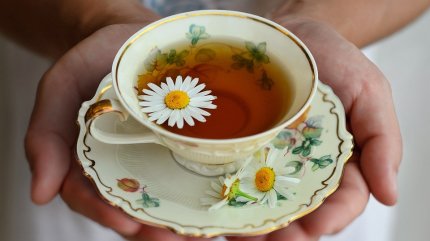
If there are no individual contraindications, you can add a small amount of honey or lemon to chamomile tea for flavor.
However, there is no convincing evidence that this combination significantly enhances the drink's effects on sleep.
People who limit added sugar should consider the amount of sugar in honey.
Honey should also not be given to children under one year old due to the risk of infant botulism.
How to choose quality chamomile tea
In stores and pharmacies, you can find chamomile in sachets, loose dried flowers, and multi-component herbal mixtures.
Not all of these products have the same composition.
Check the botanical name and ingredients
For regular chamomile tea, the flowers of the medicinal chamomile — Matricaria chamomilla — are most often used.
The European Medicines Agency (EMA) is separately evaluating preparations of the flowers of this plant in the context of traditional use.
It is advisable to check the name of the plant, the list of ingredients, and the recommended preparation method on the packaging.
If a product contains multiple herbs, its properties and potential risks may differ from regular chamomile tea.
For example, a mixture with chamomile, lemon balm, and other plants cannot automatically be considered to be the same in terms of effectiveness and safety as a single-component drink.
Are loose flowers better than tea bags?
There is not enough clinical evidence that loose chamomile tea is guaranteed to have a better effect on sleep than a quality product in tea bags.
Differences may relate to grinding, freshness, flavor, and concentration of ingredients.
It is more important to choose products with proper labeling, follow storage conditions, and not use raw materials of unknown origin.
Self-collection of wild plants without reliable identification is undesirable due to the risk of species misidentification and contamination.
Does chamomile tea contain caffeine?
Pure chamomile flower infusion is naturally caffeine-free.
That is why it is often chosen as an evening alternative to black or green tea.
Caffeine is a central nervous system stimulant and can make it difficult to fall asleep, especially if a person is sensitive to its effects.
At the same time, it is necessary to distinguish between pure chamomile and tea blends.
If the product contains black tea, green tea, or mate, the drink may contain caffeine.
Therefore, it is worth checking the full composition before buying.
Why replacing your evening tea can improve your sleep
Let's say a person is used to drinking strong black tea late at night.
Replacing it with a caffeine-free beverage may make falling asleep easier due to reduced stimulant consumption.
But that doesn't mean that it was the chamomile that caused the improvement.
Another decaffeinated drink can provide a similar effect in certain cases.
So, one of the practical benefits of chamomile tea is the ability to reduce caffeine consumption in the evening.
Who may be contraindicated with chamomile tea?
Regular chamomile tea in amounts typical for food use is considered relatively safe for most healthy adults.
However, this does not mean that it is suitable for absolutely everyone.
Natural herbal products may contain allergens and interact with medicinal substances.
People with allergies to plants in the aster family
Chamomile belongs to the Asteraceae family, which also includes ragweed, chrysanthemums, marigolds, and daisies.
According to the NCCIH, the risk of an allergic reaction to chamomile may be higher in people with sensitivities to related plants.
Possible symptoms include itching, rash, swelling of the mucous membranes, difficulty breathing, and other manifestations.
In rare cases, severe reactions, including anaphylaxis, have been described.
It is important that an allergy to one plant does not necessarily mean an allergy to all other members of the family.
However, if you have a confirmed allergy to chamomile, you should avoid the drink, and if you suspect a cross-reaction, you should first consult with an allergist.

People taking certain medications
Chamomile may interact with certain medications.
In particular, the medical literature describes a potentially dangerous interaction with warfarin, a drug that reduces blood clotting.
There are also reasons for caution when using sedatives and certain medications that are metabolized in the liver.
Some preliminary data indicate possible interactions with hormonal drugs, but their clinical significance for regular chamomile tea remains poorly defined.
If a person regularly takes medications, especially anticoagulants or drugs for the treatment of chronic diseases, it is worth discussing the use of chamomile with a doctor or pharmacist.
You do not need to change the dosage of prescribed medications on your own because you want to drink herbal tea.
During pregnancy and breastfeeding
There is insufficient data on the safety of regular or therapeutic use of chamomile preparations during pregnancy and breastfeeding.
This is especially true for concentrated extracts, large doses, and multi-ingredient herbal mixtures.
Therefore, pregnant and breastfeeding women should not use chamomile on their own to treat insomnia or anxiety.
A doctor's consultation is required beforehand.
Can chamomile tea be given to children?
Children should not be given chamomile tea as a home sleeping or sedative remedy without the recommendation of a pediatrician.
This is especially true for infants.
Herbal infusion does not replace breast milk, infant formula, or water according to age recommendations.
Additionally, chamomile may cause allergic reactions, and there is insufficient reliable data on its effectiveness for treating children's sleep disorders.
Can you drink chamomile tea every day?
For many healthy adults, a regular cup of chamomile tea can be part of their daily diet.
At the same time, the long-term safety of regular use of high doses of chamomile preparations has not been sufficiently studied.
There is also no scientifically established number of cups that is guaranteed to improve sleep and at the same time be suitable for all people.
If the drink does not cause unpleasant symptoms, it can be considered a regular decaffeinated herbal tea.
But using chamomile every day specifically to treat long-term insomnia without medical evaluation is not worth it.
Do you need to take breaks?
There is no convincing evidence that a healthy person necessarily needs to follow a special schedule of alternating periods of chamomile tea consumption and breaks.
It is also not proven that gradually increasing the concentration of the infusion enhances its benefits for sleep.
If the drink is used not as a regular food, but for medicinal purposes, the duration and method of use must be agreed with the doctor.
Why chamomile tea may not help you sleep
Sleep disorders have many possible causes.
For example, a person may have trouble sleeping due to stress, an irregular schedule, working nights, anxiety, or caffeine use.
In other cases, the problem is related to chronic pain, restless legs syndrome, obstructive sleep apnea, or certain medical conditions.
Chamomile tea does not eliminate these causes.
That is why the lack of effect from a drink does not mean that you need to make a stronger infusion or drink several cups in a row.
Instead, it is advisable to assess the general conditions of night rest.
What's more important than herbal tea for healthy sleep?
The US National Heart, Lung, and Blood Institute recommends, first of all, maintaining a stable sleep schedule and creating a conducive environment for rest.
Of practical importance are:
approximately the same time of falling asleep and waking up;
sufficient duration of night sleep;
a dark, quiet and comfortable room;
limiting caffeine and alcohol in the evening;
regular physical activity;
no prolonged use of digital devices before bedtime;
a smooth transition from work to rest.
For most adults, the recommended amount of sleep is at least seven hours a day.
However, the need for sleep is individual, and its quality is no less important than the number of hours.

How to create an evening ritual with chamomile tea
It is most rational to use the drink not as a therapeutic procedure, but as one of the elements of a peaceful end to the day.
For example, if a person usually goes to bed around 11:00 PM, you can organize the evening like this:
9:00 PM–9:30 PM. Complete essential work tasks, put away your laptop, and turn off unnecessary notifications.
9:30 p.m. If there are no contraindications, prepare a small cup of chamomile tea or another decaffeinated beverage.
10:00 PM. Move on to a quiet activity: reading, listening to music, or another comfortable way to relax.
10:30 p.m. Dim the lights, prepare the bedroom, and end the use of electronic devices.
11:00 p.m. Go to bed if you feel sleepy.
This is just an example, not a mandatory medical schedule. The specific times should be adapted to your own regimen and needs.
The main thing is not to turn tea into a condition without which it is supposedly impossible to fall asleep.
Chamomile tea or other drinks: which is better before bed?
Chamomile, lemon balm, mint, or other herbal infusions are often chosen for evening use.
However, for most of these drinks, there is insufficient evidence of therapeutic efficacy against insomnia.
| Drink | What is important to know |
| Chamomile tea | There is preliminary evidence of possible improvement in certain sleep parameters. |
| Tea with lemon balm | Researched for stress and sleep, but evidence for regular infusion is insufficient |
| Mint tea | Usually caffeine-free, but not a proven sleeping pill |
| Black tea | Contains caffeine, which may make it difficult to fall asleep |
| Green tea | Also contains caffeine, although the amount depends on the variety and preparation method. |
| Warm water | Caffeine-free and can be part of your evening ritual |
The choice depends primarily on tolerability, taste preferences, and possible contraindications.
In particular, mint may worsen reflux symptoms in some people.
Therefore, even common herbal drinks should not be considered universally safe for everyone.
The most common myths about chamomile tea
Myth 1. Chamomile acts as a natural sleeping pill.
Some research results are positive, but there is no reason to equate regular chamomile tea with medicinal sleeping pills.
Myth 2. The stronger the infusion, the faster you will fall asleep.
There is no evidence of such a relationship. Increasing the concentration of herbal substances does not guarantee a better effect and may increase the risk of adverse reactions.
Myth 3. Everyone can drink chamomile tea because it is natural.
Chamomile may cause allergies and interact with some medications. Its safety during pregnancy and breastfeeding is not well studied.
Myth 4. Chamomile is guaranteed to increase sleep duration.
A 2024 meta-analysis did not confirm a consistent increase in total sleep duration.
Myth 5. If tea doesn't help, you just need to drink it longer.
Chronic insomnia can be associated with various diseases and requires proper diagnosis. Prolonged self-medication with herbal remedies can delay effective help.

When sleep problems require a visit to the doctor
Temporary difficulty falling asleep can occur after stressful events, a change in schedule, or due to unfavorable rest conditions.
But regular sleep disturbances should not be ignored.
According to the definition used by the NHLBI, chronic insomnia can be diagnosed when difficulty falling asleep or staying asleep occurs at least three times a week for three months or longer.
The impact of sleep disorders on daytime functioning is also taken into account.
There is no need to wait three months if the symptoms are already significantly impairing the quality of life.
Symptoms to look out for
Medical evaluation is especially important if:
prolonged difficulty falling asleep;
frequent night awakenings;
pronounced daytime drowsiness;
constant fatigue even after sufficient time in bed;
loud snoring with possible breathing stops;
feeling short of breath during sleep;
significant deterioration in concentration and performance.
One of the recommended initial treatments for chronic insomnia is cognitive behavioral therapy for insomnia — CBT-B.
It helps change the behavioral and psychological factors that support sleep disorders.
Chamomile tea cannot replace such treatment, if it is necessary.
Conclusion
Chamomile tea can be a pleasant part of an evening's rest, and some clinical studies suggest its possible positive effects on subjective sleep quality.
However, there is not yet enough scientific evidence to consider it an effective treatment for insomnia.
A regular cup of chamomile tea may be appropriate for a healthy adult who tolerates the drink well and has no contraindications.
At the same time, the most important factors for healthy sleep remain a stable regimen, proper conditions for rest, and timely treatment of sleep disorders.
If tea helps you relax in the evening, there's no need to give up this ritual. But you shouldn't rely on it alone if you have regular insomnia.
FAQ: Frequently Asked Questions About Chamomile Tea and Sleep
Does chamomile tea really help you sleep?
Some clinical studies have shown that chamomile may improve some sleep quality measures. However, the results are mixed, and some of the studies have used concentrated extracts rather than plain tea. Therefore, chamomile tea cannot be considered a proven treatment for insomnia.
How long before bedtime is it best to drink chamomile tea?
There is no universally scientifically established time. From a practical point of view, a small cup can be drunk about an hour to an hour and a half before bedtime, if there are no contraindications. This helps to avoid consuming a large amount of fluid immediately before falling asleep.
How many cups of chamomile tea can you drink per day?
There is no single scientifically proven number of cups that is right for everyone. For most healthy adults, normal dietary amounts of chamomile tea are considered relatively safe. However, if you have allergies, chronic conditions, or are taking medications, you should consult your doctor.
Can I drink chamomile tea every night?
For many healthy adults, this may be a normal dietary habit. However, daily consumption does not guarantee improved sleep. If a person is using tea to self-treat persistent insomnia, it is important to find out the real cause of the problem.
Does chamomile tea make you sleepy?
Some people report feeling relaxed after drinking chamomile tea. However, studies have not proven the purported pronounced sleeping effect of regular chamomile tea. Reactions may vary depending on individual characteristics and associated evening habits.
Does chamomile tea contain melatonin?
Chamomile tea is not an established source of melatonin in clinically significant amounts. Its potential effects on sleep have been studied primarily in conjunction with other plant components, particularly apigenin. Chamomile tea should not be equated with melatonin supplements.
Can I give chamomile tea to my child to help him sleep?
Chamomile tea should not be used as a home remedy for children without the advice of a pediatrician. There is insufficient data on the effectiveness of this approach, and the plant can cause allergic reactions. You should be especially careful with any herbal infusions in infants.
Can I drink chamomile tea during pregnancy?
There is insufficient data on the safety of regular or therapeutic use of chamomile during pregnancy. Therefore, it is important to consult a doctor before using herbal preparations, especially concentrated infusions and mixtures.
Can chamomile tea cause allergies?
Yes. Chamomile is a member of the aster family and can cause allergic reactions, especially in people who are sensitive to related plants. Symptoms may include itching, rash, swelling, or difficulty breathing. Severe reactions require immediate medical attention.
Which is better for sleep: chamomile tea or melatonin?
These are different in nature and cannot be directly compared as interchangeable. Chamomile tea is an herbal drink with insufficiently proven effectiveness against insomnia. Melatonin is a hormone whose preparations can be used for certain circadian rhythm disorders. The need for its use should be determined with a doctor.
Important: This article is for informational purposes only and is not a substitute for professional medical advice. Self-medication for insomnia, self-administration of herbal remedies, sleeping pills, or dietary supplements may be harmful to your health. Before using chamomile for medicinal purposes, be sure to consult a doctor, especially if you have allergies, chronic diseases, are pregnant, breastfeeding, taking medication, or are caring for a child. Long-term sleep disorders require medical evaluation and appropriate treatment.

