
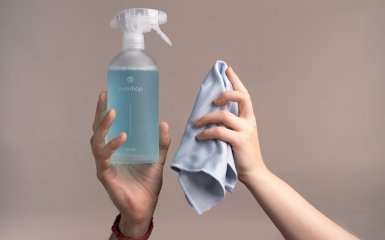
Ecological cleaning is not a complete rejection of household chemicals, but a smart choice of cleaning products and methods that help maintain cleanliness, reducing unnecessary costs, waste and environmental impact. A regular detergent, a reusable cloth and a properly selected brush often cope with everyday dirt no worse than a set of specialized sprays. At the same time, vinegar, soda and citric acid, which are often called universal eco-products, have limitations and are not suitable for all surfaces.
The main principle of ecological cleaning is to use the smallest amount of an effective product, not mix household chemicals unnecessarily, and prefer reusable tools. It is also important to distinguish between regular cleaning and disinfection, because you do not need to constantly disinfect all surfaces in your home.
Let's consider what products can be used for eco-cleaning, what can replace some of the usual household chemicals, and how to properly care for the kitchen, bathroom, furniture, and floors.
What is ecological cleaning and how does it differ from conventional cleaning?
Ecological cleaning, or eco-cleaning, is an approach to home care that takes into account not only the cleaning result, but also the use of resources, the properties of the products, the durability of the tools, and the amount of waste generated.
For example, instead of disposable wet wipes, you can use a reusable cloth that is easy to wash. And instead of five products for similar surfaces, use one universal one, if it meets the requirements for material care.
Environmentally friendly does not always mean using exclusively natural ingredients.
Vinegar, baking soda, soap, and synthetic detergents are all made up of chemicals. Their safety depends on the properties of the ingredients, concentration, method of use, and duration of contact.
Therefore, the words “natural” on the packaging do not in themselves guarantee that the product is safer for humans or the environment.
Is it possible to clean without household chemicals?
Sometimes water and a cloth are enough to remove dust. For greasy stains, a detergent is usually needed to help separate the grease from the surface.
Mineral deposits are best removed with appropriate acidic products, and some persistent contaminants require specialized cleaning.
So, the task is not to completely abandon detergents, but to use them correctly for their intended purpose.
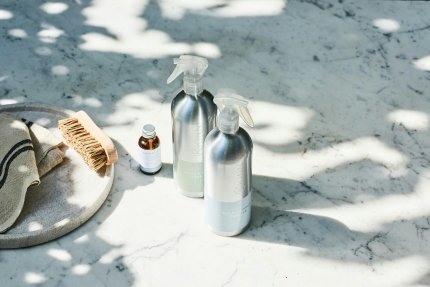
1. Do not use strong products where soap and water are sufficient
One of the most common mistakes is to use aggressive household chemicals even for light everyday dirt.
For example, to remove dust from a shelf, you usually don't need a disinfectant spray.
A damp cloth is enough to collect dust particles rather than raising them into the air.
For a kitchen countertop, water with a small amount of mild detergent is often suitable after normal use, if such care is permitted by the surface manufacturer.
Cleaning and disinfection - different procedures
During cleaning, dirt, some microorganisms, and other contaminants are removed from the surface.
Disinfection involves the destruction or inactivation of infectious agents using appropriate means.
According to the recommendations of the US Centers for Disease Control and Prevention, in most common household situations, regular cleaning with soap and water or detergent is sufficient.
Additional disinfection may be required if there is a sick person at home, people at increased risk of infections, or there has been contamination that requires special treatment.
Ecological cleaning does not mean abandoning disinfection where it is necessary. It involves its judicious use instead of constantly treating all surfaces.
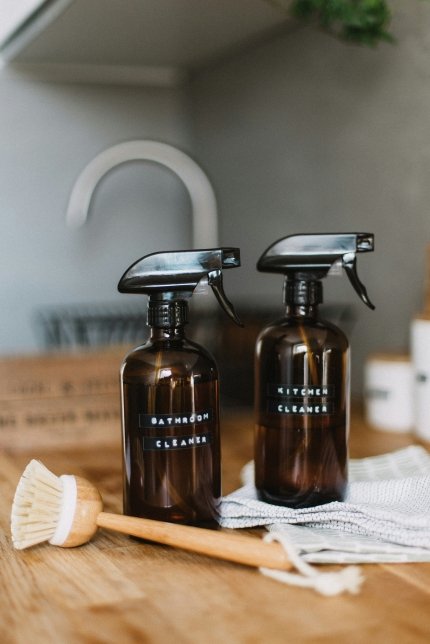
2. Choose products based on their composition and purpose, not on the label “eco”
On store shelves you can find products labeled "natural," "organic," "bio," "green," or "safe for nature."
However, such words do not always confirm independent verification of environmental characteristics.
To evaluate a product, you need to pay attention to its composition, dosage, purpose, and the presence of a recognized environmental label.
What components do household detergents contain?
Most modern cleaning products use surfactants, or surfactants.
They help water wet the surface and remove greasy dirt.
Surfactants are classified as anionic, nonionic, cationic, and amphoteric. These groups differ in their properties and applications.
It cannot be said that all anionic surfactants are dangerous, and all nonionic surfactants are completely harmless.
The specific substance, its concentration, biodegradability and effects on aquatic organisms are important.
Some components may irritate the skin or eyes, especially with prolonged contact or use of concentrated products.
Why it is better to choose products without a strong fragrance
Perfumed detergents may contain volatile aromatic compounds.
For most people, regular use of such products does not necessarily pose a problem, but certain fragrances can irritate the respiratory tract or provoke symptoms in sensitive people.
In particular, odors may be undesirable for people with bronchial asthma.
If the scent is of no practical importance, you can choose a product without added fragrances.
At the same time, the absence of odor does not guarantee the complete safety of the product: all its ingredients are important.
How to check eco-labels
One of the selection criteria is the availability of independent certification.
For example, the European EU Ecolabel covers certain categories of detergents and takes into account restrictions on hazardous components, environmental impact, packaging and cleaning efficiency.
The American EPA Safer Choice program also evaluates the composition of products according to certain criteria.
Such markings can help you compare products, but do not mean that they can be used without following the instructions.
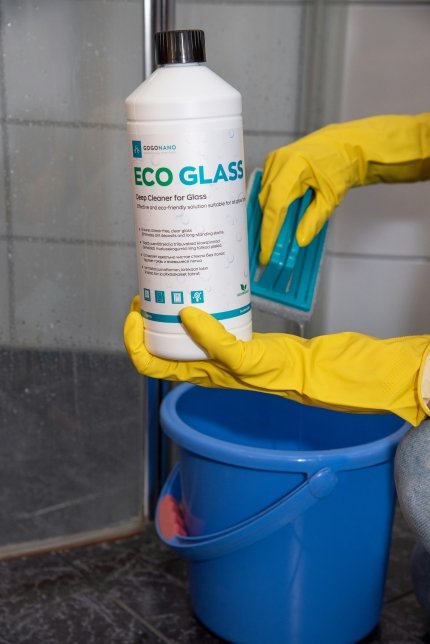
3. Use vinegar, baking soda, and citric acid only where appropriate
Home remedies can be useful for simple cleaning. However, each has its own properties, so there is no universal recipe for the entire apartment.
Baking soda — for specific stains and odors
Baking soda, or sodium bicarbonate, can help remove some stains and neutralize certain odors.
It also has moderate abrasive properties.
For stubborn stains on suitable surfaces, a small amount of baking soda moistened with water is sometimes used.
However, baking soda can leave scratches on sensitive glossy surfaces. It should not be used on expensive finishes unless the manufacturer allows such care.
Also, baking soda is not a complete disinfectant.
Vinegar — against some mineral deposits
Table vinegar contains acetic acid, which can help dissolve some mineral deposits.
For example, it can be useful for removing small amounts of limescale from an acid-resistant surface.
However, vinegar is not suitable for all materials.
You should not use vinegar or lemon juice to clean marble, limestone, travertine, and other acid-sensitive stones.
Acid can damage their surface, leaving dull stains.
It is also necessary to check compatibility with metal coatings, seams, sealants and wooden surfaces.
Vinegar cannot be considered a universal replacement for registered disinfectants.
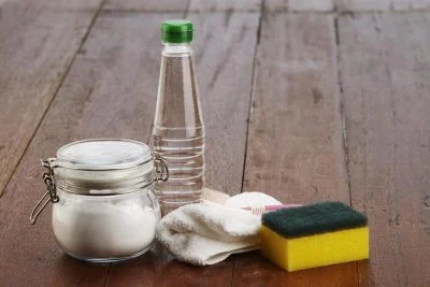
Citric acid - for scale
Citric acid is useful for removing mineral deposits in appliances and on surfaces for which the manufacturer allows the use of acidic products.
For example, some electric kettles can be descaled with a citric acid solution.
However, the method of use and concentration should be determined by the device instructions.
Do not arbitrarily use acid on coffee machines, washing machines, or equipment with a complex sealing system.
Do you need to mix baking soda with vinegar?
When baking soda and vinegar are mixed, a chemical reaction occurs, releasing carbon dioxide.
That is why the mixture foams actively.
However, during the reaction, the acid and base partially neutralize each other.
Therefore, after the reaction is complete, the mixture will not necessarily clean better than a properly selected individual agent.
Effective foaming is not proof of high cleaning or disinfection efficiency.

4. Replace disposable wipes with reusable ones
Disposable wipes are convenient, but with regular use they create a significant amount of waste.
For most everyday tasks, you can use reusable cloth wipes.
They are suitable for wiping furniture, dusting, washing countertops and some other surfaces.
Which napkins to choose
Microfiber is good at picking up small dust particles and can clean some surfaces with a small amount of detergent.
However, synthetic microfiber has an environmental disadvantage: microplastic fibers can separate from the fabric during washing.
Therefore, it is worth using such wipes for as long as possible, not washing them unnecessarily, and following the care recommendations.
An alternative could be cotton rags, particularly those made from old towels or T-shirts.
However, the choice of material depends on the task. For example, a coarse fabric may leave lint or may not be suitable for a delicate glossy finish.
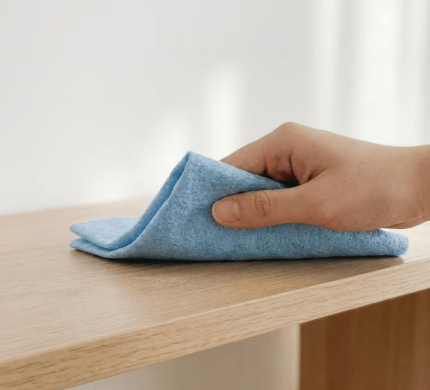
How to organize the use of napkins
It is practical to have separate napkins for the kitchen, bathroom and furniture.
This helps avoid the transfer of contaminants between different areas.
After cleaning, the fabric should be washed according to its intended purpose and dried.
Wipes that have come into contact with potentially hazardous biological contaminants require appropriate cleaning and processing.
5. Remove dust so that it does not return to the air
Ecological cleaning involves not only using fewer products, but also the right techniques.
For example, a dry rag or feather duster can lift small dust particles into the air.
After that, some of the dust settles on the furniture again.
For routine cleaning, a slightly damp cloth is often more effective.
Why the right vacuum cleaner is important
A vacuum cleaner helps remove dust from floors, carpets, and upholstered furniture.
If the appliance has an effective filtration system, including a properly installed HEPA filter, it can better capture fine particles.
However, the HEPA label alone does not guarantee the same characteristics of all vacuum cleaners. What is important is the tightness of the design and the actual filtration efficiency of the device.
The dust collector and filters must be maintained according to the instructions.
A vacuum cleaner with clogged filters or damaged seals may work less efficiently.
What is the best order to clean?
A convenient approach is to move from top to bottom.
First, they clean the shelves, window sills, and furniture, then the floor.
This helps avoid having to re-clean lower surfaces that get dust.
It is also useful to regularly clean places where dust accumulates unnoticed: baseboards, the space under furniture, and ventilation grilles.

6. Reduce the amount of product without losing effectiveness
More detergent does not always provide better results.
Excess can leave marks, require additional rinsing and increase water consumption.
This is especially true for mopping floors, washing, and cleaning smooth surfaces.
Why is it important to follow the dosage?
Manufacturers determine the recommended amount of product depending on the concentration and purpose.
If there is not enough detergent, cleaning may not be sufficient.
If there is too much, it is more difficult to completely remove it.
For concentrated household chemicals, it is worth using a measuring cap or other provided dispenser.
There is no need to increase the concentration of disinfectant solutions yourself, hoping to get a better effect.

Are concentrates and interchangeable packaging beneficial?
Concentrated products can reduce packaging volume and transportation costs if dosed correctly.
Replaceable packaging allows you to reuse the main bottle.
However, the environmental friendliness of such a solution depends on the specific packaging, production method, and recycling capabilities.
A reusable bottle makes sense when it is actually used for a long time.
Only pour products into compatible, properly labeled containers. It is dangerous to store household chemicals in beverage bottles.
7. Clean the kitchen properly without over-disinfecting
The kitchen is a place where it is especially important to combine an ecological approach with food safety rules.
For routine cleaning of countertops, facades and exterior surfaces of appliances, a mild detergent and water are often sufficient.
However, after contact with raw meat, poultry, or other potentially hazardous products, more thorough cleaning is required, and in certain situations, additional sanitation is required.
How to clean kitchen countertops
The method depends on the material.
Laminated surfaces are usually cleaned with a soft cloth and a suitable detergent, avoiding prolonged contact with water at the joints.
For natural stone, products compatible with the specific rock and protective coating are used.
Wooden surfaces should not be excessively wetted.
If the countertop comes into contact with food, the cleaning and rinsing requirements specified by the product manufacturer must be followed.
The better way to wash dishes
For regular hand washing, it is advisable to use a detergent intended for dishes.
It helps remove grease and food residue.
Baking soda or mustard powder is not a full-fledged universal replacement for such products: their effectiveness, safety for different surfaces, and ability to remove grease may vary.
To reduce water consumption, it is better not to leave the tap open continuously while washing dishes.
If you use a dishwasher, you should consider the recommended load and operating mode.
8. For the bathroom, choose products according to the type of dirt
In the bathroom, you often have to deal with soap scum, limescale, and moisture.
These problems have different natures, so they do not always require the same cleaning.
How to reduce limescale
Limescale is formed mainly due to mineral salts that remain after the water dries.
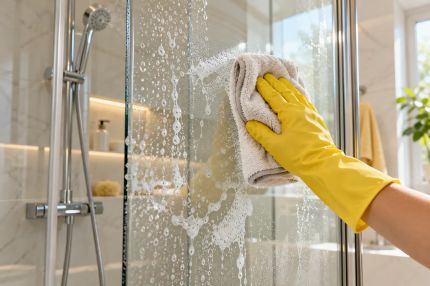
The easiest way to reduce its accumulation is to remove water from glass partitions and faucets after use.
A soft cloth or dry cloth is suitable for this.
Such regular mechanical cleaning allows you to use acidic products less often.
If plaque has already formed, it is necessary to use a cleaner compatible with the specific surface.
Can I clean my shower with vinegar?
Vinegar sometimes helps remove light mineral deposits from acid-resistant glass or ceramics.
However, it should not be used without checking compatibility with the material.
Acids can damage some stone surfaces, metal coatings, and cement joints.
If the shower has natural stone or a special protective coating, it is better to use the product recommended by the manufacturer.
How to deal with mold
Mold occurs where moisture is stored for a long time.
Therefore, the main thing is to eliminate the cause: insufficient ventilation, condensation, or leaks.
Minor contamination on cleanable hard surfaces can be removed using an appropriate method while observing safety regulations.
If porous materials are affected, the mold has spread to a significant area, or it keeps coming back, simply wiping the surface is not enough.
Fragrances and essential oils are no substitute for eliminating the source of moisture.
9. Reduce water and electricity consumption when cleaning
The environmental friendliness of home care depends not only on the composition of detergents.
Water, electricity, and the duration of household appliances also matter.
How to save water
To wash the floor, you do not need to use more water than is necessary to clean the coating.
Excessive moisture can damage laminate, wood, and some other materials.
For washing dishes, it is useful to turn off the water when it is not needed, and to clean small surfaces, use an appropriately moistened cloth instead of pouring heavily.
Is cold water really suitable for cleaning?
For some everyday tasks, room temperature water is sufficient.
However, greasy stains and certain types of laundry may require a different temperature.
Do not use cold water where the instructions for the product or hygiene requirements require a certain temperature.
How to make laundry more economical
If possible, it is advisable to choose energy-saving programs and load the washing machine according to the manufacturer's recommendations.
Overloading can impair the quality of the wash, and too few items can increase resource consumption per unit of laundry.
Lower temperatures are suitable for many everyday items, if the care instructions allow it.
However, when cleaning linen after infectious diseases or significant biological contamination, special regimes may be required.
10. Reduce waste, not just replace plastic with other materials
One of the most common myths about eco-cleaning is that any plastic item should be immediately replaced with a wooden, glass, or metal one.
In fact, environmental friendliness depends on the full life cycle of a thing.
If a plastic bucket or brush is in good condition and can be used for many years, replacing it prematurely will not necessarily reduce the environmental impact.
A more rational approach is to use suitable items until their service life ends.
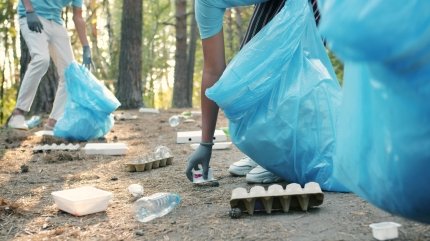
What should be changed in your home inventory?
Instead of constantly purchasing disposable items, you can use durable tools with replaceable attachments.
For example, a mop with a replaceable, reusable cloth allows you to replace only the worn part.
A brush with a replaceable head can last longer than a cheap, one-piece product that is thrown away after the bristles are damaged.
However, durability needs to be assessed realistically: a wooden handle that quickly deteriorates in a humid environment will not always be more practical than a high-quality plastic one.
Do I need to sort household chemical packaging?
The possibility of recycling depends on the packaging material and available local infrastructure.
Not all types of plastic are accepted for recycling, and multi-layer packaging can be more difficult to sort.
Before transferring the container, it is important to comply with the requirements of the relevant acceptance point.
Packaging containing hazardous material residues should not automatically be considered ordinary recyclable material.
You should also not mix the remains of different chemical products to free up bottles.
What products can be used for environmentally friendly cleaning of different rooms?
For most households, a small set of products tailored to specific surfaces is sufficient.
| Where to clean | What to use | What to look out for |
| Furniture and shelves | Slightly damp cloth | Do not over-wet the wood. |
| Kitchen facades | Mild detergent | Consider the type of coating |
| Worktop | Material compatible agent | Clean after contact with raw foods |
| Floor | Water and suitable detergent | Avoid excess moisture |
| Glass surfaces | Water, a cloth or glass cleaner | Do not damage special coatings |
| Shower area | Remedy against corresponding plaque | Check acid resistance |
| Bowl | Specialized tool as needed | Do not mix different products |
| Household appliances | Means permitted by the manufacturer | Take care of electrical components and seals |
For most common tasks, you don't need to use strong fragrances or disinfectants.
However, contaminations associated with infections require separate approaches.
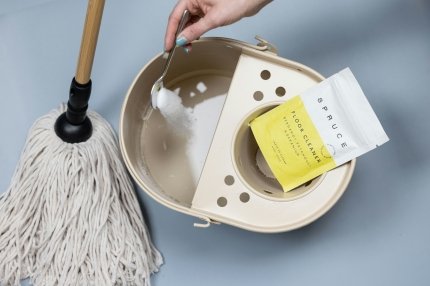
What household products should never be mixed?
The desire to create a "universal natural cleaner" sometimes leads to dangerous experiments.
Some household substances, when mixed, produce toxic gases or cause other undesirable reactions.
Chlorine bleach should not be mixed with vinegar, citric acid, acidic plumbing products, or ammonia.
During reactions, gases hazardous to breathing may be released.
You should also not arbitrarily mix different disinfectants, pipe cleaners, and other household chemicals.
Even two products that are separately allowed for use at home may be incompatible.
Is it safe to mix hydrogen peroxide and vinegar?
You don't need to mix them in one container to create a homemade cleaner.
Under certain conditions, this combination can form peracetic acid, which irritates the skin, eyes, and respiratory tract.
Hydrogen peroxide is also not universally safe for any surface.
It must be used in accordance with the concentration, purpose, and instructions of the specific product.

Can homemade mixtures be stored?
Arbitrarily prepared solutions do not always remain stable for long periods of time.
Their properties can vary, and without proper labeling, it is easy to confuse the contents of the bottle.
Therefore, it is safer to use ready-made products or simple individual components for their intended purpose, without creating complex mixtures without proven instructions.
How to organize eco-friendly cleaning of the entire apartment
To switch to eco-friendly cleaning, you don't need to replace all household chemicals at once.
It is enough to change a few habits and gradually review your home remedies.
Daily cleaning
In everyday care, the most important role is played by timely removal of dirt.
A fresh stain is usually easier to remove than a dried one.
After cooking, it is useful to clean work surfaces, wash dishes promptly, and not leave wet napkins on the countertop.
In the bathroom, it is worth removing excess water from the glass and faucets.
Such actions reduce the need for intensive cleaning in the future.

Weekly cleaning
During regular cleaning, you can combine dry dusting, cleaning surfaces with appropriate products, and mopping the floor.
Special attention should be paid to places of frequent contact: door handles, switches, faucets and work surfaces.
It is not necessary to disinfect them every week without special reasons, but they should be cleaned regularly.
Spring cleaning
During general cleaning, it is advisable to check the condition of filters, ventilation grilles, hard-to-reach areas, and places where moisture accumulates.
This is also an opportunity to review your household chemicals inventory.
If you have several almost identical cleaners stored at home, you can determine which ones you really need.
At the same time, you should not pour the remains of different products into one container or mix them to save space.
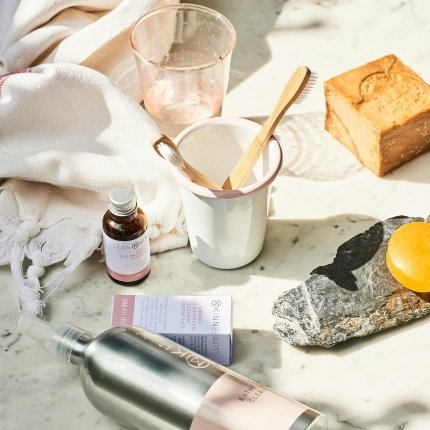
How to make cleaning safer for children and pets
In families with small children and pets, it is important to evaluate not only the environmental friendliness of the product, but also the risk of accidental contact.
Even a product with natural ingredients can cause irritation or poisoning if used incorrectly.
Keep household chemicals out of reach.
Detergents, concentrates, and other chemical products should be kept out of reach of children and animals.
You should not pour them into water bottles or sweet drinks.
The original packaging contains important information regarding composition, use and action in case of accidental contact.
Limit contact with wet surfaces
After cleaning the floor or other areas, follow the product manufacturer's instructions for drying, rinsing, or airing.
Do not allow a child or animal to come into contact with the surface while it is being treated or if unwanted product residue remains on it.
This is especially important for products that require a certain amount of time to work.
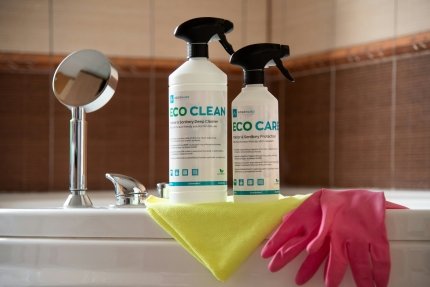
Don't use essential oils as a universal replacement for cleaners.
Essential oils do not provide guaranteed disinfection of surfaces at home.
Additionally, some concentrated oils can be dangerous to cats and other pets.
Therefore, it is not necessary to add them to floor cleaning solutions just for the sake of aroma.
For regular cleaning, a product without added fragrances is often sufficient.
Does eco-friendly cleaning really help save money?
Environmental habits can reduce costs, but it depends on how your life is organized.
For example, a reusable napkin can replace a significant number of disposable paper towels.
A concentrated product, when properly dosed, is sometimes cheaper than a ready-made solution in a small bottle.
And timely plaque removal reduces the need for stronger cleaning.
However, an expensive product with an "eco" label will not necessarily provide better results or lower costs.
For comparison, it is worth evaluating not only the price of the package, but also the cost of one use, the required amount of the product, and its effectiveness.
It is also important to consider the durability of the tools.
A quality mop with replaceable attachments can be more practical than regularly purchasing cheap disposable accessories.

Common myths about eco-friendly cleaning
Myth 1. Natural remedies are always safer
The origin of a substance does not automatically determine its safety.
Plant components can cause allergic reactions, acids can damage surfaces, and concentrated essential oils can irritate the skin.
You need to evaluate a specific product and how it is used.
Myth 2. Vinegar kills all bacteria and viruses
Vinegar has some antimicrobial properties under certain conditions, but is not a universal replacement for products with proven disinfectant effectiveness.
If disinfection is required, the appropriate product must be used according to the instructions.
Myth 3. The more foam, the cleaner the surface
The amount of foam is not always related to cleaning efficiency.
Some detergents work with little foaming.
Too much product can only make rinsing more difficult.
Myth 4. Eco-friendly cleaning means completely abandoning plastic
It is much more important to reduce unnecessary consumption and use suitable things for as long as possible.
Replacing serviceable plastic inventory with new items is not always environmentally sound.
Myth 5. Cleanliness must smell good.
The absence of a strong aroma does not mean that the surface was poorly cleaned.
A pleasant smell and hygienic cleanliness are different characteristics.
With proper cleaning, the surface may not have a noticeable odor at all.

Conclusion
Ecological cleaning does not begin with purchasing special products, but with changing everyday habits.
The greatest practical benefit can be obtained from correct dosage, regular removal of dirt, reusable wipes, reduced water consumption, and selection of products according to the surface material.
Vinegar, baking soda, and citric acid can be useful in certain situations, but they do not replace all household chemicals and are not suitable for universal disinfection.
The best approach is to maintain cleanliness without unnecessary means, without sacrificing the safety of people, pets, and the state of things.
FAQ: Frequently Asked Questions about Eco-Friendly Cleaning
What is ecological cleaning?
It is an approach to home care that involves the judicious use of cleaning products, water, electricity and reusable supplies. Its aim is to maintain cleanliness while reducing unnecessary resource consumption and waste without compromising hygiene.
What can replace household chemicals at home?
A damp cloth is often sufficient for normal dust, a mild detergent for light grease, and an acidic cleaner compatible with the surface for some mineral deposits. Baking soda and vinegar can help with some stains, but are not a universal substitute for all products.
Can I wash the floor with vinegar and water?
This depends on the flooring material. Vinegar can damage natural stone, some protective coatings, and other acid-sensitive materials. For regular floor cleaning, it is safer to use a product recommended by the flooring manufacturer.
Can I mix baking soda and vinegar for cleaning?
During mixing, a reaction occurs with the release of carbon dioxide. Despite the active foaming, the components partially neutralize each other. Such a mixture is not necessarily more effective than using a properly selected individual product.
What are the best eco-friendly cleaning products?
The choice depends on the type of contamination and the surface. It is useful to pay attention to the effectiveness, composition, concentration, instructions and independent environmental labels, such as the EU Ecolabel. There is no universally best product for all tasks.
Is there enough water and soap to clean the kitchen?
This is sufficient for many everyday tasks. However, additional sanitization may be required after surfaces have come into contact with potentially hazardous products. The method should be selected according to the nature of the contamination and the surface material.
Is it safe to clean with vinegar if there are children at home?
Vinegar is not completely harmless: it can irritate mucous membranes and, if used incorrectly, damage surfaces. It should not be mixed with chlorine bleach. All cleaning products should be kept out of the reach of children.
Is microfiber really eco-friendly?
Reusable microfiber cloths can reduce the use of single-use materials. However, synthetic fabrics can leach microplastic fibers when washed. It is therefore important to use the cloths for a long time, take proper care of them and not replace them unnecessarily.
Do I need to disinfect my apartment every day?
In normal household conditions, daily disinfection of all surfaces is usually not necessary. Regular cleaning removes most everyday contaminants and a significant proportion of microorganisms. Additional disinfection may be necessary under certain infection risks.
How to make eco-friendly cleaning cheaper?
It is advisable to use reusable wipes, dose products correctly, choose concentrates with real savings, and avoid buying multiple products with the same functions. Regular cleaning also helps avoid complex stains that require stronger products.
The material is for informational purposes only and does not replace medical advice. Self-medication can be harmful to health. In case of poisoning, respiratory tract irritation or other symptoms after contact with household chemicals, you should first seek medical attention. Household products should be used in accordance with the manufacturers' instructions.

