
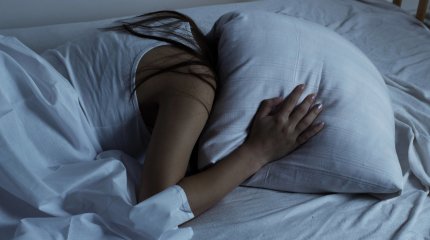
During the day, everything may be relatively normal, but towards evening, tension, anxiety, and obsessive thoughts about work, money, health, or the future set in. The person goes to bed — and instead of resting, they start replaying the day's events in their head, imagining negative scenarios, or listening to their heartbeat and other sensations in their body.
This condition is often called evening or nighttime anxiety. This is not a separate medical diagnosis, but a description of a condition where anxiety symptoms become more noticeable at the end of the day or before bedtime.
Points of attention
- Evening anxiety is a condition where anxiety symptoms become more noticeable at the end of the day or before bedtime without a separate medical diagnosis.
- Causes of evening anxiety may include stress, exhaustion, sleep deprivation, caffeine, or a disrupted sleep schedule, which lead to increased anxiety before bedtime.
- To sleep better and feel better in the evening, you should identify the causes of anxiety, reduce caffeine consumption, establish a standard evening ritual, and use relaxation techniques.
There can be many reasons: accumulated stress, exhaustion, lack of sleep, caffeine, a disturbed regime, the habit of solving problems in bed, or an anxiety disorder. Some people have several mechanisms at work at once.
We'll figure out why you feel anxious in the evening, how to distinguish normal anxiety from a problem that requires professional help, and what can be changed in your evening routine.
The material is for informational purposes only. Self-medication can be harmful to your health. If anxiety recurs regularly, worsens, interferes with sleep or normal functioning, you should first consult a doctor or mental health professional.
What is evening anxiety?
Anxiety is the body's natural response to potential danger or uncertainty. It helps mobilize attention and prepare for a difficult situation.
The problem arises when the nervous system continues to behave as if the threat still exists, even though there is no immediate danger anymore.
Evening anxiety can manifest itself in different ways:
constant scrolling of thoughts;
the expectation that something bad will happen;
inability to relax;
internal unrest;
muscle tension;
rapid or very palpitation;
sweating;
trembling;
abdominal discomfort;
feeling short of breath;
difficulty falling asleep;
multiple awakenings.
Similar symptoms are also characteristic of anxiety disorders. However, one anxious evening after a difficult day does not mean that the disease is present. The duration, frequency of symptoms, their intensity and impact on daily life are important for diagnosis.
Why anxiety can be worse in the evening
There is no universal reason. Often, the evening becomes the moment when the effects of the whole day become more noticeable.
Daytime distractions disappear
Work, travel, meetings, household chores, messages, and conversations constantly occupy attention.
When activity decreases in the evening, the brain has more opportunities to return to what was postponed during the day: an unresolved conversation, a financial problem, a health fear, or tasks for tomorrow.
Therefore, it may seem that anxiety "appeared" in the evening, although in fact it was in the evening that the person began to notice it.
A particularly characteristic scenario is a relatively calm day and a sharp increase in the flow of thoughts immediately after a person turns off the lights and is left without external stimuli.
Stress accumulates throughout the day
Even if each individual event seems insignificant, their sum can matter.
The morning rush, traffic jams, deadlines, conflicts, information overload, childcare, financial issues, and dozens of small decisions gradually deplete attention resources.
They can stay until the evening:
muscle tension;
irritability;
feeling overwhelmed;
difficulty concentrating;
internal alertness;
difficulty switching to rest mode.
Stress and anxiety share many common symptoms, including sleep disturbances, tension, fatigue, and difficulty concentrating. However, stress usually has a specific external trigger, while anxiety can persist even after the trigger has passed.
Lack of sleep makes the nervous system more vulnerable
The connection between sleep and anxiety is two-way.
Anxious thoughts can make it difficult to fall asleep. Poor sleep, in turn, can increase emotional reactivity the next day.
Experimental studies show that even one night of significant sleep deprivation can increase anxiety levels, and shorter sleep duration in everyday life is associated with fluctuations in anxiety.
This can create a vicious circle:
A person is worried in the evening.
He can't sleep for a long time because of anxiety.
The next day, he feels tired and has a harder time coping with stress.
In the evening, anxiety reactions intensify again.
The fear of another sleepless night itself becomes a new source of anxiety.
Over time, a person may begin to worry as bedtime approaches.
Caffeine can maintain feelings of anxiety
Caffeine stimulates the central nervous system. In moderate amounts, it can increase alertness and concentration, but in sensitive people or at high doses, it can increase restlessness, tremors, palpitations, and other anxiety-like symptoms.
Systematic reviews and meta-analyses link caffeine to increased anxiety symptoms, with the effect depending on dose and individual sensitivity.
It is especially important to consider hidden sources of caffeine:
coffee;
espresso;
black and green tea;
energy drinks;
cola;
chocolate;
pre-workout complexes;
some medications.
Caffeine can also affect sleep. Its effects last for several hours, so coffee in the afternoon may not have a noticeable effect on one person, but it may interfere with normal sleep for another. Recommendations for healthy sleep suggest limiting caffeine in the afternoon, especially for people with insomnia or increased sensitivity to stimulants.
Alcohol can create a false sense of calm
A glass of wine in the evening can sometimes subjectively help you relax or fall asleep faster. However, alcohol is not a cure for anxiety or insomnia.
After the initial sedation effect, sleep structure may deteriorate, sleep becomes less restorative, and nighttime awakenings may become more frequent. This is why sleep hygiene guidelines advise avoiding alcohol before bedtime.
A regular habit of “relieving stress” with alcohol can also reinforce a dangerous pattern of behavior: anxiety becomes a signal to drink alcohol, and poor sleep and well-being support a new cycle of anxiety.
Phone, work, and news prevent the brain from completing the day
Evening has formally arrived, but the nervous system can continue to receive the same stimuli as during the day.
Typical scenario:
respond to work email at 10:30 p.m.;
check the news;
read the conflict discussion;
open the messenger;
watch dozens of short videos;
check the news again;
to lie in bed and expect your brain to instantly drift off to sleep.
The bright light from screens can be a problem, as can the content itself. A work message or disturbing news can trigger a new cycle of thinking just when activity should be gradually decreasing.
Healthy sleep guidelines advise using the last hour before bedtime for quieter activities and reducing exposure to bright artificial light.
Can the biological clock really affect anxiety?
Emotional state changes throughout the day, but there is no single pattern for all people.
Some studies have found differences by chronotype. In particular, people with an evening chronotype and an increased risk of certain anxiety disorders have reported more severe anxiety symptoms in the evening in some studies. However, this line of research does not yet provide evidence that chronotype itself causes evening anxiety.
It is much more practical to pay attention to the stability of sleep and wake patterns, daylight, physical activity, and regularity of the schedule.
How to calm anxiety in the evening
There is no one technique that works for everyone. The best results usually come from changing several factors at once.
Get anxious thoughts out of bed.
If all the problems of the day are analyzed after turning off the lights, the brain gradually begins to associate the bed with planning and anxiety.
One option is to set aside 10–20 minutes in advance to write down what is bothering you.
You can divide opinions into two groups:
Something I can influence.
Write down the specific next step nearby: who to call, what to check, when to complete the task.
Something I can't decide right now.
Record the thought and return to it the next day.
The technique of “time to worry” is used in cognitive-behavioral self-help approaches. Its goal is not to forbid yourself from worrying, but to postpone endless thinking from the moment you fall asleep to a specific time.
Create a transition between work and rest
It is difficult for the body to go from high activity to sleep in a few minutes.
It's helpful to have a recurring evening script. For example:
Complete work tasks.
Write down the tasks for tomorrow.
Dim the lighting.
Snooze work messages.
Take a shower.
Read or listen to calm music.
Go to bed at about the same time.
The specific ritual may vary. Predictability is important: the same actions gradually become a signal for the end of the day.
Try slow, calm breathing.
During anxiety, breathing can become more rapid and shallow. Consciously changing its pace helps some people reduce physical tension.
One of the simple techniques:
sit or lie down comfortably;
do not try to take the deepest possible breath;
inhale slowly through your nose;
exhale slowly in the same way;
optionally count to 4–5 while inhaling and exhaling;
continue for a few minutes.
Breathing should be comfortable, without holding or forcing deep breaths. The NHS recommends regular, calm breathing as a self-help technique for stress and anxiety.
Don't try to force yourself to "stop thinking"
Telling yourself "don't think about it" often has the opposite effect.
Instead of fighting the thought, you can capture it with a simpler phrase: "I just had a thought that something will go wrong tomorrow."
This helps separate fact from assumption.
For example:
"I will definitely fail the presentation" is a prediction.
"I have a presentation tomorrow, and I'm nervous about it" is a description of a real situation.
It is working with the connection between thoughts, emotions, and behavior that lies at the heart of cognitive-behavioral therapy, which clinical recommendations include among the main methods of treating generalized anxiety disorder.
Don't constantly check if you've fallen asleep.
One of the paradoxes of insomnia is that the harder a person tries to fall asleep, the more stressed they become.
Looking at the clock at 02:17 often starts a chain:
“Five hours left” → “I’ll be exhausted tomorrow” → “I can’t handle my work” → “I need to go to sleep right away.”
As a result, the level of excitement only increases.
That is why sleep hygiene recommendations advise against constantly checking the clock at night.
Check your evening caffeine intake
If anxiety often occurs in the evening, it is helpful to record for several weeks:
What time was the last coffee?
how much coffee, tea or energy drinks were consumed per day;
when the alarm appeared;
when did you manage to fall asleep?
how good the sleep was.
Individual sensitivity varies greatly, so there is no universal time for the last cup of coffee. For a person with evening anxiety, it makes sense to see if the condition changes after shifting caffeine to the first half of the day.
Move throughout the day
Regular physical activity is part of the basic recommendations for maintaining mental health and sleep.
It doesn't have to be about intense training. It could be:
fast walking;
swimming;
bicycle;
yoga;
moderate-intensity training;
a longer walk.
For some people, very intense training right before bedtime, on the contrary, makes it difficult to fall asleep, so the time of physical activity should be selected individually.
What to do if anxiety starts in bed
If this happens regularly, it is useful to follow the same algorithm.
First, check if there is a real problem that needs to be solved right now. If not, write it down for tomorrow.
Shift your attention from future scenarios to current sensations: the support of your body on the mattress, the air temperature, calm breathing.
Don't open work email, banking apps, or news "just in case."
Don't try to assess every few minutes how relaxed you are.
If you regularly experience severe sleep problems, it is advisable to consider evening anxiety along with the sleep disturbance itself, rather than as two completely independent problems.
What not to do when you have night terrors
Some methods provide short-term relief but may maintain the problem.
You should not regularly:
use alcohol to fall asleep;
increase the dose of sedatives on your own;
taking sleeping pills without a prescription;
spending hours checking symptoms on the internet;
constantly measure the pulse without medical indications;
trying to compensate for lack of sleep with a lot of caffeine;
remain in working mode until falling asleep.
Special caution is required with over-the-counter medications and supplements for “nerves.” Clinical guidelines draw attention to possible interactions of such products with medications and the insufficient evidence base for some of them.
How to distinguish normal worry from an anxiety disorder
Everyone worries from time to time.
For example, before an interview, an important meeting, an exam, or a medical examination, anxiety is completely expected.
A different picture becomes the basis for a professional assessment:
anxiety occurs very often;
it is difficult to control excitement;
it applies to many areas of life;
symptoms last for months;
sleep is disturbed;
concentration deteriorates;
the person becomes constantly tense or irritable;
Because of fear, he begins to avoid work, meetings, trips, or other usual activities.
Generalized anxiety disorder is characterized by excessive and difficult-to-control worry most days for at least six months, in combination with other symptoms. You should not diagnose yourself with this disorder based on one criterion alone.
When to seek help
It is advisable to see a doctor or mental health professional if anxiety:
regularly prevents you from falling asleep;
causes repeated night awakenings;
is getting stronger and stronger;
interferes with work or study;
affects relationships;
forces you to avoid familiar situations;
accompanied by panic attacks;
does not decrease after changes in regimen and self-help methods.
There are effective treatments for anxiety disorders. Depending on the diagnosis and severity of symptoms, psychological methods, including cognitive behavioral therapy, and in some cases, medication may be used.
If thoughts of self-harm, suicide, or a feeling that a person may harm themselves or others arise, emergency help is needed.
Conclusion
Evening anxiety does not have one universal cause. For some, deferred experiences become more noticeable after completing tasks, while for others, chronic stress, caffeine, alcohol, lack of sleep, or a disrupted routine play a key role.
The first practical step is to track patterns: when anxiety begins, what happened during the day, how much sleep and caffeine you had, what thoughts arise before falling asleep.
A stable routine, fewer evening stimulants, a clear end to the workday, writing down problems before going to bed, and relaxation techniques can reduce evening tension. If anxiety becomes systematic and begins to control life, the problem should no longer be considered a feature of evening mood, but a symptom that requires professional evaluation.
FAQ
Why does anxiety increase in the evening?
In the evening, there are fewer external distractions, fatigue builds up, and unresolved issues from the day can come to the fore. Additional factors can include caffeine, lack of sleep, alcohol, and a disrupted schedule.
Why do bad thoughts come to mind before going to bed?
In silence and without the daily tasks, attention shifts more easily to internal experiences. If the brain is used to using time in bed to analyze problems, this scenario can repeat itself automatically.
How to quickly calm down if anxiety starts at night?
You can switch to slow, comfortable breathing, stop checking the clock, write down the worrying thought for tomorrow, and put your phone away. The goal is to reduce arousal, not to force yourself to fall asleep immediately.
Can coffee cause evening anxiety?
Yes. Caffeine can increase restlessness, tremors, and palpitations, especially in sensitive individuals or at high doses. Its effects can last for several hours after consumption.
Can lack of sleep increase anxiety?
Yes. Sleep and anxiety are closely linked. Experimental evidence shows that insufficient sleep can increase anxiety levels and emotional reactivity.
Does alcohol help you calm down before bed?
Alcohol may initially cause drowsiness, but it can worsen sleep quality and cause nighttime awakenings. It is not recommended as a treatment for anxiety or insomnia.
What is "time for anxiety"?
This is a technique where a person sets aside a short period of time in advance to write down their experiences and possible solutions. It helps to avoid taking the entire process of thinking about problems to bed.
Can evening anxiety be a symptom of an anxiety disorder?
Maybe, but the mere fact that anxiety occurs in the evening does not allow for a diagnosis. What matters is the frequency, duration, intensity of the symptoms, and how much they affect sleep and daily life.
Which doctor should I consult for constant anxiety?
You can start with your family doctor or see a psychiatrist, psychologist, or psychotherapist with appropriate clinical training. The specialist will assess your symptoms, their duration, possible physical causes, and the need for further treatment.

