

Pain in the feet and calves after several hours in heels is a common reaction to unusual stress. In such shoes, the body weight shifts forward, the pressure on the forefoot increases, the ankle joint remains in a raised heel position for a long time, and the calf muscles have to work differently than in low-heeled shoes. That is why after a party, a day at work, or a long walk, the balls of the feet, toes, heels, and calves may hurt, and you may feel stiff and tired. If the pain is moderate and gradually goes away after rest, gentle exercises for mobility, calf stretching, and gradual strengthening of the feet can help. But severe local pain, significant swelling, numbness, or the inability to step on the foot normally are no longer a situation for home exercises.
Why do my feet hurt after wearing heels?
High heels change the normal biomechanics of walking.
The higher the heel is raised, the more the foot remains in a plantar flexion position—the toes point downwards relative to the shin. This shifts some of the load from the heel to the forefoot.
Systematic studies of walking in high heels show increased pressure on the forefoot, changes in ankle and knee function, and deterioration of static and dynamic balance.
After several hours of such a load, the following may occur:
pain under the balls of the feet;
burning sensation in the front of the foot;
calf muscle fatigue;
Achilles tendon stiffness;
discomfort in the fingers;
heel pain;
a feeling that the feet are "buzzing";
mild swelling.
Problems arise especially often if the shoes are narrow, unstable, do not fit the shape of the foot, or are worn for many hours without breaks.
Why does the front of the foot suffer the most?
In regular shoes, the load during walking is distributed between the heel and the forefoot.
The heel shifts the center of load forward.
As a result, the metatarsal heads—the area just behind the toes—are under increased pressure. This is where the characteristic aching, burning, or sharp pain often occurs.
This condition is called metatarsalgia.
It can be aggravated by walking, standing for long periods of time, or walking barefoot on hard surfaces. The narrow front of the shoe further squeezes the toes and increases discomfort.
Temporary pain from wearing heels for an unusually long time may go away on its own. However, if the forefoot hurts regularly, it is worth evaluating your shoes and the condition of your foot itself.
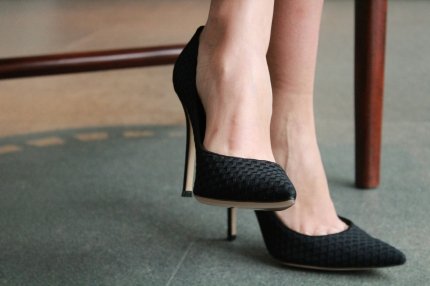
What happens to the calves?
High-heeled shoes constantly keep the calf muscles and Achilles tendon in an altered position.
This is especially true of the calf and soleus muscles.
With regular years of wearing high heels, studies have shown adaptive changes in the calf muscle-tendon complex, including shorter muscle fiber length and greater stiffness of the Achilles tendon.
Because of this, after switching to flat shoes, there is sometimes a feeling of strong tension in the back of the shin.
To prevent this condition, it is useful to maintain normal ankle joint mobility and regularly stretch the calf muscles.
What to do right after a day in heels
If your legs are simply tired, start with recovery rather than intense training.
Remove tight shoes and give your feet a rest.
If there is slight swelling, you can briefly raise your legs above the level of your pelvis.
For pain in the forefoot or localized swelling, a cold compress wrapped in a cloth may be comfortable. It does not need to be applied directly to the skin.
If the problem is more like muscle fatigue and calf stiffness, many people prefer warmth.
After a short rest, you can move on to gentle gymnastics.
The main rule: exercises can create a feeling of moderate stretching or muscle work, but should not cause acute pain.
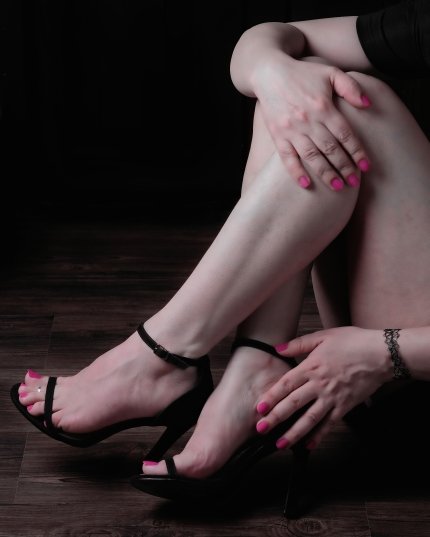
1. Up and down foot movements
This is the simplest exercise to return the ankle joint to its normal range of motion.
Sit on a chair or bed so that your foot can move freely.
Slowly pull the sock away from you.
Then point your toes toward you, as if you want to bring the top of your foot closer to your shin.
Do 10–15 repetitions with each leg.
The movement should be smooth.
After several hours in high heels, the phase when the toe moves towards itself is especially useful: it turns the foot in the direction opposite to the position in the shoes.
2. Circular movements of the ankle joint
Lift one foot off the floor.
Slowly make 8–10 large circles in one direction, then the same number in the opposite direction.
Repeat with the other leg.
You don't need to rotate your entire leg from the hip - the ankle joint should work mainly.
The exercise maintains mobility and is a good first step after removing your shoes.
You can also use another option: imagine that your thumb is a pen, and "write" a few letters in the air with your foot.
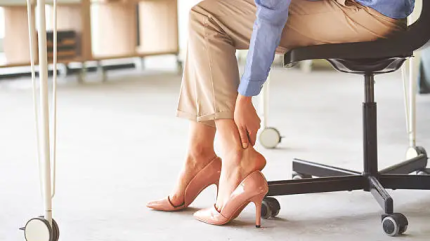
3. Straight-knee calf stretch
This exercise places more stress on the superficial part of the calf muscle.
Stand facing the wall.
Place your palms on the wall.
Take one leg back, leave the other in front.
Keep your back knee straight and your heel pressed to the floor.
Slowly move your torso forward until you feel a gentle stretch in the back of your shin.
Do not lift the back heel.
Hold the position for about 20–30 seconds.
Repeat 2–3 times for each leg.
There is no need to spring during stretching.
4. Soleus muscle stretch
This exercise is similar to the previous one, but the back knee needs to be slightly bent.
Stand against a wall, place one leg behind you.
Both feet are facing forward.
Without lifting your back heel, slowly bend the knee of your back leg.
The stretch sensation should move down the calf.
Hold the position for about 20–30 seconds and repeat 2–3 times.
A combination of straight and bent knee exercises allows you to work on different components of the calf complex.
5. Toe raises
Once the acute fatigue has passed, it is helpful to gradually strengthen the calves and muscles that control the position of the foot.
Stand near a chair or wall.
Place your feet approximately hip-width apart.
Slowly raise both heels as high as possible within a comfortable range.
Hold on a second.
Lower yourself slowly as well.
Start with 8–10 repetitions.
If the exercise does not cause pain, you can gradually perform two sets of 10–15 repetitions.
When two-legged lifts become too easy, you can gradually increase the difficulty of the exercise in your training regimen. But you don't need to immediately switch to single-legged lifts after a painful day in heels.
6. Toe raises
The calf muscles often get a lot of attention, while the muscles on the front of the lower leg are left out of training.
Stand straight and hold on to the support.
Without lifting your heels off the floor, lift the toes of both feet.
Lower them.
Repeat 10–15 times.
This simple exercise activates the muscles that elevate the forefoot and are involved in controlling the ankle joint during walking.
7. Toe control
After wearing narrow shoes, it is useful for the toes to regain their natural mobility.
Sit with your feet on the floor.
Try:
Raise all fingers.
Lower them.
If possible, spread your fingers to the sides.
Relax your foot.
Repeat several times.
Do not forcefully bend your fingers or try to cause a cramp to "strengthen".
The challenge is controlled movement.
8. Soft rolling of the foot on the ball
A light self-massage can be nice for tired soles.
Sit on a chair.
Place a small, smooth ball under your foot.
Slowly roll it from the heel to the front of the foot for about 1–2 minutes.
The pressure should be comfortable.
Rolling should not turn into an attempt to "break" the painful area.
If there is acute local pain under the foot, a bruise, or suspected injury, it is better to skip the intensive massage.
Ready-made 7-minute leg workout after heels
If you don't want to memorize a large complex, you can use a short sequence:
1 minute - foot movements up and down.
1 minute — circular movements of the ankle joints.
2 minutes — calf stretches with straight knees.
1 minute — stretching with bent knees.
1 minute — slow toe raises.
1 minute — gentle finger movements or rolling the foot with a ball.
If the pain becomes worse after the complex, the exercises should be stopped.
Exercise should leave you feeling more mobile, not create new pain.

Can I do exercises right away if my legs hurt a lot?
It depends on the nature of the pain.
If it is the familiar symmetrical fatigue of both feet or calves after prolonged standing, light movements are usually acceptable.
If the pain is acute, comes on suddenly, is localized in one place, or has changed your gait, it is better to postpone strength exercises.
You also don't need to train because:
significant swelling;
pronounced bruise;
acute bone pain;
severe pain in the Achilles tendon;
numbness;
inability to step on the foot normally.
In such situations, it is more important to establish the cause.
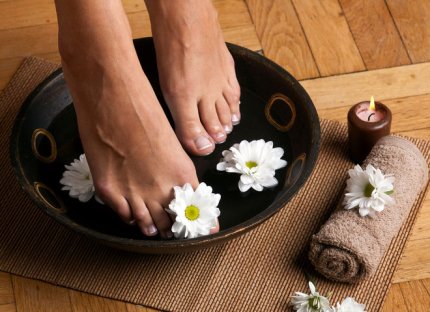
Does a warm foot bath help?
Warm water can be pleasant after a day on your feet and help you subjectively relax.
However, there is no need to add special salts, essential oils, or other ingredients to "relieve fatigue" or "improve blood circulation."
Normal comfortable heat is enough.
If there is significant fresh swelling or irritation, a hot bath may be less comfortable. In such cases, brief cooling is more often used.
The water should not be scalding hot, especially if you have impaired foot sensitivity or diabetes.
Is it necessary to apply ice?
Ice doesn't automatically need to be used after every evening in heels.
If your legs are simply tired and there is no swelling, rest and comfortable movements are enough.
For localized pain and swelling, cold can temporarily reduce symptoms.
The cold pack should be wrapped in a thin towel and applied for about 15–20 minutes. You should not sleep with the ice on your foot or apply it directly to the skin.
How to prevent pain next time
The most effective way to recover is to reduce excessive strain before pain occurs.
Choose the right size
The foot should not slide forward, but the toes should not be clenched either.
Pay attention to the width of the front of the shoe, not just the size number.
Higher heel — more load on the forefoot
Even a small decrease in heel height can significantly change the position of the foot.
For many hours of everyday wear, a moderately wide heel is usually more practical than a high, thin stiletto.

Don't start with a whole day
It is best to wear new shoes for short periods at first.
For example, walk around the house, then get dressed for a short meeting and only then plan a long day in them.
Alternate shoes
Wearing high heels for hours every day creates constant stress in one position.
Alternate them with comfortable shoes with enough room for your toes.
Pay attention to depreciation
For pain under the ball of the foot, appropriate insoles or metatarsal pads can sometimes help, reducing the load on the painful area.
If the problem recurs, it is better to choose them together with a specialist, rather than accidentally buying the thickest insole.
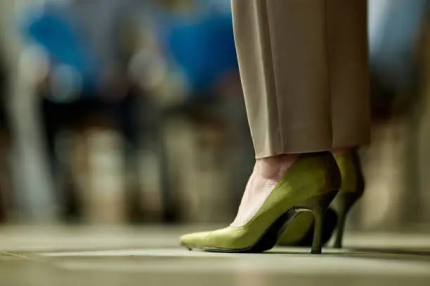
Is it good to walk barefoot after wearing heels?
Not always.
If your feet are healthy and the floor is comfortable, walking barefoot for a short while at home can feel pleasant.
But with pain in the forefoot, a hard floor without cushioning sometimes makes the discomfort worse.
With metatarsalgia, symptoms often worsen when walking barefoot on a hard surface.
In such a situation, soft indoor shoes with normal support may be more comfortable.
Is it possible to "train your feet" so that your heels no longer hurt?
Strong foot, calf, and lower leg muscles improve lower limb function and balance. Global physical activity guidelines advise adults to perform strength training exercises targeting major muscle groups at least twice a week.
But training cannot completely neutralize the biomechanical effect of very high or poorly fitting heels.
Even a trained person gets a forward pressure shift if the heel is raised a few centimeters.
Therefore, the correct approach consists of two parts:
maintain leg strength and mobility ;
Do not create excessive shoe stress for them .
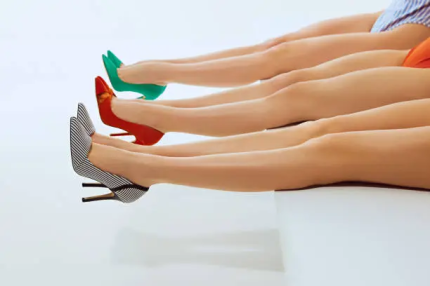
When foot pain is no longer just fatigue
The location of the pain can give you a clue as to what is going on.
The pad under the fingers hurts.
Metatarsalgia is possible due to increased pressure on the forefoot.
Especially noticeable is the pain, which worsens when standing and walking.
It hurts between the third and fourth toes.
If there is burning, tingling, numbness, or a "pebble in the shoe" sensation, one possible cause may be Morton's neuroma.
Heel or Achilles tendon pain
There are many reasons, from overuse to plantar fasciitis or Achilles tendon problems.
If the pain recurs, home stretching may not be enough.
The thumb hurts and there is a noticeable deformity.
Narrow shoes and high heels are associated with an increased risk of hallux valgus, a deformity that is often referred to as the "bone" near the big toe.
It is impossible to change an already formed bone deformity with gymnastics.
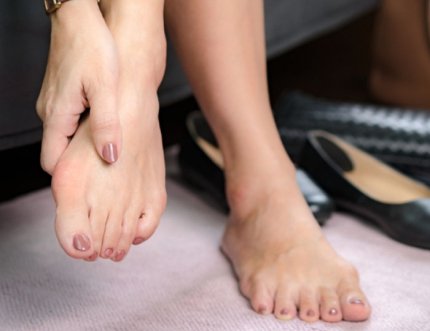
When to see a doctor
Normal fatigue after an unusual load should gradually decrease.
A medical evaluation is needed if:
the pain is severe;
symptoms are getting worse;
the pain keeps coming back;
unable to walk normally;
there is numbness or persistent tingling;
the foot has changed shape;
there was a clicking or popping sound during the injury;
there is extensive swelling or significant bruising;
the pain is clearly localized over the bone;
Symptoms persist despite changing shoes and resting.
In diabetes, foot problems require special attention due to the risk of impaired sensitivity and healing.
Unilateral leg swelling is a separate signal
Heel pain is usually related to the feet or muscles and has a clear mechanical context.
Another situation is if one leg suddenly swells, especially the lower leg or thigh.
Alarming signs are:
unilateral swelling;
unexplained calf pain;
increased skin temperature;
redness or change in color.
These symptoms may occur with deep vein thrombosis and require prompt medical evaluation.
If these are accompanied by sudden shortness of breath, chest pain, rapid heartbeat, coughing up blood, severe dizziness, or fainting, emergency care is needed.
Such symptoms should not be attributed to uncomfortable shoes.
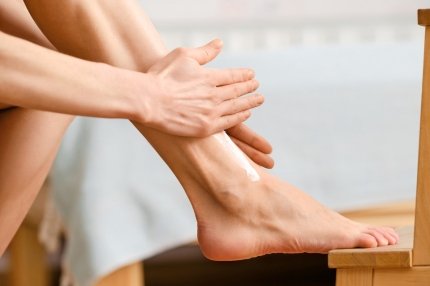
Conclusion
Heels change the distribution of weight on the foot, increase pressure on the front of the foot, and force the calf muscles to work in a shortened position. This is why your feet, toes, and calves can hurt after wearing shoes for a long time.
For normal fatigue, rest, ankle joint movements, gentle calf stretching, gradual muscle strengthening, and properly selected footwear help.
Exercises should be comfortable. Acute local pain, severe swelling, numbness, or inability to walk normally are reasons to stop exercising and find out the cause of the symptoms.
FAQ
What to do if your feet hurt a lot after wearing heels?
Remove uncomfortable shoes, give your feet a rest, and temporarily reduce the load. You can perform light foot movements and gentle calf stretches. If there is significant swelling, acute pain, or difficulty walking, it is better not to perform the exercises until the cause is determined.
What exercises are best to do after heels?
The simplest complex includes up and down foot movements, ankle rotations, straight and bent knee calf stretches, toe raises, and gentle toe exercises.
Why do my calves hurt after wearing heels?
High heels keep the foot in a raised position. This changes the way the calf muscles and Achilles tendon work. After returning to regular shoes, you may feel tightness and stiffness.
Why does the front of the foot hurt after wearing heels?
Heels put most of the weight on the forefoot. Excessive pressure can cause metatarsalgia, a pain in the ball of the foot behind the toes.
Can I massage my feet after wearing heels?
For normal muscle fatigue, a light massage can be comfortable. Strong pressure on an acutely painful, swollen, or injured area is undesirable.
What is better after heels - heat or cold?
For general muscle stiffness, warmth is often comfortable. If there is localized pain and swelling, a cold compress can be used briefly through a cloth. It is worth focusing on the nature of the symptoms.
How long should your feet hurt after wearing heels?
Mild fatigue after unusual exertion usually gradually subsides with rest. If the pain persists for several days, worsens, or regularly returns after light exertion, it is worth consulting a specialist.
Does exercising help you get used to high heels?
Strong calf, foot, and lower leg muscles improve stability and leg function. But exercises don't eliminate the load shifting that high heels create. Therefore, training is no substitute for properly fitting shoes.
Do you need to stretch your calves every day if you often wear heels?
Regular gentle stretching can help maintain mobility in the ankle and calf muscles. It should not be painful or performed in a jerky manner.
When can leg pain be dangerous?
Urgent attention is required if you are unable to walk normally, have severe pain after an injury, have extensive swelling, have a deformity in your foot, have numbness, or have sudden, unilateral swelling of your lower leg with pain, warmth, or redness. If you are also experiencing shortness of breath or chest pain, seek immediate medical attention.
undefined

