

A fresh apple with its skin and an apple baked without sugar are still healthy fruits, but they act on the body in slightly different ways. Fresh preserves the structure of the fiber better, some of the heat-sensitive substances, and usually saturates for longer. Baked apples become softer, easier to chew, and for some people, they are more comfortable for digestion.
Points of attention
- A fresh apple retains its fiber structure and keeps you fuller longer, while a baked apple becomes softer and may be more comfortable for digestion in some cases.
- Baked apples are a source of fiber, polyphenols, and pectin, which are beneficial for the body and help maintain intestinal health.
- The average gastric emptying time after consuming a whole, fresh apple was longer than after applesauce or juice, allowing for a greater feeling of satiety.
Therefore, there is no universal answer "fresh is good, but baked is not" or vice versa. The state of the digestive system, the method of preparation, the presence of the skin, the size of the portion, and what is added to the apple during baking are all important.
For most healthy people, a whole fresh apple with the skin on remains the optimal everyday option. But a baked apple without a lot of sugar, honey, butter, or caramel is also a full part of a healthy diet.
What fresh apples contain
Apples are almost 85% water and have a relatively low energy value. According to the USDA, 100 g of raw apple with skin contains about 50 kcal, 2.4 g of fiber, approximately 10 g of natural sugars, 4.6 mg of vitamin C and 107 mg of potassium. The exact values vary depending on the variety, ripeness and growing conditions.
But the nutritional value of apples is not limited to vitamins and minerals.
They contain pectin and other dietary fibers, as well as polyphenols, a large group of plant compounds that include quercetin, catechins, epicatechin, procyanidins, and chlorogenic acid. Their composition can vary significantly between varieties.
It is the combination of fiber, polyphenols, and the holistic structure of the fruit that makes apples nutritionally interesting.
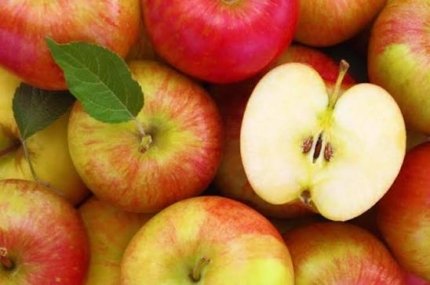
What are the benefits of fresh apples?
They better preserve the natural structure of the fruit
When we eat a whole apple, we have to bite and chew through the dense plant tissue. This is more important than it might seem.
In a randomized trial of healthy adults, a whole apple left the stomach more slowly than an equivalent serving of applesauce or juice. The average time it took for half of the stomach contents to empty was about 65 minutes after the whole apple, compared with 41 minutes after the puree and 38 minutes after the juice. Participants also reported feeling fuller longer after eating the whole fruit.
This is a good example of why the same fruit can affect appetite differently depending on the degree of processing.
Vitamin C is better preserved in a fresh apple.
Vitamin C is sensitive to temperature, oxygen, and long-term storage. Therefore, heating foods can partially reduce its amount.
Apples are not the record holders for vitamin C content in any case — citrus fruits, kiwi, peppers, and many other foods contain much more. But if you compare the same apple before and after prolonged heat treatment, the fresh one will usually retain this vitamin better.
A fresh apple is good for a snack.
A medium apple is easy to take with you, requires no cooking, and combines water, carbohydrates, and fiber.
For a more filling snack, it can be combined with a source of protein or fat, such as natural yogurt, cottage cheese, or a small serving of nuts.
This option is usually more filling than apple juice, a candy bar, or a pastry with apple filling.
Why it's better to eat apples with the skin on
If the skin is well tolerated, it is not necessary to remove it.
Studies of different varieties show that the concentration of many polyphenols in the skin is significantly higher than in the pulp. In some studies, the skin has shown the highest total phenolic content and antioxidant activity.
The distribution of individual substances also differs. For example, quercetin glycosides in the studied varieties were concentrated mainly in the skin.
The skin also adds some dietary fiber.
Before eating, it is enough to wash the apple well under running water. Peeling makes sense if the skin is difficult to chew, is poorly tolerated, or is required by a specific diet.
What changes when an apple is baked?
Under the influence of temperature, plant cells and their walls change. Pectin structures are partially destroyed or rearranged, the tissue loses its firmness, and the apple becomes soft.
At the same time, the fiber does not "disappear."
Pectin remains a dietary fiber, although its physical properties may change after heating. Current reviews of pectin research indicate that it interacts with the gut microbiota and can be fermented by colonic bacteria to form short-chain fatty acids.
Heat treatment can also reduce the amount of certain heat-sensitive compounds. A systematic review of apple polyphenols confirms that technological processing affects their composition and stability, with the outcome depending on the temperature, duration and specific cooking method.
So, a baked apple doesn't become "empty." It's just that its nutritional characteristics change slightly.
What are the benefits of baked apples?
They are much easier to chew.
After baking, the flesh becomes very soft. This can be important for:
people with dental problems;
those who use dentures;
people after dental procedures;
elderly people with chewing difficulties;
patients who temporarily need soft food.
In this case, a baked apple allows you to keep the fruit in your diet without creating unnecessary discomfort.

Some people find baked apples easier to tolerate.
A fresh, crisp apple requires more chewing and retains the dense structure of its cell walls. They soften when heated.
Therefore, some people with sensitive digestion subjectively tolerate thermally processed fruits better.
But it is important not to draw too broad a conclusion here: a baked apple is not automatically a “therapeutic product for the stomach” .
For example, apples are high in fructose and sorbitol, which are high in FODMAPs. These carbohydrates can cause bloating, pain, and gas in some people with irritable bowel syndrome. Baking them regularly won't make them go away.
Therefore, a person with IBS may not tolerate both fresh and baked apples.
A baked apple can replace a higher-calorie dessert.
A plain apple baked with cinnamon can satisfy a sweet tooth without the sugar and fat often found in cakes, cookies, or traditional desserts.
The problem starts not with the baking itself, but with the recipe.
If you add a few spoonfuls of honey, sugar, butter, caramel, ice cream, and sweet sauce, the nutritional value of the dish will change much more than if you heated the apple itself.
Does a baked apple become sweeter and more caloric?
In terms of taste, it often is. In terms of the amount of sugar in the fruit itself, it's not necessarily so.
During baking, some of the water evaporates. This causes the natural sugars to become more concentrated, and the soft, hot texture can enhance the sensation of sweetness.
If you take an apple and bake it without any additives, the sugar doesn't appear out of thin air. The total amount of energy in that fruit doesn't change fundamentally.
Another thing is to compare 100 g of raw and 100 g of heavily baked apples. After losing water, the same weight of the finished product may have a higher concentration of carbohydrates.
Supplements make an even bigger difference.
Honey and maple syrup are still sources of free sugars, even if they are perceived as “natural.” Nuts are nutritious, but they are also quite high in calories. Butter adds fat and energy.
Therefore, it is worth evaluating the entire dish, not the word "baked".
Which is better for weight loss: fresh or baked apple?
If the goal is appetite control, a fresh whole apple has a definite advantage due to its texture.
Randomized trials show that whole fruit is more satiating than more processed forms. In a study of different apple shapes, participants felt fuller after eating whole fruit, and in another experiment, eating a whole apple before a meal reduced subsequent energy intake.
But a regular baked apple without sugary topping can also be a good dessert when controlling weight.
The difference is often not determined by the cooking temperature, but by the recipe.
Baked apple with cinnamon and natural yogurt and apple with caramel, butter, and ice cream are two completely different dishes in terms of energy value.

Fresh or baked apples for diabetes
It is important for people with diabetes to look at the total amount of carbohydrates in a serving, rather than dividing fruits into "allowed" and "forbidden."
A whole fresh apple has the advantage of taking longer to chew, retaining its natural fiber structure, and being very filling.
Baking without added sugar doesn't make an apple a forbidden food in and of itself. But bland foods can be eaten more quickly, and adding honey, sugar, dried fruit, or sweet sauces increases the amount of carbohydrates in a serving.
It’s also worth distinguishing between a baked apple and apple juice. Juice has a much less pronounced texture and doesn’t provide the same satiety as whole fruit. In one randomized study, participants felt more full after a whole apple than after an equal serving of apple juice in terms of fructose.
Are baked apples good for the intestines?
Yes, they remain a source of plant fiber, particularly pectin.
Pectin is a fermentable dietary fiber. Colon bacteria can use it as a substrate and produce short-chain fatty acids that are involved in maintaining the intestinal barrier and metabolic processes.
Apple polyphenols also interact with the gut microbiota. Some of the larger polyphenol molecules are not absorbed in the upper digestive tract and reach the colon, where they can be metabolized by microorganisms.
A new 2026 systematic review of 38 intervention studies of apples and apple products found potential beneficial changes in some measures of glycemic control, vascular function, and gut microbiota. However, the authors emphasize the considerable heterogeneity of the studies and the lack of evidence to draw firm conclusions about specific therapeutic effects.
So to say that apples “heal the gut” would be an exaggeration. They can simply be a useful part of a varied plant-based diet.
Can I eat apples with irritable bowel syndrome?
Not everyone.
Apples contain both fructose and sorbitol, two types of FODMAP carbohydrates. In sensitive people, they can be poorly absorbed in the small intestine, attract water, and be actively fermented by bacteria in the colon. The result can be gas, bloating, cramps, or diarrhea.
Baking makes the apple softer, but does not necessarily solve the FODMAP problem.
Therefore, the rule “if you have intestinal problems, eat only baked apples” is incorrect. It all depends on the specific disease and individual tolerance.
When a baked apple may be better for allergies
There is a separate interesting situation - pollen-food syndrome, in particular, a cross-reaction between birch pollen and apple.
The main apple allergen, Mal d 1, is structurally similar to the birch pollen allergen, Bet v 1. In some people with birch allergies, fresh apple causes itching, tingling, or swelling in the mouth and throat.
Mal d 1 is a relatively heat-labile protein, so some people tolerate apples better after heating. In studies, heated products related to Bet v 1 lost their ability to trigger a typical IgE reaction in some patients.
But this is not a universal rule for all apple allergies. There are other apple allergens, and reactions can vary in mechanism and severity. Reviews explicitly warn that heating does not provide guaranteed safety for every person with a food allergy.
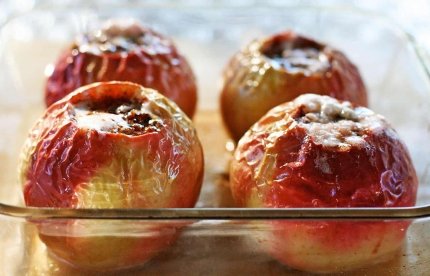
How to properly bake apples
For an everyday healthy dessert, the recipe can be very simple.
You should wash the apple, leave the skin on if you tolerate it well, remove the core, and bake until soft.
For flavor you can use:
cinnamon;
vanilla;
a little natural yogurt after baking;
a small amount of chopped nuts;
berries.
Most sweet varieties don't need sugar or honey at all: the natural sweetness becomes more pronounced during baking.
If the goal is to preserve texture and heat-sensitive substances as much as possible, you should not turn the fruit into a highly cooked puree for a long time.
What is healthier: fresh apple, baked, mashed or juice?
According to the degree of preservation of the natural structure, products can be conditionally arranged as follows:
whole fresh apple → baked whole apple → applesauce → apple juice.
This is not a “good or bad” rating. It shows how far the product deviates from the original structure of the fruit.
A whole apple requires the most chewing and leaves the stomach more slowly. Baked apples retain most of the fruit but are softer. Purees are already mechanically crushed. Juices lose a significant portion of their insoluble fiber and are drunk very quickly.
In a controlled study, a whole apple provided slower gastric emptying and greater satiety compared to puree and juice.
For a healthy person, this is one reason to choose whole fruit more often.
How many apples can you eat per day?
There is no separate medical standard specifically for apples.
One medium apple a day can be part of a balanced diet. Two is also not a problem for most healthy people, as long as the diet is varied.
There is no need to build your diet around one fruit. It is better to alternate apples with berries, citrus fruits, kiwi, plums, pears and other available seasonal fruits.
Different fruits have different sets of polyphenols, vitamins, and minerals, so variety is more beneficial than trying to find one “healthiest” product.

Fresh or Baked Apples: A Brief Comparison
Fresh apples with skin are better suited if:
need a hearty snack;
no difficulty chewing;
the peel is well tolerated;
you want to preserve the original structure of the fruit as much as possible;
Appetite control is important.
Baked apples may be more convenient if:
it is difficult to chew hard fruits;
soft food is needed;
want a warm dessert without a lot of added sugar;
fresh texture subjectively causes discomfort;
A certain form of pollen-associated allergy makes fresh apples problematic, while cooked apples are tolerated.
In many cases, there is no need to choose one. Both options can be alternated.
Conclusion
For most healthy people, a fresh apple with the skin has a slight advantage: it better preserves its natural structure, some of the heat-sensitive substances, and saturates for longer.
A baked apple is still a nutritious fruit. It is softer, easier to chew, and can be a good alternative to sweet desserts, as long as you don't add a lot of sugar, honey, butter, or caramel.
Therefore, the main difference is often not between “raw” and “baked,” but between a whole fruit and a highly processed product, and between a simple apple and a dessert with a lot of calorie additives.
FAQ
Which apples are healthier - fresh or baked?
For most healthy people, a fresh apple with its skin has a certain advantage due to its preserved structure, heat-sensitive components, and a more pronounced feeling of satiety. Baked apples without added sugar are also a healthy product.
Is the fiber in baked apples preserved?
Yes. Baking changes the structure of the cell walls and pectin, but it does not destroy all the fiber. If an apple is baked with the skin on, a significant portion of the dietary fiber remains.
Are baked apples good for the intestines?
They contain pectin and other plant fibers that can be fermented by gut microbiota. But baked apples are not suitable for every digestive problem.
Can I eat baked apples with irritable bowel syndrome?
Tolerance varies from person to person. Apples contain excess fructose and sorbitol and are high in FODMAPs. Baking does not guarantee the elimination of these carbohydrates.
Can I eat baked apples with diabetes?
A regular apple baked without sugar can be included in the diet, taking into account the amount of carbohydrates in a serving. Sugar, honey, dried fruits and sweet sauces increase the carbohydrate load.
Do apples lose vitamins after baking?
Some heat-sensitive substances, in particular vitamin C, can be destroyed by heat. The content of fiber, minerals, and many other components is not reduced.
Does a baked apple become more caloric?
Baking itself without additives does not create additional calories. Due to the loss of water, energy can be more concentrated per 100 g of product. Honey, sugar, butter, caramel, large amounts of nuts and ice cream increase the calorie content significantly more.
Do I need to peel an apple?
For most healthy people, no. The skin contains a significant amount of polyphenols and also contains fiber. Peeling may be justified if the skin is poorly tolerated or there is difficulty chewing.
What is better for weight loss - fresh or baked apple?
A whole fresh apple is usually more filling due to its texture. Baked apples with no added calories are also good for weight control and can be a convenient alternative to desserts.
Which is healthier - an apple or apple juice?
For everyday eating, a whole apple is usually preferable. It contains natural fiber structure, takes longer to chew, leaves the stomach more slowly, and is more filling than juice.
undefined

