
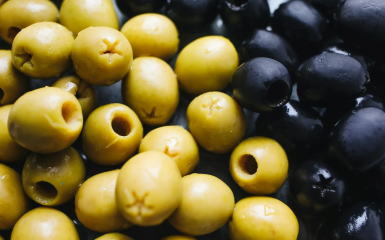
Olives are often considered a healthy snack and part of the Mediterranean diet. They can indeed be a part of a balanced diet, but their benefits depend on more than just their color. The variety, processing method, amount of salt, marinade, filling, and portion size are all important.
Green and black olives should not be compared on the principle of "good or bad." Both types have their advantages, but they are suitable for different people and dishes.
Points of attention
- Green and black olives have distinct differences in terms of ripeness, processing, texture, and flavor, making each suitable for different preferences and dishes.
- The key to choosing healthy olives lies in factors such as salt content, composition, processing method, and individual dietary needs, rather than simply focusing on color.
How do green olives differ from black ones?
The main difference between green and black olives is usually related to the degree of ripeness and processing.
Green olives are harvested earlier, when the fruit is not yet fully ripe. They tend to have a firmer texture and a more pronounced, sometimes more bitter or salty flavor.
Black olives can be fully ripe fruits or olives that have darkened due to technological processing. Therefore, color alone does not always mean the same composition or the same benefits. Black olives from different producers can vary significantly in taste, salt content, and additives.
Why fresh olives are almost never eaten raw
Fresh olives are very bitter due to natural compounds. To make them edible, the fruits are soaked, fermented, pickled, or processed in other permitted ways. That is why we buy mostly table olives in the store — already prepared for consumption.
This processing affects the taste, texture, and salt content, so two cans of olives of the same color may have different nutritional values.
What are the benefits of olives?
Olives can be part of a healthy diet when eaten in moderation. They are valued primarily for their combination of vegetable fats, flavor, and bioactive compounds.
Olives may contain:
monounsaturated fats — a type of fat characteristic of olives and olive oil;
polyphenols — plant compounds that are studied in the context of antioxidant activity;
fiber — in small quantities, but it is still present;
vitamin E and other micronutrients — their content depends on the variety and processing;
a rich flavor that helps make simple dishes more interesting without a lot of sauces.
Within the Mediterranean diet, olives are typically combined with vegetables, legumes, fish, whole grains, herbs, and olive oil. It is the overall diet, not a single product, that is most important for health.
The main nuance is salt and marinade.
The most common question about olives is not about fat, but about salt. Most table olives are preserved in brine or marinade, so they can be high in sodium.
Too much salt in your diet is not good, especially for people who have been advised by their doctor to limit it. This may include people with high blood pressure, kidney disease, a tendency to edema, or certain cardiovascular conditions.
What to do:
read the label and compare salt content between brands;
do not perceive olives as an “unlimited” snack;
if necessary, rinse olives from brine before use;
Be careful with stuffed olives, as they may contain more salt or additional ingredients;
consider other salty foods on the same day: cheese, sausages, pickles, sauces, snacks.
If you are monitoring sodium in your diet, it is more important to choose a less salty product than to focus solely on color.
Who might benefit most from green olives?
Green olives are often chosen by those who like their firm texture and brighter flavor. They work well in dishes that require a distinct salty-bitter accent.
Green olives may be a better fit:
for salads with vegetables, herbs, legumes or cereals;
as an addition to snacks where a dense texture is needed;
people who like a richer taste;
for Mediterranean-style dishes with tomatoes, fish, whole grain bread;
those who eat a small portion and do not need to strictly limit salt.
At the same time, green olives often seem saltier. This is not a universal rule, but for people with salt sensitivity or those on a sodium reduction diet, it is worth checking the ingredients especially carefully.
Who might benefit most from black olives?
Black olives often have a milder flavor and a more delicate texture, which may make them more palatable to people who find green olives too harsh.
Black olives can be a good choice:
for pizza, pasta, casseroles and warm dishes;
for people who prefer a milder taste;
for salads where you don't want too much of a salty accent;
for those who are just introducing olives into their diet;
as an ingredient in dishes, not a separate salty snack.
But black olives are not always automatically “lighter” or less salty. It all depends on the manufacturer, the filling, and the portion. If the label says a lot of salt or has unnecessary additives, the color doesn’t make the product better.
Who should limit olives?
Olives are not a dangerous food for most healthy adults when consumed in moderation, but there are situations when you should be more careful.
A restriction may be appropriate for people who:
have a doctor's recommendation to reduce salt intake;
control blood pressure;
have kidney disease or a tendency to edema;
are on a sodium-restricted diet;
have sensitive digestion and react poorly to salty or pickled foods;
pregnant and trying to control swelling or salt in the diet;
choose products for young children.
Olives for children
Olives can be too salty for children. If parents decide to add them to their diet, it is better to do so in small quantities, without pits, preferably after washing them of the brine. For toddlers, it is also important to consider the risk of crushing, so whole olives with pits are not suitable.
If your child has medical dietary restrictions, you should consult a pediatrician.
How to choose quality olives in the store
Color is not the most reliable criterion. It is much more important to read the label carefully.
Before buying, please pay attention to:
salt content — compare several options;
composition — the shorter and clearer, the better;
type of filling — brine, marinade, oil, spices;
the presence of fillings — anchovies, peppers, cheese or paste-like fillings can add salt and calories;
packaging integrity — the can should not be swollen, damaged or rusty;
storage conditions after opening — the manufacturer usually indicates how long the product can be stored in the refrigerator;
the presence of a pit — olives with pits often have a more pronounced taste, but are not suitable for young children and some dishes.
If there is a choice, it is better to choose an option with less salt and without excessive additives for your daily diet.
How to eat olives for your diet
Olives work best not as a stand-alone large appetizer, but as a small flavor accent in a dish.
Practical ideas:
add a few olives to a salad with vegetables, herbs, and legumes;
combine with whole grain bread, hummus or fish;
use instead of some of the salt in dishes;
rinse from brine if you want to reduce salinity;
do not combine many salty foods on one plate at the same time;
Choose a smaller portion if the olives are stuffed or in a salty marinade.
If you're counting calories, remember: olives contain fat, so portion size matters. They can be a healthier alternative to many snacks, but they don't make for a "diet-free" option.
Common Misconceptions About Olives
Mistake 1. Believing that black olives are always healthier
Dark color does not guarantee better composition. Black olives can vary in processing, saltiness, and additives.
Mistake 2. Choosing only by color
It's better to look at the label: salt, composition, filling, toppings, and storage recommendations.
Mistake 3. Eating olives without restrictions
Even healthy foods can be undesirable in excess. The main risk for olives is salt, especially if you already have a lot of salty foods in your diet.
Mistake 4. Considering olives as a medicinal product
Olives can supplement a balanced diet, but they do not treat hypertension, high cholesterol, heart disease, or other conditions.
Mistake 5. Ignore the filling
Stuffed olives may contain more salt, acidity, fat, or additives. This doesn't mean you can't eat them, but you should check the ingredients more carefully.
So which olives are healthier — green or black?
There is no clear answer. Green or black olives can be a useful addition to the diet if the product is of good quality, the portion is moderate, and the overall diet is balanced.
Choose green ones if you want a firmer texture, a brighter flavor, and are not on a strict salt limit. Choose black ones if you want a milder flavor or are adding olives to warm dishes, salads, or pasta.
If health is your main criterion, look not only at the color, but also at the composition and amount of salt. This is often more important than the shade of the fruit.
FAQ
Which olives are healthier: green or black?
Both types can be beneficial in moderation. The difference depends on ripeness, variety, processing, brine, and additives. For health, it is more important to choose a product with a moderate salt content and a clear composition.
Can you eat olives every day?
Yes, if there are no medical restrictions and the portion is small. But it is worth considering salt in your entire diet. If you often eat cheese, pickles, sausages or sauces, olives can further increase your sodium intake.
Are olives good for weight loss?
Olives can be part of a weight-loss diet because they have a rich flavor and can replace less healthy snacks. However, they do contain fat and salt, so quantity matters. Olives themselves do not cause weight loss.
Do you need to wash olives before eating?
This is not necessary, but can be helpful if you want to reduce the saltiness. Rinsing does not remove all the salt, but it does reduce the amount of brine on the surface of the fruit.
Can olives be eaten with high blood pressure?
If your doctor has recommended limiting your salt intake, you should eat olives with caution or choose lower-sodium options. In such cases, it is best to discuss the frequency and portion size with your healthcare professional.
Can olives be given to children?
It is possible only taking into account age, salt content and safety. For children, olives should be pitted, chopped and in small quantities. Due to their saltiness, they should not be a regular large snack.
Are black olives from a can harmful?
Not necessarily. Canned black olives can be a normal product if the composition is clear, the can is not damaged, and the salt content is not excessive for your diet. It is worth reading the label and following the storage conditions after opening.
Are stuffed olives worse?
Not always, but they may contain more salt, acidity, fat, or additional ingredients. If you are watching your diet, it is best to check the label and not make stuffed olives your main daily snack.
Conclusion
Green and black olives can be part of a healthy diet, but neither type is universally better. Green olives tend to have a firmer texture and a more pronounced flavor, while black olives tend to be softer and more delicate. For practical choices, it's more important to look at salt content, composition, processing method, and your own needs.
If you are not on a salt restriction, olives can be used in moderation as a flavor accent to vegetables, legumes, fish, whole grains, or Mediterranean-style dishes. However, if you are monitoring your blood pressure, have kidney disease, edema, or other medical conditions, choose olives with caution and follow your doctor's advice.
The material is for informational purposes only and is not a substitute for the advice of a doctor or nutritionist. If you have chronic conditions, salt restrictions, pregnancy, or special dietary needs, please consult a medical professional.

