
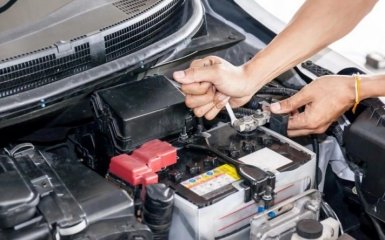
Most drivers think about the battery in the winter: the starter turns sluggishly, the car doesn't start the first time, errors appear on the dashboard. But the reason often accumulates earlier - in the hot months.
Points of attention
- Heat can accelerate chemical aging, self-discharge, and degradation of the internal elements of a car battery.
- Frost makes a weak battery noticeable by reducing available starting power, making it harder to start the engine, and increasing the sensitivity of electronics.
- Summer battery problems often manifest in the winter due to accumulated wear, undercharging, or improper operation in the summer.
Frost usually doesn't kill a battery so much as it shows its weakness. But high temperatures can accelerate chemical aging of the battery, self-discharge, and degradation of internal elements. That's why taking care of your battery in the heat is more important than it seems.
Why does it seem like the battery's main enemy is frost?
In cold weather, it is more difficult for a car battery to deliver the necessary current to start the engine. At the same time, the engine oil thickens, the starter has a harder time turning the engine, and the spark plugs, fuel system, and electronics need a stable power supply.
Therefore, a weak battery in cold weather shows itself very quickly. The driver sees an obvious symptom: the car starts poorly or does not start at all.
But that doesn't mean that cold is always the root cause. If the battery has already lost some of its capacity due to age, undercharging, heat, or problems with the charging system, the cold simply makes that loss more noticeable.
In other words: frost is a stress test. Heat often works more quietly, but for longer.
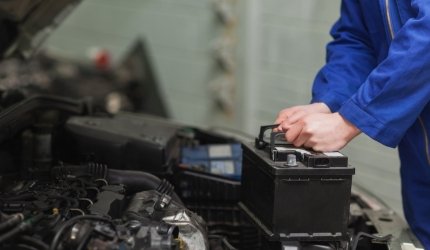
How heat affects a car battery
Lead-acid car batteries work through electrochemical processes. High temperatures accelerate these processes. In the short term, this can even give the impression that the battery is working normally: in warm weather, starting is easier, the starter turns more vigorously.
The problem is different: prolonged overheating accelerates the aging of internal components.
Heat can contribute to:
faster battery self-discharge;
corrosion of plates and internal connections;
loss of water from the electrolyte in serviced batteries;
degradation of the active mass of the plates;
increased risk of overcharging if there are problems with the voltage regulator;
general reduction in battery life under adverse operating conditions.
Important: the temperature under the hood after driving in traffic jams or on the highway can be significantly higher than the air temperature. Therefore, the phrase "only +30 outside" does not always reflect the conditions in which the battery actually operates.
Why summer problems often manifest in winter
A battery rarely fails instantly without prior reasons. More often, its life decreases gradually: the battery accepts a charge worse, discharges faster, and loses starting current.
In the summer, the driver may not notice this. The engine starts easily, there is no cold start, the load on the starter is less. But wear and tear may already be accumulating inside the battery.
When the cold weather sets in, the power reserve is lacking. That's when you get the impression that "the battery died from the cold." In fact, it could have been weakened in the summer due to heat, undercharging, or improper use.
Therefore, the statement “heat kills a battery faster than frost” should not be taken as absolute. It is more correct to say this: heat can accelerate battery aging, and frost more often reveals the consequences of this aging.
What summer conditions are most damaging to batteries?
Traffic jams and high temperatures under the hood
In traffic jams, the engine runs for a long time, air movement through the engine compartment is limited, and the cooling system fans turn on frequently. If the battery is located under the hood, it is in an elevated temperature zone.
For an old or already weakened battery, this can be an additional factor in degradation.
Short city trips
Short trips are a common cause of battery drain. After starting the engine, the battery loses some of its charge. The alternator needs time to restore it.
If the driver drives for 5-10 minutes, often stands in traffic jams, turns on the air conditioning, headlights, seat heating or ventilation, multimedia, and charging gadgets, the battery may regularly remain undercharged.
Undercharging is not always immediately noticeable, but if it occurs regularly, it reduces the reliability margin.
Long-term car downtime
Summer is the holiday season. A car can sit idle for a week or more. However, modern electronics do not turn off completely: alarms, control units, telematics and other systems can consume a small amount of current in standby mode.
If the battery is no longer new or has not been fully charged, the car may not start after a long period of inactivity, even in warm weather.
Large electrical load
The air conditioner is not directly powered by the battery, but by the engine, but the entire climate system uses fans, control electronics, and other consumers. Add a video recorder, navigator, phone chargers, music, and a refrigerator in the cabin — and the load on the electrical system increases.
A working alternator should cover the basic needs of the car while driving. But if the trips are short, the belt is worn, the contacts are bad, or the alternator is operating erratically, the battery may not receive enough charge.
Signs of a weak battery
Not every symptom means that the battery needs to be replaced immediately. But the following signs should be taken as a reason to check the car battery:
the starter turns slower than usual;
after a night or several days of inactivity, the car starts worse;
the headlights or backlight noticeably sags during startup;
random electronics errors appear;
the battery does not hold a charge after recharging;
terminals are covered with plaque or traces of oxidation;
the battery case has swelling, cracks or signs of leakage;
there is a pungent odor near the battery;
After "lighting up", the problem quickly recurs.
You should be especially careful if the battery is of unknown age, the car was purchased used, or the battery has been repeatedly discharged to zero.
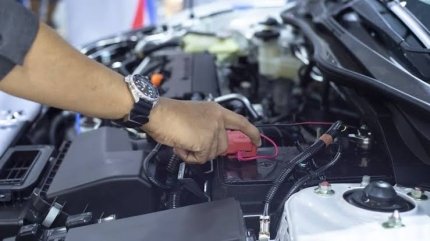
How to care for your battery in hot weather
Summer battery care does not require complicated procedures. The main thing is not to ignore basic prevention.
Check the terminals and contacts
Oxidation of battery terminals impairs contact and can cause starting problems even when the battery itself is still functional. The terminals should be clean, tightly secured, and free of green or white deposits.
If there is severe corrosion, traces of electrolyte, or damage to the wires, it is better to contact a service center.
Pay attention to the battery attachment
The battery must be securely mounted. Constant vibrations can damage the case, plates, and contacts. This is especially true for cars that often drive on bad roads.
Avoid regular deep discharge
Deep discharge is harmful to most car batteries. If the car is parked for a long time, it is worth periodically checking the state of charge or using a maintenance charger compatible with the battery type.
For AGM and EFB batteries, which are often used in cars with a start-stop system, the compatibility of the charger with a specific battery type is important.
Take a test before a long trip
If you are planning a vacation, a trip in the heat, or a route through places without convenient service, it is worth checking the battery under load in advance. Conventional voltage measurement does not always show the real state of the battery.
The service can assess the starting current, the ability to accept a charge, and the operation of the generator.
Park in the shade if possible.
Parking in the shade won't "cure" a weak battery, but it helps reduce the overall heat load on your car. This is especially helpful if your car has been sitting in the sun for a long time.
Check the charging system
If the battery is frequently discharging, the problem may not be with the battery. It is worth checking the alternator, voltage regulator, drive belt, ground connections and possible parasitic current in parking mode.
What not to do with a battery in the summer
Some popular advice may be useless or dangerous.
It is not worth it:
add water or electrolyte to a maintenance-free battery;
open the battery if its design does not provide for this;
charge the battery with an inappropriate device or without supervision;
ignore swelling of the case, odor or leakage;
leave the car with the consumers turned on for a long time;
repeatedly "lighting up" the car without finding out the reason for the discharge;
change the AGM/EFB battery to an inappropriate type without checking the car manufacturer's requirements;
work with terminals without basic precautions.
Also, don't assume that a new battery will automatically solve the problem. If the alternator is undercharging, has a current leak, or has poor contacts, a new battery can also fail quickly.
When to diagnose or replace the battery
It is worth contacting diagnostics if the battery is regularly discharged, the car does not start well after idle time, or errors related to the power supply appear on the panel.
During the inspection, it is advisable to evaluate not only the battery, but also the entire system:
battery charge status;
starting current under load;
generator operation;
voltage stability in different modes;
condition of terminals and ground wires;
current consumption in the parking lot;
compliance of the battery type with the requirements of the car.
For cars with a start-stop system, after replacing the battery, in some cases, registration or adaptation of the battery in the electronic unit is required. This depends on the car model, so it is worth focusing on the manufacturer's instructions or the recommendations of a specialized service.
FAQ
Is it true that heat kills a battery faster than cold?
Heat can accelerate battery aging, especially if the battery is overheated, undercharged, or in poor condition for a long time. Cold weather often brings out existing weakness because it reduces available starting power.
Why does the battery die after a few days of idle time in the summer?
The cause may be self-discharge, standby power consumption, an alarm, a DVR, or an already weak battery. If the situation repeats, it is worth checking the stray current and the condition of the battery.
Does air conditioning affect the battery?
The air conditioner is powered by the engine, but the climate system has electrical consumers: fans, control units, sensors. Combined with short trips and other loads, this can contribute to undercharging.
Can I charge a car battery in hot weather?
It is possible if you use a working charger that is compatible with the battery type and follow the manufacturer's instructions. Do not charge a damaged, swollen, or leaking battery.
How often should you check your car battery?
At least before winter, before a long trip and after deep discharge. If the car is driven mainly on short routes or is parked for a long time, the inspection may be required more often.
Does parking in the shade help?
Yes, it can reduce the heat load on the car and battery, but it does not eliminate the problem of wear, undercharging, or a faulty charging system.
Do I need to remove the battery if the car is parked for a long time in the summer?
This depends on the car, battery type and storage conditions. In some cases, it is better to use a trickle charger. Before removing the battery, it is worth considering that modern cars may reset settings or require system adaptation.
What's special about start-stop batteries?
Cars with start-stop systems typically require AGM or EFB batteries designed for frequent starting cycles. Replacing them with the wrong type can lead to faster wear or improper system operation.
Conclusion
Heat and cold damage the battery in different ways. Cold makes a weak battery noticeable: the car starts worse, the starter turns harder, the electronics become more sensitive to voltage drops. Heat can gradually accelerate the aging of the battery - through overheating, self-discharge, corrosion and loss of stable charge.
Therefore, summer battery care is not an unnecessary precaution, but part of normal car operation. Clean terminals, a working charging system, avoiding deep discharges and checking before trips help reduce the risk of unexpected failure.
Technical disclaimer: the material is for informational purposes only. Specific actions with the battery depend on the type of battery, car model and its electrical system. If there is an odor, leakage, swelling of the case, frequent discharges or electronics errors, it is safer to contact a qualified service.

