

Returning to school after a long summer vacation means changing several familiar conditions at once: waking up earlier, concentrating longer, completing tasks on schedule, interacting with teachers and classmates again. Therefore, in the first days, a child may get tired more quickly, get irritable, have a harder time getting up in the morning, or say that he does not want to go to school at all.
Points of attention
- A predictable routine, enough sleep, and calm conversations will help children adapt to the school rhythm after the summer holidays.
- The predicted duration of the process of adapting to school after the summer varies for each child, but it is important to assess the dynamics of changes in behavior and physical condition.
- It is necessary to understand the reasons why a child may refuse to go to school and to seek rational solutions together with teachers and specialists if necessary.
Such reactions are often a normal part of adaptation. A predictable routine, adequate sleep, calm conversations about experiences, a gradual return to academic workload, and the absence of inflated expectations from the first weeks help.
The task of parents is not to convince the child that school will definitely be wonderful, but to create a feeling that difficulties can be discussed, adults are nearby, and the new rhythm can be gradually accustomed.
Why it can be difficult for a child to return to school after the summer
The rhythm of life changes after a few months of vacation.
Children often:
they go to bed later;
sleep longer in the morning;
spend more time without a clear schedule;
sit at a desk less;
use gadgets more often;
walk more;
They choose more independently what to do.
In September, this freedom is abruptly replaced by morning wake-ups, lessons, homework, and the need to follow school rules for several hours.
Added to this are social factors.
A child may be experiencing:
new teacher;
change of class;
returning to classmates;
the conflict that remained from last year;
control work;
assessments;
sports standards;
bullying;
own appearance;
fear of not being able to cope with studies.
Therefore, the phrase "I don't want to go to school" can hide completely different reasons.
1. First, turn on sleep mode
One of the most practical things parents can do is to restore a normal routine.
Children aged 6–12 are usually recommended to get approximately 9–12 hours of sleep per day, and adolescents aged 13–18 are recommended to get 8–10 hours.
Not enough sleep can worsen:
attention;
memory;
ability to learn;
emotional regulation;
morning well-being.
If your child has been falling asleep after midnight all summer and needs to get up at 6:30–7:00 for school, it can be difficult to immediately return to a new schedule.
How to change the mode to a softer one
It's best to start about one to two weeks before school.
You can move your bedtime and wake-up times 15–30 minutes earlier every few days.
If training has already begun, the same principle can be applied gradually during the first weeks.
It is especially important to stabilize the time of morning awakening.
In the evening, it is worth creating a repeating sequence:
dinner → quiet activities → shower → getting things ready → reading → sleep.
A predictable ritual helps the body gradually transition from the active part of the day to rest.
2. Ask your child what exactly is worrying them.
Instead of a question:
"So, are you ready for school?"
it is better to ask more specific questions.
For example:
What are you interested in about the new school year?
What do you most hate to return?
Is there anyone in the class you dread meeting?
What subject excites you the most right now?
What are you afraid of in the first week?
What could make returning easier?
The child may not answer immediately.
Teenagers in particular often start talking about the real problem not during a formal "serious conversation," but on the road in the car, on a walk, or in the evening before bed.
Therefore, it is important for parents to be available for conversation, not just one specially organized dialogue.

3. Don't discount school anxiety
Phrases like:
"What is there to be afraid of?"
"Everyone goes to school."
"You're just lazy."
"You're starting to make things up again."
can close the conversation.
The child receives a signal that it is better to remain silent about anxiety.
A more useful reaction:
"I can see you're really concerned about this. Let's figure out what exactly."
Acknowledging an emotion does not mean agreeing with all of the child's conclusions.
For example, a child says:
"I'm definitely going to fail the test."
You can answer:
"It seems like you're really worried about the test. Let's think about what we can repeat and who to ask questions to if something is unclear."
This shifts the focus from a catastrophic scenario to a specific task.
4. Reduce uncertainty before the first day
Anxiety is often exacerbated when a child doesn't know what to expect.
This is especially true for:
first-graders;
children after changing schools;
children who have returned from abroad;
those who have studied remotely for a long time;
students who are moving on to middle or high school.
If possible, in advance:
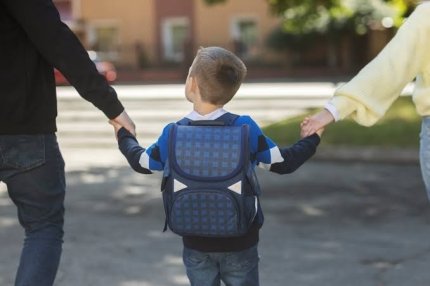
follow the route to school;
show me where the entrance is;
specify the start time of lessons;
find a class;
find out where the dining room and toilet are;
check the schedule;
Discuss who will meet the child after school.
For a small child, even such everyday details can significantly reduce stress.
5. Don't start the school year with a maximum workload
After the summer, parents sometimes want to quickly return everything at once:
school;
tutors;
English;
sport;
music;
mugs;
additional classes.
As a result, the first week of September may be busier than the middle of the school year.
It is better to give the child time to adapt.
After school, especially younger students may need an hour without academic demands: to eat, take a walk, play, or just stay home.
If a circle doesn't have a hard start date, sometimes it's smart to bring it back a little later.
6. After school, ask about more than just grades
The question "What did I get?" very quickly turns the entire school day into a single number.
Try alternating it with others:
What was the most interesting thing today?
Who were you sitting with?
What was funny?
Which lesson went by the fastest?
What was difficult today?
Who helped you?
Did something unpleasant happen?
What would you like to change tomorrow?
This way, the child sees that school is a broader experience than just grading.
It also helps parents spot social difficulties earlier.
7. Normalize mistakes at the start of the school year
After the holidays, the child may forget some of the material.
This does not mean that she "became worse at studying."
The first tests, oral answers, or difficult homework assignments may reveal gaps.
It is important not to turn every mistake into a description of abilities:
"You're completely lazy."
"I forgot everything over the summer."
"You won't get far like that."
It's more constructive to talk about a specific skill:
"There's a rule forgotten here. Let's see what exactly needs to be repeated."
This approach helps the child perceive the mistake as information about what still needs to be learned.
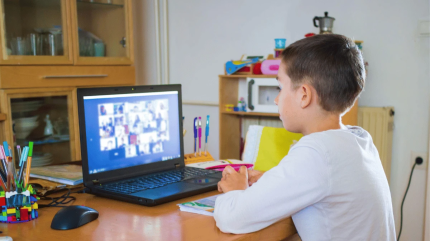
8. Organize a simple place for homework
After the summer, the brain has to get used to prolonged concentration again.
An environment with a minimum of unnecessary stimuli helps.
You don't need a perfect design studio.
Enough:
a comfortable table;
normal lighting;
the necessary equipment nearby;
minimum external noise;
a phone that is not constantly in front of your eyes.
For younger students, checklists can help:
Check your homework.
Prepare the books.
Complete one task.
Take a short break.
Go to the next one.
This way, the big abstract task of "doing homework" is broken down into several smaller steps.
Do I need to sit next to my child during lessons?
Depends on age and self-organization skills.
A first grader may need significantly more help.
It is important to gradually transfer responsibility to an older child.
A useful role for parents is to help organize the process, not to carry out the tasks.
If the child says:
"I don't understand the task,"
you can first ask:
"What step have you already taken?"
"What exactly is unclear?"
"Where in the textbook is there a similar example?"
This way, parents help find a way to the answer, rather than just naming it.
9. Leave movement in your daily schedule
Returning to school often dramatically increases the amount of sitting.
The child sits in class, then on the way home, after that on homework and in front of the screen in the evening.
Physical activity is necessary for overall health and helps reduce stress.
This could be:
sport;
bicycle;
walk;
active game;
dancing;
walk to school if the route is safe.
Not every activity has to be a session with a trainer.
For a younger child, regular play on the playground is also important.
10. Bring back the rules of using gadgets
Summer screen time is often much freer.
If a child watches videos or plays for hours in the evening and then cannot fall asleep, morning adaptation will be more difficult.
Instead of suddenly banning all gadgets, it's better to agree on clear rules.
For example:
homework without a phone nearby;
no work class chats at night;
gadgets don't sleep in bed;
a certain time before bedtime - quieter activities;
family dinner without screens.
Rules work best when they are predictable and apply to adults too.
If a parent is constantly responding to messages during dinner, asking a child to put down their smartphone looks less convincing.
11. Help restore social connections
For many children, the main stress before September is not related to lessons, but to classmates.
If your child is shy or has had little interaction with the class over the summer, you can arrange simple contact in advance.
For example:
a walk with one classmate;
a joint trip to school;
a short meeting;
correspondence with a friend.
One familiar face on the morning of the first day can significantly reduce the feeling of uncertainty.
An important factor in the psychological well-being of schoolchildren is a sense of belonging: that there are adults and peers at school who care about them.
If your child has transferred to a new school
Don't demand that she "make friends right away."
The first stage is simply to navigate the new environment.
It is normal if the child initially:
speaks little;
observes;
keeps close to one acquaintance;
doesn't want to go to class activities right away.
The task of parents is to maintain opportunities for contact, but not to turn socialization into another test.
12. In Ukrainian realities, talk about security separately
For Ukrainian schoolchildren, returning to school may be associated with additional sources of stress: air raids, shelter-in-place training, interrupted lessons, nighttime shelling, and distance learning.
Adaptation can be especially difficult for children who:
returned from abroad;
changed the city;
studied online for a long time;
lost their usual class;
experienced traumatic events.
Before learning, a child must understand the safety rules of their school.
Discuss:
where the class goes during an alarm;
who accompanies the children;
how to contact parents;
what to do if anxiety started on the road;
who takes the child;
What things should you bring with you?
At the same time, there is no need to play out worst-case scenarios in detail every day.
The goal of the conversation is to create a predictable algorithm: "If X happens, I know what to do."
After a night of prolonged anxiety, it is worth considering the child's real condition. Lack of sleep affects concentration, memory, and emotional stability.
13. Don't pass on your own anxiety to your child.
Parents are also worried about the new school year.
They may be worried about:
progress;
new teacher;
safety;
bullying;
upcoming exams;
morning logistics.
There is no need to hide all emotions.
But there is a difference between:
"I'm a little worried too, so I'll check all the details and we'll figure it out gradually."
and
"I already know this year is going to be terrible."
A child often focuses on the adult's reaction when assessing a new situation.
A calm, realistic parenting stance helps create a sense of control.
14. Don't try to fix everything in the first three days.
Adaptation has its own dynamics.
In the first weeks, the following may appear:
drowsiness;
irritability;
increased appetite;
desire to talk less;
faster fatigue;
complaints that "school is boring."
The mere fact of such reactions does not mean a psychological problem.
What matters is the duration, intensity, and how much the symptoms interfere with normal life.
Look at the trend.
After two or three weeks, does it get easier for the child or does it get more difficult?
Has she started to navigate the regime or is the situation getting worse every morning?
It is the dynamics that provide more information than one difficult Monday.
A simple 7-day school adjustment plan
If your studies are starting soon or the first few days have already been difficult, you can use a short plan.
Day 1: sleep
Determine the actual time to get up and, accordingly, the time when the child should fall asleep.
Day 2: morning
Think about the sequence of morning activities: getting up, washing, getting dressed, breakfast, going out.
Day 3: Logistics
Check your route, backpack, schedule, uniform, and required materials.
Day 4: conversation
Discuss what the child expects from school and what they are afraid of.
Day 5: social contact
Suggest contacting a friend or classmate.
Day 6: Learning space
Prepare a place for homework and a simple procedure for doing it.
Day 7: a quiet day
Don't fill the last day with extra lessons "to remember everything from the summer." It's better to leave time for exercise, a normal meal, and an early night's sleep.
When "I don't want to go to school" needs more attention
Sometimes it's just a simple reluctance to get up early.
And sometimes it's an important signal.
You should be especially careful if your child:
regularly cries before school;
complains of stomach or head pain every morning;
categorically refuses to leave the house;
has strong panic reactions;
stopped sleeping;
lost appetite sharply;
became isolated;
is afraid of a specific student or adult;
started skipping classes;
demonstrates a sharp decline in success;
speaks of humiliation or bullying.
Physical symptoms should first be assessed as real, and not automatically considered a "pre-school fantasy."
If there is no medical cause, recurring pain before school may be a manifestation of anxiety.
Why a child may refuse to go to school
School avoidance may be related to:
anxiety;
fear of failure;
perfectionism;
conflict with the teacher;
learning difficulties;
bullying;
fear of answering in front of the class;
problems with the toilet at school;
social anxiety;
experienced traumatic events.
Therefore, punishing for "laziness" without finding out the reason can worsen the situation.
If school refusal becomes regular, it is worth involving a class teacher, school psychologist, family doctor, or mental health specialist.
In difficult cases, returning to school can occur gradually according to an agreed plan.
When you need the help of a psychologist or doctor
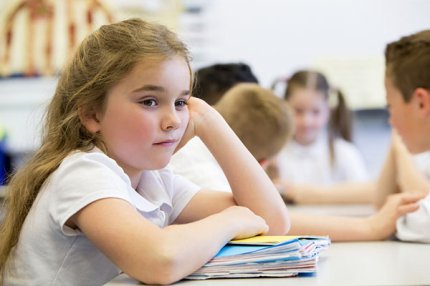
Professional consultation is advisable if anxiety:
strong;
lasts several weeks;
intensifies;
prevents the child from sleeping;
does not allow you to attend school;
significantly affects learning;
leads to social isolation;
accompanied by panic reactions.
Also, don't wait if your child talks about self-harm, not wanting to live, or feeling hopeless. In such a situation, urgent professional help and the constant presence of a responsible adult are needed.
What parents should not do
Don't be afraid of future consequences
“If you don’t study, you’ll never succeed” increases fear, but rarely improves the ability to learn.
Don't compare with other children
A classmate, older sister, or “mom’s friend’s son” has a different temperament and pace of adaptation.
Don't plan all of September minute by minute
After six or seven hours at school, a child needs time when nothing is demanded of them.
Don't make evaluations the center of family life
Academic results are important, but a bad grade is information about a specific task, not an assessment of a child's worth.
Don't ignore a sudden change in behavior
If a child who previously went to school normally suddenly flatly refuses to go there, the reason should be found out.
Conclusion
Psychological adaptation to school after the summer begins with the basics: enough sleep, a predictable morning, normal nutrition, exercise, and a clear schedule. It is equally important to give your child the opportunity to talk about anxiety, conflicts, learning difficulties, and fear of making mistakes without immediate criticism.
The first weeks of the school year shouldn't be a test of perfect discipline or peak performance. For most children, getting back into the swing of things takes time.
If the reluctance to go to school increases, persistent physical complaints, severe anxiety, sleep problems, social isolation, or sudden changes in behavior appear, it is important to look for the cause, and not expect the child to simply "get used to it."
Important: The material is for informational and educational purposes only and does not constitute medical or psychological advice, diagnosis, or treatment recommendations. Self-attributing anxiety, physical complaints, or sudden changes in a child's behavior to "not wanting to learn" alone can be harmful. If symptoms are severe, persistent, or interfere with daily life, be sure to consult a pediatrician, family doctor, or qualified mental health professional.
FAQ
How long does it take for a child to adapt to school after the summer?
There is no exact norm. Some children need a few days, others need a few weeks. It is important that it gets easier over time. If anxiety or school refusal increases, it is worth finding out the reason.
How to get your child back to a school sleep routine?
Move your bedtime and wake-up times gradually, by about 15–30 minutes. Try to maintain a consistent morning wake-up time and a calm evening ritual.
How much should a schoolchild sleep?
Children ages 6–12 are typically recommended to get 9–12 hours of sleep per night. Teenagers ages 13–18 need about 8–10 hours.
What to do if a child doesn't want to go to school?
First, find out the reason. It could be simple fatigue, but also conflict, bullying, fear of tests, learning difficulties, or anxiety. If the refusal is repeated, it is worth involving the school and a specialist.
Is it normal for a child to be very tired in September?
Yes, increased fatigue in the first few weeks may be part of adaptation. At the same time, it should gradually decrease. Prolonged or unusually severe fatigue requires attention.
Do I need to repeat the entire school curriculum before September 1?
Usually not. A brief review of familiar material can help, but intensive daily activities in the last days of vacation are not necessary. Sleep and a gradual return to a routine are often more important.
How to help a first-grader be less afraid of school?
Make school more predictable: show the route, the building, the classroom, explain the morning routine and who will pick up the child. Tell the child which adult they can contact if there is a problem.
What to do if a child cries before school?
First, help her calm down and figure out what exactly she's afraid of. If the crying is repeated every day, accompanied by physical symptoms, or leads to absences, it's best to discuss the situation with the school and a specialist.
How to understand that a child has school anxiety?
Constant worries about school, sleep problems, stomach or headache before classes, avoidance of classmates, frequent tears, and refusal to attend classes can be alarming. A single symptom does not establish a diagnosis - the overall picture and duration are important.
How should parents behave in the first weeks of school?
Maintain a predictable routine, be interested in your child's life beyond grades, don't overload them with clubs, monitor sleep and give them time to rest. If difficulties arise, it is better to solve them together with your child and the school, rather than wait until the problem becomes serious.
undefined

