

A child falls to the floor in a store because they didn't buy him a toy. A three-year-old screams when it's time to end the game. A schoolboy comes home upset and refuses to explain what happened. And a baby has been crying for half an hour, even though he was fed and changed. In such situations, parents often ask themselves one question: how to quickly calm a child if ordinary persuasion does not help?
The most important thing is to understand that children's crying, fear, irritation and tantrums require different ways of responding. A hungry baby will not be calmed by explanations. A two-year-old child during a strong emotional outburst is unlikely to accept a long conversation about the rules of behavior. And a schoolchild who has had a fight with a friend may not need entertainment, but an opportunity to talk things out.
Pediatricians and child psychologists emphasize that children gradually learn to manage their emotions through experience with adults. Therefore, the task of parents is not only to stop crying, but also to help the child feel safe, recognize their own experiences and find an acceptable way to express them.
Let's look at 12 practical techniques that can help calm a child of different ages, find out the causes of frequent tantrums, and explain when crying can indicate health problems.
Why does a child cry, scream or cannot calm down?
Crying is one of the first ways of communication available to humans.
A baby cannot explain in words that they are hungry, in pain, or need closeness. Therefore, they communicate their discomfort by crying.
As a child grows, they learn to speak, understand feelings, and gradually regulate their behavior. However, these skills are not developed overnight.
According to the UK's National Health Service (NHS), emotional outbursts often begin around 18 months of age and usually become less common after four years.
This is due, in particular, to the fact that young children already have their own desires, but are not always able to explain them or cope with disappointment.

The most common reasons for baby crying
Among them:
physical discomfort, pain, or illness;
hunger, thirst or fatigue;
fear, anxiety, or fright;
disappointment due to the inability to get what you want;
sensory overload due to noise, bright lights, or large crowds;
difficulty expressing one's own needs;
changes in routine;
conflicts with parents or peers;
the need for attention and emotional support.
It is important to consider age and circumstances.
For example, if a child suddenly starts crying profusely after a fall, the first thing to do is assess the possible injury, rather than looking for a psychological way to calm down.
How to calm a child: the main rule of three steps
The American Academy of Pediatrics (AAP) recommends a sequential approach to helping a child through times of severe stress.
First, the adult helps reduce tension, then establishes emotional contact, and only then proceeds to explanations.
Practically it looks like this:
Help them feel safe. Remove dangerous objects, reduce noise, stay close.
Show that you understand the experience. Name the emotion, offer support.
Discuss the situation after calming down. Explain the rules, listen to the child, and find a solution together.
This sequence is especially important during strong emotional outbursts.
When a child cries and screams, long explanations often do not produce the desired result.
However, after the tension is reduced, she can perceive the words of an adult much better.

12 ways to calm a child without yelling or punishment
1. Check the physical needs first
Sometimes the best way to calm a child has nothing to do with psychological techniques.
For example, a baby may cry because of a wet diaper, uncomfortable clothes, hunger, or overwork.
Preschoolers also often react more sharply to unpleasant situations when they haven't had enough sleep or haven't eaten in a while.
Try to estimate when the child last slept, ate, and rested.
If she complains of pain, has a fever, or other symptoms of illness, a possible medical cause should be considered.
You should not explain any unusual behavior with character or an age crisis.
2. Calm your own voice and behavior
When a child screams, an adult can also feel very irritated.
Especially if the situation occurs in a public place or is repeated many times during the day.
However, shouting back often increases tension.
The AAP recommends using a calm voice, an open posture, a gentle facial expression, and giving your child your full attention without being distracted by the phone.
For example, instead of "How much can you scream?" you could say:
"I can see that you are having a very difficult time right now. I am here for you."
There is no need to demand absolute calm from yourself under any circumstances.
But if you feel like you might lose control, it's important to prioritize your child's safety and, if possible, ask another adult for help.

3. Offer intimacy, but don't force a hug.
Physical contact can be a nice way to show support.
Some children find hugs, the opportunity to sit on their parents' hands, or holding their parents' hands helpful.
However, not all children want to be touched when they are very upset.
For example, a three-year-old may push away an adult, although he usually likes to be hugged.
In such a situation, there is no need to forcefully press him against you.
You can offer:
"Do you want me to hug you, or would it be better if I just sat next to you?"
If the child does not respond, stay at a safe distance and observe their reaction.
Forced restraint should not be used as a routine method of sedation.
4. Name the emotion in simple words
A young child may feel strong anger or frustration but not yet be able to describe them.
Therefore, an adult can help name the experiences.
For example:
"You're upset because we're already leaving the site."
"You're scared because of the loud noise."
"You're angry because the cube tower broke."
There's no need to insist that you know exactly why you're feeling something.
If the child denies it, it is better to clarify what exactly happened.
The American Academy of Pediatrics recommends helping children recognize and name emotions as part of developing self-regulation skills.
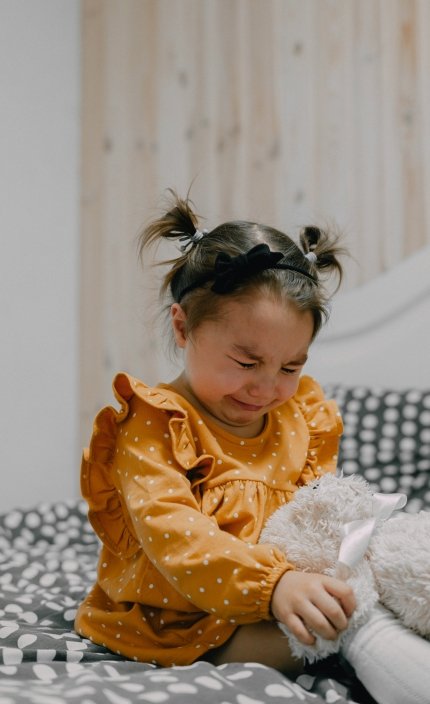
5. Reduce the number of irritants
Sometimes a child cries not because of a specific prohibition, but because of overload.
Imagine a family holiday: loud music, lots of strangers, bright lighting, and constant attempts by adults to hug a baby.
Even a pleasant event can be too intense.
If your child starts to get nervous, try moving to a quieter place, reducing the number of simultaneous calls, and giving them a chance to rest.
This may be especially important for children who are sensitive to certain sounds, lights, or touches.
However, sensory sensitivity alone does not allow for a specific diagnosis.
6. Offer a simple choice
Children between the ages of about one and three often want to have their own say in everyday situations.
But their capabilities are still limited.
Therefore, a small choice sometimes helps reduce conflict.
For example:
"We're going home now. Do you want to carry the small backpack or hold my hand?"
Or:
"It's time to get dressed. Should we put on a sweater or socks first?"
The U.S. Centers for Disease Control and Prevention (CDC) recommends offering young children simple choices that are appropriate for their age.
It is important to offer only those options that are truly acceptable.
If you have already decided to leave a dangerous place, there is no need to ask if the child wants to leave when it is impossible to stay.

7. Switch attention if the child is not too upset yet
For young children, changing activities sometimes helps prevent an emotional outburst.
For example, a toddler starts to get annoyed because of a broken toy.
You can suggest another way to play or show a safe object that arouses interest.
The CDC considers attention switching as one way to respond to some challenging situations at an early age.
However, it is important to consider the moment.
When a child is already crying a lot, trying to entertain them at all costs may not help.
Also, you don't always need to distract your child from fear, sadness, or resentment. Sometimes it's important for them to get support first.
8. Use play to express feelings
It is sometimes easier for preschoolers to talk about a difficult situation through toys than in a direct conversation.
For example, after a conflict in kindergarten, you can invite the child to act out a story with figures.
Let her determine what the characters do.
There is no need to use the game for covert interrogation or to impose a desired answer.
You can only ask carefully:
"How do you think this character is feeling right now?"
Such activities can help a child express their experiences in a form that is accessible to them.
If the game constantly repeats frightening scenes after a traumatic event, it is worth discussing this with a specialist.

9. Try a simple breathing exercise with your older child
For preschoolers and schoolchildren, short exercises for calm breathing are sometimes suitable.
For example, you can suggest that the child imagines that a hot drink is slowly cooling down.
Let her take a normal, comfortable breath and exhale gently.
Repeat several times without rushing.
There is no need to require the deepest possible breaths or hold your breath through force.
It is better to first learn breathing practices in a calm state, rather than for the first time during a severe tantrum.
If the exercise causes dizziness, discomfort, or increases fear, it should be stopped.
10. Give your child a safe time to calm down
Not all children want to talk immediately after an unpleasant event.
For example, a schoolchild may return home after a conflict with friends and ask to be left alone.
If the child is safe, you can respect their need for a break.
Say:
"I can see you're upset. I can talk to you now or a little later when you're ready."
For young children, it is important to stay close, even if they do not want active contact.
The CDC recommends creating a safe space for toddlers where they can gradually calm down, knowing that an adult is available for help.
Isolation should not be used as a punishment for the mere fact of crying.

11. Set boundaries even during strong emotions
Supporting a child does not mean fulfilling their every wish.
For example, a toddler may become very angry when he is not allowed to play with a sharp object.
In such a situation, the safety rule remains in effect.
You can say:
"You really want to take the knife, and you're sorry I won't let you. But it's dangerous. I'll put it away."
It is important to separate emotion and behavior.
It's okay to get angry. It's not okay to hit other people or hurt yourself.
The AAP recommends teaching children acceptable ways to express anger without physical punishment, humiliation, and intimidation.
12. Return to the situation after the child has calmed down.
It is difficult to teach new rules during a severe tantrum.
Instead, after the emotional tension has subsided, you can discuss what happened.
For example:
"You were upset when the game ended. Next time I'll warn you in advance so it's easier to finish."
Or:
"You're angry with your brother. You can be angry, but you can't hit him. Let's think of another way to show that you don't like him."
For young children, the conversation should be short.
Older people can be gradually involved in finding their own ways to calm down.

How to calm a newborn if he is constantly crying
A baby's crying requires a special approach.
Unlike older children, a newborn cannot consciously explain a need, change behavior upon request, or independently cope with severe discomfort.
According to NHS recommendations, you should first check the most common causes of crying: hunger, wet nappy, environmental temperature, fatigue and possible malaise.
What can you try?
If the child has no signs of illness, sometimes the following help:
feeding according to her needs;
holding or skin-to-skin contact in safe conditions;
calm rocking with proper head support;
a soft voice or lullaby;
reduction of bright light and noise;
checking the comfort of clothing and diaper.
All this should be done taking into account the age and safety of the baby.
You should not shake your baby vigorously, throw him up abruptly, or use dangerous methods of rocking him to sleep.
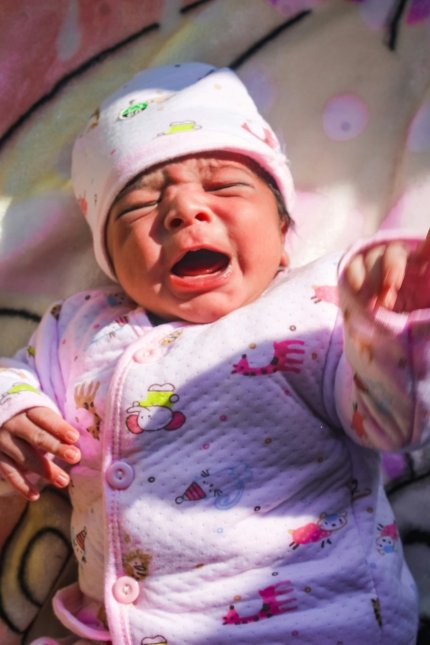
Does white noise help babies?
Monotonous sounds can be calming for some children.
However, white noise devices should be used with caution.
The sound should not be loud, and the noise source should be placed away from the child's head and sleeping area.
Do not leave the device running at high volume all night.
White noise is not a mandatory element of care and does not replace checking the baby's physical needs.
To sleep, a baby of the first year of life should be placed on his back, on a flat, hard surface, without pillows, loose blankets, and soft toys in the crib.
If the baby does not calm down
In the first months of life, periods of prolonged crying are possible, particularly in the evening.
But you shouldn't automatically consider any continuous crying to be colic.
If a child is crying unusually, not eating well, has a fever, or has other symptoms, a doctor's consultation is necessary.
It is especially important to remember: a temperature of 38 °C or higher in an infant under three months of age requires immediate medical evaluation.

How to calm a child during a tantrum at 1–3 years old
At an early age, strong emotional reactions can arise due to a desire for independence.
A child wants to open the door, get dressed, or choose a toy on their own, but they don't always have enough skills to do so.
Failure or prohibition causes disappointment.
The CDC notes that tantrums are common around 18 months of age and usually become shorter and less frequent as children get older.
What to do when a two-year-old child has a tantrum
First and foremost, ensure physical safety.
If your child is throwing objects, remove the dangerous items.
If she tries to run out into the road, stop her immediately.
After that, speak briefly and calmly.
For example:
"You're upset. I'm here. We can't stay here, but I'll help you."
There is no need to demand an immediate apology or detailed explanations.
When the child begins to calm down, you can offer water, rest, or another appropriate activity.
Can you ignore a tantrum?
The CDC guidelines do describe a method for reducing attention to individual minor forms of unwanted behavior that are supported by adult attention.
However, it cannot be applied to dangerous behavior or situations where a child is in distress and needs help.
Fear, pain, need for support, or possible malaise should not be ignored.
Even if you don't change the established rule, the child should remain safe and have the opportunity to seek help.

How to calm a child aged 3–6 when he is angry or offended
Preschoolers gradually gain a better understanding of their own feelings, but they can still react very emotionally.
For example, a child cries because he lost a board game.
In such a situation, it is not necessary to immediately offer her victory.
You can say:
"You're upset because you wanted to win. I understand. Losing can really be unpleasant."
After that, you can discuss whether the child wants to try again.
Teach calming techniques through play
In quiet times, you can come up with several options together:
ask an adult for help;
to pause;
breathe calmly;
sit in a comfortable place;
draw your mood;
explain in words what exactly upset you.
There is no need to demand that all methods work the same.
It is better to gradually find those that are suitable for a particular child.

How to calm a student after a quarrel or failure
At school age, the causes of sadness become more complex.
A child may be worried about grades, conflicts with friends, fear of making mistakes, or a sense of injustice.
In such situations, simply switching attention is not always the best solution.
First, you should listen to the child.
For example, she came back from school and said she didn't want to go there anymore.
Instead of "Don't make up your mind, it will all be over tomorrow," it's more useful to ask:
"What happened today?"
"Do you want to tell me now or after the break?"
"What was the hardest thing for you?"
When it comes to harassment, threats, or violence, soothing words alone are not enough.
It is necessary to help the child and take measures to protect him.
How to help a teenager who is crying, angry or refusing to talk
Adolescents often react acutely to peer evaluation, family conflicts, and issues of independence.
At the same time, they may not want to immediately share personal experiences.
It is important to respect this need but remain available for support.
For example:
"I can see that something unpleasant has happened. I won't force you to tell me now, but I'm ready to listen whenever you want."
Don't automatically attribute every outburst of anger to hormones or age.
Sometimes a teenager is experiencing a real problem that adults haven't yet noticed.
If mood swings become prolonged, social isolation, severe anxiety, or loss of interest in usual activities occurs, you need to pay attention to his psychological state.

How to quickly calm a child in a public place
A tantrum in the supermarket or on public transport can be particularly difficult for parents because of the presence of other people.
Sometimes adults begin to respond not to the child's needs, but to the views of others.
However, the main goal is safety and support, not an immediate cessation of crying for the sake of outsiders.
Example: a child is screaming in a store
Let's say a two-year-old child is upset because they didn't buy him the thing he wanted.
You can do this:
Make sure the child cannot get injured.
Calmly inform them that you are not planning to make a purchase right now.
Don't start a long argument.
If possible, move to a quieter place.
Stay close and give your child time to calm down.
Return to normal activities when possible.
There is no need to shame the child with the words "Everyone is looking at you."
Also, don't promise sweets or gifts after every tantrum just to stop crying.
This may inadvertently reinforce certain ways of getting what you want.
At the same time, if a child is truly hungry, they should be fed, not denied food due to behavior.
What not to do when a child cries or screams
Some habitual adult reactions can increase stress or create risks for the child.
| Common mistake | Why it can be harmful | What is better to do? |
| Shout back | Increases conflict and fear | Speak briefly and calmly. |
| To mock tears | Can cause shame | Acknowledge the child's feelings |
| Forced hugging | May increase discomfort | Ask if contact is needed |
| Giving sweets after every tantrum | May form an unwanted behavioral habit | Respond to real needs and maintain boundaries |
| Turn on a cartoon every time you feel sad. | It doesn't always help to control emotions | Offer different ways to calm down |
| Punish for crying | Does not eliminate the causes of anxiety | Separate emotions from unacceptable behavior |
| Leaving a child in danger | Creates a risk of injury | Ensure safety first |
It is also important not to use tickling against the child's will, forceful restraint without necessity, or physical punishment.
Laughing while being tickled does not always mean that the baby is enjoying it.
Her request to stop physical contact should be respected.
How to prevent frequent child tantrums
It is impossible to completely avoid strong emotions.
But you can reduce the number of situations in which it is too difficult for a child to cope with their needs.
Stick to a relatively predictable routine
According to recommendations from the World Health Organization (WHO), children aged 1–2 years usually need 11–14 hours of sleep per day, including daytime sleep.
For children 3–4 years old, the recommended duration is 10–13 hours.
These values are age guidelines, not individual recommendations.
Insufficient sleep can increase irritability.
Therefore, it is worth considering fatigue when planning long trips, shopping trips, or other busy events.
Warn about changes
Young children sometimes find it difficult to suddenly end an interesting activity.
For example, when an adult turns off the game without warning and demands to get dressed immediately.
It is useful to explain in advance what will happen next.
You could say, "We'll play a little more, and then we'll go have dinner."
For children who have difficulty navigating time, simple visual cues or repetitive rituals of transition can help.
The CDC notes that predictable rules and sequences of actions help children understand adults' expectations.
Pay attention to calm behavior
Sometimes parents only react actively when a child screams or breaks the rules.
Instead, positive actions go almost unnoticed.
Try to pay attention to specific moments of cooperation.
For example:
"Thank you for waiting until I finished talking."
"You asked for help yourself when you couldn't open the box."
The CDC recommends specific positive attention as one way to support desired behaviors.
This does not mean that a child should be constantly praised for every little thing.
It is more important that she receives warm contact not only during conflicts.
How to help your child calm down during air anxiety
For Ukrainian children, the cause of intense crying or fear can be sirens, explosions, moving, and worries about loved ones.
In such situations, the first thing to do is to distinguish between real danger and the emotional reaction to it.
If an air raid alert is issued, you must follow safety rules and head for shelter.
Psychological exercises are not a substitute for physical protection.
Once you have moved to a safe location, you can use available support methods.
For example, speak softly, invite the child to sit next to you, or take a familiar toy.
UNICEF Ukraine recommends that adults provide children with truthful explanations appropriate to their age, maintain contact, and, as much as possible, maintain a normal daily routine.
What to say to a child who is afraid of explosions
There is no need to promise that there will never be dangerous events again.
It's better to explain what you're doing to protect her.
For example:
"I hear you're scared. We're in a safer place now and we're following the rules. I'm here."
After the danger is over, you can invite the child to tell you what they felt.
But there is no need to force her to recreate traumatic events in detail.
If fear, nightmares, or other symptoms persist and affect your life, it is worth seeking professional help.
How to understand that a baby's crying requires medical attention
Not every cry is a manifestation of emotional frustration.
Sometimes it can indicate pain, infection, injury, or another condition that requires medical evaluation.
You need to be especially careful with babies who cannot yet explain their feelings.
When you need to see a doctor urgently
A medical evaluation is necessary if:
an infant younger than three months has a temperature of 38°C or higher;
the child cries unusually, continuously, or cannot be comforted;
signs of dehydration or refusal to drink appeared;
there is severe pain, repeated vomiting, or other symptoms of malaise;
the child was injured;
you have noticed a sudden change in behavior that cannot be explained by normal circumstances.
Emergency care is needed for difficulty breathing, seizures, loss of consciousness, severe lethargy, bluish skin, or other signs of a life-threatening condition.
In Ukraine you can call 103 or 112 .
There is no need to wait for the child to calm down if there are signs of a dangerous illness.
When frequent tantrums may be a reason to consult a psychologist
At an early age, emotional outbursts are common.
However, their frequency, intensity, and duration can vary significantly.
If a child regularly harms themselves or others, their reactions become increasingly severe, or significantly interfere with their attendance at kindergarten, school, and daily life, it is worth consulting a specialist.
A sudden change in behavior or loss of previously formed skills requires special attention.
You should not independently explain frequent tantrums as autism, attention deficit hyperactivity disorder, or other conditions.
Developmental and behavioral assessments should consider age, speech, sensory, health, and family circumstances.
You can start by consulting a pediatrician, who, if necessary, will refer you to a child psychologist or other appropriate specialist.
What should parents do if they themselves can no longer stand their child's crying?
Prolonged crying, lack of sleep, and the constant need to respond can be very exhausting for adults.
In such a situation, it is important not to ignore your own condition.
If you feel like you might yell, hit, or otherwise behave dangerously toward your child, stop immediately.
The baby can be placed on its back in a safe, empty crib and left for a few minutes to regain self-control. Return to check on the baby and, if possible, ask another adult to help.
An older child should also be left in a safe environment appropriate to their age.
Never shake a baby. Shaking your baby violently can cause severe brain damage and be life-threatening.
If exhaustion becomes persistent or you fear harming your child, it is important to immediately seek help from loved ones or appropriate professionals.
Conclusion
A baby's crying doesn't always need to be stopped as quickly as possible.
Sometimes it signals a physical need, sometimes it signals fear, frustration, or difficulty coping with emotions.
To help a child, it is important to consider their age, health status, and specific circumstances.
A baby needs first and foremost care and physical comfort. A toddler during a tantrum needs safety, clear boundaries, and the presence of an adult. An older child needs the opportunity to express themselves and gradually learn to regulate their experiences on their own.
A calm voice, acceptance of feelings, predictable rules, and consistent behavior from parents can help in many situations.
The goal is not for the child to never cry, but for them to gradually learn to cope with difficult emotions and know that they can count on the support of adults.
FAQ: Frequently Asked Questions About Baby Crying and Tantrums
How to quickly calm a child who is crying a lot?
First, check her safety and physical condition. Try to speak calmly, reduce stimuli, and offer support. For a young child, closeness or a simple distraction may be helpful. If the crying is unusual or accompanied by symptoms of illness, seek medical attention.
How to calm a 2-year-old child during a tantrum?
Provide a safe environment, stay close, and don't try to explain complex rules when your child is in a high mood. Speak in short sentences. As your child begins to calm down, help them identify their feelings and gradually return to normal activities.
What to do if a child screams and doesn't listen to anyone?
There's no need to yell at her. First, ensure safety, reduce the amount of stimuli, and give her time to calm down. It's best to explain the rules and discuss consequences after the intensity of emotions has subsided.
How to calm a newborn who won't stop crying?
Check feeding, diaper, ambient temperature, and any signs of discomfort. You can try holding your baby calmly, talking softly, or rocking him gently with his head supported. If the crying is unusual, prolonged, or accompanied by symptoms of illness, contact your doctor.
Is it normal for a child to throw tantrums often between the ages of 1 and 3?
Yes, emotional outbursts are common at an early age, when a child is actively developing speech and independence. But very intense, dangerous, or persistent manifestations that disrupt daily life should be discussed with a pediatrician.
Should you hug a child when they cry?
Hugs can help if the child wants them. However, there is no need to forcefully hold the child if they are pushing the adult away. You can stay close and offer support without physical contact.
Can I give sweets to stop a tantrum?
Don't make sweets a permanent way to stop crying. This can reinforce unwanted behavioral habits. At the same time, if a child is hungry, you should meet their nutritional needs according to their age, and not use food as a reward or punishment.
How to calm a child before bedtime?
A relatively predictable routine, quiet activities, comfortable surroundings, and reduced overstimulation help. If your baby is crying because of pain, fear, or other reasons, it's important to first figure them out. For infants, be sure to follow safe sleep guidelines.
What should you not say to a child when they are crying?
It is better to avoid derogatory statements such as “You are acting like a child,” “Stop it now,” or “Your problems are nonsense.” It is more useful to name the child’s experiences and explain the rules without insults or intimidation.
When do children's tantrums require the help of a psychologist?
If emotional outbursts regularly lead to injuries, become very intense, are accompanied by a sudden change in behavior, or significantly interfere with learning and daily life, professional advice is needed. It is worth consulting a pediatrician first to rule out possible medical causes.
Important: the material is for informational purposes only and does not replace the advice of a pediatrician, child psychologist, psychotherapist or other medical professional. Self-medication and the independent use of sedatives for children can be harmful to health. If a child has persistent behavioral changes, unusual or continuous crying, symptoms of illness or developmental difficulties, be sure to consult a doctor. If there are signs of a dangerous condition, urgent medical attention is required.

