
It's easy to find a car wash in Dnipro, but it's harder to understand where they'll actually wash your car safely and where they'll just quickly cover it with foam. For one driver, an express wash after the rain is enough, while another needs dry cleaning of the interior, car polishing, or ceramic coating. The difference is not only in price, but also in technology, chemistry, inventory, and service responsibility.
Points of attention
- The difference between a regular car wash, a comprehensive car wash, and detailing lies in the technology and scope of work.
- It is important to choose a service with attention to the correct sequence of car washing and the use of appropriate chemicals.
- Before losing the reliability of the paintwork, it is important to know about the safety of the car wash.
Below is a practical checklist that will help you choose a Dnipro car wash or Dnipro detailing service without unnecessary expectations and typical mistakes.
Car wash, complex or detailing: what's the difference?
A regular car wash is a basic cleaning of the body, floor mats, sometimes sills, and a quick interior clean. It is suitable for regular maintenance when there is no complex dirt, stains, deep scratches, or a need to restore shine.
A comprehensive car wash usually includes more stages: exterior washing, vacuuming, cleaning glass, plastic, wheels, and trunk. But the composition of the "complex" may vary in different services, so before booking, it is worth clarifying what exactly is included in the price.
Car detailing in Dnipro is a deeper and slower care. It may include:
delicate multi-stage washing;
cleaning the body from bitumen, metal inclusions, resin;
car polishing Dnipro;
applying wax, sealant or ceramic coating to the car;
anti-rain for glass;
dry cleaning of the Dnipro salon;
care for leather, plastic, wheels, and engine compartment.
If you just need to wash off the dust, a quality wash is enough. If the car is being prepared for sale, after winter, after a long downtime, or has lost its shine, it is more advisable to consider detailing.
Where does a safe car wash begin?
Safe car washing is not about “more foam,” but about the correct sequence. The main risk to the paintwork is when dirt, sand, and dust are rubbed onto the body with a sponge or rag.
Signs of a normal process:
first, the body is thoroughly washed with water under pressure;
active foam or preliminary composition is not kept longer than recommended by the chemical manufacturer;
separate equipment is used for disks, arches and body;
microfiber is clean, free of sand and old dirt;
the body is dried with soft towels or air, not with dirty suede;
Dark cars do not rub "dry" after incomplete washing of dirt.
It's good if the service can explain exactly how they wash the car: contactless, manual, in two stages, or with additional cleaning. If the answer boils down to "don't worry, everything will be fine," that's not always a bad thing, but for an expensive or well-maintained car, it's better to get specifics.
Auto chemistry: what to ask before the procedure
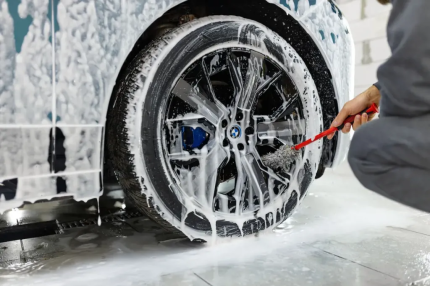
Car wash chemicals should match the material and type of contamination. Wheel cleaner is not always safe for chrome parts. Aggressive bodywork may be unnecessary for regular washing. And improper dilution of the concentrate sometimes damages plastic, rubber, decorative trim or already applied protective coating.
Before doing complex work, you should ask:
what products are used for the body, wheels, glass, interior;
is the chemistry suitable for matte, chrome, lacquered or glossy elements;
whether the presence of ceramics, wax or film is taken into account;
are there separate products for leather, fabric, Alcantara, plastic;
how does the service remove the smell after dry cleaning;
Do they provide ventilation and complete drying of the interior?
It is not necessary to demand a chemistry lecture from the technician. But a quality service can usually calmly explain the logic: what is being cleaned, why this particular product, and what are the limitations.
Protective coatings: wax, ceramic, anti-rain and film
Car protective coating should be chosen based on the purpose, not the loud name.
Wax and sealants
Wax or synthetic sealant can add shine, make cleaning easier, and temporarily improve water repellency. It's a good option for regular maintenance, but it doesn't make the bodywork immune to scratches or chips.
Ceramic coating for cars
Ceramics can increase hydrophobicity, make maintenance easier, and add shine. But the result depends heavily on the body preparation: cleaning, degreasing, and sometimes polishing. Applying ceramics to dirty or scratched LFP is a dubious idea, as the coating only “preserves” some of the defects.
It is important to clarify:
what stage of preparation is included in the service;
Is polishing required before application?
what are the care conditions after application;
What exactly does "warranty" mean and what cases does it cover?
Anti-rain
Car windshield washer fluid is applied to the windshield to help water run off more easily while driving. It can improve visibility under certain conditions, but it is no substitute for good windshield wipers, clean windshields, and driver attention.
Protective film
PPF film is usually used for areas that suffer more from chips: hood, bumper, headlights, mirrors, sills. This is a more complex and expensive job, for which a clean room, the experience of the craftsman and high-quality installation are especially important.
Polishing and restoring LFP: when appropriate and when not
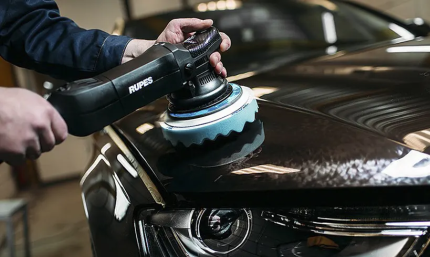
Polishing a car Dnipro is often sought when the body has lost its shine, "spider webs", light scratches or holograms have appeared. But polishing is not a cosmetic procedure without consequences. It involves mechanical processing of the varnish, so it must be performed carefully.
Reliable detailing before polishing usually assesses:
condition of the paintwork;
depth of defects;
previous repairs or painting;
owner's expectations;
risks for delicate or problem areas.
Be wary if a service promises to “remove all scratches” without inspecting the car. Deep damage that has reached the base layer or soil cannot be completely removed by polishing. In such cases, other repair methods are required.
Dry cleaning of the interior: how to assess quality and safety
Dry cleaning of the Dnipro interior is necessary after stains, odors, transporting animals, long-term use of the car, or before selling. But the interior is not only fabric. There are electronics, seams, adhesive joints, heaters, decorative inserts, touch screens.
Before dry cleaning, it is worth clarifying:
Do they do a preliminary inspection of the salon?
which materials are cleaned wet and which are cleaned delicately;
how electronics and buttons are protected;
how long does it take to dry;
Is there a pungent odor after the procedure?
Do they warn about stains that may not disappear completely?
High-quality dry cleaning is not about wet seats and a strong fragrance. After work, the interior should be clean, dry, without stickiness, strong odors, and stains. If the car is picked up too quickly after a deep wet cleaning, there is a risk of residual moisture.
Prices in Dnipro: how to compare offers without mistakes
Prices for car detailing and car washing in Dnipro can vary significantly. This is normal if the scope of work, condition of the car, class of materials, experience of the craftsmen, time of completion, and conditions of the premises vary.
The cost is usually affected by:
car size: hatchback, sedan, crossover, SUV, minivan;
degree of contamination of the body and interior;
the presence of bitumen, resin, metal inclusions;
the need for polishing or local restoration;
type of protective coating;
condition of leather, fabric, plastic;
urgency of the work;
Are additional services included in the package?
It's worth comparing not only the final amount, but also the service. "Comprehensive" in one place may mean a basic car wash and vacuum cleaner, and in another - detailed cleaning of the interior, windows, sills, rims, and trunk.
A useful question: “What exactly is included in this price, and what is paid separately?”
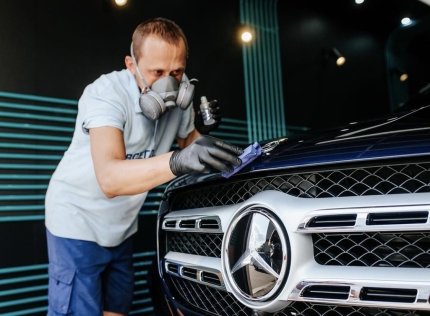
How to read reviews about car washes and detailing
The query "reviews of car wash Dnipro" can provide a lot of information, but the rating itself does not guarantee quality. It is important to look at the content.
Pay attention to:
before/after photos, if they look realistic;
recurring complaints: scratches, stains, lateness, odor, surcharges;
service responses to negative reviews;
Does the business acknowledge mistakes and offer solutions?
freshness of reviews;
Reviews about the service you need, not just the coffee and the waiting area.
One negative review doesn't always mean bad service. But if many customers write about the same problem, it's a reason to ask more questions or choose another place.
Pre-recording checklist
Before you leave your car for washing, polishing, dry cleaning, or protective coating, ask a few specific questions.
What to ask the service
What stages are included in the service?
How long will the work take?
What chemicals are used for the body, wheels, glass and interior?
Is the procedure safe for an already applied coating or film?
Are cars inspected before work begins?
Do they warn about defects that cannot be completely removed?
How do you dry the interior after dry cleaning?
What is included in the price and what may be an additional charge?
Is it possible to get photos of the result or intermediate stages for complex works?
What should a car owner do?
Take photos of the body, wheels, interior, and problem areas before work.
Remove personal belongings from the passenger compartment and trunk.
Warn about non-standard materials, film, painted elements, and weak fasteners.
Agree on the final price or the procedure for changing it.
After work, inspect the car in normal lighting.
This is not a manifestation of distrust, but a normal practice for services where the result depends on the condition of the car.
Typical mistakes of car owners
The most common mistake is choosing only the lowest price. A cheap car wash may be fine for quick routine maintenance, but complex jobs require time, materials, and expertise.
Other errors:
order polishing without a LFP inspection;
expect ceramics to remove scratches;
wash a hot body with aggressive chemicals in direct sunlight;
agree to dry cleaning without normal drying;
not specifying what is included in the "complex";
trust only beautiful photos on social networks;
do not check the car after the work is completed;
Do not inform the master about previous painting, film, or non-standard materials.
A good service is not always the most expensive. But it should explain the process, warn about limitations, and not promise the impossible.
FAQ
How is detailing different from a regular car wash?
A car wash mainly removes visible dirt. Detailing works more deeply on the body, interior, LFP, protective coatings, wheels, glass, and parts. It takes more time and requires more precise technology.
Does a new car need ceramics?
It may be appropriate if you want to make maintenance easier and maintain the shine longer. But even a new car should be inspected before applying: it may have transport dirt, minor defects, or traces of improper pre-sale preparation.
How often should you wash your car in Dnipro?
It depends on the season, parking conditions and operation. After winter reagents, heavy dust, bird droppings, tar or bitumen, it is better not to delay cleaning. The regularity should be such that dirt does not accumulate in layers.
Is touchless washing harmful?
Touchless washing itself is not necessarily harmful. The risks increase if too aggressive chemicals are used, the wrong concentration, a hot body, or the exposure time of the composition is violated.
How to understand that the dry cleaning of the interior has been done with high quality?
The interior should be clean, dry, free of stickiness, streaks, and strong odors. After quality work, materials should not look overdried or damaged, and electronics should work properly.
Why do detailing prices vary so much?
Due to the different scope of work, condition of the car, materials, experience of the craftsmen, execution time, equipment and level of surface preparation. You need to compare not the name of the service, but its actual composition.
Can you trust car wash reviews?
Yes, but it's critical. Look not only at the rating, but also at recurring topics, photos, the freshness of comments, and the service's response to complaints. Reviews about the service you're planning to order are especially important.
What to ask before polishing?
Ask if there will be a LFP inspection, what defects can realistically be removed, whether control lighting is used, how many polishing stages are planned, and whether there are risks for thin or repainted areas.
Conclusion
When choosing a car wash or detailing service in Dnipro, you shouldn't focus only on foam, beautiful photos, and the lowest price. Reliable service is evident from a transparent description of services, a careful inspection of the car, adequate promises, the right chemicals, clean equipment, and a willingness to answer questions.
For regular maintenance, a high-quality, safe car wash is enough. For polishing, ceramics, dry cleaning, or preparing a car for sale, it is better to choose a studio that works not quickly "on the fly", but according to a clear technology.
Disclaimer: The material is for reference only. The condition of the paintwork, interior, film or protective layer should be assessed on a specific vehicle before any work is carried out.
undefined

