
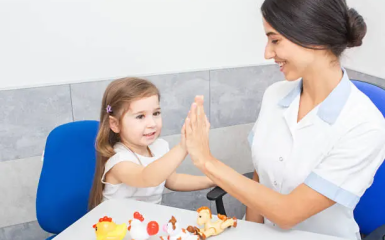
Choosing a developmental center for a child is not only a matter of a convenient address, a beautiful interior or the price of a subscription. For parents in Ternopil, it is important to understand whether the classes are appropriate for the child's age, whether the space is safe, how teachers react to tears and fatigue, and whether the program does not create unnecessary pressure. A high-quality developmental center for children in Ternopil should be a place where the child understands, is safe and gradually becomes interesting. And parents should receive not loud promises, but honest information: what exactly happens in the classes, who works with the children, how adaptation is organized and what to do if the child is not yet ready for the group.
Where to start choosing: the child's needs and the purpose of the classes
Before reviewing children's studios in Ternopil, it's worth answering a simple question: why do you need a development center?
The goal can be different:
gentle socialization before kindergarten;
development of speech, motor skills, and attention through play;
creative activities: drawing, sculpting, music, dancing;
preparation for school;
regular rhythm of activities outside the home;
communication with peers;
supporting the interests of the child.
Not every child needs the same format. An active child may benefit from a movement or music program. A child who is sensitive to noise may benefit from a small group and shorter sessions. A child who is not yet used to being left alone may need a gradual adaptation.
It is important not to compare your child to others. If one child is happy to run to the group at two years old, while another clings to mom or dad, this does not mean that there is “something wrong” with the child. Readiness for activities depends on age, temperament, separation experience, daily routine, and general well-being.
What should be the program of a development center?
A good program doesn't have to sound complicated. On the contrary, it should be clear to parents what the children are doing, why it is appropriate for their age, and how the activity is structured.
Ask at the center:
how long does the class last;
what activities are included in the program;
is there a change in activities;
how many children are in the group;
Are there any pauses?
Is it possible to attend a trial class?
How does the teacher react if the child refuses to participate?
For preschoolers, balance is important: movement, play, creativity, sensory experience, communication, simple cognitive tasks. If a program for toddlers resembles a school lesson with long sitting at a desk, this may not be the best option.

For children 1–3 years old
At this age, activities should usually be short, active, and very practical. It is important for a child to explore the world through their body, touch, sound, play, and repetition of simple actions.
It is good if the program includes:
finger games;
simple movements;
sensory materials;
music and rhythm;
interaction with an adult;
short creative tasks without the requirement of a "perfect result".
For young children, pressure is undesirable: “repeat correctly,” “don’t cry,” “sit down.” At this age, development occurs through safe interaction and play, not through coercion.
For children 3–6 years old
At 3–6 years old, a child can maintain attention for longer, but still needs play, movement, and emotional support. Preschool classes may include preparing the hand for writing, developing speech, logic, math in a playful way, creativity, and team tasks.
If you are interested in preparing for school in Ternopil, please clarify what exactly is meant. Quality preparation is not only about reading and arithmetic. Also important are:
ability to listen to instructions;
ability to wait in line;
fine motor skills;
independence;
interest in tasks;
emotional readiness for the new environment.
Promises of learning quickly in a short period of time should be taken with caution. The pace of a child's development is individual.
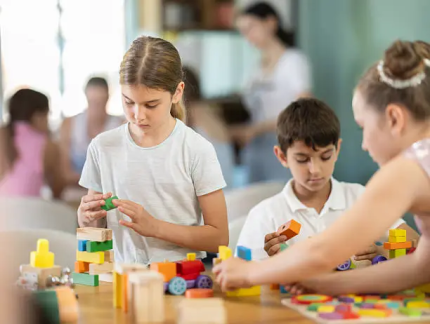
Teachers: what's more important than a beautiful description on the website?
The teacher's qualifications are important, but diplomas and certificates are not the only criterion. In a development center, a child encounters not documents every day, but a specific person: their voice, reactions, patience, ability to explain and support.
During a trial lesson, pay attention to whether the teacher:
addresses children calmly and kindly;
explains the task in simple words;
does not shame the child for mistakes or tears;
notices fatigue or overload;
does not force participation;
knows how to switch the group's attention;
treats active and quiet children equally correctly.
A separate sign of professionalism is the teacher's willingness to speak specifically with parents. For example, not "your child is naughty," but "today it was difficult for her to wait her turn, but she joined in the outdoor game." Such feedback helps, not creates guilt.
If your child has developmental, speech, behavioral, or sensory issues, it's worth asking directly if the center has experience with such work. But it's important to remember: a developmental center is not a substitute for consultation with a speech therapist, child psychologist, pediatrician, or other specialist if such help is needed.
Security of premises and process organization
A safe children's space is not just about clean floors and bright toys. It's about a system of rules that reduce risks and make a child's stay predictable.
During your visit to the development center in Ternopil, evaluate:
are there no sharp corners, slippery floors, or unstable furniture;
Are the toys appropriate for the children's age?
Are there any small parts in the toddler group?
Are the bathrooms and handwashing facilities clean?
Is the room ventilated?
is there enough space for movement;
Is the entry of unauthorized persons controlled?
who hands over the child after the lesson and how;
Is there a procedure if a child becomes sick or is injured?
It is worth asking whether the staff has parents' contacts, whether there is a first aid kit, who is responsible for children during transitions between rooms, and whether parents are allowed into the room for the first lesson.
If the administration avoids answering security questions or gets irritated by them, this is a reason to be wary. Such questions are normal for a quality center.
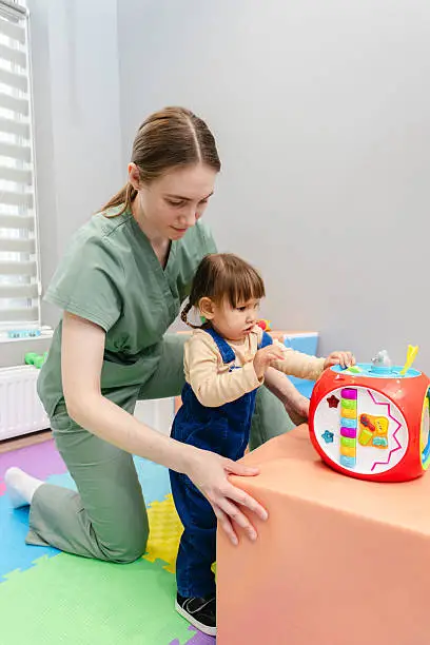
Adaptation: how to understand that the center is not pressuring the child
A child's adaptation to classes can be different. Some people join the game right away, while others need a few meetings to just get a feel for it. This is normal.
Soft adaptation may include:
trial lesson without obligation to purchase a subscription;
the possibility of parents being present at the start;
shorter first visit;
gradual increase in time without mom or dad;
the teacher's calm reaction to tears;
the child's right to observe, not to participate immediately.
A bad sign is when a child is shamed: “You’re a big boy,” “No one else cries, but you do,” “Mom will leave if you don’t obey.” Such phrases can increase anxiety and distrust.
It is better when the teacher acknowledges the child's feelings: "You miss your mother, I am here, let's see what the children are doing." This does not guarantee instant adaptation, but it creates a safer emotional background.
Location in Ternopil, schedule and everyday details
Even the best program may not be suitable if the journey to the center exhausts the child. For activities for children in Ternopil, location has practical importance: the area, transport, travel time, the ability to park or conveniently reach by public transport.
Evaluate everyday moments:
whether the activity coincides with a daytime nap or a period of fatigue;
is there a place where parents can wait;
Is it convenient to change the child's clothes?
what are the rules regarding absences and postponements of classes;
Is the payment transparent?
Do they warn about changes in the schedule?
Is there a way to contact the administrator if necessary?
Sometimes a center close to home, where the child feels safe, will be a better choice than a more well-known studio on the other side of town.
How to evaluate reviews and trial lesson
Reviews about a childcare center in Ternopil can be useful, but you shouldn't rely solely on ratings. Look at the content: what exactly parents like or dislike, how long ago the review was left, and whether there are any specifics.
Helpful reviews usually describe:
teachers' attitude;
cleanliness and organization;
the child's reaction after classes;
communication with parents;
transparency of conditions;
real strengths and weaknesses.
A trial lesson is the best way to test your impressions. After the lesson, ask yourself a few questions:Was the child safe?
Did the teacher see all the children, not just the most active ones?
Was there no shouting, shame, harsh phrases?
Were the tasks age appropriate?
Did the child have time to get used to it?
Did they explain to you how the lesson went?
Did you feel like asking additional questions - and were they answered?
It's not necessary for the child to be thrilled after the first time. What's more important is whether there was any obvious stress, danger, or pressure.
Red flags: when it's better to look for another option
Sometimes a center may look attractive on social media, but raise doubts during real-life contact. It is worth being cautious about the option if you notice the following signs:
promise a guaranteed result in a short time;
they convince that without these activities the child will “fall behind”;
do not allow to inspect the premises;
evade questions about security;
the teacher yells or shames the children;
the child is forced to participate despite strong protest;
there are too many children in the group for one adult;
there are no clear rules for payment and passes;
parents are given grades like "lazy," "problematic," "not that good";
The administration reacts aggressively to calm questions.
One drawback does not always mean that the center is bad. But if doubts persist, it is better to look at other groups for children in Ternopil.
Checklist of questions for the administration
Before enrolling your child, ask a few specific questions. They will help you quickly understand how open and organized the center is.
Ask:
What age is the group designed for?
How many children are usually in class?
Who conducts the classes and who has experience working with children of this age?
How long does the class last and how is it structured?
Can I attend a trial class?
Can one of the parents be present during the adaptation?
What do you do if a child cries or doesn't want to participate?
What safety rules apply indoors?
How do you hand over a child after class?
What happens if the child becomes unwell?
What are the terms of payment, absences, and transfer of classes?
How do parents receive feedback?
Answers don't have to be perfect or overly formal. But they should be clear, calm, and specific.
What is more important: the program, the teacher or the atmosphere?
The best results come from a combination of three things: a meaningful program, a caring teacher, and a safe environment. If the program is strong but the teacher pressures the children, the benefits may be less. If the atmosphere is pleasant but the classes are chaotic and not age-appropriate, parents' expectations may also not be met.
Focus on balance:
the child is not afraid to return;
the teacher explains and supports;
the tasks are feasible, but interesting;
safety rules are clear;
parents can ask questions;
The center does not promise the impossible.
A development center is not a competition for early achievements. It is a space where a child can try, make mistakes, get to know other children, and gradually expand their experience.

FAQ
From what age can you take a child to a development center?
There are programs even for young children, but readiness depends not only on age. The regime, temperament, health, and ability to withstand a new environment are important. For toddlers, it is better to choose short classes with the possibility of an adult's presence.
Is it necessary to go to a trial class?
It is advisable. A trial lesson helps to evaluate not only the program, but also the atmosphere, the teacher, the safety of the room, and the child's reaction. The description on social media does not always convey the real interaction.
What to do if a child cries during class?
First, it is worth understanding the reason: fatigue, fear of separation, noise, strangers, inappropriate time. A good center should not shame the child for tears. You can agree on a gradual adaptation or temporarily take a break.
How often should you attend classes?
It depends on the child's age, workload, regimen, and goal. For some, once or twice a week is enough, for others, a more frequent schedule is appropriate. It is important that classes do not crowd out sleep, free play, and rest.
Is school preparation necessary at age 4?
At 4 years old, play activities that develop speech, motor skills, attention, curiosity, and independence are appropriate. The “school-like” format may be premature for many children. If in doubt, it is best to discuss readiness with a teacher or child specialist.
How do I check if a childcare center is safe?
Ask to inspect the premises, clarify the rules for transferring a child, actions in case of injury or illness, the number of children in the group, the presence of access control. Pay attention to the furniture, toys, bathroom, cleanliness and behavior of the staff.
Is it possible to choose a center based on reviews alone?
Feedback is useful, but it is not enough. It is better to combine it with your own visit, a trial lesson, and a conversation with the teacher. What works for one child may not work for another.
What is more important - the program or the teacher?
Both factors are important, but for young children, the teacher's interaction style is often crucial. Even a good program won't work well if the child is scared, embarrassed, or ignored.
Conclusion
When choosing a developmental center in Ternopil, do not rush to focus only on advertising, price or popularity. Start with the child's needs, watch the program, talk to the teacher, assess safety and be sure to pay attention to adaptation.
A quality center does not put pressure on the child or intimidate the parents. It explains how the classes are structured, answers questions openly, has clear rules, and respects the individual pace of development. The best choice is one where the child is safe, the adults are calm, and the classes meet the real needs of the family.
Disclaimer: The material is for informational purposes only and does not replace the advice of a pediatrician, child psychologist, speech therapist, or other specialist. If you are concerned about your child's development, speech, behavior, or adaptation, please seek individual professional help.

