
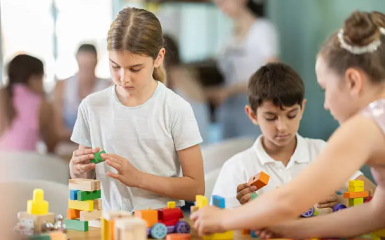
Choosing a development center for a child is not just about finding “interesting activities near home.” For a toddler or preschooler, a safe space, a calm teacher, a clear regimen, and a program that is age-appropriate are important. There are various formats in Vinnytsia: classes for early childhood children, preparation for school, creative studios, mini-kindergartens, logorhythmics, English, sensory and play groups. In order not to get lost in the offers, it is worth evaluating the center not by loud promises, but by specific criteria.
Where to start choosing: the child's needs and the purpose of the classes
Before looking for a Vinnytsia development center or reviewing reviews, formulate why your child needs the class.
Possible goals:
gentle socialization before kindergarten;
development of speech, attention, and fine motor skills through play;
communication with peers;
preparation for school;
creative or physical activities;
getting used to the group format and rules.
It is important to consider the child's age, temperament, and previous experience. One child may easily join a new group at the first lesson, while another may need time, parental presence, and gradual familiarization with the teacher.
For children 1–3 years old, safety, play, movement, sensory experience, and contact with an adult are usually key. For preschoolers 4–6 years old, structured tasks, hand preparation for writing, logic, speech, and elements of independence can be gradually added.
Class schedule: what should be inside and what should be on the alert
A quality developmental program for children should be clear to parents. The administrator or teacher should explain exactly what the children will do, how the lesson is structured, and what skills it supports.
A good program usually combines:
game tasks;
motor activity;
art;
speech exercises;
development of attention and memory according to age;
sensory games;
short opening and closing rituals;
pauses if children get tired.
Promises like “we will quickly teach you to read at age 3,” “we guarantee that you will be ahead of your peers,” and “your child will be the best in the class” can be alarming. A child’s early development should not turn into overload or competition.
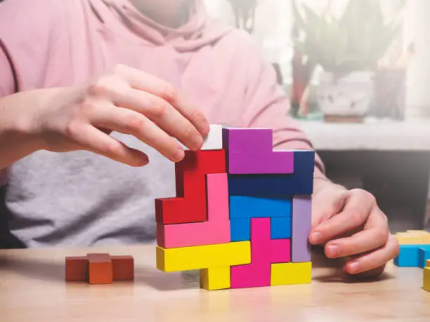
For children 1–3 years old
At this age, classes should be short, dynamic, and mostly playful. The child learns about the world through movement, objects, repetition, simple songs, finger games, and contact with an adult.
It is worth clarifying:
Can parents be present at the first lessons?
how many children are in the group;
is there free play, not just tasks at the table;
how the teacher reacts to the child's crying or refusal to participate;
Are they demanding from the child something that is not age-appropriate?
For children 4–6 years old
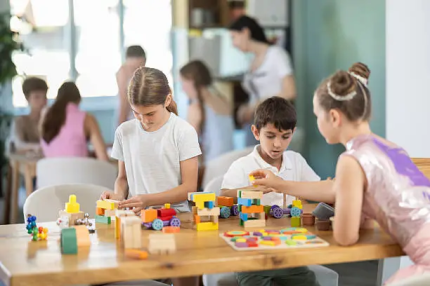
For preschoolers, classes can be more structured. Preparation for school in Vinnytsia often includes the development of speech, mathematical concepts, logic, memory, preparing the hand for writing, and the skills of listening to instructions.
But preparing for school is not just about letters and numbers. Also important are:
independence;
ability to wait in line;
ability to ask for help;
the ability to complete a simple task;
emotional readiness for the new environment.
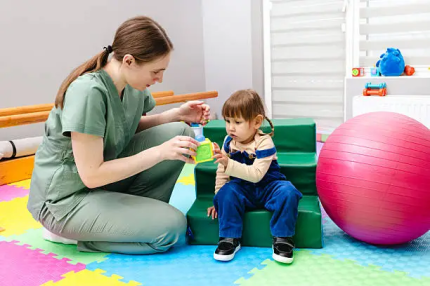
Teachers and communication: what to pay attention to
The name of the method does not replace the professionalism of the teacher. In a children's development center, it is important how the adult speaks to the child, whether he notices his condition, and whether he does not shame him for mistakes.
During the trial lesson, please pay attention to:
Does the teacher address the children calmly?
Does it explain the rules in simple terms?
does not raise his voice unnecessarily;
how he reacts to crying, fatigue, shyness;
Does it give the child time to get involved?
does not compare children with each other;
Are you ready to answer your parents' questions?
A good sign is when the teacher does not promise instant results, but explains that development depends on age, regularity, home environment, the child's condition, and individual characteristics.
If a child has noticeable difficulties with speech, behavior, sensory sensitivity, or adaptation, the center can be a helpful environment, but should not replace consultation with a speech therapist, child psychologist, pediatrician, or other specialized specialist.
Space Safety: A Checklist for a Visit
The safety of a children's center is one of the main criteria. It cannot be assessed solely by photos on social media, so it is better to come for an inspection or a trial lesson.
Check during your visit:
Is the room clean?
is there enough light and air;
Is the furniture appropriate for the children's age?
are there no sharp corners, exposed wires, or slippery floors;
Are the toys intact, without small parts that are dangerous for children?
is there a separate area for outerwear and shoes;
Is the entry of unauthorized persons controlled?
Is it clear who picks up the child after class?
Are there any rules regarding sick children in the group?
For Vinnytsia, as for other cities in Ukraine, it is important to separately clarify the algorithm of actions during an air raid. Ask where children go, who accompanies them, how parents are informed, and whether there is a proven procedure for children.
It is also worth asking whether the center has a basic plan of action in case of injury, child illness, or other unforeseen situation. It is not necessary to require complicated formalities, but the rules should be clear.
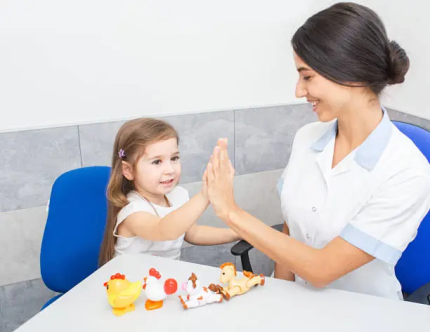
Group, schedule and workload: how not to overload a child
Classes for children in Vinnytsia can vary in length and frequency. More is not always better. For young children, too many activities can lead to fatigue, irritation, or a reluctance to go to class.
Rate:
how many children are in the group;
how many adults work with the group;
how long does the class last;
are there breaks;
whether the time of the lesson is suitable for the sleep and eating regimen;
how long does it take to get to the center;
Do the classes coincide with a period when the child is usually tired?
For toddlers, it's better to start with a light load. For preschoolers, you can add regularity, but it's important to leave time for free play, walks, and rest.
Location also matters. The Vinnytsia Child Development Center may have a great program, but if the commute exhausts the child and parents each time, the benefits of the classes may diminish.
Adaptation: What a Soft Start Should Look Like
A child's adaptation to classes is a process, not a one-day event. Even if the child is usually sociable, a new room, other children, and an unfamiliar adult can cause tension.
Soft adaptation may include:
trial lesson;
shorter stay at the start;
the presence of one of the parents at the first times, if the format allows it;
gradual acquaintance with the teacher;
a stable farewell ritual;
a favorite small thing from home, unless prohibited by the rules;
a calm discussion of the lesson upon return.
Crying at the start does not always mean that the center is not suitable. It is important to look at the dynamics: does the child calm down, does he join in the game, is there contact with the teacher, how does he feel after the lesson.
At the same time, prolonged severe fear, a sharp deterioration in sleep, constant refusal to go, complaints about harsh treatment or lack of dialogue with teachers are a reason to stop and reconsider the decision.
Documents, rules and transparency of conditions
Before registering, clarify not only the program, but also organizational issues. Transparent rules help avoid misunderstandings.
Ask about:
payment format;
conditions of absences and working hours;
subscription duration;
rules for parents to stay in the premises;
photo and video shooting of children;
use of personal data;
meals or snacks, if provided;
actions if the child becomes ill;
Who has the right to take the child?
If it's a mini-kindergarten or a long-term stay, there should be more questions: sleep, nutrition, walks, hygiene, toilet support, communication with parents during the day.
How to check the center before registering: questions for the administrator
To choose a children's development center in Vinnytsia consciously, prepare a list of questions. This is normal: a quality institution should not be annoyed by clarifications from parents.
Useful questions:
What age group is the group designed for?
How many children are in class at a time?
Who conducts the classes and who has experience working with children of this age?
What does a typical class look like in stages?
Can I attend a trial class?
How is the adaptation of a new child going?
What does a teacher do if a child cries or refuses to participate?
What safety rules apply at the center?
What is the algorithm during an air alarm?
How do parents receive feedback?
Are there rules regarding sick children?
How are payments, absences, and overtime processed?
Answers should be specific. If they only tell you “we’re fine” or “don’t worry” but don’t explain the details, it’s worth asking more questions.
Typical mistakes parents make when choosing
A search for the phrases "groups for preschoolers Vinnytsia" or "how to choose a development center" gives many options. But the most common mistakes are repeated.
Focusing only on reviews
Reviews are helpful, but they are subjective. What works for one child may not work for another. It is best to combine reviews with a personal visit.
Choosing the “strongest” program
For a preschooler, a strong program is not one with the most tasks. It should be age-appropriate, balanced, and without pressure.
Ignoring the child's reaction
Don't just evaluate a beautiful room or a convenient schedule. Pay attention to whether the child is gradually getting used to it, whether he feels contact with the teacher, and whether he is not under constant stress.
Choose only by price or area
Price and logistics are important, but they should not override issues of safety, communication style, and program quality.
When to postpone classes or change centers
Sometimes the best decision is to take a break. This does not mean that there is something wrong with the child or that the parents made a mistake.
It is worth reviewing the format if:
the child goes to classes with great fear for a long time;
after classes, there are regular sharp changes in sleep, appetite or behavior;
the teacher shames, punishes with silence, compares children;
parents are not given clear feedback;
safety rules are unclear;
the administration avoids answering basic questions;
The load clearly does not correspond to the child's age.
Perhaps a different group, a different teacher, shorter classes, or a later start time would be better for your child. In matters of development, speed is not important, but stability and a safe environment.
Conclusion
When choosing a developmental center in Vinnytsia, look beyond the name of the program or beautiful photos. The child's age, the qualifications of the teachers, the safety of the premises, the size of the group, clear rules, and gentle adaptation are important.
A good center doesn't pressure the child or scare parents with missed opportunities. It explains what it's doing, respects the child's pace, answers questions openly, and creates an environment where development happens through curiosity, play, and trust.
FAQ
From what age can you take a child to a development center?
It depends on the child, the format of the classes, and the parents' readiness. For toddlers, short play sessions, the opportunity to be with an adult, and gentle adaptation are important. Don't rush just because "everyone is already walking."
Is a development center needed if a child goes to kindergarten?
Not always. If a child has enough communication, play, and activities in kindergarten, additional classes may not be necessary. The center can be useful for a separate goal: creativity, school preparation, logic, speech, or soft work in a smaller group.
How to understand that adaptation is going well?
Normal adaptation may include excitement, shyness, or a brief cry at the beginning. A good sign is when the child gradually calms down, makes contact with the teacher, and does not appear exhausted or scared after class.
Should you leave your baby if he or she is crying?
It depends on the situation. If the crying is short and the child quickly calms down with the teacher, this may be part of adaptation. If the crying is strong, prolonged, repeated every time without improvement, it is worth discussing a different format or taking a break.
How many lessons per week is enough for a preschooler?
There is no universal norm. Focus on age, regime, kindergarten, road, sleep and general workload. A child needs not only classes, but also free play, movement, walks and rest.
How to assess school readiness?
Quality preparation for school is not just about reading and math. Speech, attention, fine motor skills, independence, the ability to listen to instructions, interact with other children, and ask for help are also important.
What to ask about safety during an air raid?
Specify where the children are moving, who is accompanying them, how quickly it happens, how parents are informed, and whether teachers are familiar with the algorithm of actions for children of different ages.
Can you trust reviews about a childcare center?
It's worth reading reviews, but don't make your choice based on them alone. It's better to combine reviews with a trial lesson, personal communication with the teacher, and your own assessment of the safety and atmosphere.
Disclaimer: The material is for informational purposes only and does not replace the advice of a pediatrician, child psychologist, speech therapist, or other specialist. If a child has severe difficulties with speech, behavior, adaptation, or health, it is worth seeking individual professional help.

