

A sleeping bag for a cold apartment is chosen differently than a sleeping bag for a hike. At home, you don't need to carry it in a backpack, so weight and compactness are less important. Instead, real comfort at night, sufficient width, pleasant fabric inside, ease of drying, moisture resistance, and the ability to use the sleeping bag for many nights in a row become critical.
Points of attention
- When choosing a sleeping bag for a cold apartment, it is more important to focus on the comfort temperature, not the extreme indicator.
- Synthetic sleeping bags are more practical for home use because they are cheaper, easier to care for, and less sensitive to moisture than down sleeping bags.
- Insulation from below is important, as a sleeping bag by itself does not provide effective heat retention on cold surfaces, such as the floor.
The main mistake is to look only at the lowest temperature on the label. For domestic use, comfort temperature is more important, not the “extreme” indicator. ISO 23537-1:2022 describes a standardized method for evaluating the thermal characteristics of adult sleeping bags for sports and leisure and labeling temperature indicators, including comfort, limit and extreme.
If the room temperature is +12…+16°C, you usually don’t need an expedition sleeping bag for -20°C. For most apartments, a warm model with a comfort of around 0…+5°C or slightly lower is enough if the person is cold, sleeps without heating, near a cold wall, on the floor or near a window. At the same time, a sleeping bag should not replace safe heating, normal ventilation and temperature control in the apartment: the WHO calls 18°C a safe and balanced reference temperature in housing for the cold season in countries with a temperate or cold climate.
Why do you need a sleeping bag in an apartment?
In an apartment, a sleeping bag can be a useful backup in case of cold nights, heating outages, accidents, saving heat in a separate room, or having guests stay overnight. It can be used on a bed, sofa, folding bed, or on top of a mattress if a regular blanket is not enough.
For a city apartment, a sleeping bag must solve several tasks:
keep warm during the night;
not to create a feeling of tightness;
dry quickly after airing;
do not accumulate odor;
easy to wash or clean;
have a convenient zipper;
match the actual temperature in the room;
Don't overheat if it gets warmer.
In an apartment, it's often not the warmest sleeping bag that works best, but a properly selected system: a sleeping bag, warm clothes for sleeping, dry socks, insulation from a cold mattress or floor, a blanket on top, and protection from drafts.
What search intent does this topic cover?
The intent of the query is mixed: informational, instructional, and partly commercial. The person wants to understand which sleeping bag to buy for a cold apartment, what temperature to look for, which insulation is best, whether a cocoon is needed, what size to choose, and what mistakes to avoid.
Therefore, the article should not just describe the types of sleeping bags, but help you make a decision: for a room +16°C, +12°C, a balcony, a summer house without heating, sleeping on the floor, a child, an elderly person, or a person who gets cold quickly.
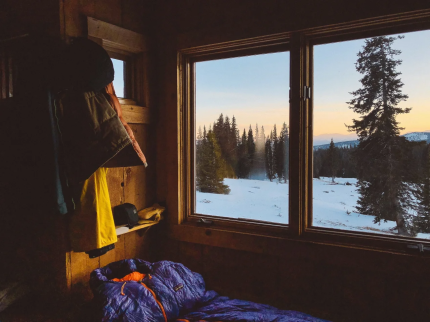
Sleeping bag temperature: comfort, limit and extreme
High-quality sleeping bags often have multiple temperature ratings listed on them. You need to read them carefully.
Comfort is the temperature at which the average person can sleep in relatively comfortable conditions. For a cold apartment, this is the main indicator.
Limit or lower limit — the lower limit at which a trained person can still sleep, but comfort is no longer guaranteed. Often this indicator is aimed at “warmer” sleepers.
Extreme is an emergency survival indicator, not a temperature for normal sleep. It is not worth focusing on it when buying a sleeping bag for home.
Sea to Summit explains that the EN/ISO tests give Comfort, Lower and Extreme ratings, and the actual performance of a sleeping bag also depends on other parts of the “sleep system”, including the insulation underneath. Therm-a-Rest also notes that the EN/ISO standard divides the temperature rating into Comfort, Limit and Extreme ranges, and a single number on a sleeping bag can be misleading to a buyer without context.
What temperature should a sleeping bag be for an apartment?
For an apartment, you should start from the lowest night temperature in the room and add a margin of 3–5°C. If the room is +16°C, you can look at lightweight models with comfort +10…+15°C or just a warm blanket. If the temperature drops to +12…+14°C, it is better to take a sleeping bag with comfort of about +5°C. If the room is +8…+12°C, a sleeping bag with comfort of 0°C or lower is more appropriate.
Approximately:
room +16…+18°C — light sleeping bag, sleeping blanket or warm home blanket;
room +12…+16°C — comfort sleeping bag +5…0°C;
room +8…+12°C — comfort sleeping bag 0…-5°C;
cottage without heating, cold floor, strong draft — comfort sleeping bag -5…-10°C plus insulation from below;
sleeping on a balcony or in an unheated room - only after a realistic assessment of temperature, humidity, and safety.
It is better to have a small thermal reserve, because the sleeping bag can be unzipped. But an excessively warm model in an apartment is also uncomfortable: a person sweats, the insulation gets wet, and sleep becomes worse.
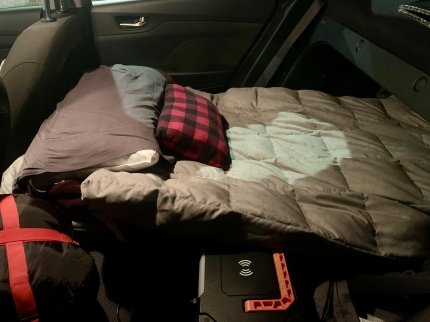
Why bottom insulation is just as important as a sleeping bag
A sleeping bag doesn't keep you warm on its own. It traps warm air around your body. If you lie on a cold floor, a thin sofa, or a squashed mattress, the insulation under your body compresses and barely works. This causes the cold to escape from underneath, even if the sleeping bag seems thick from above.
REI explains that if you use a less insulated mat in cold conditions, the sleeping bag may not achieve its claimed thermal performance. Sea to Summit also notes that without a mat with sufficient R-value, the sleeping bag may not achieve its EN/ISO rating.
In an apartment, instead of a hiking mat, you can use a mattress, topper, sleeping mat, thick blanket under it, or a combination of several layers. If a person sleeps on the floor, a thin sleeping bag without insulation underneath will almost always lose to a regular bed with a mattress and a warm blanket.
Sleeping bag shape: cocoon, blanket or half-blanket
Shape affects warmth, space and comfort.
A cocoon retains heat better because it fits the body more tightly, has less excess air inside, and is often equipped with a hood and a thermal collar. This is the best option for a cold room if a person is freezing or the temperature regularly drops below +14°C.
A sleeping bag with a blanket is more spacious and more comfortable for those who don't like restricted movement. It can be unzipped and used as a regular blanket. The downside is that it doesn't retain heat as well, especially around the shoulders, neck, and zipper.
A half-duvet or wide cocoon is a compromise. This model is warmer than a classic blanket, but not as tight as a narrow tourist cocoon.
For an apartment, it is important not to chase the most “camping” format. If a person sleeps restlessly, often turns over or cannot tolerate cramped conditions, a cocoon that is too narrow can be annoying. In this case, it is better to choose a wider cocoon with a hood or a sleeping bag-blanket with a warm blanket on top.
Down or synthetics: which insulation is better for the home?
Sleeping bags most often use down or synthetic insulation. Both options make sense, but for an apartment, the priorities are different than for a hike.
Down has an excellent warmth-to-weight ratio, compresses well, and lasts a long time with proper care. But it’s more expensive, more sensitive to moisture, takes longer to dry, and requires more careful washing. Sea to Summit notes that the lightest sleeping bags typically use down because it provides the best warmth-to-weight ratio.
Synthetics are generally cheaper, easier to care for, less demanding on moisture, and dry faster. For a cold apartment, this is often a more practical choice because the sleeping bag can be used daily, aired out in the room, stored in less than ideal conditions, and cleaned periodically. REI describes the choice between down and synthetics as one of the key criteria when buying a sleeping bag.
What is best for a cold apartment?
For most apartments, the best option is a high-quality synthetic sleeping bag with a comfortable temperature for your conditions. It is simpler, cheaper, and less stressful in everyday life. Down makes sense if you need lightness, compactness, high thermal insulation, the ability to properly dry and store the sleeping bag, and there is no high humidity in the room.
Sintepon in cheap models may be acceptable for occasional use, but it is heavier, bulkier, and loses its insulation uniformity more quickly. It is better to look for a modern synthetic insulation with a normal layer design, a thermal collar, and lightning protection against blowing.
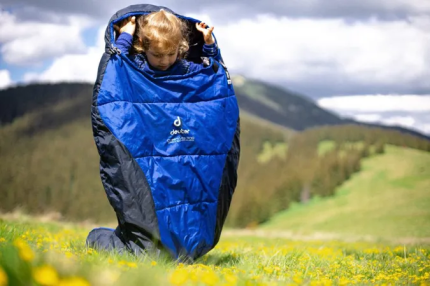
What details of a sleeping bag are really important?
In a cold apartment, it's not just the numbers on the label that matter. Often, comfort is determined by small structural elements.
Useful details:
adjustable hood;
thermal collar near the shoulders;
insulated strip along the zipper;
two-way zipper;
protection against tissue biting;
anatomical foot area;
pleasant inner fabric;
the ability to partially unbutton the bottom;
ventilation loops;
loose storage bag.
A hood is especially important if the room is cold and your head is freezing. But you shouldn't close the sleeping bag so tightly that you can breathe inside. Cumulus advises against breathing into the sleeping bag, as moisture from your breath can condense inside and wet the down or insulation.
How to choose the size of a sleeping bag
The sleeping bag should match your height and build. If it's too short, the insulation will compress in your legs, your feet will press against the fabric and you'll freeze. If it's too long, there will be a lot of excess air inside that needs to be warmed by your body.
A practical guideline is to take a sleeping bag with a margin of about 15–25 cm for your height. For home use, you can allow a little more space than for hiking, but without excess. A person who is 175 cm tall will usually need a sleeping bag that is 185–200 cm long, depending on the model. For tall people, it is better to look for the Long version.
Width is also important. A narrow cocoon is warmer, but not everyone is comfortable. If you sleep on your side, pull your knees up, or often turn over, look for a sleeping bag with an expanded shoulder and hip area. If the sleeping bag is being purchased for an elderly person, it is better to avoid models that are too tight, which are difficult to get out of.
Fabric inside and out
The outer fabric should be durable, but not necessarily too “touristy” for an apartment. What’s more important is that it doesn’t rustle, isn’t unpleasant to the skin, and can withstand regular use.
The inner fabric should be comfortable to sleep in. Some cheap sleeping bags have a slippery synthetic lining that is unpleasant to sleep in without an extra layer of clothing. This is more noticeable in an apartment than on a hike, because the sleeping bag can be used daily.
A useful addition to your home is a sleeping bag liner. This is a lightweight inner “sheet” bag made of cotton, fleece, microfiber, or silk. It is more comfortable to the body, reduces the need to wash the sleeping bag itself frequently, and adds a little warmth.
Do you need to sleep with clothes on?
It is best to sleep in dry, clean, not too tight clothing in a sleeping bag. Thermal underwear, a fleece jacket, soft pants, woolen or warm synthetic socks are best. Clothing should not squeeze the arms, legs, neck or waist, because poor blood circulation increases the feeling of cold.
Don't go into a sleeping bag with wet clothes. Even slightly damp socks or a T-shirt will quickly cool your body and moisten the insulation. If it gets hot, it's better to unzip the sleeping bag, remove one layer, or open your legs than to sweat a lot inside.
For a very cold room, the principle of layers helps: dry basic underwear, thin fleece, sleeping bag, and a blanket on top. But if you have to sleep in a jacket, hat, and several layers at a temperature below comfortable, you should think not about an even thicker sleeping bag, but about safer room insulation.
Sleeping bag for children: important precautions
A child's sleeping bag cannot be selected according to adult rules. ISO 23537-1:2022 applies to adult sleeping bags and does not provide a model for predicting temperature limits for children and infants.
For babies and small children, an adult sleeping bag is dangerous: it can be too big, heavy, uncomfortable for breathing and movement. The child cannot always get out on his own, open the zipper, or say that he is cold or hot.
For children, it is better to use age-appropriate children's sleeping bags or warm sleeping clothes that comply with the rules of safe sleep. If the apartment is very cold, the child's issue should be solved through safe heating, temperature control, consultation with a pediatrician for infants and avoiding any solutions that can block the airways.
Cold apartment and safety: when a sleeping bag is not enough
A sleeping bag helps to keep you warm, but it does not eliminate the risks of a cold home. If the room is consistently below +16°C, there is high humidity, drafts, mold, elderly people, small children or people with chronic diseases, additional measures are required.
The WHO notes that vulnerable groups – the elderly, children and people with chronic conditions, particularly cardiovascular and respiratory – may need a higher minimum temperature than 18°C. The NHS also advises that, where possible, rooms that are regularly used should be at least 18°C, including bedrooms.
A separate hazard is heating your home with a gas stove, generator, barbecue, camping stove, or charcoal-burning appliance. The CDC warns that during power outages, alternative fuel sources for heating, cooling, or cooking can cause carbon monoxide to build up in your home; generators, grills, camping stoves, and similar devices should not be used inside your home, basement, garage, or near windows.
How to make your sleeping bag warmer without buying a new one
If you already have a sleeping bag, you can make it warmer by using it properly.
What helps:
put a mattress, sleeping mat or thick blanket under you;
use the inner tab;
put on dry thermal underwear;
close the hood, but do not breathe inside;
tighten the thermal collar, if any;
cover the sleeping bag with a blanket on top;
warm your feet with dry socks;
air the sleeping bag in the morning;
do not lie down inside in wet clothes;
Do not compress the insulation with unnecessary things.
Do not place a hot water bottle with boiling water inside without a secure cover and checking for leaks. Leakage can wet the sleeping bag and create a risk of burns. Electric hot water bottles or blankets should only be used according to the manufacturer's instructions and should not be combined with items that can overheat.
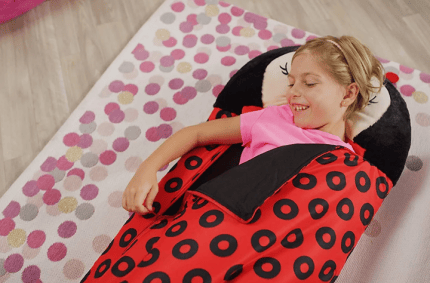
How to care for a sleeping bag in an apartment
If a sleeping bag is used daily, it should be aired regularly. At night, a person releases moisture, and some of it gets into the fabric and insulation. If you pack the sleeping bag tightly into the cover every morning, over time, an odor may appear, the insulation may clump, and heat retention may be impaired.
REI advises against storing your sleeping bag compressed in a compression sack, as this will damage the insulation over time; it is better to store it loosely in a large cotton or mesh bag.
For the home, the rules are simple:
air the sleeping bag after the night;
do not store wet or damp;
wash only according to instructions;
do not use aggressive powders;
dry completely;
do not keep it in a compression bag constantly;
Use a liner if the sleeping bag frequently comes into contact with the skin.
It is especially important to dry down sleeping bags completely. Synthetic ones are easier, but they also lose their thermal insulation if left damp or compressed for a long time.
Typical mistakes when choosing a sleeping bag for an apartment
The first mistake is to focus on extreme. This indicator does not mean comfortable sleep.
The second mistake is to buy a cocoon that is too tight. It is warm, but may be uncomfortable for daily home use.
The third mistake is to ignore the insulation underneath. On a cold floor, even a good sleeping bag may not save you.
The fourth mistake is taking a down sleeping bag into a damp apartment without the possibility of normal drying.
The fifth mistake is to choose a sleeping bag “with a margin of up to -25°C” for a room of +15°C. Such a model can be expensive, heavy, uncomfortable, and too warm.
The sixth mistake is storing your sleeping bag in a compression sack for months. This reduces the volume of the insulation.
The seventh mistake is using a sleeping bag for a small child without considering their age, size, and safe sleeping rules.
The eighth mistake is trying to compensate for very cold housing with just a sleeping bag. If the temperature is dangerous to your health, you need a safe heat source or another solution.
Practical choices based on scenarios
For an apartment with a temperature of +16…+18°C, it is better to take a light sleeping bag-blanket, a warm blanket or a demi-season cocoon. A model that is too wintery can overheat.
For a room with a temperature of +12…+16°C, the optimal choice is a synthetic sleeping bag with a comfort temperature of about +5…0°C, preferably with a hood, a strip along the zipper, and sufficient width.
For +8…+12°C, it is better to take a comfort 0…-5°C sleeping bag, use a warm lining underneath, dry clothes for sleeping, and a blanket on top.
For a summer house without heating, you need a warmer comfort model -5…-10°C, but before spending the night, you need to actually measure the temperature in the room, check the humidity, drafts, and safety of the heating.
For someone who is cold, it is better to focus on comfort with a margin, choose a cocoon or a wide cocoon, add a lining and insulation underneath.
For someone who doesn't like cramped conditions, a wide cocoon or a sleeping bag with an extra blanket is better. Sleeping comfort is just as important as warmth.
Conclusion
For a cold apartment, it is best to choose a sleeping bag based on comfort temperature, not the lowest number on the label. For most living rooms, a synthetic sleeping bag with comfort around +5…0°C is suitable, and for colder conditions, 0…-5°C or lower with mandatory insulation underneath.
The shape depends on the temperature and sleeping habits: a cocoon is warmer, a sleeping bag-blanket is more spacious, a wide cocoon provides balance. Down is appropriate if lightness and compactness are important, but synthetics are often more practical for an apartment: it is cheaper, easier to care for and better tolerates household humidity.
A sleeping bag should be part of a safe heating system. Measure the temperature in the room, avoid wet clothes, insulate the bottom, ventilate the sleeping bag, and avoid using dangerous heating sources in the room. Then the sleeping bag will really help you survive cold nights more comfortably, and not become another thing that did not meet expectations.
FAQ
Which sleeping bag to choose for a cold apartment?
For most cold apartments, a synthetic sleeping bag with a comfort temperature of around +5…0°C is suitable. If the room is below +12°C or you get cold quickly, it is better to look at a comfort of 0…-5°C and add insulation from below.
What temperature should I aim for in a sleeping bag?
You need to focus on comfort, not extreme. ISO 23537 provides for the labeling of temperature characteristics of adult sleeping bags, including comfort, limit and extreme; for household selection, comfort is the most important.
What does extreme mean on a sleeping bag?
Extreme is an emergency indicator, not a temperature for comfortable sleep. It is not suitable for choosing a sleeping bag for daily use in an apartment. For real sleep, you need to look at comfort or, with caution, limit.
What is better for the home: a down or synthetic sleeping bag?
Synthetics are often more practical for apartments: they are cheaper, easier to care for, and less sensitive to moisture. Down is warmer relative to weight and more compact, but more expensive and requires careful drying and storage. REI calls the choice between down and synthetics one of the key criteria when buying a sleeping bag.
Do you need a cocoon for a cold apartment?
If the room is really cold, a cocoon is better than a sleeping bag-blanket because it has less excess air inside and retains heat better. But for everyday home use, it is important that it is not too tight.
Can I sleep in a sleeping bag on the floor?
Yes, but only with insulation underneath: a mattress, a sleeping pad, a topper, or a thick blanket. Without insulation, the cold floor quickly absorbs heat, and compressed insulation under the body is almost useless.
Can I give an adult sleeping bag to a child?
For small children and infants, an adult sleeping bag is not suitable. ISO 23537 applies to adult sleeping bags and does not provide a temperature model for children and infants. For a child, solutions are needed based on age, size and safe sleeping rules.
Can you breathe inside a sleeping bag to make it warmer?
It is best not to do this. Moisture from breathing can condense inside the sleeping bag and reduce the effectiveness of the insulation. Cumulus advises against breathing inside the sleeping bag precisely because of the risk of moisture.
How to store a sleeping bag at home?
Don't keep your sleeping bag in a compression bag for months. After use, it should be aired out and stored loosely in a large mesh or cotton bag. REI warns that storing it compressed for long periods of time will damage the insulation over time.
Will a sleeping bag replace heating?
No. A sleeping bag helps keep you warm at night, but it doesn't solve the problem of a dangerously cold home. The WHO says 18°C is a safe guideline for living spaces during the cold season, but higher temperatures may be needed for children, the elderly, and people with chronic illnesses.
undefined

