
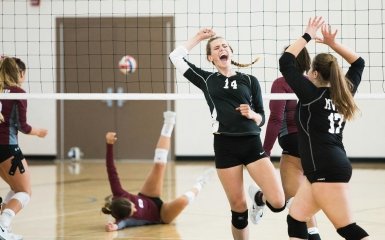
Choosing a sports section for a child in Ivano-Frankivsk often begins with a simple question: what is near home or school. But a convenient location is only one of the criteria. It is important to understand whether the format of classes is suitable for the child, whether the coach knows how to work with age, whether the load will not be excessive and whether the child really wants to return there. Sports in childhood should support development, mobility, confidence and socialization. It should not turn into constant stress or competition with parental expectations.
Where to start when choosing a section: look beyond the sport
Before looking for the "best section for children in Ivano-Frankivsk", it is worth answering a few practical questions about the child himself.
Please note:
age and maturity level - can the child listen to instructions, wait their turn, interact with a group;
temperament - an active child may prefer a dynamic format, while a cautious child may prefer a gradual introduction to movement without pressure;
previous experience - whether the child was involved in dancing, swimming, gymnastics, football, martial arts, or just moved a lot;
health status - if you have any complaints, injuries, or chronic conditions, it is best to consult a doctor;
daily schedule - school, homework, travel, sleep and rest time must remain in balance;
motivation - does the child want to try it on their own or does they go "because they have to?"
If your child doesn't know what they want to do, that's okay. In that case, it's best to start with trial classes in several different formats: team sports, individual classes, dance and movement classes, swimming, martial arts, or general physical training.
What sports sections are suitable for different ages?
Age is a guide, but it is not a hard and fast rule. Two children of the same age may have different levels of coordination, endurance, concentration, and willingness to be disciplined.
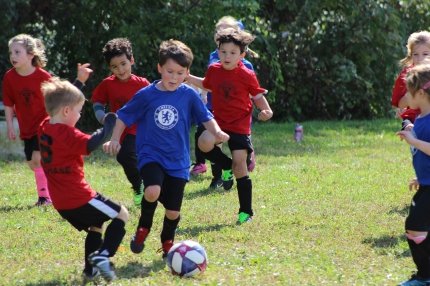
Preschoolers: movement through play
For children around 3–5 years old, a game format usually works better. At this age, it’s not medals or early specialization that are important, but basic motor skills:
running, jumping, climbing;
balance and coordination;
orientation in space;
gentle introduction to the rules;
development of attention through play.
Classes in children's gymnastics, dance, swimming, play physical education, and movement studios may be suitable. But the key is not the name of the section, but how the coach works with the kids.
If there is a lot of shouting, comparisons, punishments, or demands to "suffer" in class, this is a warning sign.
Younger students: technique, discipline, and interest
At ages 6–9, children are better able to understand the rules, learn techniques, and train more regularly. At this age, soccer, basketball, swimming, track and field, martial arts, gymnastics, dance, tennis, acrobatics, or other children's sports are often considered.
It is important that the coach:
explained in an accessible way;
did not demand instant results;
monitored the equipment;
gave time to adapt;
did not embarrass the child in front of the group.
For younger students, after-school sports should not be another "lesson with a test," but a healthy activity with rules and support.
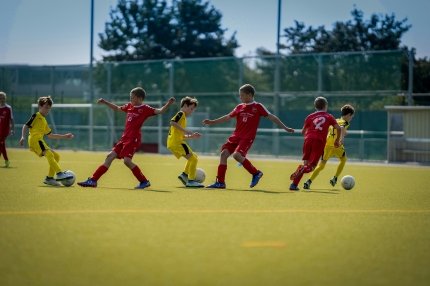
Teenagers: motivation and recovery
In adolescence, the child has more influence on the choice. The atmosphere, peers, the coach's style, development prospects, appearance, and independence are important to them.
Team sports, supervised exercise formats, martial arts, running, swimming, dancing, cycling, climbing, or other activities may be suitable for teenagers. However, it is at this age that you should be especially careful about fatigue, sleep, nutrition, training load, and the risk of training "through pain."
How to evaluate a trainer before booking
A coach for a child is not just someone who knows the technique. He or she must be able to work with age, emotions, fears, and different levels of training.
Before recording, you should ask:
what education or sports training does the coach have;
Does he have experience working with children of the appropriate age?
how is the adaptation of newcomers going?
how many children are in the group;
what to do if the child is tired, scared or refuses to do the exercise;
how the coach responds to pain or complaints;
Are there safety rules during classes?
how communication with parents takes place.
A good sign is that the coach calmly answers questions, does not belittle parents' fears, does not promise quick championship results, and does not pressure to sign up immediately.
Phrases like “everyone endures,” “it hurts, it means they’re growing,” “we don’t hold back the weak,” “parents don’t interfere at all” should be a warning sign. Discipline in sports is important, but it shouldn’t be based on humiliation or ignoring safety.
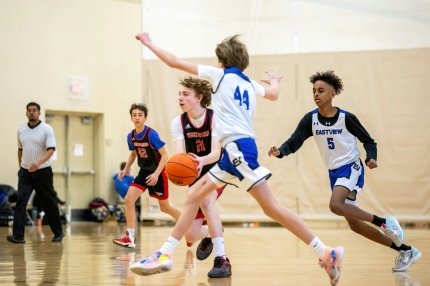
Safe Load: How Much Training Isn't "Too Much"
Safe training for kids isn't about the maximum number of sessions. It's about progression, regularity, recovery, and age-appropriateness.
In practice, parents should evaluate not only the section schedule, but also the child's overall workload. If after school there is homework, extra classes, a trip around the city and a late return home, even two training sessions a week can feel difficult.
Signs that the load may be too heavy:
the child is constantly tired and sleepy;
often complains of pain after classes;
I started sleeping worse;
I suddenly lost interest in training;
became irritable or anxious before the section;
performance has deteriorated due to lack of time for rest;
Training is perceived as punishment.
After the start, it is better to give the child a few weeks to adapt. You should not immediately add competitions, individual training and several sections at once. The body and psyche must get used to the new regime.
What to look out for during a trial lesson
A trial workout for a child is the best way to evaluate the section without rushing. Parents should look not only at the interior of the hall, but also at the process.
Observation checklist:
is there a warm-up before the main part;
Does the trainer explain the exercises clearly?
whether he controls the technique, and not just "gives tasks";
Are the equipment and coverings safe?
is there enough space for the group;
whether they leave the newcomer without attention;
Are the children allowed to ask questions?
is there no shouting, mockery or harsh comparisons;
are there breaks for rest;
How does a child leave a class - exhausted, scared, satisfied, interested?
After training, you shouldn't immediately evaluate your child with phrases like "so what, are you going to be a champion?" or "you didn't try hard enough." It's better to ask: what did you like, what was difficult, and whether they want to try again.
Local nuances of Ivano-Frankivsk
When choosing a club in Ivano-Frankivsk, it's not just the name of the club that matters, but also the logistics. Even a good club may not be suitable if the journey takes too long or the child returns home late and exhausted.
Rate:
distance from home or school;
transport at the right time;
safety of the route in the dark;
the opportunity for parents to pick up their child;
lesson and homework schedule;
seasonality of activity, if classes are partly held outdoors;
availability of showers, changing rooms, and waiting areas.
You can search for sections for children in Ivano-Frankivsk through schools, youth sports schools, city sports facilities, private clubs, studios, recommendations from parents, and official websites of organizations. But it is worth checking any information: the schedule, coaching staff, conditions, cost, and rules may change.
Don't choose based solely on the principle of "closest" or "everyone does it there." Convenience is important, but the child should be safe psychologically and physically.
Team, individual or combat sport: how to choose
There is no one sport that suits everyone. It is better to think not in terms of "good" or "bad", but in terms of what the child needs right now.
Team sports can develop interaction, group spirit, communication, and decision-making skills. However, a child who struggles in a noisy environment or who reacts painfully to comparisons may need more time to adapt.
Individual sports allow you to move at your own pace and see your personal progress better. But sometimes there is a stronger sense of responsibility for the result.
Martial arts can teach self-control, coordination, contact rules, and respect for one's partner. It is important that the coach strictly adheres to safety, does not cultivate aggression, and does not put children in dangerous sparring without preparation.
Dancing, gymnastics, and acrobatics are often good for developing coordination, flexibility, and body awareness. At the same time, it is important to ensure that there is no undue pressure regarding appearance, weight, or the "ideal shape."
Typical mistakes made by parents
When choosing a sports club for their children, parents often act with the best intentions, but some decisions can get in the way.
The most common mistakes:
Choosing based on prestige. Just because a section is fashionable doesn't mean it's right for a particular child.
Early specialization is unnecessary. At a younger age, a variety of movement is often more beneficial than a narrow focus on a single outcome.
Ignoring the child's reluctance. One-time fatigue is not a reason to quit, but constant fear of the activity should be taken seriously.
Comparison with other children. Phrases like “look how he can do it” rarely motivate well.
Excessive focus on competition. Not every child should train for medals.
Too tight a schedule. Sports do not compensate for the lack of sleep and rest.
Ignoring pain. Pain, dizziness, severe shortness of breath, or repeated injuries are reasons to stop and seek professional advice.
When to consult a doctor
A complex examination is not always necessary before regular physical activity. However, there are situations when consultation with a pediatrician or sports doctor is appropriate.
Consult a specialist if the child:
has chronic diseases;
recently had a serious illness or surgery;
complains of pain during or after exercise;
has frequent dizziness, fainting, severe shortness of breath;
returning to sports after an injury;
has limitations that have been reported by the doctor;
plans intensive training or competitive sports.
A doctor will not necessarily "forbid sports." Often, the goal of the consultation is to find a safe level of activity and understand which activities are best avoided under certain conditions.
A short checklist before recording
Before you finally enroll your child in a section, ask yourself and the coach a few questions.
About the child:
Does she want to try this particular format?
Does the schedule conflict with sleep and study?
Is there time to rest between classes?
Are there any complaints that require a doctor's consultation?
About the coach:Does he have experience working with children of this age?
How does he react to fatigue, fear, mistakes?
Does it explain safety rules?
Are parents allowed to observe the trial lesson?
About the section:What is the group size?
Is there a warm-up and a cool-down?
What are the requirements for uniform and equipment?
How is communication with parents organized?
Can I change the group or schedule?
What are the rules for absences and returning after illness?
If most of the answers are clear, the child is not scared after the trial lesson, and the trainer inspires trust, the section can be tried for a short period and then evaluated over time.
FAQ
At what age should you send your child to a sports club?
It depends on the type of activity and the child's readiness. For preschoolers, it is better to choose playful motor activities without pressure on the result. More structured sections are often easier for school-age children, but individual characteristics are important.
Is a medical certificate required for a section?
In some sections or sports schools, a certificate may be mandatory according to internal rules. Even if it is not required, a doctor's consultation is advisable if you have complaints, chronic conditions, injuries, or plans for intensive training.
How do you know if a section is not suitable for a child?
Signals may include constant fear of classes, regular complaints of pain, severe fatigue, tears before each workout, humiliation from the coach, or lack of adaptation for a beginner. One difficult class does not mean that the section is bad, but recurring problems are worth analyzing.
Which is better: team or individual sport?
What is best is what matches the child's personality, interests, and needs. Team sports can help with communication, individual sports can help with focusing on one's own progress. It's worth trying different formats and seeing how your child reacts.
How many workouts per week are enough?
There is no universal amount. It is important to consider age, school, sleep, travel, intensity of classes, and well-being. It is better to start gradually, and increase the load only when the child has adapted well.
What to do if a child wants to quit the section?
First, find out the reason: an uninteresting sport, a difficult relationship with the coach, fear of mistakes, fatigue, conflicts in the group, or excessive workload. Sometimes changing the group or coach helps, sometimes switching to another type of activity.
Should I change the section if there is no rapid progress?
Not always. Progress in children's sports can be uneven. If a child is playing safely, has interest, and is gradually developing, speed of results should not be the main criterion. But if there is no contact with the coach or the child is constantly suffering, a change is worth considering.
How to check a coach for a child?
Ask them about their experience working with children, watch a trial class, pay attention to the tone of communication, reaction to mistakes, and safety rules. It is also useful to talk to other parents, but the final decision is best made after your own observation.
Conclusion
The best sports club for a child in Ivano-Frankivsk is not necessarily the most famous, the most expensive, or the closest. It is a place where the child exercises regularly, learns safely, has contact with a coach, and does not lose interest due to excessive pressure.
Start with the child, not with the fashion for the sport. Look at the coach, the atmosphere, the load, the road and recovery. And remember: changing the section is normal. Finding your sport is also part of healthy development.
Informational disclaimer: the material is for informational purposes only and does not replace the advice of a doctor, trainer, or other professional. If your child has any complaints, chronic illnesses, injuries, or doubts about exercise, please consult a pediatrician or sports doctor.

