
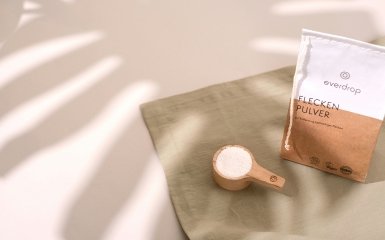
An eco-friendly laundry detergent doesn't have to be expensive, completely natural, or made without any synthetic components. The main thing is how well it removes dirt, whether it meets safety requirements, and what impact its ingredients may have on the environment. On the packaging of laundry detergents, you can often see the inscriptions "eco", "bio", "phosphate-free", "hypoallergenic" or "natural composition". However, these designations are not equivalent and do not always confirm the environmental friendliness of the product. For example, phosphate-free detergent may contain other substances that require an assessment of the impact on aquatic ecosystems. And a product with plant fragrances is not necessarily suitable for people with sensitive skin.
To choose a high-quality eco-friendly washing powder, you need to check the composition, availability of independent environmental certification, efficiency at low temperatures, recommended dosage and suitability for the type of fabric. For sensitive skin, it is additionally worth giving preference to products without fragrances and dyes.
It's not just the detergent itself that's important to consider. Washing temperature, amount of detergent, water hardness, and washing machine load also affect cleaning efficiency and environmental footprint.
Let's consider ten selection criteria, analyze the main components of laundry detergents, and explain whether eco-powder is really better than regular powder.
How is eco-friendly washing powder different from regular washing powder?
The environmental friendliness of a detergent is assessed based on several characteristics, not a single component.
Important factors include the impact of ingredients on aquatic organisms, the biodegradability of individual substances, washing efficiency, the amount of packaging and resource consumption during use.
For example, the European EU Ecolabel system sets requirements for detergents regarding toxicity to aquatic organisms, biodegradability, restriction of certain hazardous substances, packaging, and washing quality.
That is, an ecological product must not only have the appropriate composition, but also perform its main task - to clean fabrics.
If the powder does not wash stains well and requires a repeated cycle, this can increase the consumption of water, electricity, and detergent itself.
Does the Eco label mean that the powder is safe?
Not necessarily.
The word Eco can be part of a product name or a marketing statement.
Instead, independent environmental certification involves assessing compliance with specified criteria.
Therefore, it is important to check not only the green packaging design, but also who certified the product and what requirements were applied.

1. Check the composition: what components are needed for effective washing
Modern laundry detergent is a mixture of components, each of which performs a specific function.
One is responsible for removing grease, another helps work in hard water, and yet another helps remove protein stains.
Therefore, a short composition does not always mean a better product.
| Component | What is it used for? |
| Surfactants (Surfactants) | Helps separate dirt from fabric |
| Enzymes | Breaks down certain types of stains |
| Sodium carbonate | Creates an alkaline environment and helps soften water |
| Zeolites | Binds water hardness ions |
| Citrates | Helps control water hardness |
| Oxygen bleaches | Helps remove individual stains and maintain laundry |
| Polymer additives | Can prevent dirt from settling again |
| Flavorings | Gives laundry a scent |
| Dyes | Change the color of the product itself |
It is important to evaluate the entire formula.
For example, a powder without enzymes may work well under certain conditions, but is less effective at removing individual food stains at low temperatures.
At the same time, enzyme cleaners are not always suitable for wool and silk.
2. Pay attention to surfactants and their biodegradability
Surfactants are the basis of most modern laundry detergents.
They help water penetrate the fabric, weaken the bond between dirt and fibers, and aid in the removal of dirt during mechanical agitation.
Without surfactants, many greasy stains would be much more difficult to wash off.

Are all synthetic surfactants harmful?
No.
The properties of surfactants depend on their chemical structure, concentration, ability to decompose, and other characteristics.
In the European Union, there are requirements for the biodegradability of surfactants for detergents.
However, the ability of a surfactant to biodegrade does not automatically mean that the entire product completely disappears from the environment without residue.
Other ingredients also matter.
What does biodegradable powder mean?
Biological decomposition is the transformation of substances under the action of microorganisms.
Its rate depends on temperature, oxygen availability, substance properties, and other conditions.
Therefore, the inscription "100% biodegradable" must have clear confirmation: what exactly was tested, using what method, and for how long.
Without these clarifications, it is difficult to assess the real meaning of the statement.

3. Understand why phosphate-free powders are important
Phosphates were used in detergents to soften water and improve cleaning.
However, the influx of excess phosphorus compounds into water bodies can contribute to eutrophication - the excessive enrichment of water with nutrients.
This creates conditions for intensive algae growth and can worsen the condition of aquatic ecosystems.
That is why various countries have introduced restrictions on the use of phosphorus compounds in household detergents.
What restrictions apply in Europe?
European Regulation No. 259/2012 limited the total phosphorus content in a standard dose of household detergent.
For the relevant product category, a limit of less than 0.5 g of phosphorus per recommended dose for a standard load has been set.
Therefore, environmental policy is aimed at controlling the entry of phosphorus into water, not just at banning a certain word in the list of ingredients.
Does phosphate-free powder mean environmentally friendly?
No.
The absence of phosphates is an important characteristic, but not a complete assessment of the product.
For example, you also need to consider the properties of surfactants, flavors, other additives, and dosage efficiency.
It is not necessary to conclude that any phosphate-free powder is automatically hypoallergenic or safe for all people.

4. Evaluate the role of enzymes in laundry detergent
Enzymes help break down certain types of contaminants.
According to the American Cleaning Institute, different enzymes act on different substances.
For example, proteases work with protein contaminants, and lipases work with fats.
| Enzyme | What contaminants does it help remove? |
| Protease | Protein stains: egg, blood, some food stains |
| Amylase | Starchy leftovers: cereals, potatoes, pasta |
| Lipase | Fats and oils |
| Mananaza | Contamination containing mannans, including certain food sauces |
| Pectate lyase | Stains from some fruits and vegetable products |
| Cellulase | Can help care for the surface of cotton fibers |
Why enzymes are useful at low temperatures
Suitable enzyme formulas can work effectively at temperatures around 30 °C or lower.
This allows you to reduce electricity costs for heating water.
However, the result depends on the specific formulation, type of stain and washing program.
The presence of enzymes does not guarantee that any contamination will disappear without prior treatment.
Are enzyme powders suitable for wool and silk?
Not everyone.
Wool and natural silk are composed primarily of protein fibers.
Proteases designed to break down protein contaminants may be undesirable for such tissues.
Woolmark recommends using special mild detergents with the appropriate pH level for wool and avoiding conventional intensive powders with enzymes and bleaches.
For delicate clothes, you need to choose a product specifically designed for the material.
5. Check for flavors and dyes
The strong smell of freshly washed laundry is often perceived as a sign of cleanliness.
However, the scent is not an indicator of how well the contaminants have been removed.
Flavorings are added primarily to provide a scent, not to improve the cleaning mechanism.
For people with sensitive skin, this can be an important factor in choosing.
Why it's better to pay attention to Fragrance Free
The American Academy of Dermatology recommends that people with certain forms of skin sensitivity, including atopic dermatitis, choose detergents without fragrances and dyes.
It is important to distinguish between the following designations:
Fragrance Free — a product is declared as containing no fragrances.
Unscented — a product may not have a noticeable odor, but sometimes contains substances that mask the aroma.
Natural Fragrance is an aromatic composition of natural origin that does not guarantee the absence of allergens.
Essential oils may also contain substances that can cause contact allergies.
Therefore, the statement that natural flavors are always safer than synthetic ones is overly simplistic.
6. Check for independent environmental certification
Having verified certification helps distinguish proven environmental performance from generic advertising claims.
One example is the EU Ecolabel, the official environmental label of the European Union.
Its criteria take into account not only individual ingredients, but also washing performance and the impact of the product throughout its life cycle.
What does the EU Ecolabel check?
For household detergents, the system covers:
Limitation of impact on aquatic organisms.
Biodegradability of the relevant components.
Restrictions on certain hazardous substances.
Packaging requirements.
Dosage control.
Washing efficiency.
Information for proper use.
As of November 2026, the criteria for the relevant category are in force according to European Commission Decision 2017/1218, as amended.
What does EPA Safer Choice mean?
In the US, there is the EPA Safer Choice program.
To obtain the appropriate labeling, the product's ingredients, its effectiveness, and a number of other characteristics are evaluated.
This is another example of an independent approach that goes beyond a simple manufacturer's statement.
At the same time, no certification means that concentrated laundry detergent can be swallowed, applied to the skin, or used without following the instructions.
How to recognize eco-friendly marketing
Vague statements like "absolutely chemical-free," "completely harmless," or "100% environmentally friendly" without an explanation of the criteria can raise suspicion.
All laundry detergents are made up of chemicals, including those based on natural minerals.
Therefore, the absence of "chemistry" is an incorrect criterion for safety.

7. Choose the form of the product: powder, gel, capsules or sheets
The shape of the product affects ease of use, dosage, and washing characteristics.
However, no one format is indisputably the most environmentally friendly for all situations.
Washing powder
Dry powders are well suited for many everyday tasks.
They may contain oxygen bleaches, water softeners, and enzymes.
The American Cleaning Institute notes that powders are often effective against soil and clay stains.
At the same time, some formulas may dissolve less well at low temperatures, especially in hard water or if the dosage is incorrect.
Liquid or gel
Liquid products are convenient for pre-treating greasy stains.
They are usually easily distributed in water.
However, they have their own compositional characteristics, in particular, they may require appropriate preservatives.
It is also worth considering the quantity of packaging and the concentration of the product.

Laundry capsules
Capsules provide a fixed dosage and are convenient to use.
However, they do not allow you to accurately measure a smaller portion of detergent for a small load, unless the instructions state otherwise.
A separate problem is the safety of children.
The American Academy of Pediatrics warns that concentrated liquid products in capsules can cause severe poisoning and eye damage in case of accidental contact.
Therefore, they should be stored in their original, tightly closed packaging, out of the reach of children.
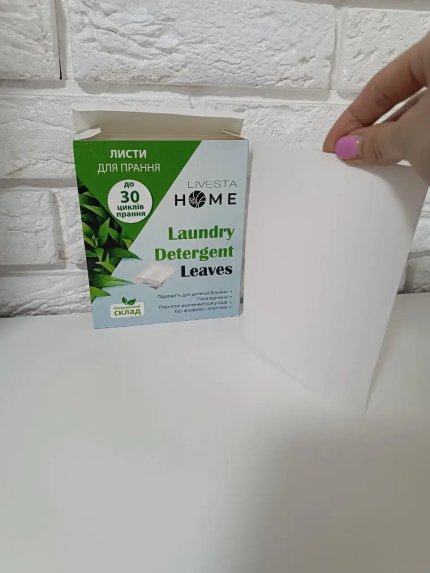
Laundry sheets
Sheets are often advertised as a compact alternative to powders and gels.
They can reduce packaging weight and be convenient during transportation.
However, environmental friendliness depends on the specific composition, solubility of the binding components, test results and actual effectiveness.
The letter format itself does not guarantee a lower environmental impact.
8. Consider water hardness and correct dosage
One of the most common reasons for poor washing results is using the wrong amount of detergent.
Too small a dose may not be able to handle the contaminants.
Excessive amounts are also undesirable: it increases costs and can leave detergent residue on the fabric.
Why does hard water affect laundry?
Hard water contains an increased amount of calcium and magnesium ions.
They can affect the performance of detergent components and contribute to the formation of mineral deposits.
Therefore, detergent manufacturers often specify different dosages for soft, medium, and hard water.
The correct amount also depends on the weight of the laundry and the degree of soiling.
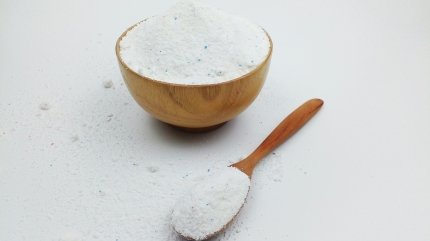
Does an extra serving of powder help?
Only when it meets the instructions for specific conditions.
If the machine is not rinsing the laundry properly, adding even more detergent may worsen the problem.
It is more practical to check the dosage, drum load and selected program.
You don't need to focus only on the amount of foam: modern detergents for automatic washing machines can work effectively without abundant foam formation.
9. Evaluate the effectiveness of washing at low temperatures
Heating water can account for a significant portion of a washing machine's energy consumption.
Therefore, a powder that works effectively at 30 °C can help reduce electricity costs.
At the same time, it is necessary to take into account the nature of the contamination and hygiene requirements.
Is 30 °C enough?
For many everyday items without heavy soiling, yes, if the appropriate program and detergent provide the desired result.
However, low-temperature washing is not a universal substitute for hygienic processing.
For example, different regimens may be required for certain infections or specific sanitary requirements.
It is necessary to take into account recommendations for fabric care, the health of the residents, and the purpose of the textile.
Why sustainability doesn't just depend on powder
Even a certified product can be used irrationally.
For example, if you wash two T-shirts in a separate long cycle, the resource costs per kilogram of laundry may be higher.
Environmental certification systems take into account the importance of correct dosage, low temperature efficiency and full permissible machine load.
10. Calculate the real cost of one wash
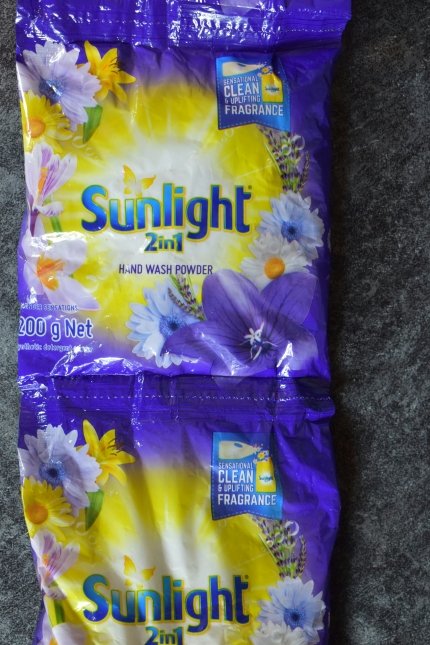
It is wrong to compare washing powders only by the price of the package.
A product that seems cheap at first glance may require a higher dosage.
Concentrated products sometimes cost more per kilogram, but provide more cycles.
How to determine the cost of laundry
The formula used is:
Cost of one wash = price of package / number of recommended cycles.
For example, a package weighing 2 kg costs 600 UAH.
If 50 g is required for one cycle, it will be enough for 40 washes.
The cost of one wash is 15 UAH.
Another concentrated product weighing 1.5 kg costs 450 UAH.
A dosage of 30 g is enough for 50 cycles.
The cost of one wash is 9 UAH.
These are conditional examples for comparison, not characteristics of specific brands.
What else should be considered?
The actual cost may vary depending on water hardness, amount of laundry and degree of soiling.
It is also important whether the product copes with stains without re-washing.
Therefore, cost-effectiveness should be evaluated together with the quality of cleaning.
Which washing powder is better to choose for children's things?
The Baby or “for children's underwear” label is not an automatic guarantee of no irritation.
Children's skin can react to various substances, including fragrances and dyes.
According to the recommendations of the American Academy of Dermatology, it is advisable to use detergents without fragrances and dyes for children with atopic dermatitis.
Do I need separate baby powder?
Not necessarily.
The American Academy of Pediatrics notes that many children are fine with regular laundry with other family members.
The need for a separate, milder product may arise if the child has irritation or individual sensitivity.
Therefore, the most important thing is not the label “for children”, but the composition and skin reaction.

Why you need to rinse things properly
Too much detergent can leave unwanted residue on the fabric.
For children with sensitive skin, it is especially important to follow the recommended dosage and not overload the drum.
Extra rinsing can be useful in certain situations, but is no substitute for choosing the right product.
Which powder is suitable for people with allergies and atopic dermatitis?
Contact dermatitis can be associated with various factors: fragrances, certain preservatives, dyes, and other substances.
However, not every irritation after washing means an allergy to the powder itself.
The cause may be the fabric, clothing dyes, insufficient rinsing, or other irritants.
Can you trust the label "hypoallergenic"?
This statement does not mean that there is no risk of allergies.
Individual reactions are possible even to components that are usually well tolerated by most people.
Therefore, it is important for people with confirmed contact allergies to consider specific substances to avoid.
For sensitive skin, a practical starting point is the absence of fragrances and dyes, not the shortest possible composition.

Is powder with soda and natural minerals better?
Sodium carbonate and other alkaline salts can be useful components of detergents.
They help create a suitable environment for cleaning and affect water hardness.
However, the presence of a natural mineral analogue does not mean that the finished powder is automatically environmentally friendly or harmless.
Can I wash with just baking soda?
Baking soda is not a complete replacement for a balanced laundry detergent.
It does not provide all the functions of surfactants, enzymes, and other components that are needed to remove various types of contaminants.
Some homemade mixtures may give unsatisfactory results, leave a residue, or be unsuitable for a particular washing machine.
There is also no need to add arbitrary amounts of soda, vinegar, or other household substances to the drum without taking into account the equipment instructions.

How to choose powder for white, colored and black clothes
An all-purpose detergent can be suitable for many everyday tasks.
However, specialized formulas sometimes better take into account the characteristics of fabrics.
For white clothes
Some white powders contain oxygen bleaches and optical brighteners.
Oxygen bleaches help remove certain stains.
Optical brighteners change the perception of whiteness through interaction with light, but are not a complete substitute for cleaning.
It is important to check the suitability of the product for a particular fabric.
For colored clothes
Detergents for colored items are usually designed to clean without any adverse effects on dyes.
However, color fastness also depends on the quality of dyeing, temperature, and mechanical stress.
Therefore, even with the appropriate powder, you should not wash things that may shed together.

For black things
Gels for dark fabrics are often convenient due to their dissolution and formula features.
However, there is no guarantee that a special product will completely prevent fading.
The result is affected by temperature, friction, drying and fabric quality.
How not to make a mistake when choosing an eco-powder: comparison of criteria
Before buying, it is useful to evaluate the product according to several parameters.
| Criterion | What to look out for | What is not enough? |
| Composition | Surfactants, enzymes, flavors, additives | The inscription "natural" |
| Environmental friendliness | Verified certification and criteria | Green packaging |
| Skin safety | Lack of known individual stimuli | The words "hypoallergenic" |
| Efficiency | Washing result at recommended dosage | Strong aroma |
| Working in cold water | Suitable temperature on the label | The inscription "universal" |
| Fabric care | Purpose for specific fibers | One remedy for all occasions |
| Economy | Cost of one cycle | Prices per kilogram |
| Packaging | Possibility of proper disposal and volume | The very inscription "eco" |
The best choice depends on what you need to wash.
For a family that washes mostly everyday cotton items, the criteria will be different from the needs of someone with a large amount of wool or silk clothing.
How to use eco-friendly powder correctly
Even a high-quality product can work worse under the wrong conditions.
First of all, you need to read the instructions and dose the product according to the water hardness and load.
You should not increase the amount of powder just because the laundry is heavily soiled.
Sometimes it is more effective to pre-treat stains with an appropriate product.
Practical washing rules
Sort items by color and fabric type.
Please adhere to the maximum allowable load for the application.
Choose the lowest temperature that provides the desired result.
Use the recommended dosage.
Do not mix different household cleaners.
Clean the detergent compartment and other accessible parts of the washing machine in a timely manner.
Dry laundry completely before storing.
If necessary, use special modes for delicate fabrics, wool and items with increased hygiene requirements.
Is concentrated powder really more environmentally friendly?
Concentrates allow you to use a smaller amount of product per cycle.
This potentially reduces the amount of packaging and resources required for transportation.
However, the environmental effect depends on the composition and actual dosage.
If the user adds the concentrate as generously as a regular powder, the economic and environmental benefits may be reduced.
Therefore, what is important is not the name "concentrate" itself, but the recommended amount per kilogram of laundry and the product's ability to perform its task.
Seven common mistakes when choosing washing powder
1. Thinking that phosphate-free means completely safe
The absence of phosphates does not determine the properties of all other components.
2. Choose powder based on aroma alone
A strong smell does not indicate quality cleaning and may be undesirable for sensitive skin.
3. Buy one product for all fabrics
Conventional enzyme powders may not be suitable for wool and silk.
4. Add more product than the manufacturer recommends
This increases costs and can impair rinsing.
5. Consider all natural ingredients harmless
Even naturally occurring substances can irritate the skin or eyes under certain conditions.
6. Ignore water hardness
Incorrect dosage in hard water can reduce cleaning efficiency.
7. Keep capsules and powders out of reach of children.
Concentrated detergents can cause serious poisoning.
They should be stored in their original packaging out of the reach of children and pets.
How to determine which powder is really right for you
It is better to evaluate the result not after one random wash, but after several regular cycles under the same conditions.
Pay attention to the cleanliness of the laundry, color retention, absence of visible detergent residue, and the need for rewashing.
If the powder leaves a white coating, first check the dosage and temperature.
If individual stains do not disappear, find out whether the composition is suitable for the corresponding type of contamination.
For example, grease stains and fruit juice residue may require different active ingredients.
If itching, redness, or a rash occurs, you don't need to continue using a product just because it is labeled as environmentally friendly.
Conclusion
A good eco-friendly laundry detergent should combine effective cleaning, reasonable composition requirements, and responsible use of resources.
The most important thing is to check for surfactants, enzymes, flavorings, independent certification, and recommended dosage.
For everyday washing, products that work at low temperatures are useful. For wool and silk, specialized formulas are needed, and for sensitive skin, you should pay attention to the absence of fragrances and dyes.
At the same time, environmental friendliness determines not only the composition of the powder, but also how rationally it is used.
FAQ: Frequently asked questions about eco-friendly laundry detergents
Which washing powder is considered environmentally friendly?
Environmental friendliness is assessed by the environmental impact of the composition, the biodegradability of the relevant components, washing efficiency, packaging and other criteria. The best confirmation is independent certification according to clear standards, such as the EU Ecolabel.
Is phosphate-free laundry detergent safe?
The absence of phosphates helps reduce the entry of relevant phosphorus compounds into water bodies. However, this does not guarantee the complete safety of the entire product. It is necessary to evaluate other ingredients and follow the instructions.
What is better for washing: powder or gel?
Powder is often convenient for general washing and soil removal. Gels can be practical for pre-treating grease stains. Results depend on the specific formula, temperature, and fabric type.
Are eco-friendly powders suitable for children's laundry?
Yes, if the product is intended for appropriate use and is well tolerated by the child's skin. In the presence of atopic dermatitis, it is often advisable to choose formulas without fragrances and dyes. The Baby label does not guarantee the absence of an individual reaction.
Are enzymes in laundry detergent harmful?
Enzymes help remove certain types of stains and can improve the effectiveness of low-temperature washing. However, some enzyme products are not suitable for wool and silk. You need to consider the composition and purpose of the specific product.
Can I wash with eco-friendly detergent at 30°C?
Yes, if the product is designed for this temperature and the selected mode provides sufficient cleaning. Certain types of textiles may require different temperatures according to care and hygiene requirements.
How do you know if a washing powder is truly hypoallergenic?
The label "hypoallergenic" does not guarantee the complete absence of allergic reactions. It is important to check the composition, the absence of known individual allergens and the availability of appropriate confirmations. If you suspect a contact allergy, you should consult a doctor.
Can I replace washing powder with baking soda?
Baking soda does not provide all the functions of a balanced detergent. It can be an auxiliary component, but other substances, including surfactants, are usually required to effectively remove various stains.
Are laundry sheets more environmentally friendly than regular laundry detergent?
Not necessarily. Compactness and smaller packaging can be advantages, but you need to evaluate the composition, effectiveness, solubility and actual environmental impact. The format of the letter itself does not confirm environmental friendliness.
How to save on washing powder without losing quality?
Compare the cost of one wash, not just the price of the package. Follow the recommended dosage, take into account the hardness of your water and use the appropriate washing machine programs. Excess powder does not guarantee better cleaning.
The material is for informational purposes only and does not replace medical advice. Detergents can cause skin irritation, allergic reactions and poisoning if used incorrectly. Self-medication can be harmful to health. If a persistent rash, itching, swelling or other symptoms occur, you should first consult a doctor. In case of contact with the concentrated product in the eyes or accidental ingestion, an urgent assessment of the situation and medical assistance are required.

