

Choosing an optician is not just a matter of beautiful frames or a good price. Comfort in everyday life depends on the quality of the eye test, the accuracy of the prescription, the correct selection of lenses and honest guarantees: while driving, at work, while studying or reading. In Ternopil, you can find different formats of opticians: from small salons to chain stores with an eye test room. In order not to be mistaken, it is worth evaluating not the sign, but the process: who tests the vision, how the results are explained, whether a prescription is issued, what is included in the price and what are the terms of service after the purchase.
Where to start when choosing optics in Ternopil
The first step is to understand why you need optics in Ternopil. Some people need their first pair of distance glasses, some need to replace old lenses, some need contact lenses or children's glasses. This will determine which criteria will be the main ones.
Before your visit, please note a few things:
Is there a possibility of checking eyesight in the optician?
who conducts the examination: ophthalmologist, optometrist or other specialist;
Do they explain the recipe parameters in clear language?
Do they help you choose frames based on your prescription, not just your appearance?
Is it possible to get a receipt, prescription and warranty conditions in writing?
Is there a service adjustment of the frame after purchase?
A good sign is when the consultant does not pressure you into a quick decision, but asks clarifying questions: how long have you been working at a computer, do you drive a car, have you had any complaints about eye fatigue, or have you worn glasses or contact lenses before?
Vision check at the optician: what to ask before the procedure
An eye exam at an optician can be convenient, especially when you need to update your glasses or get a basic prescription. But it's important to understand its limitations. It's not always a substitute for a full medical examination by an ophthalmologist, especially if you have symptoms or suspect an eye condition.
During the check-up, visual acuity is usually assessed, correction is selected, autorefractometry may be performed, and the comfort of the lenses in the trial frame can be checked. The scope of the procedure depends on the specialist, equipment, and format of the institution.
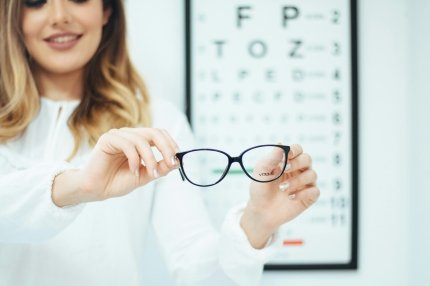
What questions to ask before the inspection
Before agreeing to an eye test in Ternopil at a specific optician, it is appropriate to ask:
who exactly will conduct the inspection and what are their qualifications;
Do they issue a prescription after verification?
Is this recipe for making glasses suitable for your case?
whether the interpupillary distance and other fitting parameters are checked;
Is it possible to apply again if there is discomfort after receiving the glasses?
or referred to an ophthalmologist if alarming signs are detected during the examination.
If the answers are vague or they don't explain to you what exactly they are checking, you should be careful.
When is an ophthalmologist needed?
A visit to an ophthalmologist is necessary if you have:
sudden or noticeable vision impairment;
eye pain;
eye injury;
severe redness, photophobia, discharge;
double vision;
flashes, "flies", darkening of part of the field of vision;
suspected infection or inflammation;
diabetes, glaucoma, cataracts or other known eye diseases;
the need to examine the child.
In such situations, selecting glasses without a medical evaluation may not be sufficient. Opticians can help with correction, but should not replace a diagnosis of diseases.

Eyeglass lenses: how not to get lost in materials and coatings
Eyeglass lenses differ not only in their power. The material, refractive index, design, coating, and purpose are important. That is why the selection of glasses should take into account the prescription, lifestyle, and expectations of the person.
Key parameters worth discussing:
Lens material: Modern polymer lenses are lighter than glass and are more commonly used for everyday glasses.
Lens index: For certain prescriptions, a higher index can make the lens thinner, but the appropriateness depends on the specific parameters.
Anti-reflective coating. Can reduce glare and increase comfort, especially when working with screens or driving in the dark.
Protective and strengthening coatings. Can increase scratch resistance, but do not make lenses completely invulnerable.
Photochromic lenses. Darken under certain lighting conditions, but their behavior depends on the environment, temperature, and type of glass in the car.
Progressive lenses. Provide multiple zones of vision, but require precise selection, proper frame fit, and an adaptation period.
Computer glasses. Can be useful under certain conditions, but are not a universal solution for all causes of eye strain.
You shouldn't choose lenses based solely on the principle of "the most expensive is the best." A quality optician should explain which options are truly necessary for your prescription and lifestyle.
How to choose frames: comfort is more important than first impressions
Eyeglass frames are often chosen based on design, but appearance is only one criterion. If the frame doesn't fit well, is too tight, slips, or isn't compatible with the lenses, even the most accurate prescription won't guarantee comfort.
When trying on, evaluate:
whether the frame presses on the bridge of the nose and temples;
Does it slip when you tilt your head?
Does it sit flat on the face?
whether the size of the light hole is suitable for your prescription;
whether the lens will be too thick or heavy in a particular frame;
Is it comfortable for you to look down, to the side, or to work at a desk?
Can the nose pads and earpieces be adjusted?
For stronger prescriptions, progressive lenses, or complex settings, it is best to choose a frame with a specialist. Not every fashionable shape is technically suitable for all lenses.
Contact lenses: why you shouldn't buy them without proper fitting
Contact lenses in Ternopil can be found in many opticians, but buying them "by the diopters of glasses" is risky. The prescription for glasses and the parameters of contact lenses are not identical.
When selecting contact lenses, the following are important:
lens power;
base curvature;
diameter;
material;
replacement mode;
wearing mode;
fitting the lens on the eye;
condition of the eye surface and tear film.
Contact lens selection should include training on how to put on and take off lenses, how to clean them, how long to wear them, and when not to wear them. Improper hygiene or wearing lenses can increase the risk of irritation, inflammation, and other complications.
It is worth being wary if the optician offers contact lenses without asking questions about previous experience, wearing habits, eye condition, and without explaining the care rules.
Children's optics: what is important for parents
Children's glasses in Ternopil need to be chosen especially carefully. For a child, not only accurate parameters are important, but also a secure fit, frame strength, comfort, and willingness to wear glasses every day.
Parents should pay attention to the following points:
The child's vision should be checked by an appropriate specialist;
if you have complaints or suspect a problem, you should consult an ophthalmologist;
the frame should be light, stable, without sharp elements;
glasses should not slip or press;
lenses should match the child's prescription and activity;
It is important to agree on the possibility of adjusting the frame after purchase.
You should not buy children's glasses "for growth" without consulting a specialist. An incorrect fit may prevent the child from seeing through the desired area of the lens.
Warranties, service and documents: what to clarify before payment
A warranty on glasses is one of the indicators of transparent service. At the same time, warranty conditions may vary depending on the optics, frame manufacturer, lens type, and nature of the damage. Therefore, it is better to clarify all important details before ordering.
Ask at the optician:
what exactly is included in the order price;
Is there a separate fee for an eye test?
whether they issue a recipe or order parameters;
will there be a check;
what warranty applies to the frame;
what are the warranty conditions for lenses and workshop work;
what is considered a manufacturing defect and what is considered mechanical damage;
Is it possible to adjust the frame for free after purchase?
What to do if you feel uncomfortable with your new glasses.
A reliable approach is when the optician is not limited to the phrase "everything is of high quality here," but explains the rules in simple words and is ready to record them in documents.
How to evaluate reviews and consultation in optics
Reviews can be helpful, but don't just rely on the average rating. More useful are comments where people describe a specific experience: how the test went, whether they explained the recipe, how they resolved a warranty issue, or whether they helped with the adaptation.
Signs of quality consultation:
you are asked clarifying questions;
do not impose the most expensive option without explanation;
compare several solutions and explain the difference;
honestly talk about the limitations of lenses or frames;
they do not promise to “completely cure vision” with glasses;
issue documents and explain guarantees;
If necessary, it is recommended to consult a doctor.
Red flags - rush, pressure, refusal to explain parameters, reluctance to issue a prescription, promises of guaranteed results, or selling contact lenses without fitting.
Typical mistakes when choosing optics
Most often, buyers make mistakes not because of a lack of information, but because of haste. Here are some things to avoid:
Choose only by price. A cheap purchase can be unsuccessful if the lenses or frame do not meet your needs.
Buying frames without considering your prescription. Not every shape is suitable for all lenses.
Don't specify the warranty. It's more difficult to find out the terms after payment.
Using an old prescription without checking. Vision may change, and the old settings may not be suitable.
Buy contact lenses with a prescription for glasses. These are different parameters and a different method of correction.
Ignore discomfort. If after the adaptation period the glasses cause significant discomfort, you should consult an optician or a specialist.
Postpone a visit to the doctor if you have symptoms. Glasses are not a substitute for medical care for pain, injury, or sudden vision loss.
Checklist before ordering glasses or lenses
Before placing an order, go through a short list:
I understand who tested my vision and what was tested;
the recipe parameters were explained to me;
I know which lenses I choose and why;
the frame is comfortable and fits my prescription;
I was explained the coatings and their practical benefits;
I receive a receipt and clear warranty terms;
I know where to go if I feel uncomfortable;
if these are contact lenses, I was explained the wearing regimen and care rules;
If the glasses are for a child, the selection is coordinated with the appropriate specialist.
This approach helps you choose not just glasses in Ternopil, but a solution that will be comfortable and safe in daily use.
FAQ
Can I have my vision checked at an optician's?
Yes, in many opticians you can check your vision and choose a correction for your glasses. But the scope of the check depends on the specialist and the equipment. If there are symptoms, chronic eye diseases or a sharp deterioration in vision, you need an ophthalmologist.
Does an eye exam at an optician replace an ophthalmologist consultation?
Not always. An eye exam can help with choosing glasses, but it is not a complete diagnosis of eye diseases. If you experience pain, injury, inflammation, flares, double vision, or sudden changes in vision, you should see a doctor.
How often should you have your vision checked?
The frequency depends on age, complaints, eye condition, presence of diseases and recommendations of a specialist. If discomfort appears, vision becomes blurred or old glasses no longer fit, you should not postpone the check-up.
Can I buy contact lenses with a prescription for glasses?
Not recommended. Contact lenses require specific parameters, including base curvature, diameter, material, and fit assessment. Contact lens selection should be performed by a specialist.
What glasses are best for working at the computer?
It depends on the prescription, duration of work, distance from the screen, lighting and complaints. Some people are satisfied with properly selected regular glasses with anti-reflective coating, while others may need special office or computer solutions.
What to ask about the warranty on glasses?
Find out what exactly is covered by the warranty: frame, lenses, coatings, workshop work. Also ask what is considered a manufacturing defect, whether mechanical damage is covered, and whether service adjustments to the frame are available.
How to choose children's glasses?
Start by getting your eyes checked by an eye care professional. The frame should be light, strong, comfortable, and fit your face properly. Don't buy glasses for your child without a prescription or "for their height" without consulting them.
Should you trust reviews about optics?
Reviews are useful if they describe a specific experience: quality of testing, recipe explanation, after-purchase service, working with warranties. But decisions should be made not only based on evaluation, but also on your own consultation and transparency of conditions.
Conclusion
When choosing an optician in Ternopil, look beyond the price and frame design. It is important that you receive a quality vision check, lens options explained, comfortable frames selected, no unnecessary charges imposed, and clear guarantees.
The best optician is a place where they speak to you clearly, record your parameters, respect your choices, and, if necessary, advise you to see a doctor. This approach helps you get glasses or contact lenses that truly meet your needs.
Informational disclaimer: the material is for reference purposes only and does not replace the consultation of an ophthalmologist. Do not use the article for self-diagnosis or self-selection of treatment, glasses or contact lenses. In case of pain, injury, sharp deterioration of vision, redness, flashes, double vision or other alarming symptoms, consult a medical professional.

