
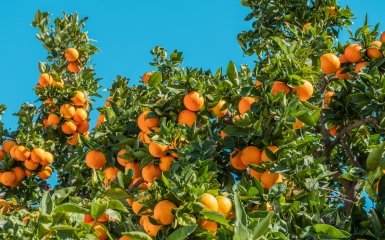
An orange can have a perfectly orange peel, be large and look ripe, but after peeling it can turn out to be sour or almost dry. At the same time, a small fruit with greenish areas can sometimes be much sweeter and juicier. The reason is that the appearance of citrus fruits does not always correspond to their taste. The color of the peel depends on the variety and growing temperature, the size does not determine the amount of sugar, and the thickness of the peel does not guarantee juiciness.
To choose a good orange, look for a fruit that is heavy for its size, firm, and free of soft spots, mold, or damage. However, these characteristics are primarily used to assess freshness and likely juiciness. Sweetness depends largely on the variety, the ripeness at harvest, and the sugar-to-acid ratio.
We'll figure out how to choose delicious oranges in a supermarket or market, which varieties are better suited for fresh consumption, what's the difference between Navel and Valencia, whether you should buy greenish fruits, and how to store citrus fruits so they don't lose their juice.
What really determines the sweetness of an orange
The taste of an orange is determined not only by the amount of sugar.
Its pulp contains natural sugars, organic acids, and aromatic compounds. It is their combination that creates the characteristic citrus flavor.
Two oranges may have similar sugar content, but one will seem significantly sweeter.
The reason is different acidity.
If the fruit has a lot of organic acids, the sweetness is felt less strongly. If the acidity is lower, the same level of sugar may be perceived as more pleasant and milder.
What is the ratio of sugar to acids?
In citrus growing, one of the quality indicators is the ratio of soluble solids to juice acidity.
The soluble solids content is often measured in °Brix. The bulk of soluble solids in orange juice are sugars, although the measure also includes other dissolved components.
Together with determining acidity, this helps to assess the degree of ripeness and flavor balance of the fruit.
However, in a store, the buyer usually does not have the opportunity to measure these indicators.
Therefore, it is necessary to use indirect signs: variety, skin condition, weight, and elasticity.
No external sign can accurately determine the sweetness of an individual orange. The most reliable way to assess the taste of a particular batch is to taste one of its fruits.
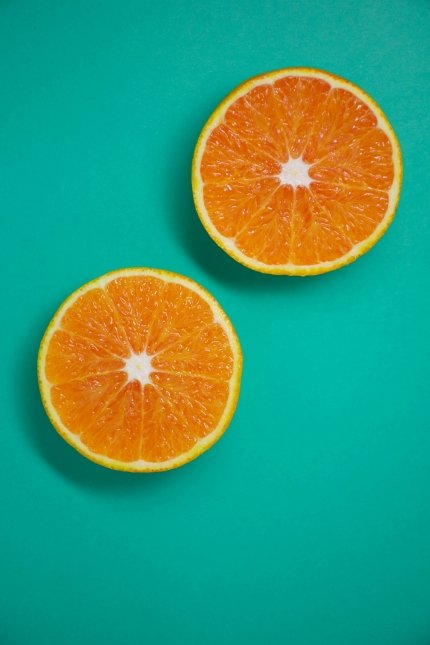
How to choose a juicy orange in one minute
You don't need to spend a long time examining each fruit in the store. It's enough to check several characteristics sequentially.
Look at the variety. Navel, Washington Navel, or Cara Cara are often good for fresh consumption. Valencia is good for juicing.
Compare the weight. Among two oranges of approximately the same size, pay attention to the heavier one.
Check for firmness. The fruit should be firm, with no dips or areas that are too soft.
Inspect the skin. Avoid deep cracks, wet spots, mold, and sap leakage.
Assess freshness. Heavily wrinkled, light, and overdried fruits may have less juicy flesh.
Check the entire batch. If there are many rotten or damaged fruits among the fruits, it is better to choose another batch.
This will help reduce the risk of buying spoiled or dried-out oranges. However, even fruit that meets all the criteria may turn out to be more sour than expected.
Why are heavy oranges usually juicier?
Weight is one of the most useful practical guidelines when choosing citrus fruits.
When comparing two oranges of the same size, the heavier one often has a greater amount of juicy pulp.
In contrast, fruit that has lost a lot of moisture during long-term storage may appear disproportionately light.
How to properly compare oranges
Take two fruits of approximately the same diameter.
Hold one in each hand and compare the feel of the weight.
If the difference is noticeable, the heavier orange may be a better choice for fresh juice.
However, it is important not to confuse juiciness with sweetness.
High water content does not guarantee a high sugar content. A very juicy orange may well have a distinctly sour taste.
Therefore, weight is better evaluated together with other characteristics, rather than being used as the sole criterion.
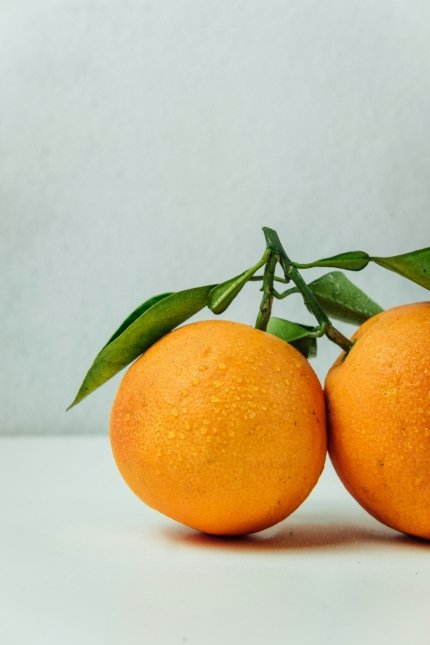
What should the skin of a sweet orange be like?
The condition of the skin primarily helps to assess freshness and the absence of damage.
A quality orange usually has a fairly firm surface, without large soft areas or signs of rot.
However, perfectly smooth skin is not necessary.
Some varieties have naturally pronounced pores, a rough or uneven surface.
Smooth or porous: which skin is better?
Finely porous, dense skin is often found in high-quality fruits.
But large pore size alone does not mean that the orange is sour or dry.
The texture depends on the variety, weather conditions and fruit development.
Therefore, the statement that all sweet oranges necessarily have thin and smooth skin is an exaggeration.
The absence of signs of spoilage is much more important.
What damages should be avoided?
You should not buy oranges that have:
mold or unusual fluffy coating;
large soft spots;
wet areas with sap leaking;
deep cracks;
punctures and significant mechanical damage;
a distinct smell of fermentation or rot.
Small dry surface scratches do not necessarily affect the quality of the pulp.
But damage that compromises the integrity of the skin increases the risk of rapid spoilage.
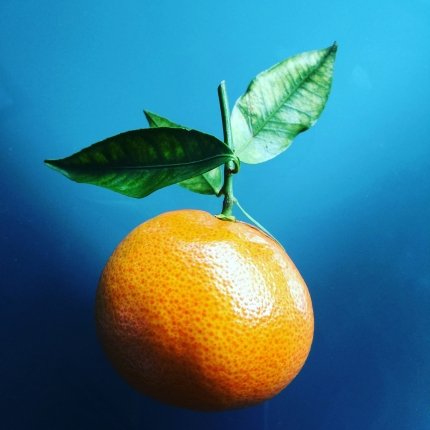
Does a bright orange color mean that the orange is sweet?
No. The rich color of the skin is not a reliable indicator of sweetness.
The color of citrus fruits depends on natural pigments, primarily chlorophyll and carotenoids.
Color change is greatly influenced by air temperature during cultivation.
In certain climatic conditions, a ripe and sweet orange may retain greenish areas of the peel.
This is especially true for individual batches of the Valencia variety.
Why can a ripe orange be greenish?
As citrus fruits ripen, the green pigment in the peel gradually breaks down, and the yellow and orange pigments become more visible.
But the intensity of this process depends on temperature.
In warm conditions, the skin may not develop a uniform orange color, even when the flesh already tastes good.
Sometimes the skin of mature fruits turns green again.
Therefore, a small green spot is not an automatic sign of immaturity.
However, a completely green fruit of an unknown variety cannot be considered ripe without additional information.
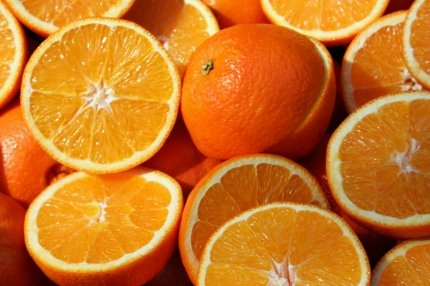
Can oranges be specially made orange?
In commercial citrus production, the opposite greening procedure is used - degreening , that is, removing the green color of the peel.
For this, they can use ethylene, which contributes to the destruction of chlorophyll.
The purpose of the procedure is to improve the appearance of fruits that have already reached the required maturity.
A change in skin color does not mean a significant increase in sugar content in the pulp.
That is why seemingly perfectly orange oranges can have different tastes.
Which varieties of oranges are the sweetest?
Variety is an important reference point, as different oranges have distinctive characteristics of pulp, acidity, juiciness, and number of seeds.
However, the taste can also vary within the same variety.
It is influenced by climate, season, growing conditions, and degree of maturity at harvest.
Comparison of popular varieties
| Variety or group | Taste and features | Best use |
| Washington Navel | Usually balanced sweet taste, seedless | Eat fresh |
| Cara Cara | Sweet taste, pink-red flesh | Desserts, fruit salads |
| Valencia | Very juicy flesh, distinct citrus flavor | Juice, smoothies |
| Lane Late Navel | A late representative of the Navel group, usually seedless | For fresh consumption |
| Moro | Dark red flesh, characteristic aroma | Fresh fruits, desserts |
| Tarocco | Red-pigmented orange with a rich flavor | Fresh fruits and juices |
The characteristics given are typical and not a guarantee of the taste of a particular fruit.
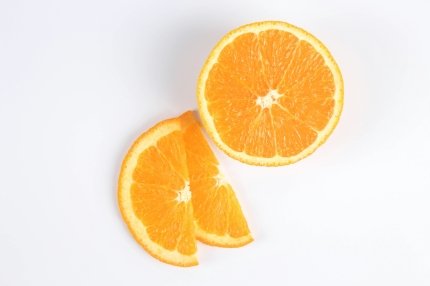
Navel: A good choice for daily consumption
The Navel Group is known primarily for its convenience.
These oranges usually have no seeds, are relatively easy to peel, and the flesh is well suited for consumption in slices.
One of the characteristic features is a small depression or protrusion on the side opposite the stem.
It is sometimes called the "navel."
However, this performance itself is not an indicator of sweetness.
Cara Cara: pinkish flesh and mild flavor
Cara Cara belongs to the Navel group, but is distinguished by its unusual flesh color.
Inside, the fruit has a pinkish-reddish hue, due to the presence of carotenoid pigments, particularly lycopene.
These oranges are valued for their sweet taste and pleasant aroma.
At the same time, Cara Cara should not be confused with classic red oranges: their color has a different pigmentary nature.
Valencia: a particularly juicy variety
Valencia is one of the most famous varieties for making orange juice.
Its flesh is usually very juicy, and the skin is often thinner and adheres more tightly to the segments.
Because of this, peeling such an orange is sometimes more difficult than peeling a Navel.
Additionally, Valencia may have bones.
But if the main goal is to make fresh juice, this is often a good choice.
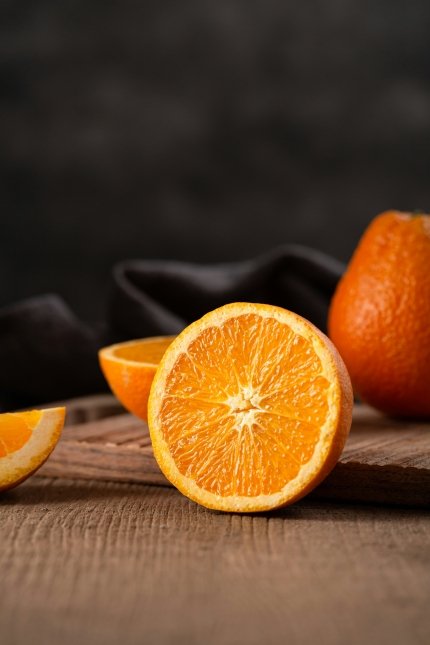
Red oranges: are they always sweeter?
Moro, Tarocco and other red oranges can have an unusual aroma and rich flavor.
Their red color is largely due to anthocyanins.
However, dark flesh does not automatically mean higher sugar content.
Some blood oranges have quite a pronounced acidity.
Therefore, it is worth buying them for the characteristic flavor profile, not just the expectation of maximum sweetness.
Can you determine the sweetness of an orange by its "navel"?
There is a popular belief that oranges with a large depression at one end are necessarily sweeter.
In fact, this element is associated with an anatomical feature of the fruits of the Navel group.
It is not a universal indicator of the amount of sugar.
Even among oranges of the same variety, the size of such a protrusion can vary.
Therefore, there is no need to look for the largest "navel" and consider it a guarantee of good taste.
It is much more useful to pay attention to the variety, firmness, and general condition of the fruit.
Should you choose large oranges?
Large oranges are easy to peel and may look more attractive.
However, size does not determine sweetness.
The size of the fruit is influenced by the variety, the number of fruits on the tree, water supply, and growing conditions.
Therefore, a small orange may well be sweeter than a large one.
Why oversized fruits are not always more profitable
Sometimes the proportion of skin in a large fruit can be significant.
But it depends on the variety and the conditions of fruit formation.
It cannot be argued that large oranges necessarily have thick skin or less juice.
For evaluation, it is more practical to compare fruits of the same varietal group and of approximately the same size.
If you buy oranges by the kilo, pay attention not only to the number of fruits, but also to their condition.
Can you tell a good orange by its smell?
A pleasant citrus aroma can be an additional sign of freshness.
However, the smell of the peel does not allow you to accurately determine the sweetness of the pulp.
Aromatic substances are contained mainly in the essential oils of the outer layer of the peel.
Their intensity depends on the grade, temperature, surface condition, and mechanical impact.
For example, if you lightly rub the peel, the aroma may become stronger, but the amount of sugar inside will not change.
What smell should alert you?
You should not buy oranges if they make you feel:
the smell of fermentation;
a distinct musty smell;
smell of decay;
an unusual pungent aroma accompanied by damage to the fruit.
If the outer surface is dry and intact and the smell is weak, this in itself does not mean that the orange is tasteless.
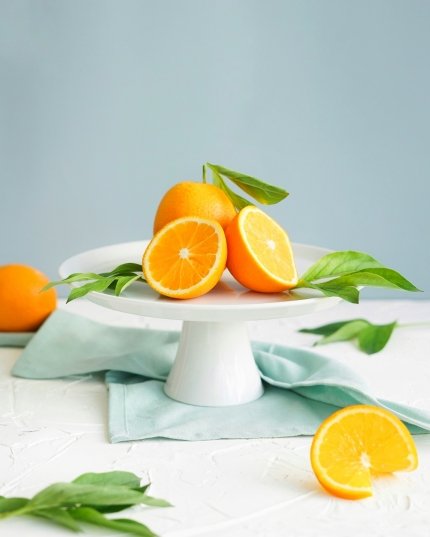
When is the best season for sweet oranges?
Seasonality is important, but depends on the country of cultivation and the specific variety.
In the Northern Hemisphere, many varieties of the Navel group ripen in winter or spring.
Valencia is usually a later variety that can be harvested in spring and summer.
In the Southern Hemisphere, the seasons are opposite.
That is why oranges are available in Ukrainian stores almost all year round.
Does country of origin matter?
On the shelves you can find fruits from Spain, Egypt, Turkey, South Africa and other countries.
However, the name of the country does not guarantee a certain sweetness.
More important are the variety, the climate of a particular region, the time of harvest, and the conditions of transportation.
Therefore, an orange from one country may be very sweet in one season and much more sour in another.
If the store lists the variety, this information is usually more useful for predicting taste than the country of origin flag itself.
Which oranges are better to buy for juice and which ones for eating?
Before buying, it's helpful to determine exactly how you plan to use the fruit.
Not every juicy orange is equally easy to peel by hand, and not every sweet fruit is best suited for storing freshly squeezed juice.
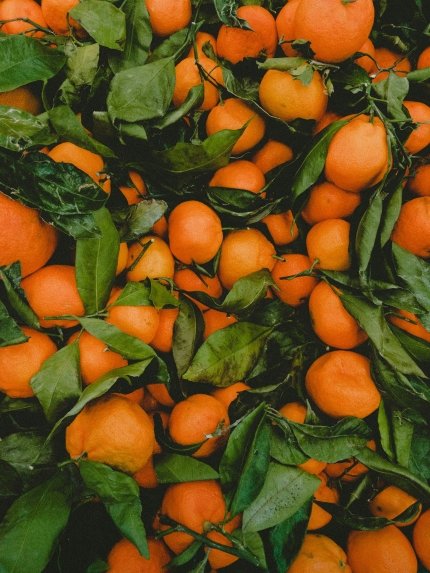
For fresh consumption
Usually, Navel oranges are convenient.
They are mostly seedless and easily divided into segments.
Cara Cara is also suitable for fruit salads and desserts where taste and appearance are important.
For orange juice
Valencia is often chosen due to its large amount of juice.
Navel oranges can also be squeezed, but their juice may gradually become more bitter after squeezing due to the formation of certain compounds.
Therefore, it is best to consume Navel juice immediately after preparation.
For baking and zest
If you need zest, pay attention to the quality of the peel and information about the processing of the fruit after harvest.
To use the peel in food, it is better to choose fruits for which there are no restrictions on its nutritional use.
Before grating the zest, the orange must be washed.
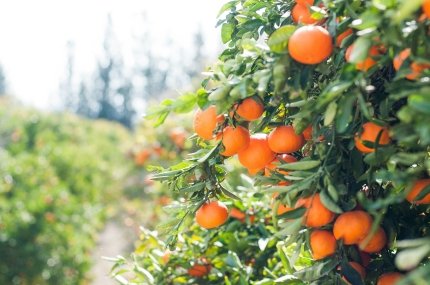
Why are oranges dry inside?
Sometimes the fruit has a normal skin, but after cutting it turns out to be almost juiceless.
The reasons may be different.
One of them is moisture loss during long-term storage.
The structure of the pulp is also influenced by the variety, degree of maturity, and growing conditions.
In certain cases, the juice sacs may lose their normal texture and the pulp may become dry or fibrous.
Can you spot a dried orange before buying?
There is no full guarantee.
But the risk is higher if the fruit is very light for its size, has severely wrinkled skin, or looks dried out.
You should also not buy oranges with pronounced soft areas.
At the same time, a small dry scratch on the surface does not mean that all the pulp is spoiled.
Will sour oranges become sweeter at home?
No. Oranges are not a fruit that continues to ripen significantly and accumulate sugar after harvest.
Unlike bananas, peaches, or some other fruits, citrus fruits don't become significantly sweeter just because they sit in the kitchen for a few days.
After harvesting, their color may change, and the pulp may gradually lose moisture.
However, this is not the same as ripening on a tree.
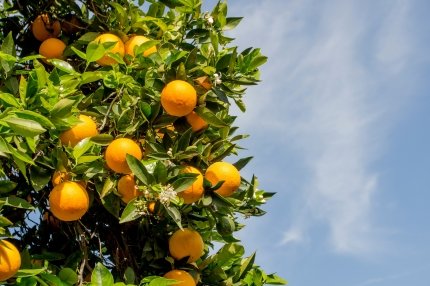
Why an orange sometimes tastes better after being refrigerated
Temperature affects the perception of taste and aroma.
Therefore, the same orange may be perceived differently when it is very cold and when it is at room temperature.
But this does not mean an increase in sugar content.
If the fruit was sour when purchased, long-term storage will not guarantee that it will become sweet.
How to store oranges so they stay juicy
Proper storage helps slow moisture loss and fruit spoilage.
If you plan to eat the oranges in the coming days, you can keep them in a cool place at room temperature.
However, for longer-term storage, a refrigerator is usually more practical.
How long can oranges last without a refrigerator?
In a cool room, quality fruits can be stored for several days or longer.
But at high temperatures they lose freshness faster.
For short-term storage in normal home conditions, it is convenient to aim for approximately 3–7 days, regularly checking the condition of the fruits.
If it's warm in the kitchen, it's best to put the oranges in the refrigerator immediately.
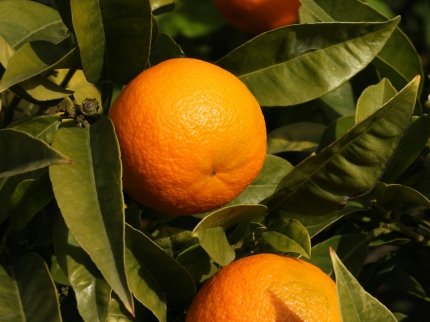
How to store oranges in the refrigerator
Under proper conditions, fresh whole oranges can be stored for approximately 2–4 weeks. Individual quality batches will last longer, but this depends on initial freshness and storage conditions.
It is advisable to keep the fruits dry, ensuring some air circulation.
Do not pack wet oranges tightly in a bag without ventilation.
If a spoiled fruit appears among the fruits, it should be removed immediately and the neighboring fruits checked.
Do you need to wash oranges before peeling?
Yes. Even if you don't plan to eat the peel, you still need to wash the orange.
Its surface may contain dust, dirt, microorganisms, and residues of substances used during cultivation or post-harvest processing.
When cleaning by hand or cutting with a knife, dirt from the skin can get onto the flesh.
How to properly wash citrus fruits
Wash your hands before preparing fruit.
Rinse a whole orange under running water.
Gently rub the surface with your hands.
If necessary, use a clean, soft brush without damaging the skin.
Dry the fruit with a clean towel or paper towel.
There is no need to wash oranges with soap, dish soap, or household cleaners.
Also, do not use unknown chemical solutions to "disinfect" fruit.
If an orange has mold or signs of rot, washing it will not make it safe again.
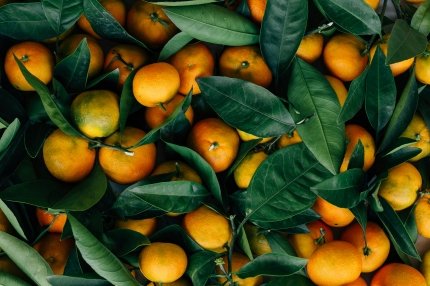
What to do if you bought sour oranges
If the fruit turns out to be too acidic to eat fresh, it can be used in dishes where acidity would be appropriate.
For example, orange juice is suitable for marinades, salad dressings, and some sauces.
The pulp can be added to fruit desserts, combined with sweeter ingredients.
Another option is to make orange sauce for poultry.
But it's important to distinguish between a sour taste and spoilage.
If an orange shows signs of rot, fermentation, or mold, it should not be used for culinary purposes.
The most common myths about sweet oranges
Myth 1. The oranger the peel, the more sugar
The color of the skin depends on pigments and growing temperature. It does not allow you to accurately determine the sweetness.
Myth 2. The biggest oranges are always the tastiest
The size of the fruit is not an indicator of the ratio of sugars and acids.
Myth 3. If an orange is heavy, it is necessarily sweet
Weight helps to roughly estimate juiciness, but does not guarantee a sweet taste.
Myth 4. Greenish oranges are unripe.
Some varieties may have green areas on the skin even when fully ripe.
Myth 5. Sweet oranges always have thin skin
Thickness depends on the variety and growing conditions. It does not directly determine the taste.
Myth 6. Sour oranges will ripen in a few days
Oranges do not continue to accumulate significant sugar after harvest. Waiting will not turn a sour fruit into a sweet one.
Conclusion
To choose sweet and juicy oranges, you shouldn't focus only on the brightness of the peel or size.
The most useful external characteristics are relatively heavy weight, density, firmness, and lack of damage. They help assess freshness and probable juiciness, but do not guarantee sweetness.
Navel and Cara Cara are often good for fresh consumption, and Valencia is good for juice. If you have the opportunity to taste a fruit from a specific batch, this will give you the most accurate idea of its flavor.
And most importantly: oranges do not become sweeter after picking. Therefore, it is better to choose a quality fruit right away than to hope that it will ripen at home.
FAQ: Frequently Asked Questions About Choosing Sweet Oranges
How to choose the sweetest oranges in the store?
Start with the variety: Navel and Cara Cara are often good for fresh consumption. Then choose firm, firm fruit that feels heavy for its size. Avoid soft spots, mold, and deep blemishes. However, the exact sweetness can only be determined by tasting the flesh.
Which oranges are sweeter: large or small?
Size does not determine sweetness. A small orange may contain more sugar or have lower acidity than a large one. It is better to pay attention to the variety, the condition of the fruit and its relative weight.
What kind of oranges is best to buy for eating?
Washington Navel, other Navel and Cara Cara varieties are usually suitable for consumption in slices. They are mostly seedless, have a pleasant taste and are relatively easy to peel.
How to tell if an orange is juicy without cutting it?
Compare the weight of several fruits of approximately the same size. Heavier oranges often have more juice. Also pay attention to the elasticity and the absence of severely wrinkled skin. But these signs are not a 100% guarantee of the result.
Can I buy oranges with green spots?
Yes, if it is a natural color and the fruit is firm and shows no signs of spoilage. Some fully ripe oranges, such as Valencia, may retain greenish areas of the peel. However, the green color itself does not confirm ripeness.
Are navel oranges really sweeter?
Not necessarily. This indentation is typical of the Navel variety. It helps identify the type of orange, but its size is not an accurate indicator of sweetness.
Which oranges are best for juice?
Valencia is one of the most common varieties for juicing due to its juicy flesh. Navel can also be used, but its juice sometimes becomes bitter faster after juicing, so it is best to drink it immediately.
Why did the orange turn out to be dry inside?
This may be a result of moisture loss during long-term storage, variety characteristics, or the condition of the pulp. Disproportionately light, severely wrinkled fruits are more likely to be suspected of being insufficiently juicy.
Will oranges become sweeter if they are left for a few days?
No. Oranges do not continue to ripen significantly or accumulate sugar after harvest. Their appearance and moisture content may change during storage, but a sour fruit is not guaranteed to become sweet.
How long can you keep fresh oranges in the refrigerator?
Under proper conditions, whole fresh oranges usually keep well for about 2–4 weeks. The actual length of time depends on initial freshness, variety, and storage conditions. Fruit should be inspected regularly and spoiled fruit should be removed immediately.

