
There’s half an hour until guests arrive, and there are unwashed dishes in the kitchen, things are scattered in the living room, crumbs on the floor, and the bathroom plumbing urgently needs to be refreshed. In such a situation, trying to clean everything at once often leads to the fact that time runs out, and the result is almost imperceptible. In fact, in 30 minutes you can significantly improve the appearance of the apartment, if you don’t try to do a full-fledged general cleaning. It’s best to focus on the surfaces that are used most often, noticeable clutter, the kitchen, bathroom and open areas of the floor.
The main principle of quick cleaning is to eliminate the biggest sources of mess and contamination first, and then move on to the details. It is important not to sacrifice hygiene for speed or to use products that can damage surfaces.
We'll figure out how to clean an apartment in half an hour, what tasks are really worth doing, how much time to allocate to each area, and how to maintain order so that express cleaning doesn't turn into daily stress.
What can you really clean in 30 minutes?
Half an hour is enough for maintenance cleaning of an apartment that does not have significant accumulations of garbage, old grease, or other complex dirt.
During this time, you can clean up scattered items, wash major kitchen surfaces, freshen up the bathroom, dust accessible furniture, and vacuum the most used areas of the floor.
However, it is unlikely that you will be able to wash all the windows, clean the oven, disassemble the cabinets, remove old limescale, and fully disinfect the apartment in 30 minutes.
The result also depends on the area of the home, the initial condition of the rooms, and the number of people involved in the cleaning.
Which tasks have the highest priority?
To quickly get things in order, it is worth dividing things into three categories.
Required: remove trash, food debris, and dirt from kitchen surfaces and plumbing fixtures that people will use.
Desirable: dust visible surfaces, fold things, and vacuum main aisles.
Optional: taking down shelves inside cabinets, moving heavy furniture, washing windows, or cleaning hard-to-reach places without urgent need.
This distribution helps avoid a situation where half of the available time is spent on a minor detail, leaving the kitchen and bathroom dirty.
What to prepare before express cleaning
Speed depends not only on how actively a person moves around the apartment.
Time is also spent searching for napkins, moving things around, and repeatedly returning to the cabinet with household chemicals.
Therefore, it is most convenient to have a compact set of tools.
For quick cleaning you will need:
several clean microfiber cloths;
a suitable detergent for kitchen surfaces;
plumbing cleaner;
a separate sponge or brush for the bathroom;
garbage bag;
a basket or container for things that need to be laid out;
vacuum cleaner or other suitable floor tool;
clean hand towel.
It is not necessary to use many different cleaners.
For most common household stains, a suitable detergent and mechanical cleaning are sufficient.
It is important that all preparations are compatible with the materials on which they are used.
Step-by-step plan for cleaning an apartment in 30 minutes
In order not to waste time, it is convenient to immediately determine the duration of each stage.
The schedule given is for one person and an apartment with a moderate level of daily clutter.
| Time | Task | Main result |
| 0–3 minutes | Preparation and collection of obvious garbage | Cleared aisles and work surfaces |
| 3–10 minutes | Kitchen | Clean countertops, sink, organized dishes |
| 10–16 minutes | Bathroom and toilet | Clean basic plumbing |
| 16–22 minutes | Living room or main room | Tidy things up, clean accessible surfaces |
| 22–26 minutes | Hallway | Organized shoes, clean entrance area |
| 26–30 minutes | Floor and finish | Visible trash removed from main routes |
This is a tentative plan, not a guaranteed standard.
If the apartment is large or there is significant contamination in one of the rooms, you need to change your priorities.
First 3 minutes: Eliminate the biggest mess
At the beginning, it is important to quickly clear surfaces and passages.
Take a trash bag and collect the obvious waste: used tissues, packaging, paper, and other trash.
Then remove items that are not in their proper places.
Move dirty dishes to the kitchen, clothes to the laundry basket, and children's toys to the appropriate container.
If there are a lot of things, they can be temporarily placed in a separate basket for further sorting.
But don't hide dirty dishes, food leftovers, or items that could get damaged there.
The goal of the first stage is not to create perfect order in the closets, but to free up space for cleaning.
How to quickly clean the kitchen in 7 minutes
The kitchen needs special attention, as this is where food is prepared and stored.
Therefore, the priority is not decorative details, but the cleanliness of surfaces that come into contact with food.
What to do first
Start with the dishes.
If you have a dishwasher, load it according to the instructions.
If you wash dishes by hand, first clean the items that create the most mess and are needed for later use.
Don't try to scrub old carbon deposits off a pan in a few minutes. If the material allows soaking, leave it for separate cleaning.
After washing the dishes, remove crumbs and food residue from the countertop.
Then clean the work surfaces with a suitable product.
If necessary, rinse off any remaining cleaner according to the instructions, especially if the surface will come into contact with food.
How to freshen up your kitchen sink
Remove food residue from the drain grid.
Rinse the sink and clean it with a soft sponge and a suitable detergent.
After that, wipe the faucet and accessible areas around it.
Do not use harsh abrasives on surfaces that may scratch.
If the sink is made of natural stone or has a special coating, you must follow the manufacturer's recommendations.
What can be left for later?
Don't waste time completely washing the refrigerator, cleaning the oven, or dismantling kitchen drawers.
Such tasks require separate time and appropriate resources.
If there is dried grease on the stove that cannot be removed by normal wiping, it is best to come back to it later.
During express cleaning, priority is given to fresh dirt and surfaces used daily.
How to clean the bathroom and toilet in 6 minutes
In the bathroom, it is important to combine speed with hygiene.
This is especially true for toilets, sinks, faucets, and frequently touched surfaces.
In what order to clean
First, remove unnecessary items from the sink and accessible shelves.
Clean the sink and faucet with a suitable detergent.
Then wipe the mirror if there are any noticeable stains or splashes.
After that, go to the toilet.
Use separate tools for it that are not used at the sink or in the kitchen.
Clean exterior surfaces, seats, and accessible areas according to the product instructions.
Clean the inner surface of the bowl with a special brush.
What is important not to miss
Check for toilet paper and a clean hand towel.
Remove trash from the trash can if it is full.
If there is water on the floor, wipe it up to reduce the risk of slipping.
There is no need to try to wash off old plaque with strong preparations in the last minutes before the arrival of guests.
Some products require prolonged contact, additional rinsing, and ventilation.
How to quickly tidy up your living room in 6 minutes
In the living room, scattered items, a dirty coffee table, and untidy textiles have the greatest impact on the overall appearance of the apartment.
Start with what takes up the most space.
Return the cushions to the sofa, fold the blanket, and clear the floor of objects.
After that, clear the table of cups, packages, and other things that shouldn't be there.
Which surfaces should be wiped?
First, clean the ones that are actively used:
coffee or dining table;
accessible shelves with noticeable dust;
desktop;
door handles as needed;
other surfaces that are clearly contaminated.
For hard surfaces, use a clean cloth and an appropriate cleaner.
If the material allows wet cleaning, a slightly damp microfiber often helps collect dust more effectively than a regular dry cloth.
There is no need to spray water or all-purpose cleaners directly on your TV, computer, or other electronics.
For screens and devices, use methods authorized by the manufacturer.
Why you shouldn't move furniture
During a general cleaning, cleaning under the sofa and cabinets may be quite appropriate.
But with limited time, moving large objects often creates more work than it can complete.
So focus on the accessible areas.
The exception is cases where there is a spilled liquid, a dangerous object, or other contamination under the furniture that cannot be put away.

How to tidy up your hallway in 4 minutes
The hallway is a place where sand, dust, moisture from shoes, and small items quickly accumulate.
Therefore, the main task is to ensure a free and clean passage.
First, place your shoes in the designated area.
Place jackets, bags, and accessories on hooks or in a closet.
Remove packages, boxes, and other objects from the floor that interfere with movement.
Then clean any visible dirt near the door.
If the mat is wet, check to see if there is any water remaining under it.
There is no need to wash the floor over sand and small debris: it is better to remove solid particles first.
Last 4 minutes: Floor and finishing cleaning
The floor often occupies the largest area among the surfaces available for cleaning.
However, it is not always possible to thoroughly clean all rooms in four minutes.
Therefore, it is worth starting with the most used routes: the hallway, the kitchen, and the central part of the living room.
If you have a vacuum cleaner, remove crumbs, sand, fur, and visible debris.
For localized stains, use an appropriate wet cleaning method.
It is important not to apply excessive amounts of water to laminate or wood floors.
Moisture can penetrate the joints and damage the coating.
If there is time, inspect the room and remove any remaining obvious dirt.
It is better to clean a few of the most used areas thoroughly than to hastily spread dirt throughout the apartment with a wet mop.
How to speed up cleaning without losing quality
Express cleaning becomes much easier if you don't perform unnecessary steps.
Several practical techniques help reduce the number of repetitive movements and get noticeable results faster.
Define completion of each task
One of the reasons for the delay in cleaning is the lack of a clear criterion for readiness.
For example, after wiping down the kitchen countertop, you may notice stains on the stove, then move on to the range hood, and ten minutes later discover that the initial work was never completed.
It is better to determine the outcome in advance.
For the kitchen, this could be a clean work surface, cleared dishes, and an empty sink.
For the bathroom, the main plumbing fixtures are cleaned and the floor is dry.
This makes it easier to control time.
Use separate wipes for different areas
Reusing the same dirty wipe on different surfaces can transfer contamination.
It is especially undesirable to use the same fabric for the toilet and kitchen.
A practical solution is to have separate napkins for kitchen surfaces, furniture, and the bathroom.
After cleaning, reusable cloths should be rinsed and dried completely.
Do not apply more product than necessary.
Excess detergent does not necessarily speed up cleaning.
On the contrary, it can leave streaks and a sticky residue that will have to be washed off repeatedly.
Follow the concentration specified by the manufacturer.
For most fresh household stains, it is not necessary to immediately use aggressive products.
Eliminate the source of the odor, don't mask it
If your apartment smells bad, air freshener will not replace cleaning.
First, check the trash can, kitchen sink, food scraps, and damp cloths.
After removing the source of the odor, provide ventilation if weather conditions and outdoor air quality permit.
There is no need to use large amounts of aromatic sprays or essential oils.
Strong odors can irritate sensitive people, and certain essential oils pose a risk to pets.
What to clean first if the apartment is very cluttered
If there are a lot of things on the surfaces, the standard schedule may not work.
Then most of the time will have to be spent freeing up available areas.
You don't need to start by thoroughly wiping the dust off a shelf filled with dozens of items.
First, determine which areas need to be made usable.
For example, for an apartment that hasn't been cleaned in a long time, priorities might be the kitchen countertop, sink, toilet, and safe passageways.
How to categorize clutter
It is convenient to use three simple categories:
garbage that can be thrown away immediately;
things that have a permanent place;
items that require further sorting.
For the latter category, a separate container is suitable.
However, after an express cleaning, you need to return to it, otherwise the mess will just move to another place.
If the accumulation of belongings interferes with movement or access to necessary spaces, safety should be the priority, not the decorative appearance of the home.
How to clean an apartment in 30 minutes if there are children at home
In an apartment with small children, priorities may differ.
It is important to first remove small objects that the child could swallow, food leftovers, spilled liquids, and other potential hazards.
Toys can be quickly folded into a container, but items that need washing should not be mixed with clean ones.
What to look out for
Start with the floor and surfaces that your child touches regularly.
Inspect the spaces near the sofa, table, and high chair.
Remove crumbs and food debris.
Use household chemicals according to instructions, keep out of reach of children, and do not leave products open while cleaning.
If a surface needs to be cleaned after contact with raw meat or other potentially hazardous contaminants, a simple quick wipe may not be enough.
In such cases, full appropriate treatment is required.
How to quickly remove pet hair
Hair usually accumulates on sofas, carpets, along baseboards and in places where the animal rests.
During express cleaning, it is not necessary to clean all the upholstery.
Start with the most used places.
For the sofa, you can use an appropriate vacuum cleaner attachment or a special tool for collecting fur, if it is compatible with the upholstery material.
For floors, it is better to use a vacuum cleaner that effectively collects hair and does not spread it through the air.
There is no need to spray fragrances on beds or surfaces that animals come into contact with.
Their safety depends on the composition and type of pet.
Is regular cleaning without disinfection sufficient?
For most everyday household situations, regular cleaning with water and a suitable detergent is sufficient.
Mechanical cleaning helps remove dirt, organic matter residues, and a significant portion of microorganisms from surfaces.
Disinfection has a different purpose - to destroy or inactivate certain microorganisms using special means.
It may be necessary if someone in the house is sick or there are other circumstances that require additional sanitation measures.
Why you shouldn't rush with disinfectants
Each drug has a contact time set by the manufacturer.
This is the period during which the product must remain on the surface to achieve the stated effectiveness.
If you wipe off the product immediately, the desired result may not be achieved.
Therefore, during express cleaning, there is no need to simulate disinfection by quickly applying and immediately removing the solution.
If disinfection is truly necessary, it must be carried out fully, following the instructions.
Do not mix chlorine bleach with vinegar, ammonia, acidic cleaners, or other household chemicals. Such combinations can produce dangerous gases.
Five mistakes that make quick cleaning take longer
Trying to do a general cleaning
With limited time, you need to identify the most important tasks.
Cleaning the oven, washing curtains, and organizing documents are usually not included.
Start with the most difficult stain
Old grease or limescale may require a separate product and significantly more time.
If the contamination does not pose an immediate danger, it is best to leave it for a scheduled cleanup.
Using dirty tools
An old sponge or clogged vacuum cleaner nozzle can reduce efficiency.
Before starting, make sure the tools are suitable for use.
Constantly moving between rooms
If you have to go back to the kitchen several times for napkins, then go to the bathroom for detergent, and then back to the living room, you lose time.
It is better to prepare everything you need and complete the main tasks in one area before moving on to the next.
Wash the floor before completing other work.
Dust, crumbs, and small debris from upper surfaces can end up back on the floor.
Therefore, it is usually advisable to clean the floor covering after the main work in the room is completed.
How to stay organized so cleaning takes less time
Express cleaning works best in a home where clutter doesn't accumulate for weeks.
For this, it is not necessary to carry out a full cleaning every day.
It is enough to maintain a few basic habits.
Clean up food spills after cooking
Crumbs, spilled drinks, and fresh grease stains are usually easier to remove immediately than after they have dried.
This also helps reduce the accumulation of dirt on kitchen surfaces.
Return things to their permanent places
If keys, chargers, documents, and accessories don't have a designated place, they gradually accumulate on tables and windowsills.
Small organizers and clearly defined storage areas can make daily housekeeping easier.
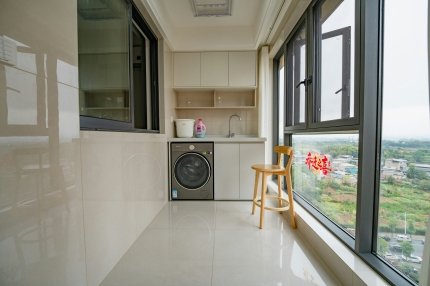
Don't leave wet cloths after cleaning.
Used sponges, mops, and cloths should be cleaned and dried.
Prolonged storage of wet instruments can contribute to the development of unpleasant odors and the accumulation of microorganisms.
Regularly check the most used surfaces
The frequency of cleaning depends on the number of residents, the presence of children, animals, and the usual lifestyle.
For example, the kitchen countertop needs to be cleaned after cooking, and the hallway floor needs to be cleaned when sand and dust actually accumulate.
It is not necessary to clean the entire apartment every day unless there is a corresponding need.
How to adapt express cleaning to different situations
Not all apartments require the same time allocation.
Therefore, the standard plan should be changed depending on what exactly needs to be fixed.
| Situation | Top priority |
| Guests will be arriving soon. | Hallway, living room, toilet, kitchen |
| After cooking a big dinner | Dishes, countertops, stove, kitchen floor |
| There are many children's toys in the apartment. | Safe walkways, floors, play areas |
| There is a dog or cat at home | Wool, resting places of the animal, floor |
| After a small home celebration | Garbage, food scraps, dishes, sticky stains |
| Daily maintenance of order | Most used areas and surfaces |
If there is only one room that needs cleaning, there is no need to waste time on the entire house just to follow a universal schedule.
For example, after cooking dinner, all 30 minutes may be needed just for the kitchen.
And before guests arrive, it's worth spending more time on the rooms they will be using.

Is it possible to clean an apartment efficiently in 15 minutes?
A short maintenance cleaning can be done in 15 minutes if the overall condition of the home is satisfactory.
However, the scope of work will have to be further limited.
Practical option:
3 minutes — pick up trash and scattered items;
4 minutes — clean the main kitchen surfaces;
4 minutes — fix the bathroom;
4 minutes — remove visible debris from the floor and tidy up the living room.
If at least one area requires more complex cleaning, the actual time will be longer.
Do not reduce the required contact time of disinfectants or skip important sanitation procedures just to meet the timer.
Conclusion
Cleaning an apartment in 30 minutes is possible if you focus on the main things: removing visible clutter, cleaning kitchen surfaces, plumbing fixtures, and the most used areas of the floor.
The most time is usually saved by having clear priorities, prepared tools, and eliminating unnecessary tasks.
At the same time, quick cleaning should not replace regular home maintenance or thorough cleaning of complex stains.
The optimal result is not perfect cleanliness of every inch of the apartment, but a tidy, comfortable, and hygienic space without unnecessary work.
FAQ: frequently asked questions about quick apartment cleaning
How to quickly clean an apartment in 30 minutes?
Start by picking up trash and scattered items. Then clean the kitchen surfaces, sink, and major plumbing fixtures. Next, tidy up the living room and hallways. Finally, vacuum the most used areas of the floor. The time depends on the size and initial condition of the apartment.
Where to start with express cleaning?
First, remove trash, food scraps, and objects that obstruct access to surfaces. This will help you quickly free up space and avoid wasting unnecessary time constantly rearranging things.
What needs to be cleaned before guests arrive?
The most common areas to prioritize are the hallway, living room, bathroom, and kitchen. It is important to remove visible clutter, clean major surfaces, ensure fresh towels and toilet paper, and eliminate sources of odors.
Is it possible to clean an apartment efficiently in 15 minutes?
You can do basic maintenance cleaning tasks if your apartment is not too dirty. However, you won’t be able to fully clean all the rooms in that time. You need to identify the most important areas.
How to quickly remove dust from furniture?
For most hard surfaces, a clean microfiber cloth can be used. If the material allows, it should be slightly dampened. For wood, screens, and other special coatings, follow the manufacturer's recommendations.
How to quickly clean the kitchen after cooking?
Remove food debris, load or wash dishes, clean countertops, stove, and sink with appropriate products. It is better to clean old carbon deposits and complex dirt separately if there is no need to solve the problem immediately.
Is it necessary to disinfect the apartment during each cleaning?
Usually not. For most everyday situations, regular cleaning is sufficient. Disinfection may be necessary if someone in the home is sick or there are other circumstances that require additional sanitation measures.
How to clean an apartment if things are scattered everywhere?
First, separate items into trash, items that have a designated place, and those that need to be sorted separately. Clear aisles and main work surfaces. Then move on to cleaning furniture, plumbing fixtures, and floors.
How to quickly remove cat or dog hair?
Use a vacuum cleaner with a suitable floor and upholstery attachment. Start by cleaning the pet's resting areas and areas that are most frequently used. For delicate upholstery, check the compatibility of the tools with the fabric.
How to make the apartment stay clean longer?
Regularly clean up fresh messes, return things to their regular places, clean kitchen surfaces after cooking, and take care of your cleaning tools. This will reduce the accumulation of clutter and reduce the time it takes to clean again.

