
Chicken fillets often turn out dry, thighs can sometimes be tough, and a baked whole chicken can have a golden crust but unevenly cooked meat. And this happens even when the recipe is followed exactly and the chicken has been marinated beforehand. The reason is usually a combination of several factors: different thicknesses of pieces, a bad heating method, too much acid in the marinade, or cooking it for too long.
The secret to juicy chicken is proper salting, even thickness of the meat, and control of the internal temperature. The marinade helps create flavor, but it doesn't guarantee tender texture on its own. Even well-marinated fillets can become dry if left on the heat longer than necessary.
We'll look at how to properly prepare chicken for cooking, which marinades really work, how long to bake the breast, thighs, and drumsticks, and what to do if the meat has already turned out dry.
Why does chicken turn out dry and tough?
When heated, the proteins in muscle fibers gradually change their structure. This process is called denaturation.
As the temperature increases, the fibers compact, some of the moisture is displaced, and the meat changes consistency.
This is a normal cooking process. The problem occurs when the heating process takes much longer than necessary.
Chicken fillet is particularly susceptible to drying out. It contains relatively little fat, so excessive moisture loss quickly affects the texture.
Thighs and drumsticks behave differently: they contain more connective tissue and fat, so they tolerate longer cooking times better.
Five main causes of dry chicken
Uneven thickness. The thin part of the fillet dries out while the thick part is still heating to the desired temperature.
Cooking time too long. Even a few extra minutes can significantly change the texture of a small piece.
Lack of temperature control. A golden crust does not mean that the meat inside is ready.
Excessive use of acid. Prolonged pickling in vinegar or lemon juice can deteriorate the structure of the outer layers.
Incorrect frying method. Too much meat in the pan prevents even browning.
To avoid these problems, it's worth starting with preparing the meat, rather than finding a complex marinade.
Secret #1. Choose the right part of the chicken
Different parts of the chicken have different fat content, connective tissue, and muscle thickness, so one cooking method may not always work for everyone.
| Part of a chicken | Features | The best cooking |
| Breast without skin | Non-greasy, dries easily | Quick frying, baking |
| Boneless thigh | Juicier, tolerates heat well | Frying pan, grill, oven |
| Shins | Contain connective tissue | Baking, stewing |
| Wings | Lots of skin, small pieces | Oven, air grill |
| Whole chicken | Different parts cook unevenly | Baking with temperature control |
If your main goal is to get juicy chicken without complicated technology, boneless thighs are often an easier choice than breasts.
For more diet-friendly dishes, you can use fillet, but it is important to monitor its readiness more carefully.
Secret #2. Make chicken fillets of the same thickness
Chicken breast usually has a thick center and a much thinner edge.
If you cook it whole, the thin part heats up faster and may lose its juiciness before the middle is cooked.
That's why equalizing thickness is one of the most effective cooking techniques.
How to properly prepare fillets
Place the chicken breast between two sheets of cling film or parchment.
Use the smooth side of a kitchen mallet or rolling pin.
Carefully flatten the thickest part.
Try to get a piece about 1.5–2 cm thick.
Do not beat the meat until it becomes too thin and breaks.
After this preparation, the fillet will heat up more evenly.
For large breasts, you can use another method - cut them horizontally into two thinner pieces.
Practical advantage: meat of the same thickness is easier to control in the pan and grill, and the risk of overdrying thin edges is significantly reduced.
Secret #3. Salt the chicken in advance
Salt affects the flavor of meat and the ability of proteins to retain moisture during cooking.
Under certain conditions, it changes the interaction of muscle proteins, allowing chicken to lose less juice during heating.
This explains why a properly salted breast often turns out to be more tender than a fillet that was seasoned immediately before frying.
What is dry pickling chicken?
Dry salting is a preparation method in which meat is evenly sprinkled with salt and kept in the refrigerator without adding water.
For home use, you can take approximately 0.8–1% salt by weight of meat.
For example, for 500 g of chicken fillet, this is 4–5 g of salt.
After evenly distributing the salt, place the meat in a sealed container and leave in the refrigerator for about 1–4 hours.
Before frying, you can pat the surface dry with a paper towel.
This dosage is a culinary guideline. If soy sauce or a ready-made spice mix with salt is used, their contribution must be taken into account.
Is saline solution needed?
An alternative method is to brine the chicken in a solution of water and salt.
It can help retain moisture, but requires precise proportions and proper cooling.
For daily cooking of small quantities of fillets, dry pickling is often more convenient: there is no need to prepare a solution, and it is easier to fry the surface until golden brown.
Secret #4. Don’t rely on marinade alone
The marinade primarily shapes the taste and aroma.
Garlic, herbs, spices, mustard, and oil help make chicken more interesting, but most of the aromatic components affect mainly the surface layers of the meat.
Salt can penetrate deeper. Acidic ingredients change the structure of proteins, but excessive exposure to them does not necessarily make the chicken more tender.
Therefore, you should not assume that the longest marinating time always provides the best result.
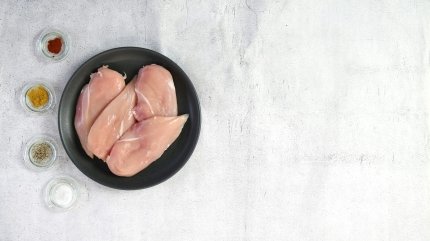
How long to marinate chicken
| Part of a chicken | Estimated time |
| Thin chicken fillet | 30–60 minutes |
| Whole breast | 1–3 hours |
| Boneless thighs | 1–4 hours |
| Drumsticks and wings | 2–6 hours |
| Whole chicken | 4–12 hours depending on the composition of the marinade |
These are culinary guidelines, not a universal norm.
Marinades with a lot of lemon juice, vinegar, or active fruit enzymes require especially careful use.
Chicken should be marinated in the refrigerator at a temperature no higher than 4 °C.
Three simple marinades for tender chicken
For most homemade dishes, a few readily available ingredients are enough.
The above proportions are calculated for approximately 500–600 g of chicken meat.
Yogurt marinade with paprika
The yogurt creates a thick coating, helps distribute the spices evenly, and adds a delicate sourness.
Ingredients:
natural yogurt without sugar - 100 g;
sweet paprika - 1 tsp;
garlic - 1 clove;
olive oil - 1 tsp;
salt - approximately 4 g, if the meat has not been salted before;
black pepper - to taste.
Mix all ingredients, cover the chicken, and refrigerate for 1–3 hours.
This marinade is well suited for thighs, drumsticks, and fillets that are planned to be baked.
Before frying in a pan, it is better to remove the excess yogurt mixture so that it does not burn.
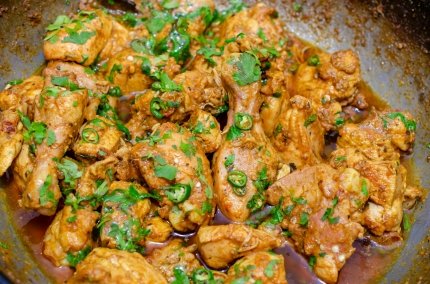
Honey-mustard marinade
The mustard adds spiciness, and the honey helps create an appetizing browned surface.
Ingredients:
Dijon mustard - 1 tbsp. l.;
honey - 1 tsp;
olive oil - 1 tbsp. l.;
dried thyme - ½ tsp;
salt and pepper - to taste.
Mix the ingredients and coat the chicken. Refrigerate for 30–90 minutes.
This option is particularly well suited for the oven.
Honey darkens quickly at high temperatures, so you should not cook such meat for a long time under intense top heat.
Marinade with soy sauce and ginger
Expressive taste without complex ingredients.
Ingredients:
soy sauce - 1½ tbsp. l.;
neutral vegetable oil - 1 tbsp. l.;
fresh ginger - 1 tsp;
garlic - 1 clove;
rice vinegar - 1 tsp;
black pepper - to taste.
Mix the ingredients and leave the chicken in the refrigerator for 30–90 minutes.
Additional salt is usually not necessary, as soy sauce already contains a significant amount of sodium.
Before frying, blot excess marinade from the surface.
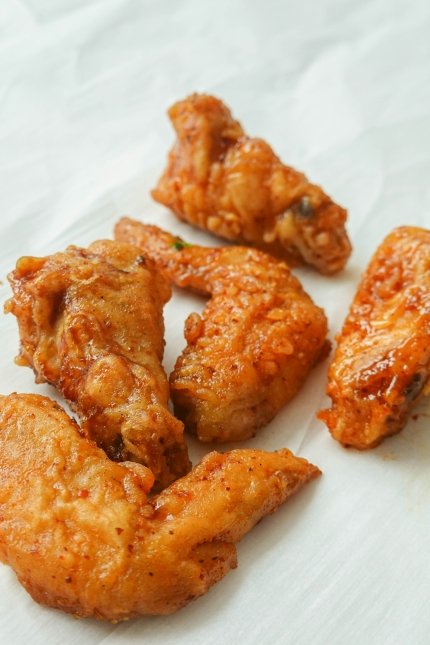
Secret #5. Properly prepare the chicken before frying
To get a golden crust, you need to reduce the amount of excess moisture on the surface of the meat.
If you put a wet fillet in a pan, a significant portion of the heat will initially be spent on evaporating the water.
As a result, the chicken may start to stew in its own juices instead of browning.
Before frying, it is enough to pat it dry with clean paper towels.
Do you need to wash raw chicken?
No. Washing raw chicken under running water is not recommended.
Splashes can transfer bacteria to the sink, countertop, dishes, and other foods.
Raw chicken can contain Salmonella or Campylobacter. The best way to reduce the risk of infection is to cook it properly and avoid cross-contamination.
Use a separate cutting board for raw meat, and wash your hands and kitchen utensils thoroughly after handling it.
Secret #6. Do not overcrowd the pan
When a lot of cold meat is placed in a pan at the same time, its surface temperature decreases.
The chicken begins to actively release moisture, and the pieces may cook unevenly.
For high-quality browning, it is better to leave small gaps between them.
If you are cooking a large portion, divide the meat into several batches.
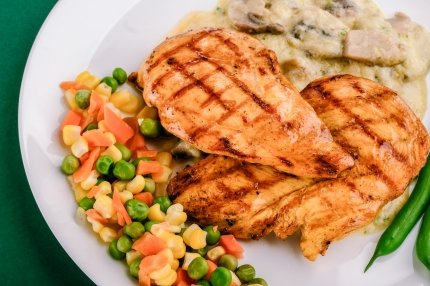
How to fry chicken breast
Flatten the fillets to approximately the same thickness.
If necessary, salt beforehand.
Wet the surface.
Heat a frying pan with a small amount of oil.
Place the meat and let the surface brown.
Turn over, reduce heat if necessary.
Cook the thickest part to an internal temperature of 74 °C.
For a thin fillet, this may take about 6–10 minutes total, but the time depends on the thickness of the piece, the pan, and the power of the stove.
Don't focus only on the specified minutes.
Secret #7. Control the temperature inside the chicken
This is the most important cooking step from a food safety perspective.
According to safe poultry cooking guidelines, chicken should reach an internal temperature of at least 165°F (74°C).
This applies to breasts, thighs, drumsticks, wings, whole chicken, and ground chicken dishes.
It's best to use a digital kitchen thermometer.
Its probe should be inserted into the thickest part of the meat, without touching the bone.
For large or uneven pieces, it is worth checking the temperature in several places.
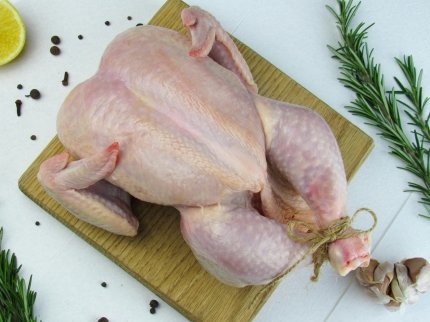
Why you can't determine readiness by color alone
A common tip is to cut the chicken and check for pink meat inside.
However, color is not a reliable indicator of safety.
Chicken can sometimes remain pink even after being heated sufficiently. Conversely, a white color does not guarantee that the required temperature has been reached.
Therefore, you should not focus only on the appearance or transparency of the juice.
Secret #8. Match the oven temperature to the part of the chicken
The oven temperature determines how quickly the surface and center of the meat heats up.
For chicken fillets, it is important to avoid cooking them for too long. For thighs and drumsticks, you can use a longer cooking time as they have a different structure.
Approximate modes:
| Part of a chicken | Oven temperature | Approximate time |
| Boneless breast | 190–200 °C | 18–25 minutes |
| Boneless thighs | 190–200 °C | 20–30 minutes |
| Thighs with bone | 190–200 °C | 35–45 minutes |
| Shins | 190–200 °C | 35–45 minutes |
| Wings | 200–210 °C | 35–45 minutes |
| Whole chicken | 180–190 °C | Depends on the mass |
The time is for guidance only and does not replace measuring the core temperature.
If the pieces are very large or the meat is cooked with a large amount of vegetables, the time may increase.
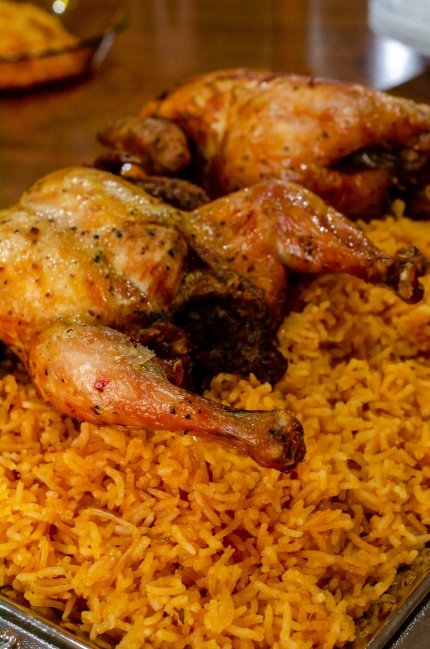
Does a baking sleeve help preserve juiciness?
A sleeve or closed shape reduces the evaporation of moisture into the environment.
This can be useful for large pieces or a whole chicken.
However, in a closed environment, the surface usually browns less.
If a crispy skin is desired, you can carefully open the sleeve at the end according to the manufacturer's instructions and continue heating.
At the same time, the sleeve will not protect the fillet from drying out if it significantly exceeds the required cooking temperature.
Secret #9. Let the finished chicken rest for a few minutes
After cooking, the meat should be left to rest for a short time before slicing.
During resting, the temperature inside gradually evens out and the structure of the meat stabilizes.
For a small fillet, about 3-5 minutes is usually enough. For larger pieces or a whole chicken, this time may be longer.
It is important that the chicken has already reached a safe internal temperature.
Rest is no substitute for proper heat treatment.
You should also not leave cooked meat at room temperature for a long time.
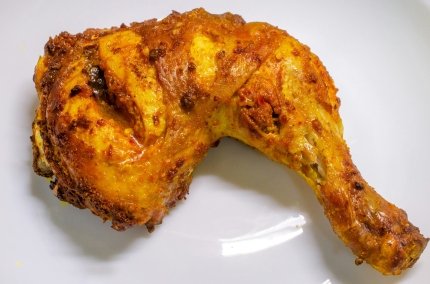
Secret #10. Don’t try to compensate for dryness with more oil
When the chicken comes out dry, it seems logical to add more butter, oil, or marinade.
However, these ingredients do not always eliminate the cause of the problem.
Oil may affect surface texture and flavor, but it does not restore moisture to muscle fibers lost through excessive heat.
Similarly, a creamy sauce makes the finished dish more succulent in taste, but does not change the actual state of the overdried meat.
The best strategy is to prevent moisture loss through proper preparation and readiness monitoring.
How to cook chicken fillet in the oven: a basic recipe
For an everyday dinner, it's not necessary to use a long marinade.
It is enough to properly prepare the breast, salt it, and add a few spices.
Ingredients for two servings
chicken fillet - 500 g;
salt - 4–5 g;
olive oil - 1 tbsp. l.;
sweet paprika - ½ tsp;
dried garlic - ¼ tsp;
black pepper - to taste.
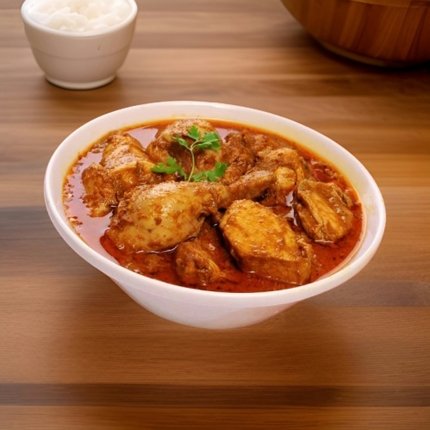
Preparation
Divide the large fillet into approximately equal portions.
Adjust the thickness if necessary.
Salt evenly and leave in a closed container in the refrigerator for 1–2 hours.
Preheat the oven to 200 °C.
Mix oil, paprika, garlic and pepper.
Cover the fillet with the mixture and place in the dish.
Bake for approximately 18–25 minutes, depending on thickness.
Check the temperature in the center of the thickest part - it should reach 74 °C.
Let the finished meat rest for 3–5 minutes.
This fillet can be served with mashed potatoes, bulgur, rice, or vegetables.
It is also suitable for salads and sandwiches after cooling.
How to make your thighs and calves extra tender
Dark chicken meat contains more myoglobin, fat, and connective tissue than breast.
During prolonged heating, some of the connective tissue gradually changes structure, so the thighs and calves may become softer even after reaching the minimum safe temperature.
This explains why thighs sometimes have a nicer texture after longer cooking than breast.
For baking thighs with skin, it is useful to:
dry the surface well;
salt evenly;
do not cover the skin with a thick layer of liquid marinade;
place pieces with gaps;
control the temperature in the thickest part.
For a crispier crust, you can briefly increase the top heat at the end, carefully monitoring the process.
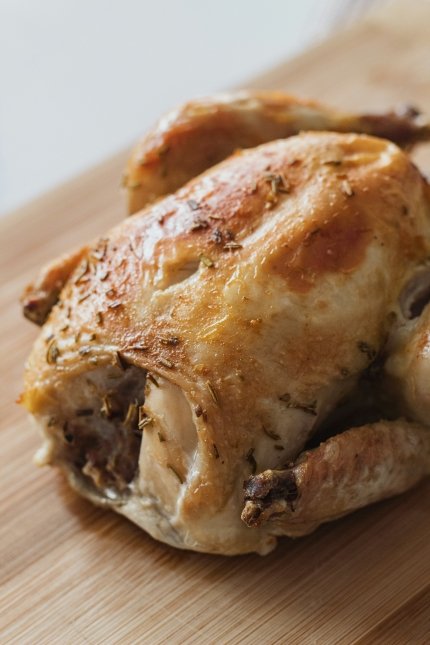
Why doesn't chicken have a golden crust?
Surface browning is associated with chemical reactions, particularly Maillard reactions.
Under the influence of heat, new aromatic substances are formed between the individual components of proteins and sugars.
They are responsible for the characteristic smell and taste of roasted meat.
If the surface is too wet, the temperature remains lower for a while due to water evaporation.
Therefore, a dry surface, sufficient heat, and free space between the pieces are important for a golden crust.
Is it true that the crust "seals in the juices"?
No. Roasting does not create an airtight shell that completely traps moisture inside.
Even well-browned meat continues to lose some of its juices during heating.
The crust is formed primarily for flavor and aroma.
To maintain juiciness, uniform thickness, salting, and the correct timing of cooking are more important.
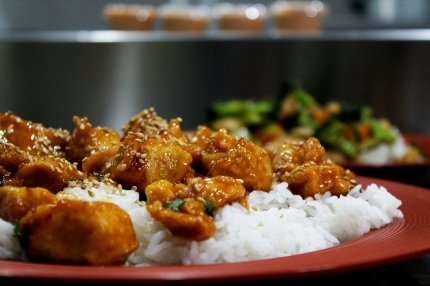
Can you cook chicken straight from the fridge?
It is not necessary to leave the chicken on the table for half an hour or longer before cooking.
Gradually warming meat to room temperature is not a necessary condition for juiciness.
For a small fillet, the most important things are its thickness and proper cooking.
At the same time, leaving raw poultry at room temperature for a long time creates a risk of microbial growth.
Therefore, it is safer to keep the chicken in the refrigerator until you start preparing it and cook it without unnecessary delays.
What to do if the chicken is already dry
It is impossible to completely restore the original structure of overdried meat.
However, it can be used in a way that makes the dryness less noticeable.
For the finished fillet
Cut the meat into thin slices or separate into fibers.
Add it to a warm sauce based on sour cream, cream, or tomatoes and heat briefly.
Do not cook for long, as additional heat can further compact the meat.
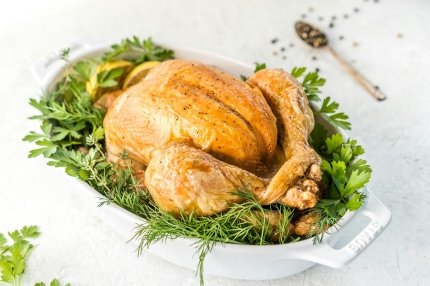
For baked thighs
If they become too dry, chop the meat and use it as a filling for pita bread, sandwiches, or homemade pies.
The sauce and vegetables will help balance the consistency.
For the chicken left over from dinner
Fully cooked meat can be added to soup, casserole, or salad.
It is important to follow the rules for storage and reheating.
How to safely store raw and cooked chicken
Raw chicken can contain bacteria that cause food poisoning, so proper storage is an essential part of cooking.
It is recommended to use or freeze raw chicken within 1–2 days of purchase, provided it is stored in the refrigerator at a temperature no higher than 4 °C.
Cooked meat can be stored for approximately 3–4 days if properly refrigerated.
Basic rules:
Store raw chicken in a closed container on the bottom shelf of the refrigerator.
do not allow its juices to come into contact with finished products;
defrost meat in the refrigerator, cold water or microwave according to the appropriate rules;
after defrosting in cold water or in the microwave, cook immediately;
cool the finished chicken and refrigerate for two hours;
reheat leftovers to 74 °C.
Do not use marinade that has been in contact with raw chicken as a ready-made sauce without proper boiling.
It is most convenient to set aside a clean portion of the marinade before it comes into contact with the meat.
Important: The material is for informational purposes only. If you experience symptoms of food poisoning after consuming food, you should consult a doctor. Self-medication can be harmful to your health.
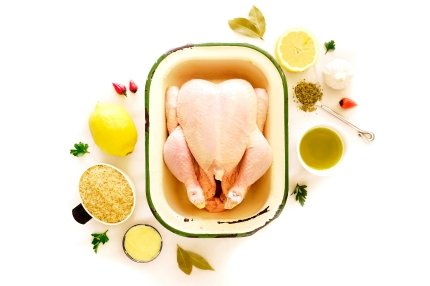
Conclusion
Juicy chicken doesn't start with expensive spices or a complex marinade, but with proper preparation.
For chicken fillet, uniform thickness of pieces, moderate salting, and temperature control are especially important. Thighs and drumsticks tolerate longer heating better, but also require the right mode.
Marinades help to enhance the flavour, but they are not a substitute for proper cooking. Use a food thermometer, aim for a safe internal temperature of 74°C and do not continue heating unnecessarily.
FAQ: Frequently Asked Questions About Cooking Chicken
How to cook chicken fillet so that it is juicy?
Even out the thickness of the fillet, salt it evenly and leave it in the refrigerator for about 1–2 hours. Then dry the surface and bake or fry to an internal temperature of 74 °C. Do not heat the meat much longer than necessary.
Why does chicken breast turn out dry in the oven?
The most common cause is cooking the fillet too long or uneven thickness. The thin part can dry out before the center is cooked. To avoid this, level the fillet and check the doneness with a thermometer.
How long to marinate chicken for juiciness?
For thin fillets, 30–60 minutes is often enough, for breasts, about 1–3 hours, and for thighs, 1–4 hours. The exact time depends on the composition of the marinade. Chicken should only be marinated in the refrigerator.
What is the best way to marinate chicken?
For a mild taste, natural yogurt, oil, and spices are suitable. For a more pronounced taste, mustard, garlic, herbs, or soy sauce are suitable. It is important not to use excessive amounts of acid and to consider the salt content.
At what temperature should you bake chicken fillet?
A good guide is 375–400°F (190–200°C). Boneless breast often takes about 18–25 minutes to cook, but the actual time depends on the thickness of the breast. An internal temperature of 165°F (74°C) is considered done.
Do I need to wash chicken before cooking?
No. Washing raw chicken can transfer bacteria along with splashes of water onto kitchen surfaces and other foods. Proper cooking, clean utensils, and avoiding cross-contamination are important for safety.
Do I need to beat chicken breast before frying?
Not always, but evening out the thickness helps cook the fillet more evenly. You can gently flatten the thickest part with a kitchen mallet or cut the breast horizontally into thinner pieces.
Can I cook chicken without a marinade?
Yes. Chicken can be juicy even without marinating. It is enough to salt the meat correctly, choose the appropriate cooking method and avoid excessive heating.
How to tell if a chicken is fully cooked?
The most reliable method is to measure the temperature with a food thermometer in the thickest part of the meat. It should reach at least 74 °C. The color of the meat and the clarity of the juices are not sufficiently accurate indicators.
Can a dry chicken breast be saved?
It is impossible to completely restore the original juiciness, but dried meat can be cut into thin slices and served with warm sauce. It is also suitable for stuffing, salads and soups. It is better to avoid additional prolonged heating.

