

Self-love is often imagined as a constant admiration for your appearance, positive affirmations in front of the mirror, and confidence in every decision. In reality, a healthy attitude towards yourself is much more down-to-earth. It is the ability to recognize your own worth, take care of your needs, notice your strengths and weaknesses, set boundaries, and not turn every mistake into proof of your own inadequacy.
A person who feels good about themselves may be insecure before an interview, unhappy with a photo, or upset after a failure. The difference is that these situations do not become an excuse to declare themselves "not good enough."
Psychological research shows the promise of self-compassion practices for reducing excessive self-criticism. Cognitive-behavioral approaches also use work with negative beliefs about oneself in persistently low self-esteem.
Therefore, a realistic goal is not to "fall in love with yourself forever," but to form an attitude towards yourself that remains stable enough even on bad days.
What it means to truly love yourself
In psychology, "self-love" is not a separate diagnosis or a precisely defined clinical indicator.
In everyday usage, this concept usually describes a combination of several things:
self-esteem;
healthy self-esteem;
self-compassion;
accepting one's own imperfections;
caring for physical and psychological needs;
the ability to protect personal boundaries;
the absence of constant self-abasement.
It is also useful to distinguish between self-esteem and self-compassion .
Self-esteem refers to how a person generally evaluates themselves.
Self-compassion is manifested in how she treats herself when she makes mistakes, suffers, or feels her own imperfections.
This is an important difference.
A successful day makes it easy to maintain a good opinion of yourself. It is much more difficult to stay on your own side after a failure.
1. Replace internal humiliation with an accurate description of the problem
The inner critic is rarely limited to specifics.
You forgot to reply to the letter - and this pops into your head:
"I am irresponsible."
There was a mistake in the report:
"I'm not capable of anything at all."
Didn't go to training:
"I have no willpower."
Thus, a specific event turns into a global verdict on the individual.
Try a different format.
Not:
"I'm terrible at organizing everything."
AND:
"I missed this deadline because I misjudged the scope of the work."
Not:
"I am weak."
AND:
"It was hard for me to say no today."
Such an internal dialogue does not deny the mistake. It makes it concrete, and therefore something that can be done about it.

2. Talk to yourself as you would to a loved one.
Imagine a good friend saying:
"I blew the interview. I must be a complete loser."
Most likely, you will not answer:
"Absolutely right, don't even try again."
You will probably say:
"Yes, it's unpleasant. Let's figure out what went wrong and what can be improved."
Why is the internal conversation with oneself often much harsher?
Self-compassion isn't about convincing yourself that every action you take is beautiful. It's about responding to your own difficulties without putting yourself down.
Meta-analyses of controlled studies show that interventions aimed at developing self-compassion can significantly reduce self-criticism. However, researchers emphasize that the quality and methods of studies vary, so this is not a universal remedy for all psychological problems.
Practical question
The next time you start to scold yourself, ask:
"In what words would I explain this same situation to someone I respect?"
Then try to apply the same standard to yourself.
3. Don't force yourself to believe affirmations that seem false.
Phrases:
"I am the most successful person."
"I am impeccably beautiful."
"I can do anything."
may sound inspiring, but they don't work for everyone.
One well-known experimental study found that repeating very positive statements about themselves sometimes made people with low self-esteem feel worse. This may be because of the strong contrast between the phrase and their own beliefs.
If the statement "I am incredibly confident" evokes the internal response "no, that's not true," it is of little use.
It is better to use realistic wording.
For example:
"My value does not depend on one result."
"I can worry and still try."
"I made a mistake, but a mistake doesn't fully describe me."
"I'm learning to be more accepting of myself."
Such phrases are easier to reconcile with reality.

4. Celebrate concrete progress, not constant victories
If you can only respect yourself after a great achievement, life quickly turns into an endless exam.
Got a promotion - good.
The next one is needed in a day.
Losing five kilograms is not enough.
We earned more - now we need even more.
Healthy self-esteem should not be entirely dependent on performance.
Try to notice the process.
For example:
you used to postpone an unpleasant conversation for a month, but now you have it in two days;
started training twice a week;
for the first time, they refused an unnecessary work task;
submitted an application even though they were afraid of rejection;
After a mistake, they didn't spend the entire evening blaming themselves.
This is already a change in behavior.
Keep a list of evidence
If you tend to remember mostly your own failures, write down one specific thing once a day:
"What did I do well enough today?"
It is not necessary to seek great achievement.
"I called the doctor, even though I was putting it off."
"I didn't respond to rudeness with rudeness."
"I went out for a walk instead of another hour of work."
The goal is to train the attention to notice the bigger picture.

5. Allow yourself to have needs.
Low self-esteem often manifests itself in a strange way: a person perfectly understands the needs of everyone around them, except for their own.
She knows:
when the partner is tired;
what does the child need;
What task is the manager urgently waiting for?
how to help parents;
when to support a friend.
And one's own fatigue is perceived as something secondary.
Taking care of yourself doesn't necessarily mean a massage, a bath, or a weekend at a hotel.
Sometimes it looks like this:
eat normally;
get enough sleep;
go to the doctor;
postpone work;
ask for help;
not to take on an additional task;
leave the evening free.
The World Health Organization includes basic self-care as the usual things: getting enough sleep, physical activity, a healthy diet, social contacts, quitting tobacco, and avoiding alcohol.
Taking care of yourself doesn't start with shopping, but with being attentive to your own needs.
6. Learn to say “no”
People with low self-esteem may fear that rejection will make them:
selfish;
ungrateful;
bad friends;
inconvenient employees;
not caring enough partners.
As a result, they agree, and then become overwhelmed, irritated, or resentful.
You can say "no" calmly.
For example:
"I can't do it today."
"I don't have the resources to take on another task."
"Thanks for the offer, but this time I'll decline."
"I don't work on weekends."
Assertiveness means the ability to express one's needs and rights without putting another person down.
Refusal does not require aggression.
And it doesn't guarantee that the other person will like your answer.

7. Stop judging yourself through the eyes of everyone around you.
The problem begins when self-esteem becomes completely dependent on external validation.
"They wrote me a compliment - I'm beautiful."
"The boss praised me - I am competent."
"My partner is cold today - there must be something wrong with me."
Then the internal state constantly fluctuates depending on the behavior of others.
Of course, a person needs recognition, closeness, and support. Complete independence from other people's opinions is an unrealistic goal.
But it's useful to have your own criteria.
For example:
"I consider this project good because it met all the key requirements."
"I'm happy with how I conducted the conversation, even if the other person didn't agree."
"My day doesn't go bad just because one person was unhappy with me."
This is the gradual transition from a completely external assessment to an internal support.
8. Compare yourself carefully, especially on social media
Social comparison is natural. It is unlikely that we will be able to completely stop comparing ourselves to others.
The problem arises when you regularly compare:
your own daily life — with someone else's edited selection of the best moments.
You see:
travel;
new apartment;
perfect breakfast;
athletic body;
successful business;
happy relationship.
You don't usually see:
debts;
conflicts;
unsuccessful photos;
disruptions;
fears;
hours of training;
uncertainty.
If you regularly feel worse after a certain account, this is reason enough to change your information environment.
You can unsubscribe, hide content, or reduce the time in the feed.
This is not a sign of weakness.
You simply control what you feed your own attention to every day.

9. Do things that boost your confidence.
Self-esteem is not only formed by thoughts.
Behavior is also important.
If you constantly tell yourself:
"I can rely on myself,"
and then systematically violate their own agreements, internal trust is unlikely to be strengthened.
Therefore, it is better to make smaller promises to yourself.
Not:
"From now on, I'll train every day."
AND:
"I'm going for a 30-minute walk twice this week."
Not:
"I will completely change my life."
AND:
"I'll make an appointment for the consultation tomorrow, which I've been putting off."
Not:
"I will never work in the evening again."
AND:
"On Wednesday after 7:00 PM, the laptop is closed."
A small agreement fulfilled provides real proof:
"I said it and I did it."
Over time, such evidence can be much more convincing than beautiful motivational phrases.
10. Review the people around whom you constantly become a “worst version of yourself.”
The social environment influences psychological well-being.
This doesn't mean you should only hang out with people who constantly praise you.
A good friend might say:
"You were wrong here."
The partner may be dissatisfied.
A colleague may give critical feedback.
The key question is what is the general nature of the interaction?
A healthy environment allows:
be wrong;
refuse;
to have a different opinion;
to succeed without ridicule;
to talk about difficult things;
receive honest feedback without humiliation.
Relationships where the following are systematically present are alarming:
mock;
depreciation;
manipulation;
CONTROL;
humiliation;
punishment for personal boundaries.
At the same time, you shouldn't automatically declare every person who once said something unpleasant as "toxic."
Evaluate the repetitive pattern of behavior.

Self-love is not selfishness.
Egoism in everyday terms often involves systematically ignoring the needs or rights of other people for the sake of one's own benefit.
Healthy self-esteem works differently.
For example:
Selfish demand:
"Everyone must adapt to me."
Personal boundary:
"I can't help today."
Indifference:
"I'm not interested in other people's problems at all."
Self-care:
"I want to support you, but I'm exhausted today. Let's talk tomorrow."
You can simultaneously respect others and not give up on yourself.
Why appearance shouldn't be the sole basis of self-esteem
Not everyone manages to love their own body every day.
A more realistic goal is to not let appearance determine all of one's self-worth.
Body:
changes with age;
reacts to pregnancy;
sick;
gaining or losing weight;
gets scars;
getting old.
If all self-esteem is built solely on appearance, any such change can be perceived as a threat to the personality.
Try to expand the list of characteristics by which you evaluate yourself.
For example:
reliability;
humor;
professionalism;
curiosity;
caring;
courage;
persistence;
ability to learn;
art.
A person is much greater than his reflection in the mirror.

Don't confuse self-acceptance with refusal to change.
Accepting yourself doesn't mean saying:
"I am who I am and I will not change anything."
You can simultaneously think:
"I have value now"
and
"I have a behavior I want to change."
For example:
"I don't hate myself for being overweight, but I want to take better care of my health."
"I don't consider myself stupid because of my poor English, but I decided to improve it."
"I accept that I have a hard time setting boundaries, and that's why I'm practicing this skill."
Self-acceptance removes humiliation from the change process.
Responsibility remains.
What to do after a mistake: an algorithm instead of self-blame
The next time you feel like scrolling through your own failures for hours, try these five steps.

1. Name a fact
"I missed the deadline."
Without "I'm a terrible employee."
2. Acknowledge the emotion
"I feel ashamed and uncomfortable."
3. Define responsibility
"I really mistimed it."
4. Do what you can fix.
Warn your colleague, apologize, and agree on a new deadline.
5. Articulate the change
"Next time I'll set the internal deadline a day earlier."
After that, continuing to psychologically punish yourself no longer means being more responsible.
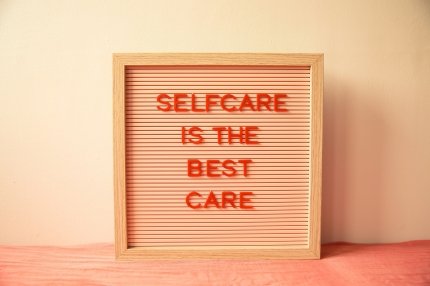
5-minute daily practice of healthy self-esteem
It's not necessary to keep a big diary.
In the evening, answer five questions:
1. What did I do well today?
2. What was difficult?
3. Where have I been unfairly hard on myself?
4. What did I need today?
5. What one small step will I take tomorrow?
The goal of this practice is not to convince yourself that the day was perfect.
It helps to form a more accurate and balanced perception of oneself.
How to understand that your attitude towards yourself is changing
Healthier self-esteem doesn't necessarily manifest itself in the thought:
"I am a beautiful person 24 hours a day."
Changes can look much calmer.
You:
recover faster from mistakes;
you call yourself offensive words less often;
say "no" more easily;
less need for constant approval;
you can receive criticism without completely destroying your self-esteem;
compare other people's success less with your own value;
you notice your own needs better;
allow yourself to rest;
you try new things despite the fear of failure.
These are much more reliable signs of progress than constant euphoria from yourself.

When low self-esteem needs professional help
Low self-esteem is not a separate mental disorder in itself, but can accompany other problems.
It is worth contacting a psychologist, psychotherapist or doctor if you:
you hate yourself almost constantly;
avoid people because of feelings of inferiority;
you do not dare to do ordinary things because of fear of evaluation;
you feel a prolonged depressed mood;
stopped getting pleasure from usual things;
have severe anxiety;
constantly feel shame or worthlessness;
you use alcohol or other substances to cope with these experiences.
Cognitive-behavioral psychological interventions are used to work with persistently negative beliefs about oneself, and meta-analyses show that psychotherapy for depression can also improve self-esteem.
If you are having thoughts of self-harm, suicide, or believing that others would be better off without you, you need immediate professional help.
Conclusion
Learning to love yourself doesn't mean looking in the mirror with admiration every day or never doubting your own decisions.
It is much more important to stop being a constant source of humiliation for yourself.
A healthy attitude towards yourself is shaped by very specific things: how you react to mistakes, whether you allow yourself to rest, how much you respect your own boundaries, how you talk to yourself after failure, and whether you are able to see your worth beyond other people's assessments.
You can start with one rule: don't speak to yourself any harsher than you would speak to someone you love and respect .
The rest gradually builds around this attitude.
Important: The material is for informational and educational purposes only and does not constitute medical or psychological advice, diagnosis, or treatment recommendations. Self-diagnosis and self-treatment of mental disorders can be harmful to your health. If low self-esteem, severe self-criticism, anxiety, depressed mood, or other psychological symptoms significantly affect your daily life, first consult a doctor or qualified mental health professional.

FAQ
How to learn to love yourself?
Start not by demanding to admire yourself, but by changing your everyday behavior: stop globally humiliating yourself, notice your own needs, set boundaries, fulfill small promises to yourself, and learn to experience mistakes without self-destruction.
How is self-love different from self-esteem?
Self-esteem describes a person's overall perception of their own worth and abilities. Self-love is a broader everyday concept that can include self-respect, acceptance, self-care, and self-compassion.
What is self-compassion?
Self-compassion is a kind and realistic attitude toward oneself in moments of mistakes, failures, or suffering. It does not mean justifying any behavior or avoiding responsibility.
Do affirmations help increase self-esteem?
Not everyone. Very positive statements that contradict a person's inner beliefs can feel false, and in some studies have even made people with low self-esteem feel worse. Realistic statements are often a better alternative.
How to stop constantly criticizing yourself?
First, notice the moment when a specific mistake becomes a global label. Replace “I’m a failure” with an accurate description: “this attempt failed.” Then, determine what can realistically be fixed.
How to love your appearance?
You don't have to be in awe of your body every day. A more realistic goal is to treat it without humiliation, take care of your health, and not base your self-esteem solely on appearance.
How to stop comparing yourself to others?
It's hard to completely eliminate social comparisons. It's more helpful to notice when they make you feel worse, reduce your exposure to content that consistently makes you feel worse, and compare your current progress to your previous point.
Is it selfish to put yourself first?
Taking care of your own sleep, health, rest, time, and personal boundaries doesn't automatically mean ignoring the needs of others. Healthy relationships involve respecting the needs of both parties.
How to increase self-esteem without a psychologist?
You can start by working with negative beliefs, using realistic self-talk, gradually overcoming avoidance, setting small goals, and developing assertiveness. If low self-esteem is persistent and significantly interferes with your life, professional help may be more effective.
When should you consult a psychologist for low self-esteem?
If it limits work, studies, relationships, social life for years, or is accompanied by severe anxiety, depressed mood, feelings of worthlessness, or other symptoms, it is advisable to consult a qualified professional.

