
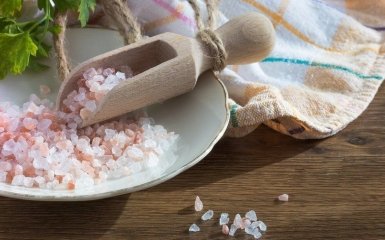
Ordinary table salt can become the basis for a fragrant seasoning that will give potatoes, vegetables, meat or fish a completely different taste. Just combine it with dried herbs, spices, citrus zest or other natural ingredients.
For example, salt with smoked paprika enhances the flavor of baked potatoes, a mixture with dill and lemon zest complements fish well, and tomato-basil seasoning adds expressiveness to vegetables and pasta.
Points of attention
- Flavored salt is made from regular table salt and completely dried herbs, spices, zest, or vegetable powders.
- Eight homemade blends will complement the taste of potatoes, fish, meat, pasta, vegetables and even desserts.
- To preserve the aroma, delicate mixtures with herbs and citrus zest are best added at the end of cooking.
It's easy to prepare such mixtures at home. However, there are a few important nuances: the ingredients must be properly dried, the proportions must be balanced, and the storage method must correspond to the composition of the seasoning.
The main secret of flavored salt is not to increase the amount of salt, but to complement its taste with spices that suit a particular dish.
We'll figure out how to make your own flavored salt, what combinations of ingredients are the most successful, why salt sometimes loses its flavor, and how to store homemade seasonings without lumps, moisture, and foreign odors.
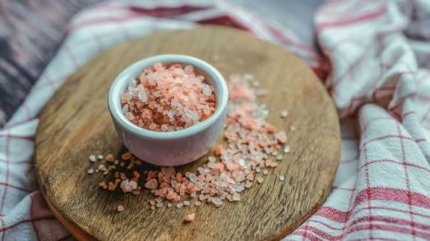
Why does salt change the taste of food?
Table salt consists mainly of sodium chloride.
Sodium chloride itself is practically odorless, but it affects the taste perception of other food components.
In moderate amounts, salt can enhance the perception of certain taste characteristics and reduce the sensation of bitterness.
That is why even a small amount of salt can change the taste of vegetables, sauces, and baked goods.
However, aroma and taste are not the same thing.
Saltiness is perceived by taste buds, while much of what we call the aroma of a dish is associated with volatile compounds that enter the olfactory system.
When rosemary, pepper, dried onion, or lemon zest are added to salt, it becomes a carrier of additional aromatic components.
Why is it better to add flavored salt at the end of cooking?
Some of the aromatic substances in spices and herbs are volatile and sensitive to prolonged heating.
For example, the fresh smell of citrus peel is partly due to essential oils, which can be lost during intense heating.
Therefore, blends with delicate flavors are often best added just before serving.
At the same time, spices like cumin, paprika, or dried garlic can also be used during cooking.
It is important to consider that ground paprika and other dry spices can burn on a surface that is too hot and become bitter.
Which salt to choose for homemade seasonings
Ordinary table salt is suitable for flavoring.
It is not necessary to buy expensive exotic varieties.
However, the size and shape of the crystals affect how the seasoning is distributed throughout the dish and felt during consumption.
Fine table salt
It has small crystals, dissolves quickly, and mixes well with powdered spices.
Suitable for sauces, soups, vegetable dishes and mixtures that need to be evenly distributed.
Its disadvantage is that small spices and salt can sometimes separate if the components differ significantly in size.
Medium-grained salt
Convenient for universal aromatic blends.
It can be used during cooking or added to ready-made dishes.
It is especially suitable for mixtures with crushed dried herbs.
Coarse sea salt or flaked salt
Usually used as a finishing seasoning.
Larger crystals create noticeable splashes of saltiness and can add textural contrast.
For example, they are convenient to sprinkle on baked vegetables or cooked meat.
However, coarse salt does not always combine well with very fine spice powder.
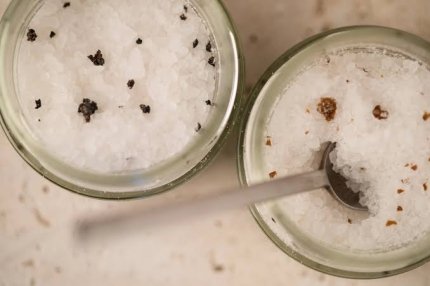
Does sea salt taste better than regular salt?
The main component of both types remains sodium chloride.
Slight differences may be due to mineral impurities, crystal size, and processing method.
But there is no reason to believe that any sea salt is automatically healthier or less salty than regular salt, calculated on an equal weight basis.
It is also important that a teaspoon of fine and flaked salt can contain different numbers of grams.
Therefore, for accurate recipes, it is better to use a kitchen scale.
How to make flavored salt: the basic method
For a homemade mixture, you will need salt, dried aromatic ingredients, and a clean, dry jar.
It's easiest to start with a small portion.
You can use 50–60 grams of table salt and approximately 2–5 grams of dry spices and herbs as a base.
This is a starting ratio, not a strict culinary norm.
The intensity of the aroma depends on the type and freshness of the spices.
Step-by-step cooking
Prepare a clean and completely dry glass jar.
Check that all aromatic ingredients are dry.
If necessary, grind herbs or spices in a mortar.
Mix them with salt until evenly distributed.
Try a small amount of seasoning on prepared foods.
Pour the mixture into a jar and seal tightly.
There is no need to automatically increase the amount of spices if their smell seems weak in the dry mixture.
The aroma may be more pronounced when in contact with warm food.
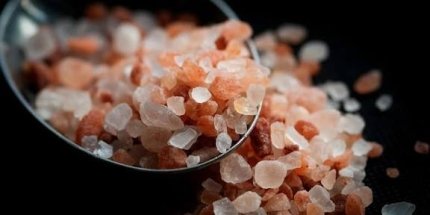
8 recipes for flavored salt for various dishes
The proportions given are designed for small home-made portions.
For convenience, medium-grained salt is used. If you use a different variety, it is better to maintain weight proportions and not replace gram for gram with teaspoons.
All dried ingredients must be food grade and free of signs of moisture.
1. Tomato-basil salt for pasta and vegetables
The combination of sun-dried tomatoes and basil creates a rich flavor that goes well with Mediterranean dishes.
Ingredients:
60 g of salt;
6 g of fully dried tomato powder;
2 g dried basil;
1 g of dried onion.
Grind the tomatoes into a dry powder and mix with the other ingredients.
It is important to use dried tomatoes, not those dried in oil.
What dishes does it go with: pasta with tomato sauce, baked eggplant, zucchini, potatoes, and vegetable soups.
The most pronounced result is obtained if you add a small amount of the mixture to a ready-made hot dish.
2. Lemon-dill salt for fish
This blend combines a citrus aroma with herbaceous notes of dill.
Ingredients:
60 g of salt;
2 g of completely dried lemon peel;
2 g of dried dill;
0.5 g of ground white pepper.
Mix the ingredients, first chopping the zest.
What dishes does it go with: baked fish, boiled potatoes, steamed vegetables, and light creamy sauces.
If you want to preserve the distinct lemon flavor, add some of the seasoning at the end of cooking.
Important: Dried zest must be completely dry. Fresh grated zest contains water and is not suitable for long-term storage in a dry mixture.
3. Smoked salt with paprika and cumin
You don't need to use special smoked salt for this seasoning.
Regular table salt and smoked paprika are enough.
Ingredients:
60 g of salt;
3 g smoked paprika;
1 g of ground cumin;
1 g dried oregano.
Mix all ingredients until smooth.
What dishes does it go with: country potatoes, baked pumpkin, beans, chicken, and chickpea dishes.
Smoked paprika adds characteristic smoky notes to dishes without using a smokehouse.
However, its taste may vary depending on the manufacturer, so it is better to start with a small amount.
4. Mushroom salt for a rich flavor
Dried edible mushrooms contain compounds that are involved in the formation of the umami taste.
Umami is one of the basic tastes, often described as rich, brothy, or meaty.
Ingredients:
60 g of salt;
5 g of powder from completely dried edible mushrooms;
1 g of dried thyme;
1 g of dried onion.
Only use mushrooms from a reliable food source.
You don't need to collect unknown wild mushrooms yourself to make powder.
What dishes does it go with: buckwheat, mashed potatoes, stewed vegetables, mushroom soups, and creamy sauces.
Mushroom powder can absorb moisture from the air, so the jar should be kept tightly closed.
5. Seasoned salt with fennel and black pepper
Fennel seeds have a characteristic sweet, aniseed aroma.
In small quantities, it goes well with meat, vegetables, and legumes.
Ingredients:
60 g of salt;
2 g fennel seeds;
1.5 g of black pepper;
1 g of dried orange peel.
Lightly grind the fennel and pepper in a mortar.
It is not necessary to grind them into a very fine powder.
What dishes does it go with: baked pork, chicken, lentils, carrots, and cauliflower.
This is a mixture with a fairly distinct aroma, so it should be added gradually.
6. Onion-garlic salt for daily use
This option is suitable for those who want a universal seasoning without complex aromatic combinations.
Ingredients:
60 g of salt;
3 g of dried ground onion;
2 g of dry garlic powder;
1 g dried parsley.
Mix the ingredients thoroughly.
If the garlic powder has lumps, first check to see if it has become damp.
What dishes does it go with: omelets, baked potatoes, vegetable stew, homemade crackers, and savoury pastries.
For long-term storage, use dried garlic.
Freshly ground cloves significantly increase the moisture content of the mixture and require a different storage regime.
7. Salt with sesame and nori seaweed
This seasoning has a distinct nutty and marine aroma.
Ingredients:
50 g of salt;
8 g of edible sesame seeds;
2 g dry nori sheets without added oil;
1 g of ground ginger.
Sesame seeds can be lightly toasted in a dry frying pan until fragrant, taking care not to burn them.
After that, it needs to be completely cooled.
Chop the nori and mix all the ingredients.
What dishes goes well with: rice, vegetable bowls, baked tofu, and noodle dishes.
Because sesame seeds contain fats, the prepared mixture may lose freshness faster than a seasoning made from just salt and dried herbs.
Prepare small portions and store them in a cool place.
Sesame is also a food allergen, which must be considered when preparing food for other people.
8. Orange salt with cardamom for desserts
Salt can be used for more than just savory dishes.
A small amount of salt helps to enhance the flavor of chocolate, caramel, and some baked goods.
Ingredients:
50 g of fine salt;
2 g dried orange peel;
0.5 g of ground cardamom;
0.5 g of ground cinnamon.
Mix the ingredients.
What dishes does it go with: brownies, homemade caramel, chocolate chip cookies, and baked pears.
Use this seasoning very sparingly—a few crystals or a small pinch per serving is usually enough.
Too much salt can overpower the sweet and spicy notes of the dessert.
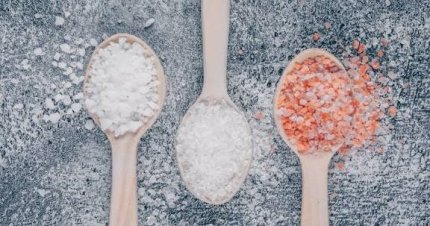
Which flavored salt goes with which dishes?
| Dish | The most successful combinations |
| Scalloped potatoes | Smoked paprika, garlic, dried onion |
| Fish | Lemon zest, dill, white pepper |
| Chicken | Paprika, fennel, dried herbs |
| Paste | Tomato, basil, oregano |
| Buckwheat | Mushrooms, thyme, onion |
| Baked vegetables | Cumin, paprika, garlic |
| Rice | Sesame, nori, ginger |
| Chocolate desserts | Orange zest, cardamom, cinnamon |
These combinations are not mandatory culinary rules.
The taste depends on the main dish, cooking method, and personal preference.
How to properly dry zest, herbs and garlic for flavored salt
One of the main conditions for safely storing homemade seasoning is a sufficiently low moisture content in all ingredients.
Salt can absorb water from fresh herbs, garlic, or citrus peel.
But this does not mean that any wet mixture automatically becomes suitable for long-term storage.
How to prepare citrus zest
Wash the fruit thoroughly under running water.
Remove mostly the colored part of the peel, without grabbing much of the white layer, which can add bitterness.
Spread the zest in a thin layer.
Dry it in a suitable food dehydrator or oven that provides controlled low temperatures and moisture removal.
The peel should be completely dry, without wet areas.
It needs to be cooled before mixing with salt.
How to dry herbs
You can use dill, parsley, thyme, basil, and other edible herbs to make homemade mixtures.
Remove damaged parts before drying.
The greens need to be properly prepared and dried to the point where the leaves crumble easily.
Temperatures of around 35–43 °C are often used to dry herbs in a dehydrator.
Excessive heating can degrade the color and flavor.
It is not worth storing under-dried greens in a closed jar due to the risk of mold development.
Can I add fresh garlic?
For dry seasoning that you plan to store in the cupboard, it is best to use garlic powder or properly dried garlic pieces.
Fresh garlic contains a significant amount of water.
If you mix it with salt without further controlled drying, the resulting mass will have different storage conditions.
This mixture should not be left at room temperature for long periods of time.
For quick use, you can prepare a small batch with fresh ingredients, store it in the refrigerator, and use it in the near future.
There is no need to transfer the shelf life of industrial dry seasonings to homemade wet mixes.
Do you need to heat salt to enhance its flavor?
Heating can affect the flavor of individual spices, but salt itself does not acquire a new flavor simply from being in a hot pan.
For example, cumin, coriander, or fennel seeds are sometimes briefly heated in a dry frying pan before grinding.
This can make their aroma more pronounced.
However, not all ingredients require such processing.
Delicate dried herbs and citrus peels can lose some of their aromatics when exposed to high temperatures.
Therefore, it is more practical to heat only the appropriate whole spices as needed, cool them completely, and then mix with salt.
Do not leave the finished aromatic mixture on high heat: this may worsen the aroma or cause individual components to burn.
How to store homemade flavored salt
Ordinary dry table salt is well stored due to its physicochemical properties.
But after adding herbs, vegetable powders, seeds, and other ingredients, the shelf life of the mixture depends on all of its components.
First of all, it is important to protect the seasoning from moisture, light, and high temperature.
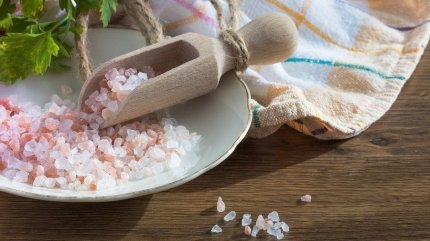
Which container is best?
Small glass jars with lids that close tightly are convenient for dry mixes.
You can also use suitable food containers.
The container must be clean and completely dry before filling.
There is no need to pour scented salt into a jar where there are drops left after washing.
Where to store jars
Choose a dry, cool, and dark closet.
Don't keep seasonings above the stove or near the sink.
Heat, steam and regular humidity fluctuations accelerate the loss of aroma and can cause caking.
Do not leave the jar open while cooking, especially over a pan of steam.
How long does scented salt last?
If the mixture is made only with properly dried ingredients, its aroma can last for several months.
However, it is impossible to establish a universal expiration date for all home recipes.
For the best quality, it is practical to prepare the amount you plan to use within the next 1–3 months.
This is a recommendation for freshness of flavor, not a confirmed microbiological safety date for any blend.
If the seasoning contains oils, fresh products, or insufficiently dried ingredients, the storage rules will be different.
Why does household salt clump together?
The most common cause is moisture.
Table salt can absorb water from the environment.
Some added ingredients, including vegetable and fruit powders, are also sensitive to moisture.
Because of this, the mixture may gradually curdle.
Small dry lumps do not necessarily mean spoilage.
However, if there is condensation inside the jar, the seasoning has become damp, the smell has changed, or there are signs of mold, you should not use it.
Does rice in a salt shaker help?
Dry rice grains are sometimes used in everyday life to reduce salt caking.
However, they are not a substitute for airtight packaging and proper storage.
In addition, foreign ingredients can get into the food through the holes in the salt shaker.
A more reliable method is to use completely dry spices and prevent steam from entering the jar.
Can I reduce the amount of salt by adding more spices?
Aromatic herbs, spices, and citrus zest can make a dish more interesting to taste without a proportional increase in the amount of salt.
However, the flavored salt itself remains a source of sodium.
For example, if a mixture consists of 90% salt and 10% other dry ingredients, 10 grams of such seasoning will contain approximately 9 grams of salt.
Therefore, it is wrong to call such mixtures salt-free or automatically dietary.
The World Health Organization recommends that adults consume less than 5 grams of salt per day from all food sources.
The total includes not only salt added at home, but also sodium in bread, cheese, sauces, sausages, and other products.
How to use spices for less salty food
Instead of adding more flavored salt, you can increase the amount of unsalted seasonings separately.
For example, add dried garlic, paprika, and thyme to vegetables, and use less salt.
This makes it easier to control the total sodium content.
It's also important to remember about iodized salt: it's one of the dietary sources of iodine. Replacing all regular salt with non-iodized decorative varieties can change your dietary iodine intake.
The material is for informational purposes only. Self-medication can be harmful to health. If you have any medical conditions that require sodium restriction or a special diet, you should consult a doctor before changing your diet.
Five mistakes when making flavored salt
Add fresh, moist herbs for long-term storage. Water changes storage conditions and can promote spoilage.
Using too many strong spices. Pepper, fennel, cardamom, and some other spices can overpower the taste of the main dish.
Heat the entire mixture over high heat. Some of the aromatics may break down or evaporate.
Ignore the size of the crystals. One teaspoon of different types of salt can contain different numbers of grams of sodium chloride.
Cooking too large portions. The aroma of dried herbs and ground spices gradually fades, even if the product remains dry.
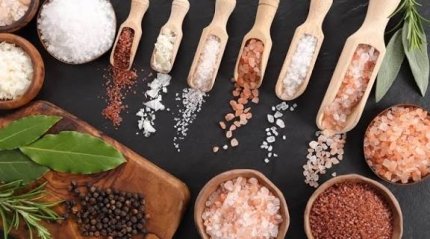
How to create your own flavored salt recipe
It is better to start with a combination of two or three components.
Choose a main flavor that should match the upcoming dish.
For example, for baked potatoes, it could be garlic or paprika.
For fish - dill, citrus zest, or white pepper.
For vegetables - thyme, cumin, or dried onions.
After that, identify an additional note that will complement, not interrupt, the main one.
For example, you can add a little cumin to smoked paprika, and lemon zest to dried dill.
You shouldn't mix ten different spices at once.
In such a mixture, individual flavors may lose their expressiveness, and the result is more difficult to control.
It is better to do the first test on a small portion of ready-made food, rather than just tasting dry salt.
This will help you assess how the seasoning interacts with the main ingredients of the dish.
Conclusion
Regular table salt can easily be transformed into a flavorful homemade seasoning using dried herbs, citrus zest, spices, and vegetable powders.
For a successful result, it is important to choose the right combination of flavors, use completely dry ingredients, and store the mixtures in airtight jars away from moisture and heat.
It's best to start with small portions and add seasoning gradually.
Flavored salt shouldn't make a dish overly salty. Its main advantage is the ability to reveal the taste of familiar foods thanks to properly selected flavors.
FAQ: Frequently Asked Questions about Flavored Salt
How to make flavored salt at home?
Mix table salt with completely dried herbs, spices, or citrus zest. You can start with 50–60 grams of salt and a few grams of dry aromatic ingredients. Store the mixture in a clean, airtight jar.
What spices are best to add to salt?
It depends on the dish. For potatoes, paprika, garlic, and dried onion are good; for fish, dill and lemon zest; for pasta, basil and tomato powder. For meat, you can use black pepper, fennel, cumin, and thyme.
Can I add fresh herbs to salt?
You can make a small mixture for quick use, but it should not be stored as a dry seasoning at room temperature. For long-term storage, it is safer to use properly dried herbs.
How to make lemon salt?
Use regular table salt and completely dried, crushed lemon zest. Add dried dill or pepper if desired. Fresh zest should be dried first for long-term storage.
Why does the scented salt stick together in the jar?
Most often due to moisture from the air or remaining in the ingredients. To prevent caking, use dry ingredients, airtight containers, and keep the mixture away from the stove and sink.
How long can you store homemade flavored salt?
To preserve the best flavor, it is practical to prepare dry mixes in small batches for 1–3 months. This is not a universal safety period. Actual shelf life depends on the composition, degree of drying of the ingredients, and storage conditions.
Which salt is best for mixing with spices?
Fine or medium-grained salt is suitable for universal seasonings. Coarse or flaked salt is better suited for final sprinkling on dishes. When preparing mixtures accurately, it is worth measuring ingredients in grams.
Can I mix salt with dried mushrooms?
Yes, if you use proven edible mushrooms, properly dried and suitable for food use. Mushroom powder gives dishes a rich flavor. The mixture should be stored in a dry, airtight container.
Is flavored salt healthier than regular salt?
Flavored salt has additional flavoring components, but it still contains sodium. It doesn't automatically become healthier just because it has herbs in it. It can be used to create a more pronounced flavor while controlling the overall amount of salt in your diet.

