

Salmon has a rich flavor and delicate texture, so it doesn't require complex sauces or a lot of spices to prepare. At the same time, the right marinade can transform an ordinary baked fillet into a dish with distinct citrus, spicy, creamy or sweet notes.
Points of attention
- For two or three portions of fillets weighing 500–600 g, approximately 3–6 tablespoons of liquid or semi-liquid marinade are usually sufficient.
- The pomegranate base creates an interesting combination of sourness and fruity sweetness. Cumin adds a warm spicy aroma, and fresh mint makes the taste lighter.
- Sweet peppers give the marinade thickness and natural sweetness, tomatoes add a slight sourness, and basil adds a fresh aroma.
The main thing is not to overdo it with the ingredients and marinating time. Salmon contains a lot of its own fat, and its protein structure is sensitive to acids and salt. If you leave the fish in concentrated lemon juice or vinegar for a long time, the surface can become dense and the consistency uneven.
For most homemade marinades, 15–60 minutes in the refrigerator is sufficient. The exact time depends on the mixture, the thickness of the fillet, and the desired intensity of flavor. Acidic marinades usually need a shorter time, while oil- and herb-based mixtures can be left in a little longer.
We've put together seven original salmon marinades that are perfect for baking, pan-frying, and grilling. We also explain how to choose fish, calculate the right proportions, avoid over-drying, and know when your salmon is ready.
How to properly marinate salmon so it stays juicy
Marinating is the process of soaking a product in a mixture of spices, salt, oil, and other ingredients that affect its flavor and surface texture.
In the case of salmon, the marinade mainly affects the outer layers of the fillet. The aromatic substances do not immediately penetrate the entire thickness of the fish, especially if the piece is large.
Salt can gradually penetrate deeper, while oils, herbs, and many spicy ingredients mostly affect the surface.
That's why you don't need to leave small portions of salmon in the marinade overnight.
Three ingredients for a successful marinade
Most marinades for red fish are based on a combination of three groups of ingredients.
Base: Olive or other vegetable oil, yogurt, coconut milk, mustard, or fruit puree help distribute the seasonings over the surface of the fish.
Flavor accent. This can be citrus fruits, ginger, soy sauce, herbs, garlic, berries, or spices.
Balancing ingredients: A small amount of salt, honey, sugar, or acid helps balance the rich flavor of salmon.
You don't have to use all of these ingredients at once. Sometimes just oil, mustard, and a few sprigs of fresh herbs are enough.
How much marinade is needed for 500 g of salmon
For two or three portions of fillets weighing 500–600 g, approximately 3–6 tablespoons of liquid or semi-liquid marinade are usually sufficient.
A large amount of liquid will not necessarily make the flavor more intense.
It is much more important to evenly coat the pieces, place them in a single layer, and let them sit for the required time.
For marinating, it is convenient to use a glass container, a food container with a lid, or a suitable food bag.
The 7 Best Marinades for Salmon in the Oven, Grill, and Pan
The recipes below are designed for approximately 500–600 g of salmon fillet. This makes two or three servings, depending on your appetite and side dish.
All mixtures are intended for fish, which must be fully cooked after marinating.
1. Honey-mustard marinade with thyme
The combination of Dijon mustard, honey, and thyme creates a balanced flavor with a slight spiciness, sweetness, and herbal aroma.
The marinade forms a thin layer on the surface of the fillet, which takes on an appetizing golden hue during baking.
Ingredients:
Dijon mustard - 1 tbsp. l.;
honey - 2 tsp;
olive oil - 1 tbsp. l.;
apple cider vinegar - 1 tsp;
fresh thyme - 2 small sprigs;
black pepper - to taste;
salt - a small pinch.
How to prepare:
Mix the mustard with honey until smooth.
Add olive oil and apple cider vinegar.
Remove the thyme leaves from the sprigs and add to the mixture.
Season with pepper and a little salt.
Brush the fillet with marinade on all sides.
Cover the container and place in the refrigerator for about 20–30 minutes.
The best cooking method: baking in the oven at 190 °C.
Place the fish, skin side down, in the baking dish, leaving a thin layer of marinade on the surface. Bake for approximately 12–20 minutes, depending on the thickness of the fillet, checking for doneness with a thermometer.
Honey contains sugars that darken quickly when exposed to high temperatures, so it's best to avoid prolonged heating under the top rack of the oven for this recipe.
What to serve with: baked potatoes, green asparagus, broccoli, or a leafy green salad.
2. Ginger-Pear Marinade with Soy Sauce
Pear is an unusual ingredient for a fish marinade. Its natural sweetness softens the saltiness of the soy sauce, and ginger adds a fresh, spicy flavor.
As a result, the salmon gets a distinct flavor with notes of Asian cuisine without a lot of sugar.
Ingredients:
ripe pear - ½ pc.;
soy sauce - 1½ tbsp. l.;
fresh ginger - 1 tsp. finely grated;
sesame oil - 1 tsp;
rice vinegar - 1 tsp;
garlic - 1 small clove;
black pepper - optional.
How to prepare:
Peel and core the pear.
Grate the pulp on a fine grater or chop with a blender.
Add soy sauce, ginger, sesame oil, and vinegar.
Stir in the minced garlic.
Spread the marinade evenly over the fillet.
Leave the fish in the refrigerator for about 20–40 minutes.
Additional salt is usually not necessary, as soy sauce already contains a significant amount of sodium.
Best cooking method: pan or oven.
Carefully remove any excess fruit puree from the surface before frying. This will help prevent the natural sugars from burning too quickly.
Fry the salmon, skin side down, over moderate heat, then cook until fully cooked, reducing the heat if necessary.
Culinary tip: Sesame oil is best used in small amounts. It has an intense aroma and can overpower the delicate flavor of fish.
This salmon goes well with rice, baked carrots, and fresh cucumber salad.
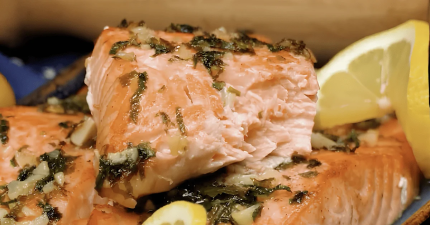
3. Roasted Pepper, Tomato, and Basil Marinade
This option is suitable for those who love Mediterranean combinations. Sweet peppers give the marinade thickness and natural sweetness, tomatoes add a slight sourness, and basil adds a fresh aroma.
Unlike liquid marinades, this mixture has a consistency similar to a thick sauce.
Ingredients:
baked red pepper - ½ large;
tomato paste - 1 tsp;
olive oil - 1 tbsp. l.;
fresh basil - 5–6 leaves;
garlic - 1 small clove;
dried oregano - ¼ tsp;
salt and black pepper - to taste.
How to prepare:
Bake the peppers until soft, cool and remove the skin.
Transfer the pulp to a blender bowl.
Add tomato paste, oil, garlic and basil.
Grind until a thick, homogeneous mass.
Add oregano, salt and pepper.
Cool the mixture completely if it is still warm.
Brush the salmon and refrigerate for 25–40 minutes.
Best cooking method: baking in a pan.
Place the fish skin side down and spread a thin layer of marinade on top.
Bake at a temperature of about 190 °C until fully cooked.
Don't apply too thick a layer of vegetable stock. Because of its moisture and density, the fish may warm up more slowly than the usual recipe suggests.
What to serve with: couscous, bulgur, baked zucchini, or green beans.
4. Pomegranate marinade with cumin and mint
The pomegranate base creates an interesting combination of sourness and fruity sweetness. Cumin adds a warm spicy aroma, and fresh mint makes the taste lighter.
For the recipe, it is most convenient to use pomegranate sauce without excessive sugar or concentrated pomegranate juice.
Ingredients:
pomegranate sauce or concentrated juice - 1 tbsp. l.;
olive oil - 1½ tbsp. l.;
honey - ½ tsp. as needed;
ground cumin - ¼ tsp;
fresh mint - 4–5 leaves;
salt and black pepper - to taste.
How to prepare:
Mix pomegranate sauce with olive oil.
Taste the mixture before it comes into contact with the raw fish.
If the base is too acidic, add a little honey.
Add ground cumin and pepper.
Add finely chopped mint.
Brush the fillets and leave in the refrigerator for about 15–25 minutes.
The acidity of pomegranate sauces can vary significantly, so for a very concentrated product, it is better to use a shorter marinating time.
Best cooking method: oven or electric grill with controlled heat.
Pomegranate ingredients and honey can caramelize quickly, so avoid excessively high heat.
For serving, you can use fresh pomegranate seeds, herbs, and a small amount of separately prepared sauce.
This marinade goes especially well with rice, baked eggplant, and a green salad.
5. Coconut marinade with lime and coriander
Coconut milk creates a soft, creamy base, while lime and coriander add fresh flavor.
The marinade works well for salmon that is cooked in the oven or stewed with a small amount of sauce.
Ingredients:
unsweetened coconut milk — 3 tbsp. l.;
lime zest - ½ tsp;
lime juice - 1 tsp;
ground coriander - ½ tsp;
fresh ginger - ½ tsp;
garlic - 1 small clove;
salt - to taste.
How to prepare:
Stir in the coconut milk until smooth.
Add lime zest and juice.
Grate the ginger and garlic on a fine grater.
Stir in the ground coriander and salt.
Cover the fillet with a thin layer of marinade.
Leave in the refrigerator for about 20–30 minutes.
You don't need to add a lot of lime juice. Its purpose is to create a fresh accent, not to make the fish sharply sour.
Best cooking method: baking in a small dish.
Place the fish skin side down, add some of the marinade and bake at 180–190 °C until cooked.
If you want more sauce, prepare a separate batch of the coconut mixture that has not come into contact with the raw fish and heat it in a saucepan.
What to serve with: jasmine rice, broccoli, baked cauliflower, or steamed vegetables.
6. Cranberry marinade with rosemary
Cranberries have a distinct acidity that nicely balances the salmon's natural fat content. Rosemary adds rich, herbal notes, and a touch of honey helps to soften the flavor.
This option is especially suitable for autumn and winter menus.
Ingredients:
fresh or frozen cranberries - 60 g;
water - 2 tbsp. l.;
honey - 1 tsp;
olive oil - 1 tbsp. l.;
fresh rosemary - ½ small sprig;
salt - a small pinch;
black pepper - to taste.
How to prepare:
Place the cranberries in a small saucepan.
Add water and heat until the berries are soft.
Puree the berries and let cool completely.
Add honey, olive oil, and finely chopped rosemary.
Season with salt and pepper.
Apply a thin layer of the chilled marinade to the salmon.
Leave in the refrigerator for 15–25 minutes.
Cranberries are quite acidic, so you shouldn't soak the fillets in it for several hours.
Best cooking method: baking in the oven.
For a more attractive appearance, use a small amount of marinade so that it forms a thin coating rather than hiding the fish under a thick layer of berry mass.
Mashed potatoes, baked parsnips, carrots, or Brussels sprouts go well with cooked salmon.
7. Mediterranean marinade with capers and oregano
If you don't want sweet marinades, try a combination of capers, olive oil, lemon zest, and herbs.
Capers have a characteristic salty and spicy taste, so they allow you to make a dish expressive without a lot of additional salt.
Ingredients:
olive oil - 2 tbsp. l.;
capers - 1 tbsp. L.;
lemon zest - ½ tsp;
dried oregano - ½ tsp;
parsley - 1 tbsp. l. finely chopped;
garlic - 1 small clove;
black pepper - to taste.
How to prepare:
Chop the capers lightly with a knife.
Mix them with olive oil.
Add lemon zest, oregano, and parsley.
Stir in the finely chopped garlic and pepper.
Evenly coat the salmon with the mixture.
Leave in the refrigerator for 30–45 minutes.
If the capers are very salty, you can rinse and dry them beforehand. It is best to use additional salt only after evaluating the composition of the marinade.
Best cooking method: pan, oven or grill.
Before frying, you can carefully remove some of the herbs and garlic from the surface so that small pieces do not burn.
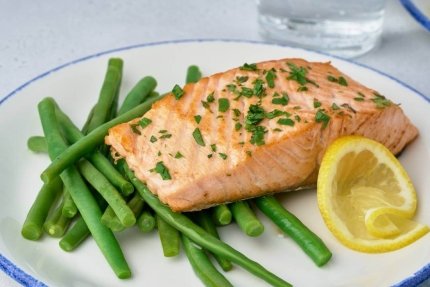
The finished salmon goes well with baked tomatoes, potatoes, green vegetables, and couscous.
Which marinade for salmon to choose depending on the cooking method
Not all marinades behave the same under high temperatures.
Mixtures with honey, fruit puree, or syrups darken faster because they contain sugars.
Marinades with lots of herbs and garlic can burn on a hot pan or open grill.
Therefore, the choice depends not only on taste preferences, but also on the method of preparation.
| Way | Best suited |
| Oven | Honey-mustard, vegetable, coconut, cranberry |
| Frying pan | Ginger-pear, Mediterranean |
| Electric grill | Mustard, pomegranate, herbal |
| Outdoor grill | Oil marinades without a lot of sugar |
| Baking in foil | Coconut, vegetable, herbal |
| Aerogrill | Marinades with a small amount of liquid and sugar |
For an air grill, it is especially important to remove excess liquid marinade so that it does not accumulate at the bottom of the basket or splash out during air circulation.
How long does it take to marinate salmon?
The duration of marinating is determined not only by the size of the piece, but also by the composition of the marinade.
Acids change the structure of proteins on the surface of the fish. This process is called denaturation.
Due to prolonged contact with lemon juice, vinegar, or acidic fruit purees, the outer layers of the fillet can gradually become denser and sometimes brittle.
That's why salmon usually doesn't need to marinate for many hours.
Estimated time:
| Type of marinade | Time in the fridge |
| With lots of citrus juice | 10–20 minutes |
| Berry or pomegranate | 15–25 minutes |
| Mustard with a small amount of acid | 20–30 minutes |
| With soy sauce and ginger | 20–40 minutes |
| Based on oil and herbs | 30–60 minutes |
| With coconut milk and a little lime | 20–30 minutes |
These values are practical culinary guidelines, not universal norms.
If the marinade is very acidic or salty, the time should be reduced.
Marinate salmon only in the refrigerator at a temperature no higher than 4 ° C. Do not leave raw fish on the kitchen counter for marinating.
Do you need to marinate salmon overnight?
For most portioned pieces, the answer is no.
Salmon has a delicate texture, and marinades with acids and salt can gradually change its consistency.
After prolonged marinating, the surface sometimes becomes dense, while the middle remains virtually unchanged.
Too much salt can also make the flavor too intense.
If you need to prepare dinner in advance, it is more convenient to mix the marinade separately and leave the fish in the refrigerator without it.
After that, it is enough to marinate the salmon shortly before cooking.
For recipes with minimal acid and salt, longer aging is sometimes possible, but it does not guarantee better flavor and must take into account the freshness of the fish and storage conditions.
How to choose salmon for pickling
The taste of the finished dish largely depends on the quality of the fish.
A marinade can enhance the natural flavor of salmon, but it cannot fix a spoiled product.
For home cooking, you can use chilled or properly defrosted fillets.
What to look for before buying
Quality salmon should have an elastic texture and a smell typical of fresh fish, without pronounced sour, rancid, or ammonia notes.
The color of the flesh depends on the type of fish and its diet, so a bright orange hue is not independent evidence of freshness.
Also worth checking:
packaging date and expiration date;
storage temperature;
packaging integrity;
absence of excessive amounts of unnatural mucus;
elasticity and surface condition of the fillet.
If the fish has an unpleasant odor or other signs of spoilage, it should not be used.
Strong spices, lemon juice, and heat treatment do not guarantee the safety of a spoiled product.
Is frozen salmon suitable?
Yes. Good quality frozen fish can be good for marinating and subsequent baking.
It is best to defrost the fillet gradually in the refrigerator.
If you need to speed up the process, you can use cold water, placing the fish in an airtight container. After defrosting, it should be cooked without delay.
Do not leave salmon to defrost on the counter at room temperature.
Pat the surface dry with paper towels before marinating. Excess liquid after defrosting can dilute the marinade.
How to properly bake marinated salmon in the oven
Baking is one of the most convenient ways to prepare marinated red fish.
For a portioned fillet about 2–3 cm thick, you can start with an oven temperature of 190 °C.
Depending on the size of the pieces and the characteristics of the oven, cooking may take approximately 12–20 minutes.
However, time is not a reliable indicator of safety.
The recommended internal temperature for cooked salmon is 63°C , measured with a food thermometer in the thickest part of the fillet.
How to avoid overdrying
For even cooking, it is advisable to use pieces of approximately the same thickness.
If one part of the fillet is much thinner than the other, it may cook earlier.
If possible, place portioned pieces separately, leaving a little space between them.
There is no need to turn the fish repeatedly while baking.
For fillets with skin, it is convenient to place them skin side down.
If the marinade contains honey, fruit puree, or a lot of sugar, keep an eye on the surface. It may darken before the center of the fish reaches the desired temperature.
How to fry marinated salmon in a pan
Marinades with a small amount of liquid are best for the pan.
If the pieces are covered in a thick fruit puree or a large amount of herbs, it is best to remove the excess before frying.
This will help avoid burning.
Step-by-step method
Remove the salmon from the marinade just before cooking.
Remove excess liquid from the surface.
Heat a frying pan with a small amount of oil.
Place the fillets skin side down.
Cook over moderate heat, without moving the fish unnecessarily.
Turn carefully if necessary.
Reduce heat and bring to an internal temperature of 63 °C.
For small portioned pieces, the total time can be around 6–12 minutes, but it depends significantly on the thickness of the fillet.
Don't just focus on the golden crust. The fish may look cooked on the outside but not yet reach a safe temperature on the inside.
How to cook marinated salmon on the grill
Grilling works well for salmon with the skin on, as it helps the piece retain its shape.
The grill needs to be cleaned and preheated before cooking.
It's best to place the salmon on a moderately hot surface. Too much heat can quickly burn the marinade, especially if it contains sugar.
For grilling, it is most convenient to use oily herbal marinades or mixtures with a small amount of sweet ingredients.
If the marinade contains a lot of honey, it is better to cook the fish on an area with less intense heating.
When turning, use a wide spatula to avoid damaging the delicate fillet.
Cooking time depends on the thickness of the pieces and the temperature of the grill. The main criterion is the temperature inside the fish.
Why does marinated salmon turn out dry?
Marinade does not guarantee juiciness by itself.
Even well-marinated salmon can lose moisture if heated for too long.
During heat treatment, fish proteins change their structure and gradually become denser.
Excessive heating causes some of the moisture to escape from the muscle fibers, making the finished fillet drier.
The most common reasons
Baking too long. If you only follow the time in the recipe, you can overdry thin pieces.
Overly acidic marinade. Prolonged soaking in lemon juice or vinegar changes the structure of the outer layer of the fish.
Too much salt. A heavily salted marinade can significantly affect the texture if left for a long time.
Uneven thickness of the fillet. The thin part of the piece will cook earlier than the thick part.
High pan temperature. The outer surface can quickly overcook before the center is evenly heated.
The best way to avoid overdrying is to choose the right marinating time and monitor the internal temperature during cooking.
Why does a white coating appear on cooked salmon?
When baking or frying salmon, white flakes or streaks sometimes form on the surface.
This is mainly albumin, a protein found in the muscle tissues of fish.
When heated, it can come to the surface along with some of the moisture and curl up.
Such a coating in itself does not mean that the salmon is spoiled.
Its amount depends on the characteristics of the fish, the temperature and the intensity of heating.
Often, the white coating becomes more noticeable with overly intensive cooking.
However, it is not always possible to completely avoid its occurrence, even if the fish is cooked correctly.
Can I use the marinade as a sauce for cooked salmon?
This is a common mistake that can pose a food safety risk.
The marinade in which the raw fish was placed was in contact with its juices and potential microorganisms.
Therefore, you can't just pour it over a finished dish.
It is best to set aside some of the freshly prepared marinade before it comes into contact with the raw salmon. This clean portion can be used as the base for the sauce.
If you need to use a marinade that has already been in contact with raw fish, it should be brought to a vigorous boil. However, for thick, milky, or complex mixtures, it is safer and more practical to prepare a separate sauce.
Do not return cooked salmon to the container where the raw fish was stored without first cleaning it properly.
Can you freeze salmon in marinade?
Technically it is possible, but the result depends on the composition of the marinade.
Mixtures with high amounts of acid can change the surface structure of fish during defrosting.
Marinades with dairy ingredients sometimes separate.
Therefore, for home cooking, it is more convenient to freeze clean portioned fillets and marinate them after defrosting.
If the fish has already been marinated, it should only be frozen if it has been stored properly and the temperature regime has not been violated.
Do not use freezing as a way to extend the shelf life of fish that has been stored in the refrigerator for a long time.
How long can you store raw and cooked salmon?
Raw fish is a perishable food.
According to general food safety recommendations, raw salmon should be cooked or frozen within 1–2 days of storage in the refrigerator at a temperature no higher than 4 °C.
Pickling does not automatically extend this period.
If fish has already been in the refrigerator for some time, you can't assume that adding vinegar, lemon juice, or salt will make it fresh again.
Once cooked, finished salmon can be stored in the refrigerator for about 3–4 days, provided it is cooled quickly and at the proper temperature.
Do not leave fish at room temperature for more than two hours, or at ambient temperatures above 32°C for more than one hour.
Does lemon marinade make raw fish safe?
Lemon juice and other acidic ingredients can change the structure of fish proteins, sometimes causing the surface of the fillet to lighten and become denser.
A similar effect is used when preparing certain dishes from raw fish.
However, such a change in texture is not equivalent to full heat treatment.
An acidic marinade does not guarantee the destruction of dangerous bacteria and parasites.
Therefore, the recipes given in this article involve further complete cooking of the salmon.
It is especially important to avoid raw or undercooked fish for pregnant women, young children, the elderly, and those with weakened immune systems.
Health information: The material is for informational purposes only. If you experience symptoms of food poisoning, you should consult a doctor. Self-medication can be harmful to your health.
The most common mistakes when marinating salmon
Even a good recipe can yield an unsuccessful result if the fish is prepared incorrectly or the cooking conditions are violated.
Too much lemon juice. Excessive acidity can change the surface texture of the fish and overpower its natural flavor.
Marinating overnight: This is not necessary for most portioned cuts, especially if the mixture contains acid or a lot of salt.
Using too many spices. Intense seasonings can completely hide the characteristic flavor of salmon.
Marinating at room temperature. This creates conditions for the rapid development of unwanted microorganisms.
Frying with a thick layer of sweet marinade. Honey, fruit purees and syrups can burn before the fish is cooked inside.
Adding salt without taking soy sauce into account can result in a dish that is too salty.
Reusing raw marinade. This practice is dangerous without proper heat treatment.
Roasting too long. The marinade will not prevent moisture loss if the fillet is significantly overcooked.
How to choose the best marinade to taste
Salmon has its own natural fat content, so it pairs well with sour, spicy, and fresh ingredients.
However, you should not add lemon, vinegar, mustard, a large amount of garlic, and several types of spices to one marinade at the same time.
One main flavor idea often yields a much better result.
| Desired taste | Marinade |
| Sweet with a slight spiciness | Honey-mustard |
| Rich, with spicy notes | Ginger-pear |
| Vegetable, Mediterranean | From baked pepper |
| Sweet and sour, expressive | Garnet |
| Soft, creamy | Coconut |
| Berry, with a herbal aroma | Cranberry |
| Salty, fresh | With capers and oregano |
For your first introduction to marinated salmon, it's best to start with the mustard or Mediterranean version.
If you want a more interesting flavor for a holiday dinner, cranberry or pomegranate marinades are suitable.
And for dishes with rice and vegetables, ginger-pear and coconut work well.
Conclusion
A delicious salmon marinade doesn't have to have a lot of ingredients. Just the right combination of a base, a flavoring, and a small amount of salt or acid is enough.
For most portioned pieces, 15–60 minutes of marinating in the refrigerator is sufficient. Longer marinating time does not guarantee better flavor, and excess acid can deteriorate the texture of the fish.
The best results come from using a quality fillet, using a moderate amount of marinade, and controlling the cooking temperature. This is what allows you to get juicy salmon with a distinct flavor, regardless of whether you cook it in the oven, on the grill, or in a pan.
FAQ: Frequently Asked Questions About Salmon Marinade
What is the easiest way to marinate salmon for the oven?
Mix a tablespoon of olive oil, a dash of Dijon mustard, a teaspoon of honey and a pinch of thyme. Brush over the fillets and refrigerate for about 20-30 minutes. Then bake to an internal temperature of 145°F (63°C).
How long does it take to marinate salmon?
Usually 15–60 minutes is enough. For acidic marinades with lemon, vinegar or berries, it is better to choose a shorter time - about 10–30 minutes. For oil mixtures with herbs, a slightly longer marinating time is possible.
Can I leave salmon in the marinade overnight?
This is not practical for most portioned cuts. Especially if the marinade contains a lot of acid or salt. Long exposure can change the texture of the surface of the fish. It is better to prepare the marinade in advance and mix it with the salmon shortly before baking.
What marinade is best for grilled salmon?
For grilling, it is convenient to use oil mixtures with herbs, mustard, garlic or spices. Marinades with a lot of honey and fruit sugars burn faster, so they require more careful control of the heating.
Is it necessary to add lemon juice to the marinade?
No. Salmon can be marinated without lemon, using olive oil, mustard, herbs, soy sauce, or spices. Lemon juice adds acidity, but too much can change the texture of the fish.
Why does salmon become tough after marinating?
This can be caused by over-exposure to acidic or salty marinades or excessive heat during cooking. It is important to monitor both the marinating time and the internal temperature of the finished fish.
Do you need to salt salmon before marinating?
This depends on the composition of the marinade. If it contains soy sauce, capers, or other salty ingredients, additional salt may not be necessary. For oil-based and herb-based mixtures, a small amount of salt can be used.
Can you marinate frozen salmon?
It's best to first completely defrost the fish in the refrigerator, remove excess moisture, and only then add the marinade. This will help distribute the mixture better over the surface and make the marinating time more predictable.
Can I use the marinade after raw fish as a sauce?
Without proper heat treatment, no. It is best to reserve some of the clear marinade until it comes into contact with raw salmon. If the mixture has already come into contact with raw fish, it should not be served directly without sufficient boiling.
How do you know when marinated salmon is ready?
The most reliable way to check is to use a food thermometer. The recommended internal temperature for cooked fish is 63°C. If you don't have a thermometer, use the fact that the flesh has lost its translucency and can be easily separated with a fork, although this method is less accurate.

