

Moving to a new apartment or house is rarely just about moving boxes. You need to pack your belongings, secure your appliances, negotiate with movers, prepare paperwork, hand over your old home, and get settled into your new life. If you leave everything to the last two days, even a small apartment move can become a complicated and expensive process. The most common problems arise from poor planning: boxes are not labeled, the truck doesn't fit the furniture, important documents end up among the packed items, and upon arrival, you discover that the sofa won't fit through the doorway.
It's best to start preparing for the move 3–4 weeks in advance: determine your budget, audit your belongings, book transportation, gradually pack everything, and prepare a separate bag with the essentials for the first 24–48 hours.
A properly organized move allows you to reduce the amount of unnecessary things, avoid damage, and get settled in your new home faster.
Let's consider a step-by-step preparation plan, packing rules, features of transporting furniture and appliances, and a complete checklist of things to do before and after changing your address.
Where to start preparing for moving
The first step is to determine not the number of boxes, but the total amount of work.
Moving from a furnished rental apartment can be significantly different from moving all of a family's belongings from a three-bedroom home.
The complexity is influenced by the number of items, the dimensions of the furniture, the presence of an elevator, the distance between addresses, and the possibility of freight access.
Before packing, it is worth answering a few practical questions:
When do you need to vacate your old home?
When can I get the keys to the new one?
Will there be access to both apartments on the same day?
What furniture and household appliances need to be transported?
Are there any large items that need to be disassembled?
Will loaders be needed?
Who will be responsible for children and pets on moving day?
It is important to check whether the dates of transfer of housing match.
If the old apartment needs to be vacated before the new one becomes available, additional costs may arise for temporary storage of belongings.
Step-by-step moving plan for a month
It is convenient to divide the preparation into several stages.
This approach allows you to avoid accumulating all tasks on the last day.
| When | What needs to be done? |
| In 4 weeks | Determine the date, budget, amount of items and method of transportation |
| In 3 weeks | Conduct a property audit, select a carrier, prepare packing materials |
| In 2 weeks | Pack seasonal and rarely used items, resolve service issues |
| In 7 days | Prepare equipment, documents, basic clothing, and kitchen utensils |
| In 1–2 days | Pack a bag of essentials, check transportation and access to housing |
| On the day of moving | Monitor loading, key transfer, meters, and delivery |
| After moving | Check property, unpack necessary items, update address information |
If you only have a few days left, you should change your order of actions: first ensure transportation, access to new housing, and safekeeping of documents, and only then sort out non-essential items.
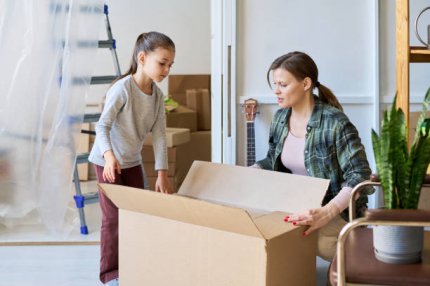
1. Make a moving budget in advance
The cost of moving does not only consist of paying for the truck.
Additional charges may apply for the services of movers, furniture packing, cabinet disassembly, carrying heavy objects, and long waiting times.
What costs need to be taken into account?
Main categories:
Transport and transportation.
The work of loaders.
Boxes, stretch film and protective materials.
Disassembly and assembly of furniture.
Packaging of fragile items.
Temporary storage is possible.
Cleaning of old and new homes.
Unforeseen expenses.
For budget control, it is advisable to provide a small reserve.
For example, additional costs may arise if movers have to carry furniture up stairs or transport is delayed due to difficult access to the house.
How to avoid hidden fees
Before ordering a carrier, it is worth getting a written cost estimate.
It is advisable to record what is included in the agreed amount and which services are paid separately.
Particular attention should be paid to hourly pay, minimum order duration, and the cost of additional hours.

2. Inspect your belongings before packing.
Moving is a good time to review property that hasn't been used for a long time.
However, you don't need to start a massive sorting of everything at once.
It's better to move by rooms or categories.
For example, look at clothes first, then books, kitchenware, and storage items.
How to decide what to take with you
Each thing can be classified into one of four categories:
Leave and move.
Sell or transfer to others.
Repair or reuse.
Dispose of properly.
It is worth assessing not only the emotional value of the item, but also the costs of transporting it.
For example, transporting an old cabinet a considerable distance can sometimes cost almost as much as purchasing a new one.
At the same time, you shouldn't automatically throw away items that are in good condition just because they seem unnecessary before moving.

3. Choose a carrier and check the terms and conditions
If you plan to transport furniture and large household appliances, it is advisable to determine the type of vehicle you need in advance.
An incorrectly estimated amount of luggage may result in the need to make multiple flights.
What to tell the transport company
For a more accurate calculation, you need to specify addresses, floors, the presence of elevators, the approximate number of boxes, and a list of large items.
Please report separately about refrigerators, washing machines, large mirrors, TVs, and furniture that cannot be transported assembled.
It is also important to find out whether a car can drive directly up to the entrance.
How to check the reliability of a carrier
Pay attention to clear payment terms, availability of appropriate transportation, damage registration procedures, and property liability.
Specialized transport organizations recommend recording the list of items, delivery conditions, and cargo condition.
If the company offers insurance, you need to clarify what risks it covers.
The word "insured" itself does not mean automatic compensation for any damage.

4. Prepare boxes and packing materials
Proper packaging helps protect your belongings and speeds up unloading.
Sturdy cardboard boxes of various sizes are suitable for most items.
Additionally, you may need wrapping paper, bubble wrap, tape, markers, and protective covers.
Which boxes are better to use?
Heavy items, such as books, are best packed in small, sturdy boxes.
Lightweight, bulky items—pillows, blankets, and textiles—can be folded into larger ones.
You don't need to pack boxes so tightly that they are difficult to lift safely.
It is especially important to consider weight if the load has to be carried up stairs.
How to properly sign boxes
It is most effective to indicate not only the name of the room, but also the main content.
For example:
Kitchen - plates and cups.
Bedroom - bed linen.
Living room - books.
Bathroom - towels and toiletries.
It is also useful to number the boxes.
If five boxes are sent to the kitchen, they can be numbered 1 through 5.
This will help you check if all your items have arrived at the new address.
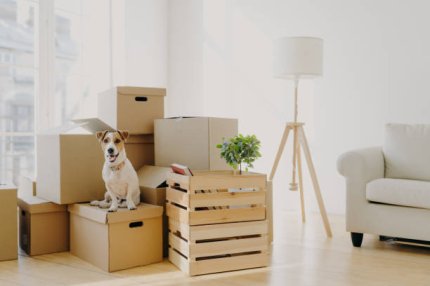
5. How to properly pack dishes, glass and other fragile items
Glass objects, ceramics and mirrors require separate protection.
The main mistake is to put several fragile items together without spacers.
During transportation, they can shift, hit each other, and become damaged.
How to pack plates and cups
Each fragile item should be protected with wrapping paper or other suitable material.
Cymbals are often safer to place vertically, like records, with spacers between them, if the box is of appropriate construction and provides sufficient protection.
Empty space needs to be filled to keep things from moving.
The box should be marked as containing fragile goods.
However, the inscription "Caution" does not replace proper packaging.
How to transport mirrors and paintings
For large mirrors and paintings with protective glass, it is better to use special boxes or rigid protective panels.
Do not apply direct pressure to the glass surface.
In transport, such items must be securely secured against movement.
Particularly valuable or antique items may require professional packaging.

6. How to prepare furniture for moving
Before disassembling furniture, you need to check whether it is really necessary.
For example, a small cabinet can be transported whole if its construction is strong enough and its dimensions allow it to pass through a door safely.
Large wardrobes, beds, and some shelving units are often more convenient to transport disassembled.
What to measure in advance
It is important to know not only the dimensions of the furniture, but also the width of doorways, corridors, landings, and elevators.
For example, a sofa may fit into a freight elevator lengthwise, but not through its doors.
Therefore, it is better to take measurements before ordering transport.
How not to lose fasteners
It is convenient to pack screws, hinges and other small parts into separate, labeled bags.
For complex furniture, it is useful to photograph the disassembly sequence.
Do not stick tape directly to delicate lacquered surfaces as this may damage the surface.

7. How to prepare a refrigerator, washing machine and TV
Large household appliances require separate preparation.
It cannot be assumed that all devices can be transported in any position.
Refrigerator
Before moving, you should remove the food, clean the interior surfaces and defrost the appliance if necessary.
Shelves and movable elements must be secured according to the manufacturer's recommendations.
The transport position and the time before restarting depend on the refrigerator model and the type of compressor system.
One waiting rule should not be applied to all refrigerators.
Washing machine
Before transportation, you must disconnect the communications, turn off the water and drain the remaining liquid according to the instructions.
For many front-loading models, manufacturers provide for the installation of transportation bolts that secure the drum.
If such bolts are required, they must be removed before operation in a new location.
TV and monitor
The best option is the original box with appropriate protective inserts.
If it is not preserved, you can use special packaging for televisions.
Carriers recommend transporting large flat screens vertically, protecting them from pressure and shock.
It is advisable to pack cables and remotes separately and sign for them.

8. Prepare a first aid bag
This is one of the most useful things when moving.
Upon arrival at your new apartment, all the boxes may remain unpacked, so items for your first night should be easily accessible.
It is better to carry the bag personally for the first 24–48 hours, rather than leaving it with the main load.
What to put in your bag
Documents, keys, bank cards.
Chargers and power banks.
Medications that are used regularly.
Personal hygiene products.
Change of clothes and underwear.
Towels and basic bed linen.
Drinking water and food that does not require complicated preparation.
Napkins, toilet paper and trash bags.
Flashlight and necessary small tools.
If a family is moving with a child, it is necessary to separately provide food, diapers, care products, and other items according to age.
Important medications and documents should not be packed in boxes that may not be accessible during transport.
9. What documents do you need to prepare before moving?
The composition of documents depends on whether a person is moving to their own home, a rented apartment, or to another city.
For rented accommodation, it is important to check the terms of the contract, the date of transfer of the apartment, and the payment procedure.

What to check when renting an apartment
In Ukraine, a housing rental agreement is concluded in writing in accordance with Article 811 of the Civil Code of Ukraine.
It is advisable to draw up a separate acceptance and transfer certificate, which indicates the condition of the apartment, available furniture, household appliances, and meter readings.
This helps reduce the risk of disputes over damages or utility bills.
What documents to keep on hand
Depending on the situation, these may include passports, children's documents, employment contracts, housing documents, insurance documents, and papers related to work or study.
It is better to transport originals separately from the main cargo.
For important documents, you can also prepare electronic copies in a secure storage location.
10. What to do in an old apartment before moving out
Even when everything is taken out, there are still a few important tasks left.
The first thing you need to do is inspect the premises, complete financial calculations, and record the condition of the home.
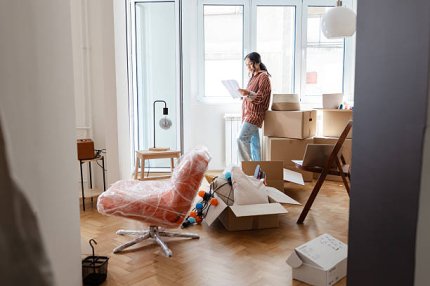
Apartment inspection before handover
It is necessary to inspect:
Cabinets, drawers and mezzanines.
Space under the bed and behind furniture.
Balcony and storage room.
Bathroom.
Kitchen shelves and refrigerator.
Sockets to which appliances were connected.
Storage places for keys and documents.
You also need to remove the trash and fulfill the conditions regarding the condition of the accommodation upon return.
Meter readings
On the day of handing over the apartment, it is worth recording the electricity, water, and gas readings, if the appropriate meters are installed.
It is practical to take photos that show the indicators and the device itself.
Depending on the terms of service, the relevant parties must be informed of the date of transfer of housing and the final figures.
If the apartment is rented, it is useful to keep written confirmation of the transfer of keys.

11. What to check in a new apartment before unloading things
It is advisable to inspect your new home before it is filled with boxes and furniture.
This is especially important when renting.
Priority check
It is necessary to check the serviceability of door locks, water supply, sewage, electricity, lighting and available equipment.
It is also worth finding out where the electrical panel, main water shut-off valves, and other elements that may be needed in an emergency are located.
If any faults are found, they must be recorded before the final approval of the condition of the housing.
How to protect yourself from disputes
For a rented apartment, it is advisable to take photographs of existing damage, the condition of furniture, appliances, and coatings.
This data can be included in the acceptance and transfer report.
It is important to record the initial meter readings to separate your own utility consumption from the previous one.

12. How to organize a moving day without chaos
On the day of the move, it is most important to ensure a clear loading and unloading procedure.
If everyone tries to pack, move things, and solve organizational issues at the same time, the risk of mistakes will increase.
It is practical to appoint a person to coordinate the process.
Download order
Large furniture and appliances should be placed according to the safe vehicle loading plan.
The load must be secured so that it does not shift during movement.
Fragile boxes should not be placed under heavy objects.
It is advisable to transport personal essentials separately.

How to track delivery
After unloading, check the number of boxes and the condition of the most valuable items.
If the cargo was transported by a company, any damage or missing items must be recorded in accordance with the contract and transportation documents.
You should not sign confirmation of complete and undamaged delivery if the actual inspection has not yet been completed.
How to move with a small child
Moving with a child requires additional planning, as eating, sleeping, and care routines may not coincide with the carriers' schedule.
The most important thing is to provide a safe place for the child on the day the furniture is moved.
Do not leave a small child near areas where heavy objects are being carried.
What to prepare separately
The baby will need regular food, water, diapers, wipes, clothes, medication if needed, and sleeping supplies.
It is also useful to first arrange a place to relax in a new apartment.
It is necessary to check the availability of open sockets, windows, balconies, household chemicals and tools.
It is undesirable to leave folded boxes and loose furniture where they could fall on a child.
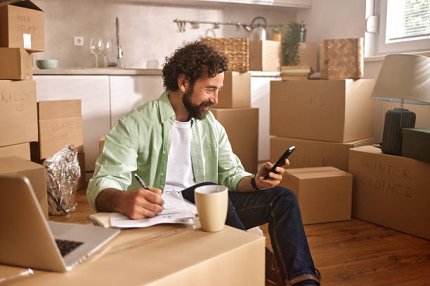
How to organize a move with pets
For animals, moving also means a change in their usual environment.
When loading things, it is better to provide them with a separate, safe space where they will not interfere with the loaders and will not have the opportunity to accidentally escape.
What to take for the animal
You will need a carrier, regular food, water, bowls, bedding, and necessary veterinary documents.
It is advisable to transport cats and small animals in appropriate carriers.
In a new home, it is best to first organize a quiet area with water and familiar objects.
You don't need to let your pet into all rooms at once if furniture is being moved or dangerous objects remain.
How to unpack things after moving
The main mistake after delivery is trying to unpack absolutely everything in one evening.
It is much more practical to restore daily life by priority.
What to unpack first
The first things to be available are a place to sleep, toiletries, towels, basic kitchen utensils, and necessary clothing.
Then you can organize the kitchen, storage areas, and workspace.
Books, decor, and rarely used items can be left for later.
Why you shouldn't rush with furniture placement
After moving, it sometimes turns out that the original room layout is inconvenient.
For example, a cabinet blocks access to an outlet, and a desk is far from the necessary lighting.
Therefore, before the final installation of heavy furniture, it is better to check its location.
This is especially true for items that need to be secured to the wall to prevent tipping.
What address and administrative issues need to be resolved after moving?
Physical relocation does not always automatically mean a change in officially registered residence.
In Ukraine, declaration and registration of place of residence are regulated by separate rules.
As of the date of preparation of the material, the general deadline for declaring or registering a new place of residence is 30 calendar days after arrival.
At the same time, the procedure, the ability to submit an application online, and the required documents depend on the person's legal status, housing characteristics, and other circumstances.
Who to notify about a change of address
Depending on the situation, you may need to update your contact information with banks, insurance companies, delivery services, your employer, and other organizations.
It is also worth checking the relevance of the address for delivering documents and orders.
If you have children, you may have additional questions about educational institutions or other services.
Not all of these actions are mandatory for every person, so they should be determined according to specific circumstances.

How much does moving cost and how to save money?
The cost of apartment moving depends on the number of items, distance, floors, availability of an elevator, and the list of additional services.
Therefore, there is no universal price for moving a one-room or three-room apartment.
What can you save on?
The biggest impact is the previous reduction in the volume of things.
You can also pack clothes, books, and other simple items yourself, leaving professional packaging for valuable equipment and large-sized property.
Sometimes it is more profitable to transport everything on one flight in a car of the appropriate size than to order a smaller car several times.
However, you should not skimp on reliable cargo securing, proper transportation, or safe transportation of heavy objects.
Ten mistakes that most often complicate moving
Start packing on the last day. Rushing can cause things to get mixed up and fragile items to be left unprotected.
Do not measure furniture or aisles. Large items may not fit through doors or elevators.
Use weak boxes. A damaged bottom creates a risk of loss of contents.
Don't sign for the packaging. After delivery, you have to open many boxes looking for one thing.
Pack documents with the main cargo. They may not be accessible when you need them.
Do not agree on the final cost with the carrier. Additional services can significantly increase costs.
Forget about meter readings. This makes it difficult to differentiate utility payments.
Transporting equipment without preparation. Improper transportation can damage the equipment.
Don't pack a bag for the first night. The most necessary items get lost among the boxes.
Unpacking everything at once creates a new mess and delays the return to normal life.

Moving checklist: what to check before moving out
This list can be used for final verification.
| Task | What to check |
| Moving date | Confirmed with all parties |
| New housing | Keys and access to the premises |
| Carrier | Time, transport, cost and contacts |
| Furniture | Dimensions, disassembly, fastening |
| Household appliances | Preparation according to instructions |
| Boxes | Signed and counted |
| Fragile things | Protected and marked |
| Documents | In a bag that is carried personally |
| Medicines and necessary things | Available for the first 1–2 days |
| Old apartment | Checked cabinets, balcony and pantry |
| Counters | The indicators are recorded and photographed. |
| Keys | Sent or received with confirmation |
| Delivery | The quantity and condition of the property have been checked. |
| New apartment | Water, electricity and locks checked |
Conclusion
Moving becomes much easier when it is divided into understandable stages: planning, sorting, packing, transporting, and setting up your new home.
The most important thing is to agree on the date, budget, and transportation in advance, properly protect furniture and appliances, and maintain access to documents and essential items.
Special attention is required for the transfer of housing, recording meter readings, and checking the condition of the property.
A well-organized move is not one during which everything is done as quickly as possible, but one after which you don't have to look for lost things, repair damaged equipment, or solve unforeseen financial issues.
FAQ: frequently asked questions about organizing a move
How long in advance should I start preparing for moving?
For a typical apartment move, it's a good idea to start preparing 3-4 weeks in advance. If you need to move a lot of furniture, move to a new city, or organize temporary storage, you may need more time.
What is the best place to start packing?
Seasonal clothing, books, decor, and items that are rarely used should be packed first. Everyday items, documents, medications, and toiletries should be left accessible until the last day.
How to properly sign boxes when moving?
It is most convenient to indicate the destination room, main contents and box number. Fragile items require a separate marking. This helps to control the delivery and find things faster after the move.
What should you bring with you on the first day in a new apartment?
First of all, documents, keys, chargers, medicines, a change of clothes, hygiene products, towels, bedding, water and simple food. These items are best transported separately from the main cargo.
How to organize an apartment move cheaper?
Costs can be reduced by pre-sorting your belongings, packing simple items yourself, and choosing a vehicle of the appropriate size. However, you should agree on the full cost of transportation services in advance.
How to properly transport a refrigerator?
It should be cleaned, defrosted if necessary, the moving parts secured and the manufacturer's instructions for transport position followed. The time before switching on again depends on the specific model.
Do I need to disassemble furniture before moving?
Not always. Small, sturdy furniture can sometimes be transported assembled. Larger wardrobes, beds, and shelving are often easier to disassemble, especially if they don't fit through doors or elevators.
What documents are needed when moving into a rented apartment?
First of all, it is necessary to draw up a written rental agreement. It is also advisable to have a handover certificate indicating the condition of the apartment, available property, and meter readings.
What to check before handing over an old apartment?
It is necessary to inspect all premises and storage areas, remove any left-over items, record the condition of the dwelling and meter readings. For a rented apartment, it is advisable to arrange the handover of keys and completion of payments in writing.
Do I need to change my place of residence registration after moving?
If it concerns a change of residence that is subject to declaration or registration in Ukraine, the relevant legislative rules apply. The general period is 30 calendar days after arrival. The possibility of online registration and the procedure depend on the specific circumstances and the current terms of service.

