

Anxiety before a test is a normal reaction. The brain perceives the assessment as an important event: it requires quick recall of information, time constraints, and the pressure of expectations. The problem begins when stress before a test blocks attention, sleep, appetite, or thinking ability.
The good news is that anxiety can be managed. It may not always be completely eliminated, but it can be reduced enough to allow you to act more calmly and not lose access to knowledge.
Why are exams so nerve-wracking?
The exam combines several strong stress factors:
uncertainty - it is not known what questions will occur;
time constraints - it seems that a mistake will cost too much;
fear of evaluation - the result is seen by teachers, parents, classmates or peers;
high expectations - "I have to pass perfectly", "my whole life depends on this";
previous negative experience - if there was a failure before, the brain may expect a repeat.
Moderate anxiety sometimes even helps to mobilize. But strong anxiety before an exam can interfere with working memory: it is more difficult to read the condition, remember formulas, build an answer. That is why it is important to train not only knowledge, but also methods of self-regulation.
What to do in advance: the basis of calm preparation
Psychological techniques work better when there is basic preparation. If a person does not sleep, studies chaotically, and lives on caffeine, the nervous system becomes exhausted faster.
To prepare for the exam without stress or at least with less tension, simple steps can help:
Break the material into blocks: not "study everything", but "today - three topics and 20 test tasks";
alternate repetition and practice: not only reread the notes, but also answer questions, solve tests, and explain the topic out loud;
take short breaks: the brain needs time to process information;
plan your sleep: cramming at night often impairs concentration during the exam;
rehearse the format: if there is a test - practice the tests, if there is an oral answer - speak the answers;
Leave a time buffer: the last day is better used for repetition, not for a panicked start.
Advice to schoolchildren before the NMT and advice to students before the session have a common basis: the less chaos in preparation, the lower the uncertainty, and therefore the less anxiety.

8 psychological techniques before and during the exam
1. Breathing with a longer exhalation
When a person is anxious, their breathing often becomes rapid and shallow. This can increase feelings of tension. A simple way to calm down before an exam is to take a few slow breaths with longer exhales.
Try this:
Inhale through your nose at a comfortable rate.
Exhale more slowly than you inhaled.
Repeat several times without effort or delays that cause discomfort.
This does not "turn off" fear instantly, but it can reduce physiological tension: heart palpitations, trembling, feeling of rush. It is better to practice breathing techniques before the exam in advance, rather than trying them for the first time in the classroom.
2. Grounding technique 5–4–3–2–1
If thoughts jump from "I'll forget everything" to "I won't enter", returning to reality through the senses helps.
Tell us about yourself:
5 objects you see;
4 sounds or bodily sensations that you notice;
3 things you can touch;
2 smells or neutral details around;
1 short action you will take now.
This exercise can help when you're feeling panicky during an exam or before entering a classroom. It shifts your focus from catastrophic predictions to the present moment.

3. Reframing catastrophic thoughts
The fear of failing an exam often sounds like an absolute statement in your head: "I know nothing," "everything is lost," "if I make a mistake, it's the end." Such thoughts seem like facts, but they are often an anxiety reaction.
Instead of fighting them, try reframing:
"I don't know anything" → "I'm worried, so it seems to me that knowledge has disappeared. I'll start with what I remember."
"I will definitely fail" → "I cannot know the outcome in advance. My task is to take the next step."
"Everyone is better prepared" → "I don't see the full picture. Comparison doesn't help right now."
This is one of the basic principles of the cognitive-behavioral approach: not to automatically believe every anxious thought, but to check it and make it more realistic.
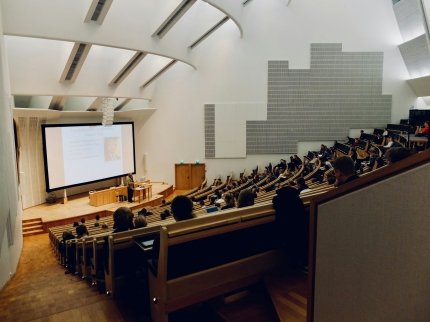
4. Exam rehearsal in conditions similar to real ones
The brain is less afraid of what is already familiar. Therefore, a practice exam is not just a test of knowledge, but a way to reduce uncertainty.
How to rehearse:
set a timer;
put away the phone;
use similar tasks;
don't peek at the notes;
When you're done, check for errors and write down what to repeat.
This technique is especially useful for tests, NMTs, module tests, and sessional exams. It shows not only weak topics, but also how you react to time, difficult questions, and fatigue.
5. The rule of the first simple step
When a task seems overwhelming, anxiety builds. The rule is simple: don't think about the entire exam at once, but identify the first action.
Before preparation, this could be:
open the list of topics;
choose one topic for 25 minutes;
solve the first five problems;
write down unclear questions.
On an exam, the first step can be even simpler: write your name, go through all the questions, mark the easier ones, start with the one where the answer is more obvious. This way, you regain a sense of control.
6. The "if - then" plan
Anxiety loves uncertainty. An "if-then" plan sets a scenario for action in advance.
Examples:
If I don't know the first task, I move on to the next one and come back later.
If I start to panic, I take three slow breaths and read the condition again.
If I catch the thought "I'm going to fail," I tell myself: "What's important now is not the forecast, but the next action."
If I see that time is passing, I do the tasks where I can score points faster.
Such a plan does not guarantee a perfect result, but it helps you avoid improvising in times of severe stress.

7. Short pauses to regain attention
Pausing during an exam doesn't mean wasting time. Sometimes a 20-40 second pause helps you save more than chaotic rereading of the test.
You can take a micropause:
to lower the shoulders;
to open the jaw;
put your feet on the floor;
exhale slowly;
return to one specific task.
This is useful for concentration during an exam, especially when the body is already tense and thoughts are starting to get confused.
8. Visualize the process, not just the result
Visualization doesn't have to be a magical "imagine five and everything will work out." A more practical option is to imagine a process of action.
For example:
you enter the audience;
sit down;
read the instructions;
start simple;
pause if excitement increases;
check your answers at the end.
This gives the brain a familiar scenario, which can reduce fear of the exam format itself.

What to do if you "get lost in thought" during the exam
A feeling of emptiness in your head does not always mean that there is no knowledge. Often it is a reaction to a sudden surge of anxiety.
Algorithm of actions:
Stop for a few seconds. Don't beat yourself up - it will only increase the tension.
Take a slow breath out. Then another.
Read the condition again. Underline key words if allowed.
Start with the easiest. You don't have to go in order.
Write down everything that comes to mind. Formulas, dates, terms, associations.
Come back to the difficult part later. Often the answer "pulls up" when the brain is already engaged.
If the question is oral, you can start with the phrase: "I'll structure my answer like this..." or "First, I'll explain the main concept..." This gives you a few seconds to gather your thoughts.
Common mistakes that increase anxiety
Some habits seem beneficial, but in practice can increase stress.
The most common mistakes:
studying all night - lack of sleep impairs attention, memory and self-control;
constantly comparing yourself to others - someone else's confidence does not always mean better preparation;
reread without practice - it seems that the material is familiar, but a stupor arises during the tasks;
abuse caffeine or energy drinks - in excess they can increase heart rate and anxiety;
thinking in "all or nothing" categories - one exam is important, but it does not determine a person's value;
Postpone the start until the last minute - procrastination temporarily reduces discomfort, but then increases panic.
How not to be nervous before an exam? Don't try to become "perfectly calm," but remove what excites your nervous system.

How parents can support their student without undue pressure
Adult support can reduce anxiety, but it can also increase it. Comparisons, threats, and phrases like "if you don't pass, you'll ruin your life" work the worst.
It is better to say:
"I can see that you're having a hard time. Let's think about what we can do today."
"The grade is important, but you are more important to us than the result."
"How can I help: listen to the answer, bring water, don't distract?"
"A mistake is unpleasant, but you can work with it."
How to support your child before the exam practically:help create a realistic schedule;
make sure there is food, sleep and breaks;
not to constantly discuss scores;
not to compare with brothers, sisters, friends;
After the exam, give yourself a break first, rather than immediately analyzing your mistakes.
It is important for a teenager to feel that they are loved not for the result, but simply because they are. This does not reduce responsibility, but it reduces destructive pressure.
When you need professional help
Normal anxiety before an exam passes or subsides after the event. But sometimes the tension becomes too much.
It is worth contacting a psychologist, psychotherapist, doctor, or an adult you trust if:
anxiety regularly interferes with sleeping, eating, and studying;
Strong physical symptoms appear before exams;
have frequent panic attacks or a feeling of loss of control;
a person avoids studying or exams out of fear;
thoughts of self-harm or unwillingness to live appear.
There is no need to "put up with" or feel ashamed in these situations. Professional support can be an important part of safety.

A short checklist before the exam
The day before the exam:
repeat key topics, rather than the entire course from scratch;
prepare documents, pens, water, necessary things;
check the time and place;
don't plan a night marathon;
Do something relaxing before bed.
In the morning:eat something familiar if you can;
leave with plenty of time;
do not read panic chats;
don't repeat everything, but short supporting notes.
In the audience:read the instructions;
start with what is available;
keep track of time, but not every 30 seconds;
use breathing, pauses, and an "if-then" plan;
leave a few minutes for checking if the format allows.

FAQ
How to quickly calm down before an exam?
Try slow breathing with longer exhalations, the 5–4–3–2–1 technique, and a quick first-action plan: "come in, sit down, read the instructions, start easy." This can reduce tension and restore a sense of control.
What to do if you start to panic during an exam?
Stop, put your feet on the floor, breathe out slowly a few times, name the objects around you, and return to the simplest task. If such states recur or are very frightening, it is worth seeking professional support.
Should you study all night before an exam?
This is usually a bad strategy. Lack of sleep can impair memory, attention, and the ability to manage emotions. It's better to do a short review and give your brain a rest.
How not to compare yourself to others before an exam?
Remind yourself that you don't know the real level of preparation of others. Focus on the actions that you can control: repeating the plan, breathing, taking turns.
What should I do if it seems like I don't remember anything?
Start with the easier questions, write down key words, formulas or associations. Often, memory returns gradually once you have started working.
Does meditation help before an exam?
Brief mindfulness practices can help some people reduce stress. But it’s best to practice them beforehand. If you feel worse or more anxious during meditation, choose another way to self-regulate.
How can parents avoid causing harm before an important exam?
Don't compare, threaten, or minimize fear. Ask what help is needed, keep things calm, and make it clear that your support is not dependent on your score.
When should you consult a psychologist for exam fear?
If anxiety is severe, recurrent, interferes with sleeping, eating, studying, or is accompanied by panic attacks or thoughts of self-harm, you need help from a professional or a trusted adult.
Conclusion
Passing an exam calmly does not mean not worrying at all. A realistic goal is different: to notice anxiety, not fuel it with catastrophic thoughts, and to have specific actions in case of stress.
Preparation, sleep, practice tasks, breathing, grounding, a "what if" plan, and support from loved ones don't guarantee a perfect score. But they can help students pass the exam without a nervous breakdown and retain more energy afterward.
Informational disclaimer: the material is educational in nature and does not replace the advice of a psychologist, psychotherapist or doctor. If anxiety is severe, prolonged or accompanied by dangerous thoughts, seek professional help.

