
Preparing your apartment for winter begins long before the cold weather sets in. Even if the heating is working properly, loose windows, cold walls, improperly positioned furniture, and insufficient ventilation can cause your home to lose heat and cause condensation to accumulate on surfaces.
Points of attention
- Check windows and doors for drafts, replace damaged seals, and clear space around radiators.
- Inspect heating, plumbing, electrical, and gas equipment; leave complex repairs to professionals.
- Do not block ventilation and control humidity to prevent condensation and mold.
Electrical, plumbing, and backup power sources require special attention. In the event of a power outage, it is important not only to maintain a comfortable temperature, but also to prevent frozen pipes, equipment damage, and unsafe use of heaters.
Properly preparing an apartment for winter consists of three main tasks: reducing heat loss, checking engineering systems, and preparing the home for possible utility outages.
Some of the work can be done yourself. For example, replacing available window seals, cleaning ventilation grilles, checking humidity, or organizing winter supplies.
However, repairing electrical wiring, gas appliances, and internal elements of the heating system requires appropriate qualifications.
We'll figure out how to check your apartment before the cold weather, why windows can let in cold air even without drafts, how to properly use radiators and heaters, and what to prepare in case of a power, water, or heating outage.
Where to start preparing your apartment for winter
It is not necessary to immediately buy an additional heater or order expensive insulation.
First, it is worth determining where exactly the apartment is losing heat and which systems may need maintenance.
For the initial inspection, you will need a regular room thermometer, a hygrometer to measure humidity, and a careful inspection of the available structures.
It is best to conduct the test in cool weather, when the difference between indoor and outdoor temperatures is already noticeable.
What problems need to be identified first?
Pay attention to the following signs:
cold air movement is felt near closed windows or doors;
condensation constantly appears on the glass and slopes;
individual radiators heat up unevenly;
the outer corners of the walls are noticeably colder than the rest of the surfaces;
there are traces of leakage on the balcony;
sockets heat up when powerful appliances are operating;
the bathroom stays damp for a long time;
There are visible traces of water near the plumbing connections.
Each of these signs requires separate verification.
For example, a cold wall does not always mean a faulty window, and condensation can be a result of high humidity, insufficient air exchange, or low surface temperature.
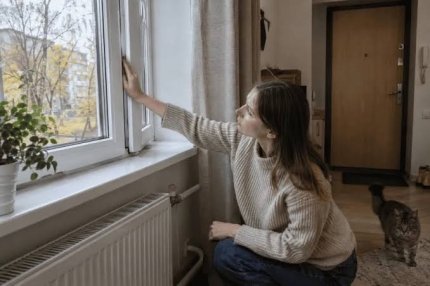
1. Check the tightness of windows and balcony doors
Windows are one of the most noticeable areas of possible heat loss.
Even modern double-glazed windows will not provide proper comfort if the sashes do not fit well to the frame or the installation seams are defective.
In cold and windy weather, check the joints of the sashes, the areas near the hinges, the window sills and the slopes.
If a draft is felt, you need to determine its source.
How to understand that the seal needs to be replaced
Window seals can lose their elasticity over time.
Sometimes cracks, deformations or areas appear on it that no longer provide tight contact.
Inspect the rubber elements around the entire perimeter.
If the seal is damaged, it is replaced with one that is compatible with the specific window system.
Do not install a random thick rubber band: excessive pressure can make it difficult to close the sash and increase the load on the fittings.
Do I need to switch plastic windows to winter mode?
Not all window systems have a separate seasonal adjustment mode.
In some designs, it is possible to vary the leaf pressure, but constant maximum pressure is not always beneficial for seals.
If the window closes normally and does not let air in, there is no need to change the settings unnecessarily.
If there are any distortions or difficulties with closing, it is better to have the fittings professionally adjusted.
Why you shouldn't seal all the cracks indiscriminately
Sealing should not disrupt ventilation.
If the natural ventilation system depends on the supply of outside air, excessive sealing of the apartment without organizing the inflow can cause the accumulation of moisture and pollutants.
Therefore, eliminating uncontrolled drafts must be combined with proper air exchange .
2. Insulate the front door and eliminate drafts
Cold air can enter from the stairwell or vestibule through a leaky front door.
This is especially noticeable in old houses where doors are deformed or seals have not been replaced for a long time.
Check the condition of the door leaf, frame, and joints.
How to reduce heat loss through doors
If the problem is a damaged seal, it can be replaced.
If there is a significant gap near the threshold, a suitable lower sealing element sometimes helps.
But the door must open and close freely.
Devices that make quick evacuation difficult must not be installed.
It is also important not to disrupt the operation of fire doors and other structures provided for in the building design.
If the front door is severely warped, simply applying sealing tape may not solve the problem.
3. Prepare the batteries and heating system
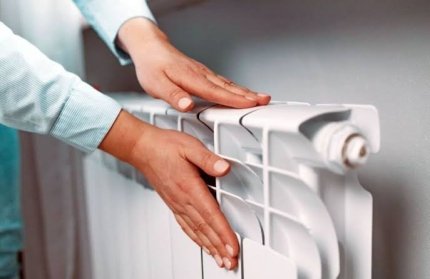
Before the heating season, you need to check the accessible parts of the radiators and make sure that the heat can spread normally throughout the room.
The easiest way to start is to clean the batteries from dust.
Dust accumulates between sections and on surfaces that are difficult to wipe clean during daily cleaning.
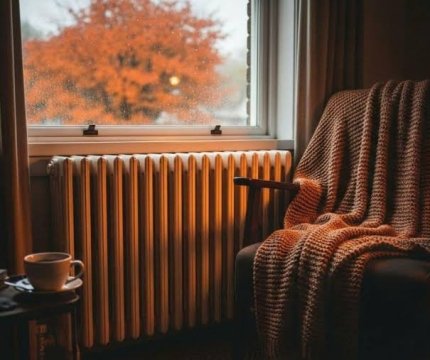
Why you shouldn't cover batteries with furniture
Radiators transfer heat to the air and surrounding surfaces.
If there is a large closet or sofa in front of the radiator, the circulation of warm air is impaired.
Thick curtains that completely cover the radiator can also trap some of the heat near the window.
Therefore, it is worth freeing up space around the heating device.
At the same time, there is no need to dismantle the decorative screens yourself if they are part of a special design.
What to check after starting the heating
Inspect pipe connections, radiator valves, and accessible areas of the system.
Pay attention to any signs of leaks, unusual sounds, or uneven heating.
If the battery remains cold when the heating is on, the cause may be air in the system, incorrect balancing, or another malfunction.
You don't need to unscrew the connections or drain the coolant from the central heating system yourself.
In apartment buildings, such actions can affect the operation of the heating in neighboring apartments.
If the radiator is equipped with an air vent, it should only be used according to the rules of the specific system. If you do not have experience, you should seek the help of a responsible specialist.
4. Check the gas boiler or water heater
If the apartment has individual gas heating, winter preparation should include checking the boiler and related equipment.
Gas appliances require regular maintenance according to the manufacturer's requirements.
It is especially important to check the operation of combustion product removal systems.
Why is carbon monoxide dangerous?
Carbon monoxide, or carbon monoxide, is produced during incomplete combustion of fuel.
It has no characteristic odor or color.
Therefore, it is impossible to determine its presence based on one's own feelings.
For early detection of dangerous concentrations, appropriate carbon monoxide detectors are used.
Such devices are especially important in homes with gas boilers, water heaters, and other fuel-burning appliances.
What not to do with gas equipment
You should not repair gas valves yourself, change the design of chimneys, or disable automatic safety devices.
Also, you should not block the provided ventilation holes in an attempt to retain heat.
A gas stove or oven cannot be used as a room heater.
If you smell a characteristic gas odor, you should avoid open flames and actions that could create a spark, leave the danger area, and notify the gas emergency service.
5. Check the wiring before using the heaters
In winter, the load on the power grid often increases.
Electric heaters, boilers, and other powerful devices are added to conventional household appliances.
In old houses, the electrical wiring is not always designed for the simultaneous operation of several such devices.
What signs of malfunction should you pay attention to?
Check available outlets, plugs, and cables.
Danger signals may include darkening of the plastic, the smell of overheating, sparking, or noticeable heating of the connections.
If the outlet shows signs of damage, do not use it until it is checked.
Also, do not disassemble the electrical panel yourself or replace the circuit breaker with a device with a higher rating.
Protective automation must comply with the characteristics of the electrical wiring.
Why is it better to connect the heater directly to the outlet?
A powerful heater creates a significant electrical load.
Common household extension cords and surge protectors can overheat if used for purposes other than their intended purpose.
Therefore, a portable electric heater should be connected directly to a working stationary outlet, if this is in accordance with the manufacturer's instructions.
There is no need to simultaneously turn on several powerful devices through one extension cord.
6. Prepare additional heaters properly
An electric heater can be a useful source of supplemental heat, but only if used safely.
Before the start of the season, check the housing, cable, plug and operation of the regulators.
Do not use devices with visible damage.
Where you can't install a heater
Do not place portable heaters close to curtains, bedding, upholstered furniture, or other flammable materials.
Fire safety recommendations require a significant safe distance from such objects. For certain types of portable heaters, the guideline is about one meter, and the requirements of Ukrainian services may require at least 1.5 meters.
The applicable safety regulations and the instructions for the specific device take priority.
The heater must stand on a stable surface.
There is no need to dry clothes on it or cover it with towels.
Portable electric heaters should not be left on unattended or while sleeping.
Which heater is more economical?
Electric resistance heaters convert the consumed electrical energy mainly into heat.
Therefore, the claim that one conventional electric heater produces several times more heat than another with the same electricity consumption needs to be verified.
The difference may lie in the way heat is distributed, temperature control, and comfort.
Heat pumps work on a different principle and, under favorable conditions, can transfer more heat energy than they consume in electricity.
However, their effectiveness depends on the external temperature, design and operating mode.
7. Check ventilation to avoid condensation and mold
In winter, many people open their windows less often in an attempt to keep warm.
However, insufficient air exchange can lead to the accumulation of water vapor.
Moisture is generated during cooking, showering, drying laundry, and the normal daily activities of residents.
If it comes into contact with cold surfaces, condensation may occur.
What humidity is optimal for an apartment in winter?
For residential premises, a practical guideline is a relative humidity of approximately 30–50%.
It is advisable to keep it below 60% if possible.
At the same time, even with normal humidity, conditions for condensation may arise in the center of the room near a cold wall.
Therefore, it is important to monitor not only the hygrometer readings, but also the condition of window slopes, external corners, and surfaces behind furniture.
How to check ventilation
Start by inspecting the ventilation grilles in the kitchen and bathroom.
Remove any available dirt from their surface.
Do not block ventilation ducts with furniture or decorative plugs.
If the hood is not working properly, the system needs to be checked.
You should not change the design of the general building ventilation yourself.
How to ventilate an apartment without excessive heat loss
If the outdoor air quality is good, short-term intensive ventilation can be used.
But the duration depends on the outside temperature, the area of the room and the heating operation.
During times of heavy smoke or high levels of outdoor pollution, this method may not be desirable.
In apartments with controlled ventilation, it is necessary to adhere to the prescribed operating mode of the system.

8. Inspect plumbing and pipes in cold areas
Even a small leak in the fall can turn into a serious problem in the winter.
Especially if water gets inside structures or near electrical equipment.
Check accessible connections under sinks, near the toilet, washing machine, and boiler.
Pay attention to damp spots, traces of corrosion and deformation of furniture boards.
Can pipes freeze in an apartment?
Yes, if the temperature at the pipe installation site drops below the freezing point of water.
The most vulnerable may be pipes in unheated technical rooms, near external walls, or in insufficiently insulated structures.
The risk increases during prolonged heating outages.
But you should not change the general house water supply scheme yourself.
If there is a risk of pipes freezing, an assessment of their laying conditions and an appropriate technical solution are required.
What not to do with frozen pipes
Do not heat them with an open flame.
You should also not use homemade electric heaters or uncontrolled heating.
Abrupt or improper heating can damage the pipeline and create a fire hazard.
9. Prepare the balcony and loggia for frost
The balcony often becomes the coldest part of the apartment.
Even with glazing, the temperature there can approach the outside temperature.
Therefore, before winter, you need to check not only the windows, but also the drainage, floor coverings, and things stored on the balcony.
What needs to be removed or moved?
Check for items that may be affected by low temperatures.
This applies to some paints, household chemicals, batteries, and other materials with storage conditions specified by the manufacturer.
Do not leave containers of water in an unheated room, as they may burst when frozen.
Also check that the drainage paths for rainwater and meltwater are not blocked.
Why you can't put a generator on the balcony
Gasoline, diesel, and gas generators can emit carbon monoxide during operation.
A balcony, even an open one, is not a safe place for their operation in an apartment building.
Combustion products can enter the apartment through windows, doors, and ventilation openings.
Generators are designed to operate outdoors, maintaining a safe distance from buildings and openings.
For an apartment, you need to consider only those backup power sources whose operation is permitted in residential premises.
10. Prepare your apartment for possible power outages
Winter power outages create inconvenience not only due to the lack of lighting.
In some homes, circulation pumps, individual boiler operation, water supply, and Internet equipment depend on electricity supply.
Therefore, preparation should begin by identifying critical devices.
What devices may need backup power?
First of all, these are communication devices, a router, necessary lighting, and equipment on which important household needs depend.
For them, you can use power banks, uninterruptible power supplies, or charging stations of appropriate capacity.
But before choosing, you need to take into account the actual consumption of the devices and the characteristics of the backup source.
Not all charging stations are suitable for working with pumps, boilers or other equipment that has special power requirements.
How to use the charging station safely
Only connect devices that are compatible with the station's specifications.
Do not exceed its rated power.
Ensure ventilation of the case and adhere to the temperature regime specified by the manufacturer.
Do not place the equipment near heat sources or where water may get in.
Do not connect the charging station to the household electrical network using a homemade cable with two plugs.
Such a connection can create a dangerous reverse voltage.
If integration of backup power into the apartment's electrical network is required, it must be performed by qualified specialists using appropriate protective and switching devices.
11. Prepare a supply of water and necessary things
If the house has pumping equipment, a power outage may affect the water supply.
Therefore, it is important to provide a small autonomous reserve before winter.
Its volume depends on the number of residents, the age of children, household needs, and possible outage scenarios.
What to have at home
For basic preparedness for utility outages, it is useful to anticipate:
drinking water in suitable food containers;
separate technical water for domestic needs;
flashlights and charged batteries;
power banks and necessary cables;
long-term storage products that do not require complicated preparation;
necessary medicines and first aid supplies;
warm clothes and extra blankets;
charged communications equipment;
access to important documents and contacts.
Stocks need to be checked regularly.
This is especially true for product expiration dates, battery health, and temperature requirements for medications.
You should not store large amounts of fuel in your apartment.
12. Prepare an action plan in case of a prolonged lack of heating
A short-term decrease in temperature in an apartment does not necessarily pose a danger to engineering systems.
But a prolonged lack of heat during severe frosts can lead to overcooling of the room and freezing of individual pipelines.
It is important to know in advance which systems in the house depend on the electricity supply.
For example, an individual gas boiler usually requires electricity for automation and pumps.
In buildings with centralized heating, the operation of the heat supply may depend on pumping and other equipment.
How to reduce apartment cooling
When there is no heating, it is worth limiting unnecessary heat loss.
Close doors to rooms you are not using, unless this prevents necessary air exchange.
You can close thick curtains at night, but do not cover running radiators with them.
Use extra layers of clothing and bedding according to the temperature.
There's no need to try to warm up the entire apartment with candles or a gas stove.
Such methods do not provide proper, safe heating and may pose a risk of fire or poisoning by combustion products.
What to do if the temperature continues to drop
Monitor the actual room temperature.
Particular attention should be paid to small children, the elderly, and residents with increased sensitivity to cold.
If the housing becomes unsuitable for safe residence, relocation to an accessible heated space is required.
If there is a threat of freezing of internal water supply systems, appropriate measures are required by those responsible for their operation.
You should not drain the water from the common heating system of an apartment building yourself.
How to reduce heat loss in an apartment without major repairs
Not all energy efficiency measures require large expenditures.
In many cases, it is sufficient to first eliminate obvious defects.
For example, sealing a mounting seam or replacing a damaged seal can reduce uncontrolled cold air infiltration.
However, the effect depends on the initial state of the structure.
Do blackout curtains help?
Curtains can reduce the feeling of cold radiation from the window surface and affect thermal comfort.
They can be closed in the evening.
But during the day, in sunny weather, open curtains allow you to use some of the natural sunlight.
At the same time, the fabric should not cover the radiator or touch dangerous heating elements.
Is it worth sticking thermal insulation film on windows?
Special interior film systems can reduce heat loss through some older window designs.
However, effectiveness depends on proper installation and product characteristics.
Not all films are equally suitable for modern double-glazed windows.
Self-adhesive bonding of unsuitable materials to glass can degrade its performance.
Why carpet will not replace floor insulation
A rug can make the surface more pleasant to walk on and reduce the feeling of cold underfoot.
But it does not eliminate serious thermal defects in the ceiling.
If the floor consistently remains very cold, especially above an unheated room, the structure as a whole needs to be evaluated.
How to determine where an apartment loses the most heat
Not every cold corner means the same problem.
The cause may be leaks, insufficient thermal insulation or cold bridges.
A cold bridge is an area of a structure through which heat is transferred more intensely than through neighboring areas.
For example, this phenomenon is possible near concrete lintels, balcony slabs, or certain joints of exterior walls.
Will a thermal imager help?
Thermal imaging can show temperature differences on surfaces.
This is a useful tool for identifying potential problem areas.
However, a thermal imager does not measure heat loss directly and does not automatically determine the cause of a cold spot.
The result is affected by weather, solar heating, surface characteristics and other factors.
Therefore, the images require correct interpretation.
You should not start expensive insulation based on just one image without checking the design.
Why does mold appear in the apartment in winter?
Mold can develop on materials that remain damp for long periods of time.
In winter, cold exterior walls, window slopes, and areas behind large furniture are especially problematic.
If humid room air comes into contact with a cold surface, condensation can form on it.
Prolonged moisture creates favorable conditions for fungal growth.
What to do if dark spots appear in the corner
First, identify the source of moisture.
Check ventilation, the condition of the exterior wall, and the possibility of hidden leaks.
You should not simply paint over the affected area without cleaning and drying it.
If the mold has spread to a significant area or there is suspicion of damage inside the structure, specialized troubleshooting is required.
It is especially important to check whether the furniture does not interfere with the normal movement of air near cold walls.
How to prepare your apartment for winter in seven days
If time is limited, the work can be divided into one week.
Such a plan allows you to start with the most important systems and gradually move on to organizing inventories.
| Day | Task |
| 1 | Check windows, doors, seals and slopes |
| 2 | Inspect radiators, evaluate heating operation |
| 3 | Check ventilation, humidity and condition of exterior walls |
| 4 | Inspect plumbing, boiler, and accessible piping |
| 5 | Check sockets, cables and electric heaters |
| 6 | Prepare backup lighting, power, and water supplies |
| 7 | Check the balcony, fire safety and emergency plan |
If the inspection reveals malfunctions in gas equipment, electrical wiring, or serious leaks, such problems have a higher priority than minor insulation work.
What are the most dangerous mistakes when preparing an apartment for winter?
Completely block ventilation. This can contribute to the accumulation of moisture and hazardous combustion products.
Heating an apartment with a gas stove. This method creates a risk of fire and carbon monoxide poisoning.
Plug multiple heaters into one extension cord. Overloading can cause the connections to overheat.
Install the generator on the balcony. Combustion products can enter the living quarters.
Remodel the electrical panel yourself. Connection errors can cause electric shock or fire.
Ignore leaks under the sink. Even a small amount of water can damage furniture and structures.
Leave condensation on windows. Constant moisture creates conditions for mold to grow.
Blocking radiators with furniture can impair heat distribution in the room.
Change the heating system yourself. Incorrect actions can affect neighboring apartments.
Store chargers and batteries near heat sources. This may compromise the temperature conditions for safe operation of the equipment.
Conclusion
Preparing an apartment for winter is not just about insulating windows and purchasing a heater.
First of all, you need to check the tightness of the structures, the serviceability of the heating, ventilation, plumbing, and electrical networks.
It is especially important not to create new risks in attempts to keep warm: do not block ventilation, do not use a gas stove for heating, and do not overload electrical outlets.
For apartments that may experience power outages, it is worth separately preparing backup lighting, communication equipment, a water supply, and safe power sources.
The best result is obtained by timely inspection of the home and elimination of specific problems before the onset of severe frosts.
FAQ: frequently asked questions about preparing your apartment for winter
What should you check in your apartment before winter?
First of all, check windows and doors for drafts, the condition of radiators, ventilation, plumbing connections, sockets and electrical wiring. If there is gas equipment, it is important to properly maintain it. It is also worth preparing backup lighting and a supply of water.
How to insulate an apartment for the winter without renovation?
You can fix leaks in windows and doors, replace damaged seals, clear space around radiators, and use curtains properly. However, these measures are no substitute for addressing serious defects in the building's insulation.
Do I need to switch plastic windows to winter mode?
Not necessarily. Not all window systems have seasonal adjustment. If the sash closes tightly and does not let air through, it may not be necessary to additionally change the pressure. If there are problems, it is better to check the fittings.
How to make an apartment warmer if the radiators do not heat well?
First, make sure that the radiators are not blocked by furniture or thick curtains. If the radiator remains cold or heats unevenly, the cause may be a problem with the heating system. It must be diagnosed without unauthorized interference with the general building communications.
What is the optimal humidity for an apartment in winter?
A practical guideline is a relative humidity of approximately 30–50%. It is advisable to keep it below 60% if possible. If condensation occurs, ventilation and the temperature of cold surfaces should be assessed.
How to prepare an apartment for power outages in winter?
Charge power banks, prepare flashlights, backup communications, water, and non-perishable food. Identify critical electrical appliances and select compatible backup power if necessary. Do not use homemade electrical connections.
Can I use a generator on an open balcony?
No. Generators powered by gasoline, diesel, or gas emit combustion products, including carbon monoxide, and should not be installed on balconies or inside residential buildings.
Is it safe to leave an electric heater on overnight?
Portable electric heaters should not be left unattended while sleeping. They should be operated according to the manufacturer's instructions, at a safe distance from flammable materials, and without overloading the electrical system.
Why do apartment windows fog up in winter?
Condensation occurs when moist room air comes into contact with a sufficiently cold glass or other surface. The causes can be high humidity, insufficient ventilation and low temperature of the window structure. These factors need to be checked together.
What to do if the heating in the apartment is turned off during frosts?
Control the room temperature, limit unnecessary heat loss, and use safe ways to maintain comfort. Do not heat your home with a gas stove or homemade devices. During prolonged severe cold weather, you should consider the risk of pipes freezing and the possibility of staying in a heated room.

