
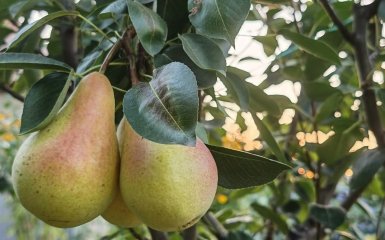
Pears can remain firm for several weeks, and then soften in just a few days. It is especially frustrating when, after a bountiful harvest, you have to urgently process the fruit, although you wanted to keep it fresh for the winter. In fact, making jam is not necessary. Depending on the variety and ripeness, pears can be stored in the refrigerator, cold cellar, frozen, dried or turned into natural fruit puree without adding sugar.
However, the storage method must be chosen correctly. A ripe soft pear will not last for several months in a box, while hard fruits of winter varieties can be stored much longer under appropriate conditions.
The main secret to long-term storage of pears is to choose the right stage of ripeness, cool the fruit as quickly as possible, and avoid mechanical damage.
We'll look at which pear varieties are suitable for winter storage, at what temperature to keep them, whether the fruit should be wrapped in paper, how to properly freeze and dry pears, and what to do if the harvest has already started to soften.
Why do pears spoil quickly after picking?
A pear remains a living fruit even after it has been removed from the tree.
Respiration, enzymatic processes, and transformations of substances that affect taste and texture continue in its tissues.
During ripening, the flesh gradually softens, the ratio of sugars and acids changes, and characteristic aromatic compounds are formed.
An important role in this process is played by ethylene, a natural plant hormone that is involved in the regulation of fruit ripening.
When a pear is placed in a warm room, the ripening process usually accelerates.
That's why fruit that has remained hard in the refrigerator for a long time can quickly become soft after being transferred to the kitchen.
Why do pears sometimes turn dark inside?
Some varieties of European pears ripen best after picking, rather than directly on the tree.
Leaving them on the branches until completely soft may increase the risk of internal browning and pulp destruction.
Similar problems are possible with improper storage, especially if the fruits were overripe or were kept at unfavorable temperatures for a long time.
Therefore, for winter supplies, it is important to harvest pears at the proper ripeness to remove, without waiting for them to become soft.
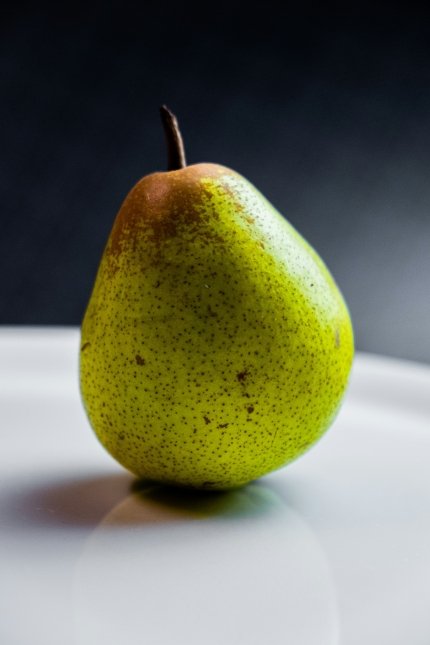
What varieties of pears are best stored in winter?
Not all pears have the same shelf life.
Early summer varieties are usually intended for quick consumption. They can be very juicy and flavorful, but often go rancid quickly.
Autumn varieties usually last longer, and some winter varieties can remain edible for several months.
Varieties worth paying attention to
| Variety or group | Features | Storage potential |
| Williams (Bartlett) | Juicy fragrant fruits | Mostly short- or medium-term |
| Conference | Dense pulp, popular autumn variety | Can be stored for several months |
| Bere Bosc | Dense fruits with characteristic brownish skin | Suitable for longer cold storage |
| Anjou (D'Anjou) | Winter variety, ripens more slowly | High keeping quality potential |
| Comice | Sweet fruits with tender flesh after ripening | Requires proper cooling |
| Listopada and related winter varieties | Depending on the specific variety, they have good keeping quality. | May be suitable for winter supplies |
The specific period depends on growing conditions, ripeness at harvest, and storage temperature.
For example, in professional controlled-atmosphere storage, some winter varieties can be stored for four to six months. But it is not always possible to achieve the same result in a regular home refrigerator.
For long-term storage, not only the variety is important, but also how correctly the fruits are harvested and cooled.
When to pick pears so they last longer
For most European varieties, the best time to harvest is before full consumer ripeness.
The fruit has already reached a characteristic size, but the flesh remains firm.
Appearance can help assess ripeness, although there is no universal test for all varieties.
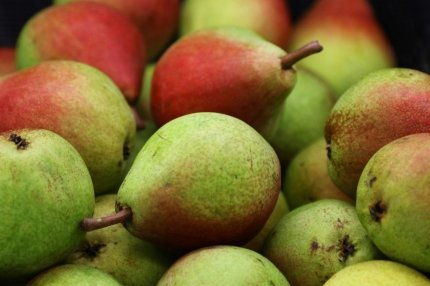
How to check readiness for collection
Carefully lift the pear and rotate it slightly.
In many European varieties, the ripe fruit for harvesting is relatively easily separated from the fruiting branch along with the stalk.
If you have to pull hard or damage the branch, the fruit may not be ripe enough yet.
Additional characteristics include the size typical for the variety, the gradual lightening of the green color, and the condition of the seeds.
However, it is difficult to accurately determine readiness for long-term storage based on the color of the skin alone.
Why you shouldn't shake pears from the tree
Even a small blow can damage fetal tissue.
Sometimes no serious changes are visible on the surface, but inside the pulp begins to brown.
Damaged areas also become more vulnerable to deterioration.
Therefore, pears for winter storage should be picked by hand, not thrown into a bucket or poured from a great height.
It is important to keep the stalks intact and not scratch the skin with your nails.
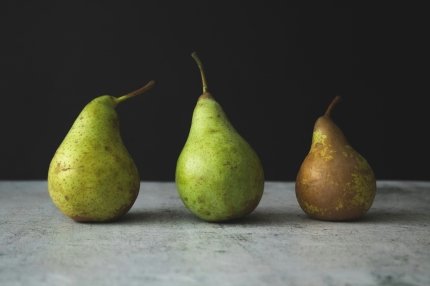
Do all pears need to be picked firm?
No. For example, Asian pears have different ripening characteristics.
Many Asian varieties are harvested when they are ready to eat directly from the tree.
Therefore, the rules for European winter pears cannot be automatically applied to all varieties.
How to prepare pears for winter storage
After harvesting, the fruits need to be sorted.
Even one rotten pear can become a source of spoilage for neighboring fruits, especially if there is insufficient ventilation.
What pears can be left for the winter?
For long-term storage, choose fruits that:
are firm and correspond to the removable ripeness characteristic of the variety;
have a whole skin;
do not contain soft areas and dents;
have no signs of mold or rot;
not damaged by insects;
assembled without bumps or falls.
Fruits with mechanical damage must be separated.
If they show no signs of spoilage, they can be used more quickly for cooking or appropriate processing.
Pears with mold or rot should not be left among healthy fruit.
Do you need to wash pears before storing them?
For normal home storage, it is better not to wash whole, healthy pears in advance.
Wetting the surface and incomplete drying can create additional conditions for deterioration.
Visible dry dirt can be carefully removed without damaging the skin.
Fruit should be washed under running water immediately before consumption or processing.
Do not use soap, household detergents, or disinfectants not intended for food use to wash edible fruits.
At what temperature is it best to store pears?
Temperature is one of the most important factors in keeping quality.
In warm conditions, pears breathe faster, release ethylene, and soften.
Cooling slows down these processes.
For many European varieties, professional recommendations suggest temperatures of approximately −1 to 0 °C with a relative humidity of 90–95%.
However, at home, it is important to prevent accidental freezing of fruits.
Therefore, for a regular refrigerator, a practical guideline may be approximately 0–4 °C , depending on the variety and temperature stability of the appliance.
Why sub-zero temperatures can be dangerous
The temperature at which fruits begin to freeze depends on the content of dissolved substances, in particular sugars.
For many pears, frost damage is possible at around −1.5…−2 °C.
After thawing, the flesh may become watery, brown, and excessively soft.
Therefore, you should not leave pears near the freezer or in a place in the refrigerator where the temperature can drop uncontrollably below zero.
Why do pears need high humidity?
In dry air, fruits gradually lose water.
As a result, the skin shrivels and the flesh becomes less juicy.
High relative humidity helps reduce such losses.
However, humidity does not mean that pears should be wet.
Drops of water on the surface, stagnant condensation, and poor ventilation can contribute to the development of rot.
Method 1. How to store pears in the refrigerator
For most city apartments, the refrigerator is the most convenient place to store small batches of pears.
It provides a relatively stable low temperature and does not require separate storage.
Step-by-step preparation
First, sort out the firm, healthy fruits.
Carefully arrange them in the fruit compartment.
To reduce moisture loss, you can use food bags with small ventilation holes.
There is no need to tightly seal the pears in a regular plastic bag without the possibility of air exchange.
This can contribute to the accumulation of condensate and create undesirable gas exchange conditions.
Check the fruit periodically and remove any that are starting to soften.
How many pears can be stored in the refrigerator?
The duration depends on the variety and ripeness.
Fully ripe fruit often needs to be used within a few days.
Firm pears of some fall varieties can be stored for several weeks.
Winter varieties, properly harvested and refrigerated, can remain of good quality for several months under favorable conditions.
But this is not a guarantee for every batch of fruit.
Method 2. How to store pears in a cellar or cold storage
If you need to preserve several boxes of harvest, a refrigerator may not be enough.
In this case, a cool storage facility with a stable temperature and proper ventilation is suitable.
What should the conditions be?
It is advisable to maintain the temperature as close to 0 °C as possible without the risk of freezing the fruits.
For a home cellar, a guideline can be approximately 0–3 °C.
At temperatures of +5…+8 °C, pears will usually ripen faster, so their shelf life will be shorter.
Humidity should be high, but without constant condensation on the boxes and fruit.
You can install a thermometer and hygrometer for monitoring.
How to properly arrange pears in boxes
Clean wooden, plastic, or cardboard boxes that allow air circulation are suitable.
It is best to place the fruits in a single layer.
If space is limited, multi-layer stacking with careful separation of the fruits is allowed, but the risk of damage is higher in this case.
Do not overload the boxes.
It is important that the lower fruits do not deform under the weight of the upper ones.
Do you need to wrap each pear in paper?
Individual wrapping is not a mandatory storage condition.
It is sometimes used to reduce friction between fruits.
But paper does not stop ripening or protect against internal spoilage.
Additionally, tight packaging can make it difficult to inspect the fruit.
Therefore, it is more important to ensure the correct temperature, no damage, and regular inspection than to wrap each pear individually.
Can you store pears on the balcony?
A balcony is only suitable when the temperature on it remains fairly stable.
This is difficult to achieve on an open balcony.
In autumn, temperatures can range from plus during the day to minus at night.
And in winter, pears in boxes can freeze.
When is balcony storage possible?
If the balcony is glazed and has a controlled temperature, it can be temporarily used for fruit.
You need to check the temperature directly near the boxes, and not just rely on the weather forecast.
It is important to protect the fruits from direct sun and sudden temperature fluctuations.
However, an insulated box without controlled heating does not guarantee that the pears will not freeze during severe frosts.
Can pears be stored next to apples and other fruits?
Pears, apples, and some other fruits emit ethylene.
This gas is involved in the regulation of maturation.
In a warm room, proximity to ripe fruit can accelerate the softening of pears.
That is why apples are sometimes used to ripen a hard pear faster in a paper bag.
But for long-term cold storage, this effect is usually undesirable.
It is better to separate batches of fruit by degree of ripeness.
You also don't need to store pears next to substances or products that have a strong odor.
How to properly ripen pears after refrigeration
Many European pears best develop their characteristic juiciness after being removed from cold storage.
This is especially true for winter varieties.
For some of them, the chilling period is an important part of normal ripening.
How long does it take to reach maturity?
After cold storage, place a few pears in a room with a temperature of approximately +18…+22 °C.
Depending on the variety and ripeness, the process can take from a few days to a week or longer.
There's no need to immediately move all your winter supplies into a warm kitchen.
It is better to take small portions as needed.
How to tell if a pear is ready to eat
Gently press your finger on the area near the stem.
In many European varieties, the slight pliability of the flesh in this zone is a sign of consumer ripeness.
Do not squeeze the middle of the fruit too hard.
This can leave dents.
Once ripe, it is best to eat the pear within the next few days.
Method 3. How to freeze pears for the winter
Freezing is suitable if the fruit is already ripe but still firm and shows no signs of spoilage.
However, after defrosting, the structure of the pears changes.
The flesh may become softer and release more juice.
Therefore, frozen fruits are best used for baking, compotes, sauces, cereals, and desserts.
Freezing pears in syrup
This method helps to better preserve the quality of the pieces.
To make syrup, you can use approximately three parts sugar to four parts water by volume.
This is a common syrup recipe for freezing fruit.
Step by step:
Wash the pears, peel them, and remove the core.
Cut into slices of the same size.
Prepare the sugar syrup and bring it to a boil.
Warm the slices in boiling syrup for about 1–2 minutes.
Remove the pears and cool.
Transfer to freezer containers.
Pour over the cooled syrup, leaving room for the liquid to expand.
Close, date and freeze.
To reduce darkening, food-grade ascorbic acid can be used according to a proven recipe.
Can you freeze pears without sugar?
Yes. Sugar is not a prerequisite for safely freezing fruit.
It mainly affects taste, texture, and color retention.
For sugar-free freezing, you can prepare peeled slices, treat them with food-grade ascorbic acid to prevent browning according to the instructions, and pre-freeze them separately on a tray.
Once hardened, transfer the pieces to freezer bags or containers.
It should be noted that after defrosting, their texture may be worse than that of fruits properly frozen in syrup.
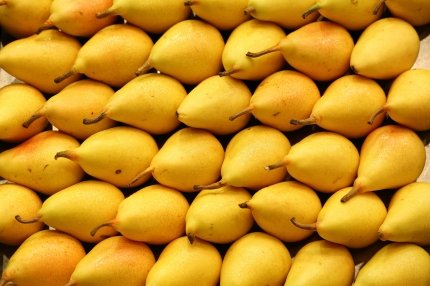
Method 4. How to dry pears in an electric dryer or oven
Drying is suitable for ripe sweet pears that remain healthy and show no signs of rot.
During drying, a significant portion of the water is removed from the fruit.
This slows the development of microorganisms and allows the fruit to be stored without a freezer, provided it is properly dried and packaged.
Preparation for drying
Wash the pears under running water.
Remove the core and cut the fruit into slices approximately 5–8 millimeters thick.
The skin can be left on if it is thin and intact.
But after drying, it can become tougher, so for a more tender texture, it is better to peel the fruit.
To reduce browning, you can use a food-grade ascorbic acid solution or another proven method of pre-treating fruit.
At what temperature to dry
For a home dehydrator, a practical guideline is around 55–60 °C.
The exact mode depends on the design of the appliance, the thickness of the slices and the water content of the fruit.
Arrange the slices in a single layer so that air circulates between them.
There is no need to place the pieces tightly on top of each other.
It is important to ensure proper air circulation and temperature control in the oven.
Not every oven model is capable of maintaining a low temperature suitable for fruit.
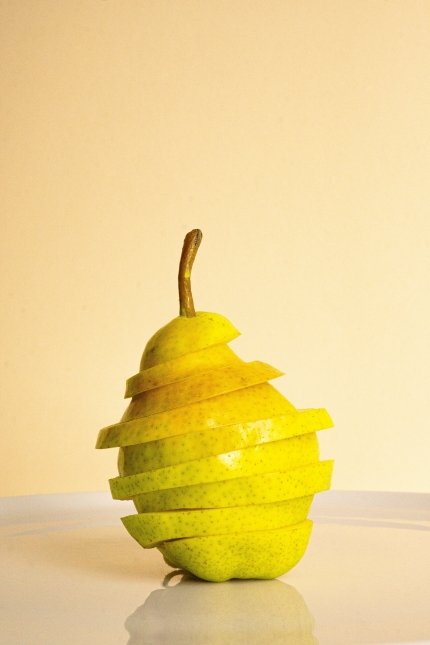
How to tell when dried pears are ready
The finished pieces should be flexible after cooling, but without visible moisture inside.
If you cut a thick slice, there should be no wet areas in the center.
You don't need to judge readiness by color alone.
Overdried pears can become too hard, and underdried ones can spoil quickly during storage.
Why do dried pears need to be kept after drying?
After the dehydrator, the moisture content of different pieces may vary.
For example, thinner slices dry faster than thicker ones.
Therefore, homemade dried fruits benefit from so-called conditioning — equalizing residual moisture.
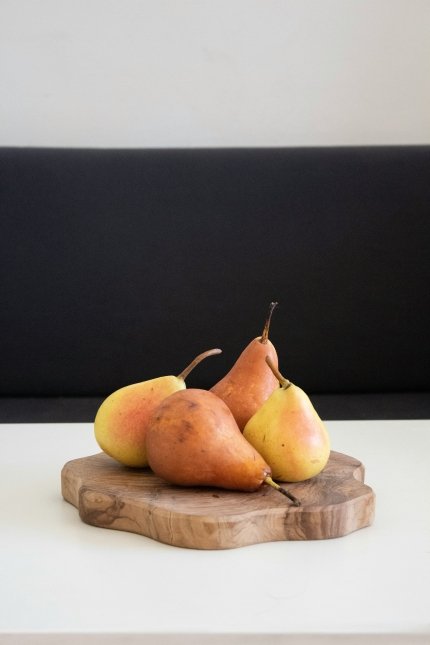
How to properly condition dried pears
Cool the dried fruit completely.
Place them loosely in clean, dry glass or food-grade plastic containers.
Close and leave for about 7–10 days.
Gently shake the container daily and check for condensation.
If moisture appears on the walls, the fruit needs to be dried further.
If there are signs of mold, the product should be discarded.
After conditioning, transfer the pears to an airtight container and store in a dry, cool, and dark place.
How long do dried pears last?
If properly dried and packaged, dried fruits can be stored for several months.
In cool, dry conditions, individual batches retain their quality for up to a year, but in a warm kitchen the period can be significantly shorter.
The duration depends on the residual humidity, temperature and tightness of the container.
Periodically check dried fruits for signs of moisture, insects, and mold.
Method 5. Pear puree without jam and a lot of sugar
If the pears are already very soft, it is not advisable to keep them fresh any longer.
However, healthy fruits without signs of rot can be used to make fruit puree.
This method is especially convenient when you need to quickly process a small amount of ripe fruit.
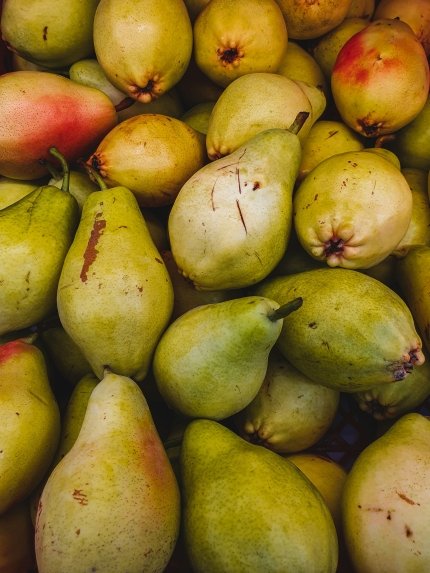
How to make pear puree for freezing
Wash the pears, peel if desired, and remove the cores.
Cut the flesh into small pieces.
Transfer to a saucepan with a little water.
Heat until softened, stirring occasionally.
If desired, add a little cinnamon or other food spice.
Grind until smooth.
Then quickly cool the puree, divide into small portions into freezer-safe containers and freeze.
You can skip adding sugar if the natural sweetness of the pears is sufficient.
What dishes to use frozen puree for?
It is suitable for oatmeal, pancakes, homemade pastries, fruit sauces and desserts.
It is convenient to freeze it in portions that will be used at one time.
Important: regular homemade pear puree, packaged in jars without an appropriate, proven canning procedure, cannot be stored at room temperature as sterile canned goods.
This requires a separate safe method of canning, not just hot bottling.
Which method of storing pears to choose
| Way | Who is pear suitable for? | Main advantage | Limitation |
| Refrigerator | Firm, healthy fruits | Maintaining a fresh texture | Limited space and time |
| Cold cellar | Large batches of winter varieties | You can store a lot of fruit | Temperature control required |
| Freezing | Dense ripe pears | Convenient portions for the winter | After thawing, the crumb softens. |
| Drying | Ripe healthy fruits | No freezer needed | Thorough drying is required. |
| Frozen puree | Soft ripe pears | You can use the surplus harvest | Requires a freezer |
How to store pears during power outages
If the power supply is unstable, the method of harvesting fruit is of particular importance.
The refrigerator and freezer can temporarily maintain a low temperature after the power is turned off, but the duration depends on the contents, insulation, and room temperature.
Provided the door remains closed, a full freezer can maintain a sufficiently low temperature for about 48 hours, and a half-full one for about 24 hours.
These are approximate values, not a guarantee.
What to do after a long outage
If frozen pears still have ice crystals or their temperature does not exceed +4 °C, they can usually be refrozen, although the quality may deteriorate.
If the product has completely melted and has been kept warm for a long time, the solution depends on temperature and time.
You need to be especially careful with ready-made fruit puree.
You should not determine the safety of a product based solely on its smell or taste.
For preparations that do not depend on electricity, properly dried pears are a practical alternative.
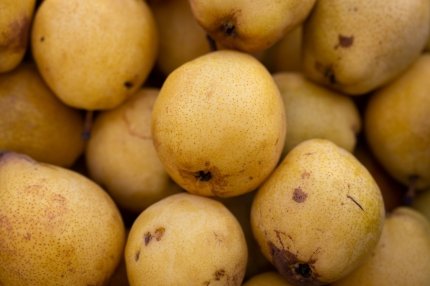
The most common mistakes when storing pears
Harvest the fruit when it is too ripe. Completely soft pears are not suitable for long-term fresh storage.
Stacking damaged fruit with healthy ones increases the risk of rot spreading.
Store pears in a warm pantry. High temperatures accelerate ripening.
Leave the fruit on a frosty balcony. After freezing, the pulp may lose its normal structure.
Seal wet fruit tightly in bags. Condensation and insufficient air circulation can contribute to spoilage.
Checking the boxes too infrequently can leave one spoiled pear unnoticed for a long time.
Freeze rotten pears. Freezing does not make spoiled produce safe.
Do not dry the pieces sufficiently. Residual moisture can lead to mold.
Storing purees without proper refrigeration. Prepared fruit dishes are not intended to be stored indefinitely at room temperature.
How to organize the storage of a large harvest of pears
If several buckets of fruit have been collected from a tree, you should not try to preserve the entire batch in one way.
It is best to divide the harvest by the degree of ripeness and condition of the fruit.
Firm, healthy winter pears can be sent for cold storage.
Ripe but still dense fruits are suitable for freezing or drying.
Soft, healthy pears are best used quickly for desserts or purees.
Damaged and spoiled fruit should be separated.
This approach allows you to reduce crop losses and obtain various preparations without cooking a large amount of jam.
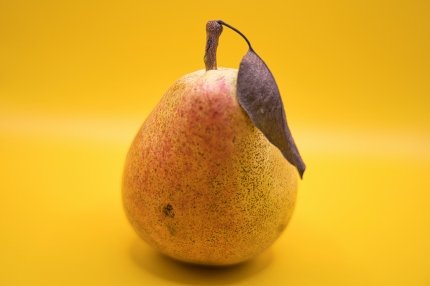
Conclusion
You can preserve pears for the winter without jam or complicated preservation.
For long-term fresh storage, firm, healthy fruits of varieties with good keeping quality are best. They need to be cooled quickly and maintained at a stable low temperature without freezing.
Ripe pears can be frozen in slices or turned into fruit puree, and drying allows you to make a stock that does not require the freezer to be constantly running.
The most important thing is not to mix fruits of different ripeness, regularly check stocks, and choose a harvesting method according to the condition of the fruits.
FAQ: Frequently Asked Questions About Storing Pears for the Winter
How to keep pears fresh until winter?
Choose firm, healthy fruits of a variety with good keeping quality. Store them in a refrigerator or cold cellar at a stable temperature close to 0 °C, avoiding freezing. Check the fruits regularly and remove those that have started to spoil.
Which pear varieties are best suited for long-term storage?
Known varieties with good keeping potential include Conference, Bere Bosque, Anjou, and some winter varieties. Shelf life depends on when the fruit was picked, how quickly it was cooled, and the conditions under which it is kept.
At what temperature should pears be stored in winter?
For many European varieties, the professional temperature optimum is approximately −1 to 0 °C. In a domestic refrigerator, it is more practical to maintain around 0–4 °C, as it is important to avoid accidental freezing of the fruit.
Can pears be stored in plastic bags?
You can use food bags with ventilation holes to reduce moisture loss. However, you should not tightly seal wet pears in completely airtight bags, where condensation can accumulate.
Do you need to wash pears before storing?
For normal storage of whole fruit, pre-washing is usually not necessary. Surface water can contribute to spoilage if the fruit is not dried sufficiently. Wash pears under running water immediately before eating or processing.
Can pears be frozen without sugar?
Yes. Peeled pears can be frozen without syrup, pre-treating to prevent browning if necessary. However, the flesh usually becomes softer after thawing, so these pears are best used for baking, sauces, and desserts.
How to properly dry pears for the winter?
Cut healthy, ripe pears into equal pieces and dry in a dehydrator at an appropriate temperature, approximately 55–60 °C. After drying, cool them, condition them for 7–10 days, and store in an airtight container.
Why do pears darken inside during storage?
Causes may include overripeness, tissue damage, improper temperature conditions, or physiological disorders. Some European varieties are particularly sensitive to overripeness on the tree. For long-term storage, they are usually harvested firm.
Can pears be stored with apples?
This is possible if the temperature is right, but to control ripening, it is better to separate the fruit by degree of ripeness. Apples and pears emit ethylene, which can accelerate fruit ripening, especially in warm weather.
What to do if the pears have already become very soft?
If the fruit is healthy and shows no signs of spoilage, it can be used quickly for purees, sauces, baking, or freezing. Pears with rot or mold should not be used for homemade preserves.

