
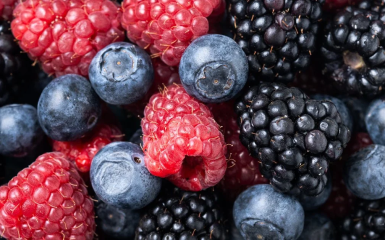
Freezing is one of the most convenient ways to preserve seasonal vegetables, fruits, and berries for the winter. However, the result does not always live up to expectations: strawberries turn into a soft mass after defrosting, broccoli loses its color, and zucchini becomes watery.
The cause is usually not the freezer itself, but rather improper preparation of the food. Some vegetables need to be blanched first, while others can be frozen raw. Berries are best spread out in a single layer first, and sliced fruit sometimes requires additional processing to prevent browning.
Points of attention
- For freezing, choose fresh produce, clean it and remove excess moisture. Freezing does not guarantee the destruction of dangerous microorganisms.
- Most vegetables should be blanched before freezing to better preserve color and flavor. Bell peppers can be frozen raw.
- It is convenient to freeze berries first in a single layer, and then pack them in bags. For fruits that darken after cutting, apply appropriate pre-treatment.
The optimal storage temperature for frozen vegetables and fruits is −18 °C or lower. For best quality, most home-made preparations should be used within 8–12 months.
At the same time, freezing does not sterilize products and does not guarantee complete preservation of the original texture. It significantly slows down unwanted processes, but the quality of the result depends on the freshness of the raw materials, the speed of freezing, and proper packaging.
Let's look at how to prepare various foods, how many minutes to blanch vegetables, which berries can be frozen without sugar, and what to do with supplies during a power outage.
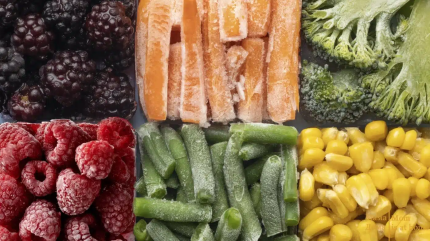
Why freezing helps preserve vegetables and fruits
At low temperatures, the water inside products turns to ice. This dramatically slows down the activity of microorganisms, enzymatic reactions, and other processes that lead to spoilage.
However, freezing does not stop all changes completely.
Some enzymes can remain active even at low temperatures, which is why blanching is recommended for many vegetables.
According to the National Center for Home Food Preservation (NCHFP), this treatment helps preserve the color, flavor, and texture of frozen vegetables.
Why do foods become soft after defrosting?
During freezing, ice crystals form inside and between cells.
They can damage cellular structures.
After defrosting, some of the water comes out of the fabrics, so the product loses its original elasticity.
This is especially noticeable in cucumbers, tomatoes, strawberries, and other foods with a high water content.
Rapid freezing usually promotes the formation of smaller ice crystals and better preservation of texture, although it is impossible to completely prevent the changes.
Which vegetables, fruits and berries are best for freezing?
Not all products tolerate low temperatures equally well.
The best results are usually obtained from raw materials that, after defrosting, are planned to be used for cooking.
| Product | Is it suitable for freezing? | Best use |
| Strawberry, raspberry, blueberry | Yes | Desserts, cereals, pastries, smoothies |
| Cherry, sweet cherry | Yes | Compotes, sauces, pies |
| Peaches, apricots | Yes | Desserts, purees, pastries |
| Apples, pears | Yes, after appropriate training | Fillings, compotes, purees |
| Broccoli, cauliflower | Yes, blanching is desired. | Soups, side dishes, casseroles |
| Carrots, green peas | Yes, after blanching | Soups, stews, vegetable mixtures |
| Bell pepper | Yes, raw or blanched | Sauces, stews |
| Tomatoes | Yes | Sauces, soups, stews |
| Zucchini | Yes, but the texture will change | Pancakes, stews, soups |
| Cucumbers, leaf lettuce | Poorly retain texture | Not the best choice for fresh salads |
It is important to freeze foods based on how they will be used after thawing.
For example, a tomato for a sauce is a good candidate for the freezer. But the same tomato is unlikely to remain firm enough for a fresh salad.
1. Choose fresh and high-quality products
Freezing does not improve the quality of the product, but only helps preserve its current state.
Therefore, it is best to use ripe, healthy vegetables and fruits without signs of rot.
Don't delay freezing until the berries start to spoil.
How to properly prepare raw materials
First of all, sort through the harvest.
Remove leaves, stems, damaged parts, and foreign matter.
Most fruits and vegetables should be washed gently under clean running water. There may be specific guidelines for certain berries: for example, the NCHFP allows freeze-drying unwashed blueberries and then washing them before use.
After washing, remove excess surface moisture.
You can use a colander, a clean towel, or paper towels for this.
You don't need to leave the berries in water for a long time: they can lose some of their juice and become damaged.
Why you shouldn't freeze spoiled foods
Low temperature does not guarantee the destruction of all dangerous microorganisms.
After thawing, they can reproduce again under favorable conditions.
Therefore, products with mold, rot, mucus, or an unpleasant odor should be discarded.
2. Blanch vegetables before freezing
Blanching is the short-term treatment of products with boiling water or steam followed by rapid cooling.
Its main task is to reduce the activity of enzymes that can deteriorate the color, taste, and texture of vegetables during storage.
For most vegetables, blanching is an important preparation step.
How many minutes to blanch different vegetables
According to NCHFP recommendations, processing time depends on the type of vegetable and the size of the pieces.
| Vegetable | Blanching time in boiling water |
| Carrots, sliced or diced | 2 minutes |
| Small whole carrot | 5 minutes |
| Broccoli, inflorescences about 4 cm | 3 minutes |
| Cauliflower, small florets | 3 minutes |
| Green beans | 3 minutes |
| Green peas | 1.5 minutes |
| Spinach and most other leafy greens | 2 minutes |
| Zucchini, cut into pieces | 3 minutes |
| Bell pepper, halves | 3 minutes if blanching is selected |
| Bell pepper, strips | 2 minutes if blanching is selected |
The time is counted after the water boils again.
Insufficient blanching may not provide the desired enzyme inhibition, and excessive blanching may impair flavor and texture.
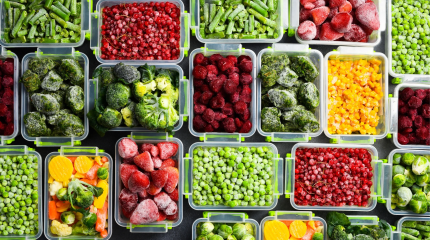
How to properly blanch vegetables
Prepare the vegetables and cut them according to their future use.
Boil enough water.
Dip a small portion into boiling water.
After the boil resumes, count the recommended time.
Immediately transfer the vegetables to cold ice water.
Cool for about the same amount of time as blanching.
Dry thoroughly.
Package and freeze.
If there are too many vegetables, the water temperature may drop and the processing quality will deteriorate.
Therefore, it is better to blanch in small batches.
3. Freeze berries separately so they don't stick together
Strawberries, raspberries, blackberries, and other berries can freeze in one large piece.
This is inconvenient if you only need to take a small portion for porridge or dessert.
The solution is to pre-freeze in a single layer.
Step-by-step method
Arrange the prepared berries on a flat tray that fits in the freezer.
It is desirable that the fruits do not touch each other.
Freeze until solid.
After that, quickly transfer the berries to a freezer bag or container and return them to the freezer.
This approach is called tray freezing.
It allows you to store berries as individual fruits, although after defrosting their texture may still be softer than fresh ones.
Do I need to add sugar?
No, sugar is not required to safely freeze berries.
It can affect the taste and texture of individual fruit preparations, but for smoothies, cereals, and many desserts, it is convenient to freeze berries without it.
If you plan to use strawberries for sauces or fillings, they can also be frozen as puree.
How to properly freeze strawberries, raspberries and blueberries
Although the general principle is similar, each berry has its own characteristics.
Strawberry
Choose ripe but firm berries.
Rinse, remove sepals and dry carefully.
To preserve individual fruits, use pre-freezing on a tray.
Large berries can be cut in half or prepared as a puree.
Raspberry
Raspberries are very delicate, so you need to handle them with extreme care.
When washing, avoid using a strong stream of water, which can damage the fruit.
After removing excess moisture, spread the berries in a single layer.
Do not pack a large amount of fresh raspberries into a container with a strong seal.
Bilberry
There is a separate NCHFP recommendation for blueberries: when dry freezing, the berries can be left unwashed before freezing, as pre-washing sometimes makes the skin tougher.
These blueberries need to be washed before use.
If you plan to turn the berries into puree immediately, wash them before chopping.
How to freeze fruit so it doesn't turn brown
Some fruits change color quickly after cutting.
This is due to enzymatic oxidation.
The darkening of apples, pears and peaches is especially noticeable.
Does lemon juice help?
An acidic environment can slow down browning, but the result depends on the product and the processing method.
For more accurate color retention, NCHFP recommends using ascorbic acid in appropriate formulations.
It acts as an antioxidant.
At the same time, there is no need to add an arbitrary amount of acid to all fruits.
How to freeze apples
For future baking, apples can be peeled, cored, and cut into slices.
To reduce browning, appropriate ascorbic acid treatment or short-term steam blanching using proven technology is used.
Then the apples can be frozen in portions.
Once thawed, they are usually better suited for pies, compotes, and purees than for fresh salads.
How to freeze peaches, apricots and cherries
For stone fruits, removing pits and proper packaging are important.
Peaches and apricots can lose density after defrosting, so it is advisable to cook them immediately for specific dishes.
For example, apricot halves are convenient to use in baking, and sliced peaches are great for desserts.
It is best to sort, wash, and, if necessary, remove pits from cherries before freezing.
If the fruits are needed for dumplings or pies, it is convenient to freeze them in small portions.
This allows you to avoid defrosting the entire supply for one meal.
How to freeze tomatoes, peppers and zucchini
These vegetables have different structures, so the approaches are different.
Tomatoes
Frozen tomatoes usually lose their density after defrosting.
The NCHFP recommends using them primarily for cooking.
Tomatoes can be frozen whole or sliced, after pre-preparing according to the chosen technology.
For sauces, make tomato puree or a prepared base almost immediately.
Bell pepper
This is one of the exceptions for which freezing without blanching is possible.
According to NCHFP recommendations, peeled peppers can be cut into strips or rings and frozen raw.
For certain culinary tasks, preliminary blanching is also permitted.
After defrosting, the peppers may become softer, but are good for stews, soups, and sauces.
Zucchini
Zucchini contains a lot of water, so after defrosting, their structure changes.
For sliced zucchini, blanching for three minutes is recommended.
This preparation is best used for stewing and other cooked dishes.
For pancakes, you can prepare the grated mass according to the appropriate recipe, taking into account that liquid will be released after thawing.
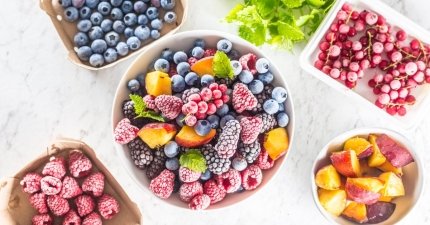
What foods are best not to freeze for fresh salads?
Not all vegetables retain a pleasant texture after defrosting.
This is especially true for products with high water content and delicate cell walls.
These include fresh cucumbers, leaf lettuce, radishes, and some types of greens.
After thawing, they may become soft, watery, and lose their characteristic crunch.
However, this does not mean that they cannot be frozen at all.
For example, individual vegetables can be used in prepared dishes, sauces, or special recipes.
It's just important not to expect them to look and feel like they were just picked after defrosting.
What is better to freeze food in: bags or containers?
Proper packaging helps reduce air contact and moisture loss.
For the freezer, special bags and containers are used, designed for low temperatures and contact with food products.
Ordinary thin packaging does not always provide sufficient protection.
When is it better to use packages?
The bags are convenient for portioned vegetable mixes, greens, berries, and sliced fruits.
Before closing, you can carefully remove excess air without damaging the product.
There is no need to vacuum the delicate berries so hard that they are crushed.
When are containers suitable?
Hard containers are practical for fruit purees, sauces and soft preparations.
If the product contains a lot of liquid, you need to leave room for expansion during freezing.
Do not fill glass jars to the brim or use glass that is not intended for freezing.
What is frostbite?
Freezer burn is the deterioration of the quality of frozen products due to the loss of moisture from the surface.
Dry, discolored areas may appear on the products.
This phenomenon in itself does not necessarily mean that the product is unsafe, if it has been stored at the appropriate temperature throughout.
However, the taste and texture may noticeably deteriorate.
At what temperature is it correct to freeze foods?
For long-term storage, the freezer should be maintained at −18 °C or below.
This is the temperature recommended by the NCHFP and the University of Minnesota.
If the freezer has a quick freeze function, it can be used according to the manufacturer's instructions.
Is it necessary to set −24 °C?
Not always.
Lower temperatures can accelerate initial freezing if such a function is provided by the design.
However, for long-term storage of properly frozen products, the standard guideline remains −18 °C.
Continuous operation at a lower temperature may increase electricity consumption.
Why you shouldn't download the entire harvest at once
If you put a lot of warm food in the freezer at the same time, the temperature inside may rise.
Freezing will occur more slowly, and the quality of existing stocks may suffer.
The NCHFP recommends adding only the amount of food that the freezer can freeze in approximately 24 hours.
For many freezers, this is approximately 0.9–1.4 kg of fresh food for every 28 liters of usable volume, unless the manufacturer has set a different limit.
How long can you store frozen vegetables and fruits?
At a stable temperature of −18 °C, properly prepared fruits and vegetables usually retain their best quality for approximately 8–12 months.
This is a benchmark of quality, not a point after which all products automatically become unsafe.
If food has remained properly frozen the entire time, it can be safe for longer, although the taste, color, and texture will gradually deteriorate.
For homemade blanks, it is convenient to use a simple labeling system.
| What to note on the packaging | Example |
| Product name | Broccoli |
| Preparation method | Blanched |
| Date of freezing | 06.11.2026 |
| Appointment | For soups and side dishes |
| Number | 300 g |
It is better to place new portions so that older stocks are used up first.
Are vitamins preserved in frozen foods?
Yes, properly frozen vegetables and fruits can remain a valuable source of nutrients.
According to the University of Minnesota, freezing is one of the storage methods that, under proper conditions, allows for good preservation of the nutritional value of foods.
However, the amount of individual vitamins can change during washing, cutting, blanching, and storage.
Some water-soluble vitamins are particularly sensitive to technological processing.
Are frozen vegetables less healthy than fresh ones?
Not necessarily.
The result depends on how much time has passed since harvest and how the product was stored.
For example, vegetables frozen shortly after harvest can retain nutrients well.
At the same time, fresh produce that has been transported and stored for a long time may also undergo changes.
Therefore, you should not consider frozen vegetables an inferior substitute for fresh ones.
How to properly defrost berries, fruits and vegetables
The method of defrosting depends on how you plan to use the product.
For soups, stews, and other hot dishes, many frozen vegetables can be added without first thawing.
This reduces preparation time and helps avoid excessive juice loss.
How to defrost berries for desserts
The safest universal method is defrosting in the refrigerator.
Place the berries in a clean container to collect any liquid that will ooze out.
Do not leave perishable items at room temperature for long periods of time.
For smoothies, berries are often used without defrosting.
For baking, you can also add them frozen, if the recipe calls for it.
Do I need to drain the juice after defrosting?
It depends on the dish.
For fruit sauce, juice can be useful.
In pies, excess liquid sometimes makes the filling too wet.
Therefore, some of the juice can be separated or the recipe adjusted.
Do not consider juice leakage to be a sign of spoilage: it is often a natural consequence of cell damage from ice.
Can defrosted foods be refrozen?
This depends on the temperature and defrosting conditions.
According to FoodSafety.gov, food can usually be refrozen if it still contains ice crystals or is no warmer than +4°C.
However, after re-freezing, the quality may deteriorate.
If a perishable product has been kept warm for a long time, refreezing it will not make it safe.
It is also important to consider the specific type of product.
You can't determine safety based on smell or taste alone.
What to do with frozen foods during a power outage
This is a particularly important issue for Ukrainian households.
Even high-quality frozen supplies can suffer if the temperature in the freezer rises for a long time.
How long does a freezer keep cold without electricity?
According to FoodSafety.gov, a fully loaded freezer with the door closed can maintain a safe temperature for approximately 48 hours.
If it is half full, the guideline is about 24 hours.
These are approximate values.
The actual time depends on the insulation, room temperature, freezer design and how often the door is opened.
How to save supplies during a blackout
First of all, do not open the freezer unnecessarily.
If possible, use a thermometer to monitor the temperature.
If power is restored, check the products individually.
The presence of ice crystals or a temperature not higher than +4 °C may indicate that refreezing is permissible according to food safety recommendations.
If it is impossible to determine how long perishable food has been kept warm, there is no need to take any chances.
The most common mistakes when freezing
1. Freeze vegetables without blanching required
This can lead to deterioration in color, taste, and texture.
2. Put the wet berries in a big pile
They can freeze into one solid piece.
3. Use inappropriate packages
Insufficient protection from air and moisture loss contributes to freezer burn.
4. Loading too many fresh products at once
This slows down the freezing process and may increase the temperature inside the chamber.
5. Store products without dates
Without labeling, it is difficult to determine which supplies should be used first.
6. Expect the cucumbers to stay crunchy
Foods with a high water content often lose density after defrosting.
7. Consider the freezer a sterilizer
Freezing does not guarantee the destruction of all dangerous microorganisms.
8. Defrost foods in warmth for many hours
This can create conditions for the development of microorganisms.
How to organize a home freezer
For convenience, it is worth dividing the blanks according to their purpose.
For example, store berries for breakfast and desserts in one compartment, and vegetables for soups and stews in another.
Small portions are more convenient than one large package.
If you regularly make soups, you can mix prepared carrots, peas, and green beans in advance.
For vegetable mixtures, it is important to first properly prepare each component.
After freezing, the bags can be stacked more densely to make efficient use of space.
However, during the initial freezing process, you must leave enough space for cold air to circulate.
Conclusion
Proper freezing of vegetables, fruits and berries consists of several important steps: selection of fresh products, appropriate preparation, quick freezing and stable storage at a temperature of −18 °C or lower.
Blanching is important for most vegetables. Berries are best frozen in a single layer first, and fruits that are prone to browning should be pre-frozen.
The best quality homemade preparations usually last for 8–12 months.
The main thing is to take into account the characteristics of each product and determine in advance which dishes it is intended for.
FAQ: Frequently asked questions about freezing vegetables and fruits
What vegetables can be frozen raw?
Bell peppers and hot peppers, in particular, can be frozen without blanching using the appropriate technology. For most other vegetables, including broccoli, carrots, and green beans, blanching is recommended for better quality preservation.
Do I need to wash berries before freezing?
Most berries should be washed and dried carefully. However, there are special recommendations for certain products. For example, blueberries for freeze-drying do not need to be washed before freezing, but they must be washed before use.
How long should you blanch broccoli before freezing?
For broccoli florets about 4 cm in size, three minutes in boiling water is recommended. After that, the vegetables should be quickly cooled in ice water, dried well and frozen.
Can strawberries be frozen without sugar?
Yes. To do this, prepare the berries, squeeze out excess moisture, freeze in a single layer on a tray, and then transfer to a bag or container. Sugar is not required for safe freezing.
At what temperature should frozen fruit be stored?
The recommended temperature for long-term freezer storage is −18 °C or lower. It is important to maintain this temperature stable and avoid frequent partial defrosting of products.
How many months can frozen vegetables be stored?
For best taste and texture, most properly prepared homemade preserves should be used within 8–12 months. Continuous storage at −18 °C may keep the product safe for longer, but quality will deteriorate.
Why do frozen berries become watery?
During the formation of ice crystals, cellular structures can be damaged. After thawing, some of the juice is released from the tissues. This is a natural process that can be partially reduced by quick freezing, but not completely eliminated.
Can tomatoes and cucumbers be frozen?
Tomatoes are good for freezing for later use in sauces, soups, and stews. Cucumbers tend to lose their crispness after defrosting, making them unsuitable for fresh salads.
Do I need to defrost vegetables before making soup?
Usually not. Many prepared frozen vegetables can be added directly to a hot dish. This is convenient and helps reduce cooking time.
Can vegetables and berries be refrozen after the power goes out?
Refreezing may be acceptable if the products still contain ice crystals or their temperature does not exceed +4 °C. If they have been kept warm for a long time, safety should be assessed based on the conditions and duration of storage. Do not taste test questionable products.
The material is for informational purposes only. Freezing does not guarantee the destruction of all pathogenic microorganisms. Improper storage and defrosting of products can cause food poisoning. Self-medication can be harmful to health. If you experience symptoms of food poisoning, you should consult a doctor.
undefined

