
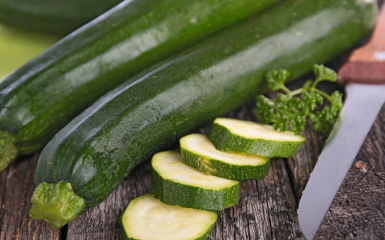
Zucchini is good for freezing, but only if prepared properly. If you simply cut the vegetables, put them in a bag and put them in the freezer, in the winter you often end up with a soft, watery mass with no distinct flavor. The reason is not the freezer itself, but excess moisture, slow freezing, improper cutting, lack of blanching or poor packaging.
Points of attention
- Young zucchini with thin skin, small seeds, and dense flesh are best suited for freezing.
- Young zucchini with thin skin can be left unpeeled. The skin helps the pieces hold their shape better and adds color to dishes.
- Raw zucchini can be frozen, but the results will be less predictable.
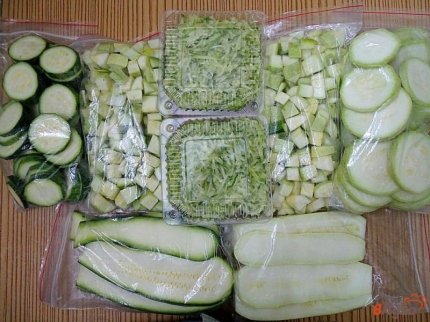
Properly freezing zucchini helps preserve them for soups, stews, vegetable sautés, casseroles, pancakes, muffins, and stuffing. The main thing is to immediately decide for which dishes you are preparing the preparation. Cubes are convenient for stews, circles for baking, grated mass for pancakes, and small pieces or puree after heat treatment for soups.
The best result is obtained by a simple scheme: choose young, dense zucchini, wash, cut or grate, blanch if necessary, cool quickly, dry well, freeze in a thin layer and only then divide into portions. This way, the workpiece freezes less in lumps, retains its color better and does not turn into an ice monolith.
What search intent does this topic have?
The intent is mixed: informational and instructional. The person is not looking for general information about zucchini, but for a clear answer: how to freeze zucchini for the winter, whether to blanch them, how to prepare vegetables for fritters, whether to freeze raw, how to pack, how long to store, and what to do so that they do not become watery after defrosting.
Therefore, the article should cover the entire process: from choosing zucchini to using the finished product in the winter. Important sub-queries: “zucchini for the winter in the freezer”, “how to freeze grated zucchini”, “do you need to blanch zucchini”, “zucchini for fritters for the winter”, “how to freeze zucchini in circles”, “why are zucchini soft after freezing”.
Which zucchini is better to take for freezing?
Young zucchini with thin skin, small seeds, and firm flesh are best for freezing. They should be fresh, free of soft spots, rot, cracks, slime, mold, and a strong odor. The fresher the vegetable is when frozen, the better its quality will be after thawing.
Overripe zucchini can also be used, but not for all preparations. If the skin is already hard and the seeds are large, it is better to peel the vegetable, remove the core and grate the pulp for pancakes, muffins or vegetable caviar. Such zucchini is less suitable for beautiful circles and cubes: after freezing they often become rough on the outside and watery on the inside.
Do not freeze vegetables that have been sitting in the kitchen for a long time, have become soft or have lost their elasticity. The freezer does not restore freshness to the product. It only stops further spoilage if the temperature is low enough.
Do I need to peel zucchini before freezing?
Young zucchini with thin skin can be left unpeeled. The skin helps the pieces hold their shape better and adds color to dishes. It is enough to wash the vegetables well under running water, cut off the stem and tip.
It is worth peeling zucchini if:
the skin is rough and hard;
the vegetable has grown too much;
there are scuffs or dried spots on the surface;
zucchini is intended for children's menus;
you plan to prepare a delicate puree, cream soup or pastries;
The skin has a bitter taste.
It is better to remove large seeds with a spoon before freezing. They do not make the preparation unsafe, but they worsen the texture. After defrosting, such a center often gives a lot of water and makes the dish less neat.

Do I need to blanch zucchini?
Blanching is the brief heating of vegetables in boiling water or steam followed by rapid cooling. For zucchini, this step is necessary primarily for quality: it slows down the action of enzymes that can cause vegetables to lose color, flavor, and texture even in the freezer.
For sliced zucchini, water blanching is usually used for about 3 minutes. The pieces are dipped in boiling water, heated briefly, quickly transferred to very cold water, cooled, drained, and thoroughly dried.
For grated zucchini, the approach is different. It is more convenient to steam them in small batches for 1–2 minutes, until the mass becomes slightly translucent. Then it is cooled, strained, divided into portions and frozen.
Blanching shouldn't turn zucchini into a finished dish. If you keep them in boiling water for too long, they'll soften before you freeze them. If you don't heat them enough, the enzymes can continue to affect the quality. So time is of the essence.
Can you freeze zucchini raw?
Yes, you can freeze raw zucchini, but the results will be less predictable. After defrosting, they tend to become watery, soft, and lose their shape. This option is acceptable if you plan to use the workpiece for puree soup, stew, sauce, zucchini caviar, or dishes where the perfect shape of the pieces is not important.
You can freeze grated zucchini for fritters raw, if you are prepared to squeeze out the liquid after defrosting. However, for long-term storage, a short steaming usually yields the best quality.
Raw zucchini slices for frying are the riskiest option. After freezing, they often give off a lot of water and do not hold the breading well. If you want a base specifically for fried zucchini, it is better to cut thicker slices, blanch them briefly, dry them thoroughly, and freeze them in a separate layer.
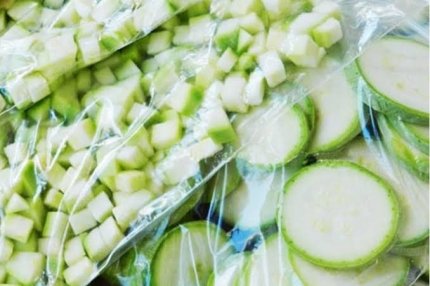
How to freeze zucchini slices
Slices are suitable for casseroles, vegetable side dishes, ratatouille, stews and quick stir-frying after drying. Cut them into uniform thicknesses, approximately 0.8–1.5 cm. Slices that are too thin will tear easily after freezing, while slices that are too thick will take longer to freeze and cook unevenly.
Procedure:
Wash the young zucchini.
Cut the ends.
Cut into slices of equal thickness.
Dip in boiling water for about 3 minutes.
Transfer to cold or ice water.
Cool for about the same amount of time as you blanched.
Drain in a colander.
Spread it out on a towel and dry it.
Freeze on a board or tray in a single layer.
Pour into a bag or container.
Separate pre-freezing is necessary to prevent the slices from sticking together. In the winter, you can take as much as you need, rather than defrosting the entire package.
How to freeze zucchini cubes
Cubes are the most convenient, versatile format. They can be added to soups, stews, vegetable sautés, stews, sauces, casseroles, and pie fillings. The optimal size is 1–2 cm. Small cubes cook quickly, while large ones hold their shape better.
The scheme is the same: wash, cut, blanch for about 3 minutes, cool quickly, dry well and freeze in a thin layer. If the zucchini is very young and tender, you can make cubes with the skin on. If the vegetable is large, it is better to peel it and remove the seeds.
For stew, zucchini can be mixed with other vegetables after pre-freezing: bell peppers, carrots, eggplants, green peas, corn, broccoli. But each vegetable has its own preparation, so you shouldn't blanch everything at the same time in one pot without understanding the difference.
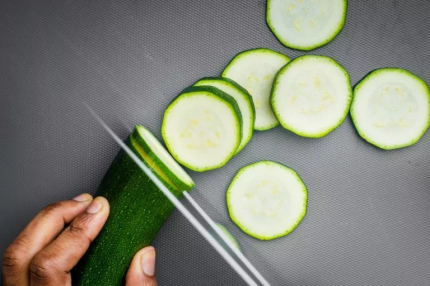
How to freeze grated zucchini for fritters
Grated zucchini is the most practical ingredient for pancakes, fritters, muffins, vegetable cutlets, and casseroles. In winter, just defrost a portion, drain or squeeze out excess liquid, and add egg, flour, spices, or other ingredients.
Preparation procedure:
Wash the zucchini.
Peel and remove seeds if necessary.
Grate on a large grater.
If the mass is very juicy, squeeze it slightly.
Steam in small batches for 1–2 minutes.
Cool quickly.
Let the liquid drain.
Divide into portions of 250–500 g.
Release the air from the bag.
Sign the date and weight.
Do not pack grated zucchini in large 1–2 kg briquettes unless you plan to use it all at once. Re-freezing after thawing degrades the quality and sometimes creates additional risks if the product has been kept warm for a long time.
How to freeze zucchini for children's menus
For children's menus, it is better to choose young, fresh, high-quality zucchini without damage. They should be peeled, sliced, steamed or boiled until soft, pureed, and frozen in small portions.
It is convenient to use ice cube trays or silicone molds, and after freezing, transfer the cubes to a bag. This way you can take one or two servings for porridge, soup, or vegetable puree.
It is important not to add salt, spices, sauces, mayonnaise or other adult ingredients to baby food. Label the date and ingredients, especially if you are freezing several types of vegetables.
The product should be warmed well before serving to a child. If there are any doubts about the smell, color, storage conditions, or defrosting, it is better not to use such a preparation.
How to properly cool zucchini after blanching
After boiling or steaming, zucchini needs to be cooled quickly. If you leave them in the bowl, they will continue to cook from their own heat and become too soft. This is why even properly cut vegetables can lose their shape.
It is most convenient to prepare a bowl of cold water and ice before blanching. Transfer the hot zucchini into it with a slotted spoon. Cooling should take about the same amount of time as heating.
After that, the water should be drained and the pieces should be dried. The moisture on the surface will turn into ice, which will stick the vegetables together and deteriorate the texture. A clean kitchen towel or several layers of paper towels are suitable for drying.
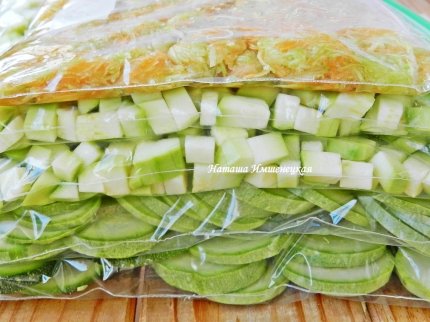
Why do zucchini become watery after freezing?
Zucchini contains a lot of water, so its texture inevitably changes after freezing. When the water inside the cells freezes, ice crystals form. The slower the product freezes, the larger these crystals can be and the more damage they can cause to the vegetable's tissues.
Wateriness increases if:
the vegetables were overripe;
the pieces are cut too large;
zucchini were frozen wet;
the package was poorly sealed;
there is a lot of air left in the package;
the freezer was overloaded;
the product froze in a thick layer;
the workpiece melted several times;
The zucchini was thawed at room temperature for too long.
It is impossible to make thawed zucchini completely the same as fresh. But you can significantly improve the result: quickly freeze, blanch if necessary, dry, pack in small portions, and add pieces to hot dishes without first defrosting.
What to pack zucchini in for the freezer
The packaging should protect the zucchini from air, odors, and drying out. Tight freezer bags, containers with lids, vacuum bags, or zip-lock bags are suitable for this. Regular thin bags often tear, let in odors, and provide less protection against freezer burn.
Before sealing the bag, remove as much air as possible. If you have a vacuum sealer, use it for cubes, slices, or portions of grated zucchini. For a soft grated mass, it is better to first slightly freeze the portions and then vacuum seal them so that no liquid is drawn into the seam of the bag.
Label each portion: “zucchini cubes,” “zucchini for fritters,” “zucchini slices,” date, weight, or approximate volume. In winter, this saves time and helps avoid mixing up the preparations.
How to quickly freeze zucchini
Fast freezing gives a better texture. For a home freezer, it is important not to put too many warm or moist foods in at once. A large volume of vegetables raises the temperature inside the chamber and slows down the freezing process.
Practical rules:
cool the zucchini before freezing;
dry the pieces after blanching;
spread the first frosting in a single layer;
use the quick freeze mode, if available;
do not overload the freezer;
leave space for cold air to circulate;
Pack portions in flat bags, not thick lumps.
A flat bag freezes faster and takes up less space. It's convenient to spread the grated zucchini in a thin layer in the bag, then store it vertically or stack it.
How long can you store frozen zucchini?
At a stable freezer temperature of around -18°C, frozen foods can remain safe for a long time, but the quality gradually deteriorates. For zucchini, it is optimal to plan to use them within 8–12 months. After that, they can become drier, lose their flavor, absorb odors, or get freezer burn.
Freezer burn appears as dry, light or grayish areas on the surface of the product. This is more of a quality issue than a safety issue if the product has been stored frozen without prolonged thawing. However, the taste and texture will noticeably deteriorate.
If the zucchini has a strange odor, a slippery surface after defrosting, signs of spoilage before freezing, or has been kept warm for a long time after defrosting, it is better not to eat them.
How to use frozen zucchini
For soups, stews, sauces, and casseroles, zucchini can be added straight from the freezer. This way, they lose their shape less and don't sit in their own liquid for long. Add them toward the end of cooking, as they cook more quickly after blanching and freezing.
For pancakes, muffins, and casseroles, it's best to thaw grated zucchini in the refrigerator or in a bowl, then drain off any excess liquid. For pancakes, you often need to press the mixture harder, otherwise the dough will be runny and the finished pancakes will be soft and moist inside.
To fry the zucchini, it is advisable to partially defrost them, dry them with a towel, and cook them quickly on a well-heated surface. But you need to understand: after freezing, they will rarely be as elastic as fresh summer zucchini.
Can I freeze ready-made zucchini dishes?
Yes, many zucchini dishes can be frozen ready-made. It is often even more convenient than storing the vegetable raw. Zucchini caviar, vegetable stew, pureed soup, casseroles, stewed vegetables, and sauce bases freeze well.
Dishes with a lot of sour cream, mayonnaise, creamy sauces, or crispy breading do not tolerate freezing well. After defrosting, the sauce may separate and the crust may become soft.
Ready meals should be cooled, placed in small containers, tightly closed, labeled, and frozen. Do not put a hot pan in the freezer: this increases the temperature in the chamber and worsens the conditions for other foods.
Common mistakes when freezing zucchini
The first mistake is to freeze overripe, watery zucchini in circles. For this shape, it is better to take young, dense vegetables, and use large ones grated or for puree.
The second mistake is to skip drying. Even after proper blanching, wet pieces will stick together and become covered in ice.
The third mistake is to put everything in one big bag. In the winter, you will have to defrost the excess, and re-freezing will worsen the quality.
The fourth mistake is not labeling the blanks. After a few months, it's hard to remember where the zucchini for fritters is and where the cubes for stew are.
The fifth mistake is freezing in a thick layer. The product takes longer to freeze, forms more ice, and retains its texture worse.
The sixth mistake is to expect the texture of fresh zucchini from frozen. They are not suitable for salads, but they work well in hot dishes.
The seventh mistake is storing the bag with air in it. Air accelerates surface drying, freezer burn, and foreign odors.
The best ways to freeze food
For stew, choose 1–2 cm cubes. It is better to blanch them, cool them, dry them, and freeze them on a tray.
Small cubes or slices are suitable for soup. They can be added to the pot without defrosting.
For fritters, it is best to grate the zucchini, steam it or freeze it raw for a short time, divide it into portions, and squeeze it after defrosting.
For casseroles, use circles or half circles. They should be the same thickness and well-drained.
For cupcakes and muffins, use grated zucchini in portions by weight that matches the recipe.
For children's menus, it is better to make ready-made puree without salt and spices and freeze it in small portions.
Step-by-step universal recipe for freezing zucchini
Take young, firm zucchini. Wash, trim off the ends, and cut into cubes or slices. Bring a large pot of water to a boil. Drop the vegetables into the boiling water in batches for about 3 minutes. Don't add too many at once, as the water will cool quickly.
After blanching, immediately transfer the zucchini to a bowl of ice water. Cool, drain in a colander, and spread out on a towel. When the surface is drier, transfer the pieces to a board or tray in a single layer.
Place the tray in the freezer until firm. Then quickly transfer the zucchini to freezer bags, squeeze out the air, seal, label with the date, and return to the freezer.
For grated zucchini, grate the pulp, lightly squeeze out the juice, steam for 1–2 minutes in small portions, cool, drain, and freeze in flat portion bags.
Conclusion
Zucchini for the winter is best frozen not in a hurry, but for specific dishes. Young vegetables are suitable for slices and cubes, large ones for grated mass, puree or caviar. Blanching, rapid cooling, drying and portion packaging significantly improve the result.
To prevent zucchini from becoming mushy, don't put wet slices in the freezer in a thick layer, don't use overripe vegetables for beautiful slicing, don't leave a lot of air in the bag, and don't defrost the entire batch for one serving. For hot dishes, it's often better to add slices straight from the freezer, and defrost and squeeze grated zucchini for fritters.
Properly prepared zucchini will not be quite as good as fresh, but it will remain a convenient, tasty, and practical stock for winter soups, stews, casseroles, fritters, and baking.
FAQ
Can you freeze zucchini without blanching?
It is possible, but the quality will be worse. Raw zucchini tends to become watery and soft after freezing. This is acceptable for puree soup, caviar, or stewing, but for slices and cubes, a short blanching gives the best result.
How many minutes should you blanch zucchini before freezing?
Sliced zucchini is usually blanched in boiling water for about 3 minutes. Grated zucchini for baking or fritters is best steamed in small batches for 1–2 minutes.
Why do zucchini become watery after defrosting?
Zucchini contains a lot of water. During freezing, ice crystals form, which damage the flesh. The wateriness is increased if the vegetables were overripe, wet, froze slowly, or stored in a poorly sealed bag.
How to freeze zucchini for fritters?
Grate the zucchini on a coarse grater, squeeze out the juice slightly if necessary, steam for 1–2 minutes, cool, drain and divide into portions. After defrosting, the mass must be squeezed again before adding to the dough.
Do I need to defrost zucchini before cooking?
For soups, stews, sautés, and sauces, you don't need to thaw them—they can be added straight from the freezer. For fritters, muffins, and casseroles with grated zucchini, it's best to thaw a portion and drain off any excess liquid.
What is the best way to freeze zucchini?
It is most convenient to use tight freezer bags, zip-lock bags, vacuum bags, or containers with lids. The main thing is to release the air, close tightly, and sign the date.
How long do frozen zucchini last?
For best quality, zucchini should be used within 8–12 months. They can be stored longer at a stable freezer temperature, but the flavor, smell, and texture will gradually deteriorate.
Can I freeze zucchini slices for frying?
Yes, but they will be softer than fresh ones after defrosting. Cut into slices about 1 cm thick, blanch briefly, cool, dry well, and freeze in a single layer.
Can I freeze zucchini caviar?
Yes, zucchini caviar tolerates freezing well. It should be fully cooked, cooled, placed in small containers, tightly sealed, and frozen in portions.
Can zucchini be refrozen?
Not recommended. Refreezing will degrade the texture and flavor. If the zucchini has been sitting at room temperature for a long time after thawing, it's best not to risk putting it back in the freezer.

